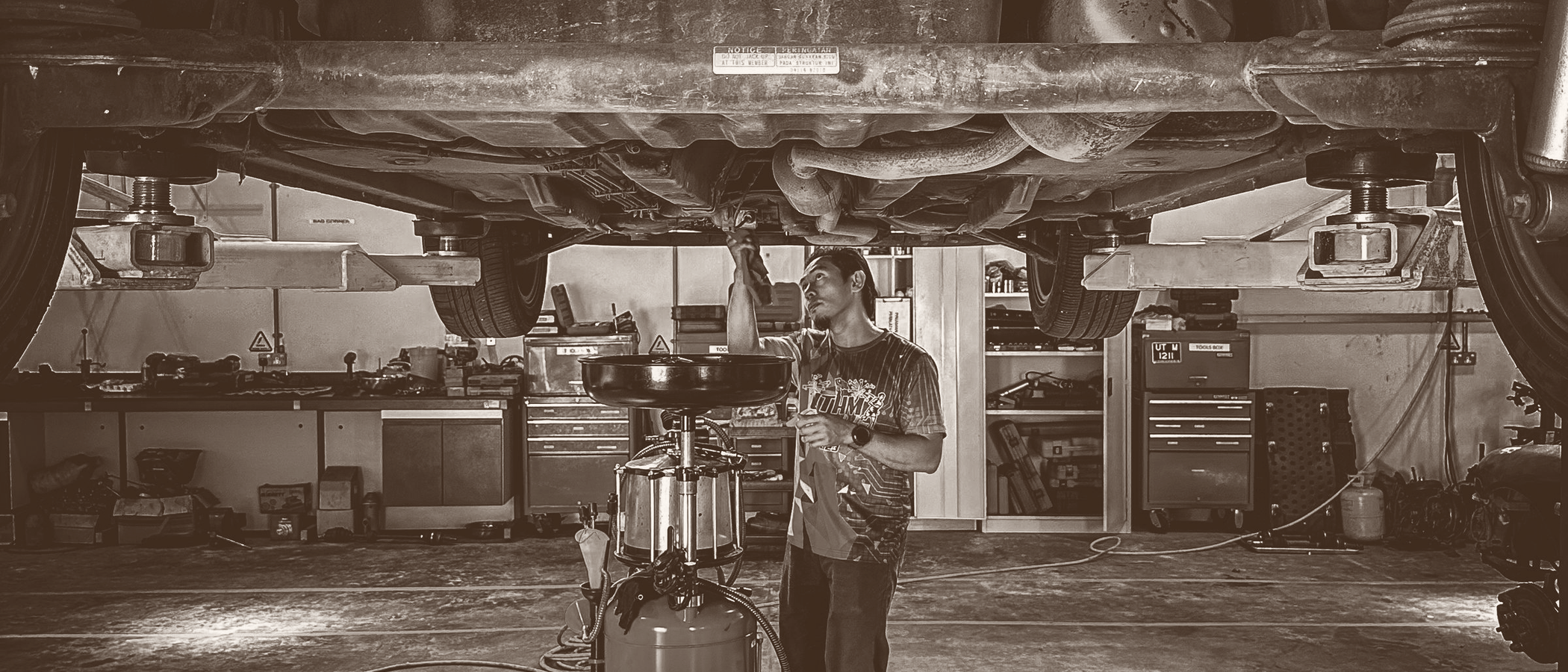
Saturday morning at a quick lube shop looks a certain way. Every bay is full. Two cars idle in the lot waiting their turn. The one person at the counter is checking someone out, answering a question about a cabin air filter, and watching the tech wave for a signature on a wiper blade upsell. Then the phone rings.
Nobody can pick it up. Not because the shop does not care about the call, but because the hands that would answer it are already busy with the car in front of them. This is the quiet problem in the oil-change business. The busier you are, the harder it is to answer the phone, and the busiest hours are exactly when the most people call.
Why the phone goes quiet at the wrong time
Quick lube runs on throughput. The whole model rewards moving cars through bays fast, which means the front desk is a working station, not a call center. During a peak, the person up front is juggling payment, questions, and the flow of vehicles. The phone becomes the thing that gets dropped.
The pattern repeats on a schedule. Saturdays draw the weekend crowd catching up on maintenance they put off all week. The 5 to 6 p.m. window after work brings people trying to squeeze an oil change in before dinner. Lunch hour has its own small surge. In each of these windows, staff attention is fully spent on the cars already on site, and the ringing phone competes with a customer standing right there. The customer in the building almost always wins.
So calls stack up during the exact hours the shop most wants new business walking in.
The caller who never leaves a message
Here is the part that stings. When someone calls a quick lube shop, they usually have a simple question with a time attached to it. How long is the wait? Do you take the 5W-30 my car needs? Are you open till six? Can I bring it in right now?
Those questions expire fast. A caller who wants to know if they can get an oil change in the next thirty minutes is not going to leave a voicemail and wait for a callback that might come after they have already made other plans. They hang up and dial the next shop on the map. Voicemail assumes the caller is willing to wait. During a rush, the caller is the least patient version of themselves, phone in hand, already looking at three other results.
A caller who reaches voicemail dials the next shop. That is the whole dynamic. The missed call does not sit in a queue for later. It walks across the street.
How missed calls compound during a rush
One missed call on a slow Tuesday is a shrug. The problem is that missed calls cluster. They arrive in the same busy windows, stacked on top of each other, because the conditions that make one call hard to answer make all of them hard to answer.
Picture the Saturday peak again. Six people call in a ninety-minute stretch. The counter is slammed the entire time, so none of the six get through. That is not one lost conversation. It is six drivers who each moved on to a competitor, and it happened during the shift the shop staffed up for and spent money to promote. The rush that was supposed to be the good part of the week is also the part quietly leaking callers out the side door.
Local search makes this sharper. When someone searches "oil change near me," they get a list. If your line is busy, the next name is one tap away. The caller does not know you were slammed. They just know you did not answer.
Practical ways to cover the phone
Shops handle this a few different ways, each with tradeoffs.
Add a dedicated phone person. Effective, but expensive, and hard to justify when the phone only spikes for a few hours across the week. You end up paying for coverage during the quiet stretches to get it during the loud ones.
Route to a mobile line. This just moves the problem into a manager's pocket. That person is usually on the floor during a rush too, so the call still competes with a car.
Use a traditional answering service. A human takes a message, but a generic operator often cannot answer the questions that matter to a quick lube caller, like current wait time or whether you stock a specific oil weight. A message that arrives after the caller already left is a message about a customer you lost.
Use an AI voice receptionist. This is where Answara fits. Answara answers every call, on the first ring, at any hour, including the middle of the Saturday rush when nobody at the counter can reach the phone. It talks with the caller in natural conversation, captures their details, answers routine questions you have set up, and books or logs the visit so nothing falls through. It does not get busy. It does not put a caller on hold to run a payment. Every call gets picked up, whether it is one call or six at once.
The point is not to replace the people who move cars through your bays. It is to make sure the phone stops being the thing that gets sacrificed when those people are heads-down.
FAQ
Why do so many quick lube callers hang up instead of leaving a voicemail? Their questions are time-sensitive. Someone deciding whether to drive over in the next half hour needs an answer now, not a callback later. When they hit voicemail, they typically end the call and try the next shop on their search results.
When do quick lube shops miss the most calls? During peak throughput windows. Saturday mornings, the after-work stretch around 5 to 6 p.m., and lunchtime tend to produce the most call volume and the least staff availability to answer, since everyone up front is handling cars already on site.
Can an AI receptionist actually answer specific questions, like whether you carry a certain oil weight? It answers the routine questions you configure for it and captures details on anything it should hand off. For a quick lube shop, that covers common asks like hours, wait expectations, and services offered, with the caller's information logged for follow-up.
Does Answara replace my front desk staff? No. It covers the phone so your counter staff can stay focused on the cars in front of them. Answara handles calls around the clock, including the busy hours when a live pickup is hardest.
See how Answara answers every call, even during your Saturday rush.