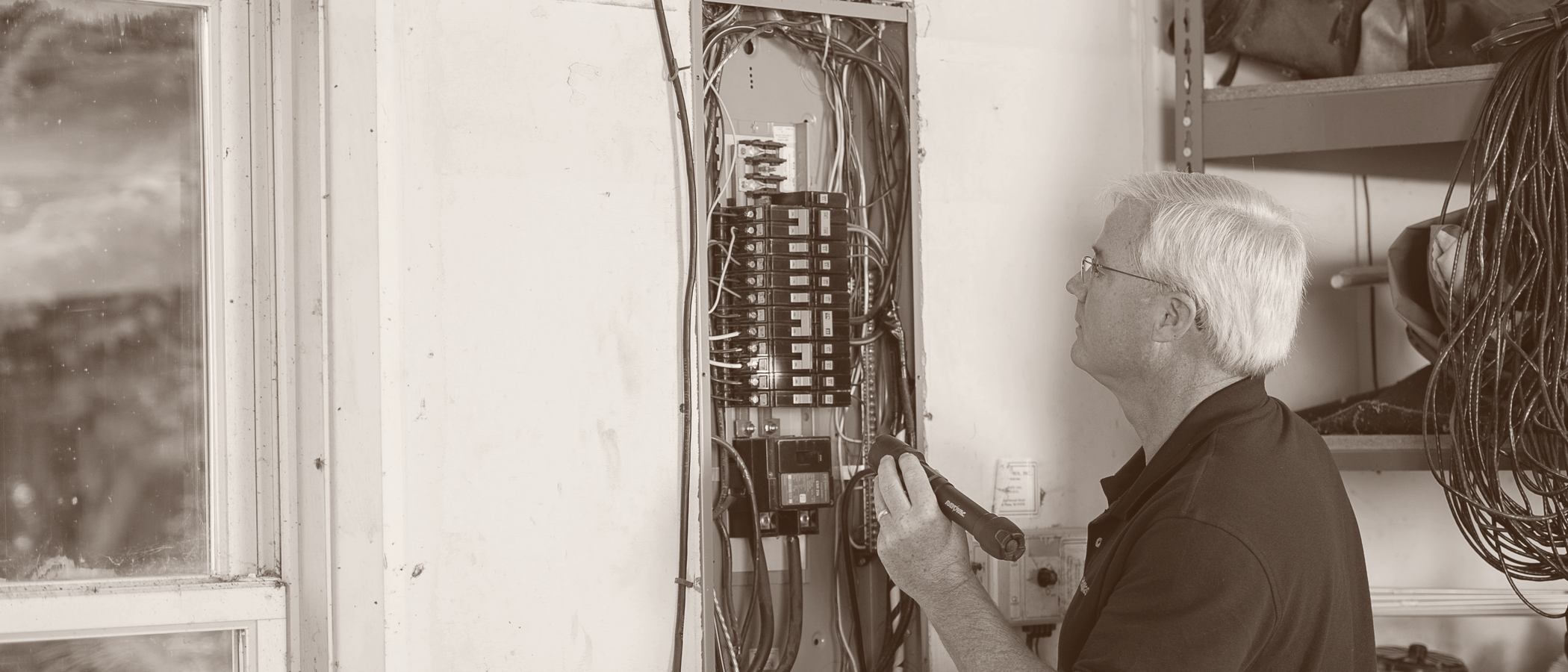
Your electrical panel is the gray metal box in the garage, basement, or hallway that almost nobody thinks about until something goes wrong. It takes power from the utility and splits it into the circuits that run your lights, outlets, and appliances. When the panel is sized right and in good shape, you never notice it. When it falls behind what the house is asking of it, the house tells you.
Below are seven signs your panel may need an upgrade, what each one usually points to, and when to call a licensed electrician. One thing to settle first: none of this is DIY. The main wires feeding a panel stay live even when the main breaker is off, and the energy inside is enough to injure or kill. Reading the signs is your job. Opening the panel is not.
1. Breakers that trip again and again
A breaker trips to protect you. When a circuit draws more current than it is rated for, the breaker cuts power before the wire overheats. Trip once in a while and it did its job. Trip on the same circuit every week, or trip the moment you run the microwave and the toaster together, and the message is different: that circuit, or the panel behind it, cannot keep up with normal use.
Sometimes the fix is small, like moving a heavy appliance to its own circuit. Sometimes the panel itself is undersized for how you live. An electrician can tell which by measuring the load and how the circuits are laid out. Repeated tripping is worth a call, especially if it started without any change in what you plug in.
2. Lights that dim or flicker when something turns on
Watch your kitchen lights the next time the refrigerator compressor kicks in or the microwave starts. A brief, barely-there dip is normal. A clear flicker or a noticeable dimming every time a big appliance cycles suggests the panel is straining to deliver steady voltage.
Flickering has other causes, like a loose bulb or a failing switch. But when it happens across several rooms at once, or tracks with large appliances turning on, the panel and the service feeding it move up the suspect list. Mention it to an electrician, because loose or overloaded connections can heat up over time.
3. A fuse box, or 60 to 100 amp service, in a modern home
Walk up to the panel and look at how it interrupts power. Screw-in fuses instead of switches usually mean the equipment is decades old. Many of these systems were built for 60 or 100 amps of service, which was plenty for a mid-century house with a few lights, a stove, and a television.
A house today runs central air, a heat pump or electric water heater, a laundry pair, a home office, and often a car charger. A 60 or 100 amp panel can be maxed out before you add anything new, and older equipment raises the odds of outdated wiring behind it. If your home still has a fuse box, or a service rating at the low end, have an electrician assess whether the capacity still fits the house. Some older panel brands have known safety concerns, and only a qualified pro can tell you if yours is one of them.
4. A panel that feels warm, or shows scorching
Here is one check you can do safely, and it takes ten seconds. Rest the back of your hand near the closed panel cover, without opening anything. The cover should feel cool or room temperature. Warmth coming off a closed panel means something inside is generating heat it should not.
Now look at the outside. Brown or black scorch marks, melted spots, a corroded cover, or a hot-plastic smell near the panel are all reasons to stop and act. These point to loose connections or arcing inside, some of the more serious problems a home's wiring can have. Do not open the cover to investigate. Call a licensed electrician promptly, and if you smell burning or see smoke, treat it as the emergency it is.
5. Buzzing, humming, or crackling from the panel
A healthy panel is silent. If you hear a steady buzz, a hum, or an occasional crackle or sizzle coming from it, that is a sign to take seriously. Buzzing often means a breaker or connection is loose and current is arcing across a gap it should be crossing cleanly. Arcing generates heat, and heat near wiring is how electrical fires start.
Sound is one of the earliest warnings a panel gives, and it is easy to miss because these boxes sit in rooms we rarely enter. If your panel is making noise, keep the cover shut and get an electrician out to find the source. This is not a wait-and-see situation.
6. Power strips and adapters doing the panel's job
Count the power strips, cube taps, and extension cords running the daily loads in your home. A surge protector behind a media center is fine. But if strips are daisy-chained to feed a space heater, or every room leans on an extension cord because the wall outlets ran out years ago, the house is telling you it has fewer circuits than the way you live requires.
Power strips do not add capacity. They split one circuit into more plugs, which makes it easier to overload the circuit behind the wall. The real fix is usually more circuits, and sometimes a panel with the room to hold them. An electrician can add capacity safely. A pile of adapters only hides the shortage while the load keeps climbing.
7. You are adding an EV charger or a major appliance
This is the sign homeowners hit most often, and it is the one where the timing is in your control. A Level 2 EV charger, a hot tub, an electric range replacing a gas one, a heat pump, a workshop, an addition: each of these is a large new load. Before any of them goes in, the panel has to have both a free spot and enough overall capacity to carry it.
Plenty of older panels are already close to full, so a big addition is exactly when an upgrade tends to make sense. Have an electrician run a load calculation before you buy the equipment or book the install. Learning the panel needs work while the appliance is still on order is a much easier place to be than learning it after the thing is sitting in your driveway.
The safety line, stated plainly
Every sign on this list is something you can notice from the outside. Trips, flickers, warmth, sounds, scorch marks, a crowd of power strips, a big appliance on the way. Noticing is the whole point, and it is the safe part.
The panel itself is off limits. The wires that feed it stay energized even with the main breaker switched off, and there is no way to make working inside one safe without training and the right equipment. Do not remove the cover, swap a breaker, or try to add a circuit yourself. Panel work belongs to a licensed, insured electrician, and in most places code requires a permit and inspection for it. If any sign here is showing up at your house, that is your cue to make the call.
Frequently asked questions
How long does an electrical panel last? Many panels run 25 to 40 years, though the number matters less than the condition and the capacity. A panel can be within its years and still be undersized for a modern household, or overdue and still limping along. An inspection tells you more than the birthday does.
Is a warm electrical panel always dangerous? Warmth on a closed panel cover is not normal and is worth a same-week call to an electrician. Paired with buzzing, a burning smell, or scorch marks, treat it as urgent and stop using the panel where you can.
Can I upgrade the panel myself? No. Panel work involves live utility wiring, permits, and inspection, and the risk of injury or fire is real. This is licensed-electrician work in essentially every jurisdiction.
What is the difference between 100 amp and 200 amp service? It is the amount of power the panel can deliver to the whole house at once. Many newer homes run 200 amp service to cover central air, electric appliances, and car charging. A 100 amp panel can be fine for a smaller, gas-heavy home, but it fills up faster as you electrify.
If two or three of these signs sound familiar, book a licensed electrician for a panel assessment. A short visit now can catch a loose connection or an overloaded service before it turns into a hazard, and it gives you a clear answer on whether your panel is ready for whatever you plan to plug into it next.