When your heating system starts making the case for its own retirement, usually in the first cold snap of the year, the choice comes down to two families of equipment: a heat pump or a gas furnace. They warm a house in fundamentally different ways, and the right pick depends more on your climate and your comfort preferences than on any single spec sheet.
This guide walks through how each system works, where each one shines, and the practical differences you will actually feel day to day.
How Each System Actually Heats Your Home
A gas furnace burns fuel. Natural gas or propane ignites inside a combustion chamber, a heat exchanger warms the incoming air, and a blower pushes that hot air through your ducts. The air coming out of the registers is genuinely hot, often in the range of 120 to 140 degrees Fahrenheit.
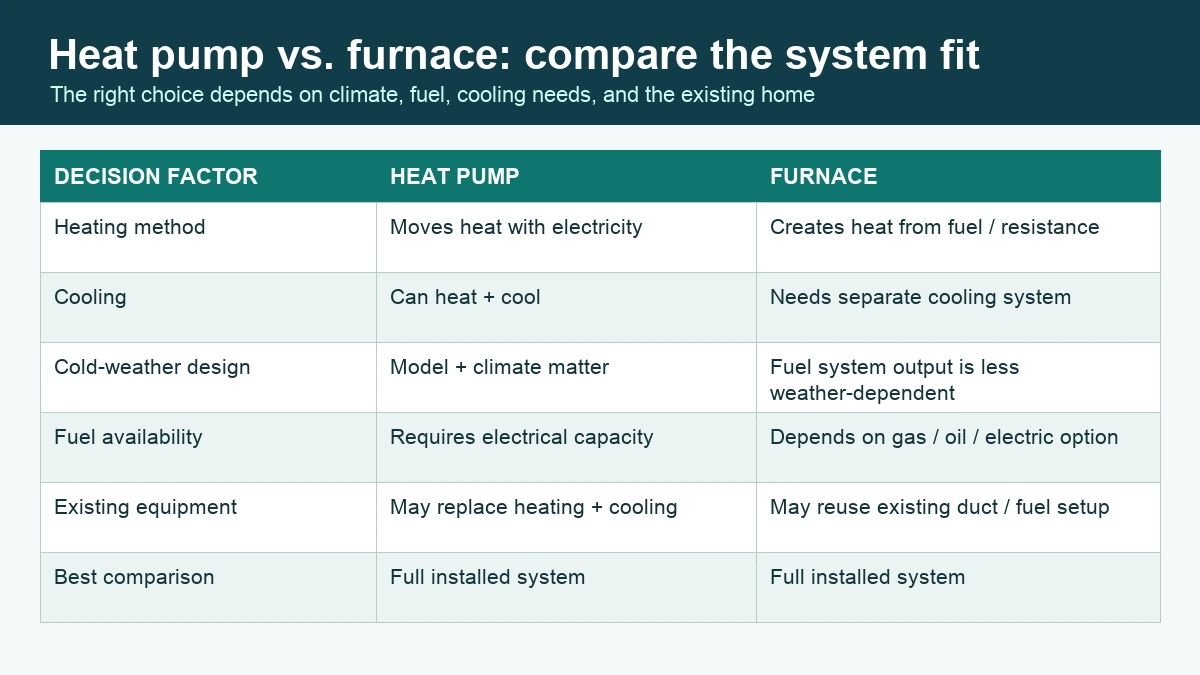
A heat pump does not create heat by burning anything. It moves heat. Even in cold outdoor air there is thermal energy, and a heat pump uses refrigerant and a compressor to pull that energy inside. Run the same system in reverse during summer and it becomes your air conditioner. That dual role is one reason heat pumps have become so common in new installs: one piece of equipment covers both seasons.
The mechanical difference explains most of the trade-offs below. Combustion produces intense, fast heat. Heat transfer produces steadier, gentler heat and does it using electricity rather than fuel.
Climate Is the Deciding Factor
If there is one question that settles the debate for most homeowners, it is this: how cold does it get where you live, and for how long?
Heat pumps are a natural fit in mild and moderate climates. Across much of the South and the Pacific coast, a modern heat pump handles the entire heating season without breaking a sweat. In regions with brief, mild winters, the efficiency of moving heat instead of burning fuel is hard to argue with.
Colder climates complicate the picture. As outdoor temperatures fall, a standard heat pump has to work harder to extract usable heat, and its efficiency drops. Cold-climate heat pumps have narrowed this gap considerably and now perform well into freezing temperatures, but in places with long, deep winters, many homes still lean on a furnace or pair a heat pump with a gas backup in what is called a dual-fuel setup.
A gas furnace, by contrast, delivers the same strong output whether it is 40 degrees or 10 degrees outside. For homeowners in the northern tier who want reliable, powerful heat during a long winter, that consistency carries real weight.
Comfort, Efficiency, and the Feel of the Heat
Efficiency looks different for each system because they measure different things. Furnaces are rated by AFUE, the percentage of fuel converted to usable heat, and high-efficiency models convert the large majority of what they burn. Heat pumps are rated by HSPF and SEER, and because they move existing heat rather than generate it, they can deliver more heating energy than the electrical energy they consume. Comparing the two directly is tricky, which is why climate and fuel availability tend to matter more than the raw numbers.
Comfort is where personal preference enters. Furnace heat arrives hot and in cycles: the system fires, blasts warm air, satisfies the thermostat, and shuts off. Some people love that toasty blast. Heat pumps run longer and gentler, holding a steady temperature with air that is warm but not hot. That evenness feels great to many homeowners, though anyone expecting a furnace-style blast can find the cooler supply air surprising at first.
Humidity plays in too. Because heat pumps run longer cycles, they tend to manage indoor humidity smoothly across the year, which matters in muggy regions.
Maintenance and What Ownership Looks Like
Both systems ask for seasonal attention, but the checklists differ.
A furnace involves combustion, so safety is part of every visit. A technician inspects the heat exchanger for cracks, checks the burners and flame, confirms the flue is venting properly, and tests for carbon monoxide. Filters need regular changing, and the system generally runs only during heating season, which means it rests for months at a time.
A heat pump runs year round because it handles both heating and cooling, so its components see more total hours. Maintenance focuses on the refrigerant charge, the coils, the reversing valve, and the outdoor unit, which needs clearance from leaves, snow, and debris. There is no combustion to worry about and no carbon monoxide risk, which simplifies the safety side.
Here is a practical reality that shows up every fall. The moment temperatures drop and heating systems get their first real test of the season, HVAC contractors field a rush of replacement inquiries: the furnace that will not light, the heat pump that quit over the summer, the homeowner who finally decided this is the year. Those calls cluster into a few busy weeks, and a missed one usually means the homeowner simply dials the next company on the list. This is where always answering matters. Some contractors keep a live team on the phones, and others use an AI receptionist like Answara, which answers calls 24/7 and captures the details so no first-cold-snap inquiry slips through while a crew is out on a job.
Making the Call
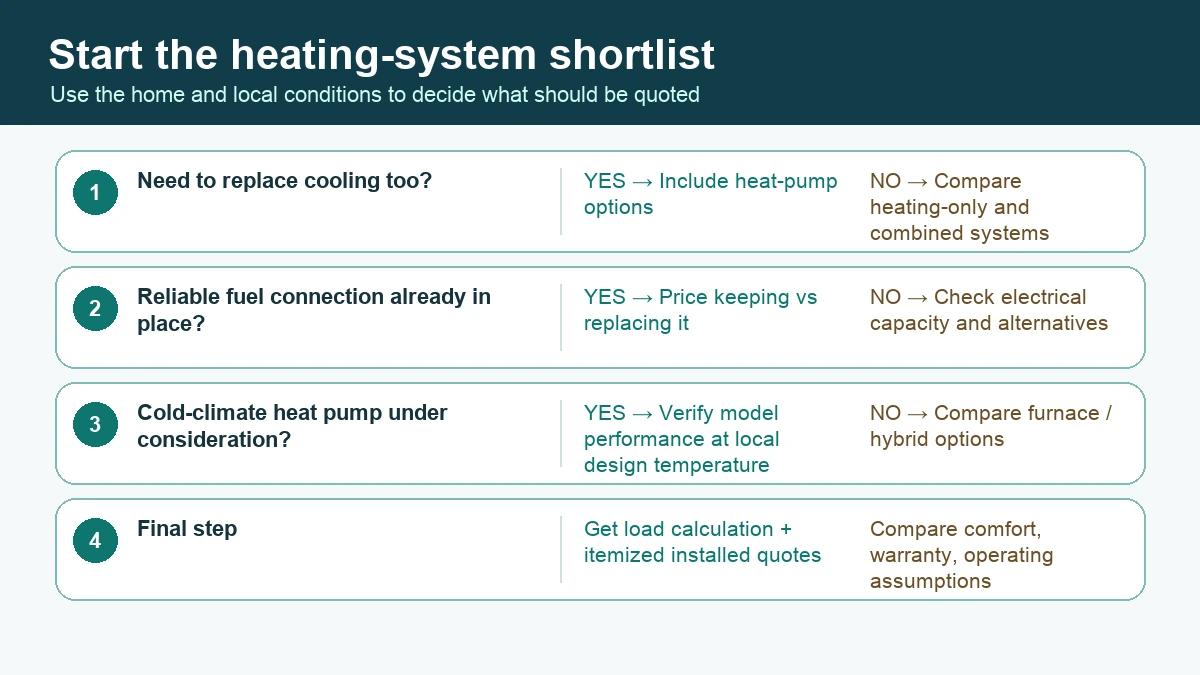
Start with your climate, then weigh comfort and how you feel about combustion versus all-electric equipment. A homeowner in a mild region who wants one system for both seasons has a clear lean toward a heat pump. A homeowner facing long, hard winters who values strong, consistent output has good reason to consider a furnace or a dual-fuel pairing. A local HVAC contractor who knows your region can size the equipment to your house and your winters, which is the part no online guide can do for you.
FAQ
Can a heat pump really keep my house warm in freezing weather? Modern cold-climate heat pumps hold their own well below freezing, far better than older models did. In areas with sustained deep cold, many homeowners choose a dual-fuel system that pairs a heat pump with a gas furnace so the furnace takes over on the coldest days.
Why does the air from my heat pump feel cooler than my old furnace? Heat pumps supply air that is warm but not hot, and they run in longer, steadier cycles instead of short hot bursts. The room reaches your target temperature, but the air at the register feels milder than the blast a furnace produces. Many people prefer the evenness once they get used to it.
Does a heat pump replace my air conditioner? Yes. A heat pump cools in summer by running the same refrigerant cycle in reverse, so it serves as both your heater and your air conditioner. That is one reason a single heat pump can replace two separate pieces of equipment.
How often should each system be serviced? A yearly professional check is a good baseline for either one, ideally before the season it works hardest. Furnaces need a combustion and safety inspection, while heat pumps need refrigerant and coil checks. In both cases, changing filters on schedule does more for performance than almost anything else you can do yourself.