You set the thermostat to 70 and the house sits at 74. The system is clearly running. You can hear the blower, you can feel air moving, but the number on the wall never catches up to the number you asked for. It is one of the most common HVAC complaints, and it happens in both heating and cooling seasons.
The good news is that a lot of the causes are simple and safe to check yourself. The frustrating part is knowing where to stop. Some problems, like a clogged filter or a bumped thermostat setting, take five minutes. Others, like low refrigerant or a leaking duct run, need a licensed technician and the right tools. This guide walks through the likely causes from easiest to hardest, gives you a short checklist, and tells you clearly when it is time to call a pro.
Why an HVAC System Runs but Never Catches Up
When your system runs constantly without hitting the setpoint, it usually means one of two things. Either something is choking the airflow that carries heated or cooled air through the house, or the equipment cannot produce enough heating or cooling capacity to meet the demand. A third possibility is that the thermostat itself is reading the room wrong, so the system is chasing a target it already reached.
Airflow problems are the most common and the easiest to diagnose. Capacity problems, like a refrigerant leak or a failing compressor, are not. Start with the easy checks below before assuming the worst.
Simple Checks a Homeowner Can Do
Work through these in order. Most people find the problem in the first two.
- Check the air filter. A dirty filter is the single most common cause of weak airflow. If it looks gray or clogged when you hold it to the light, replace it. Filters can need changing every one to three months during heavy use.
- Confirm the thermostat mode and setting. Make sure it is set to Heat or Cool, not Auto or Off, and that the setpoint and fan mode are what you expect. A schedule or a bumped setting is an easy thing to miss.
- Look at every supply and return vent. Furniture, rugs, and closed registers starve the system of airflow. Open the vents and clear anything blocking them.
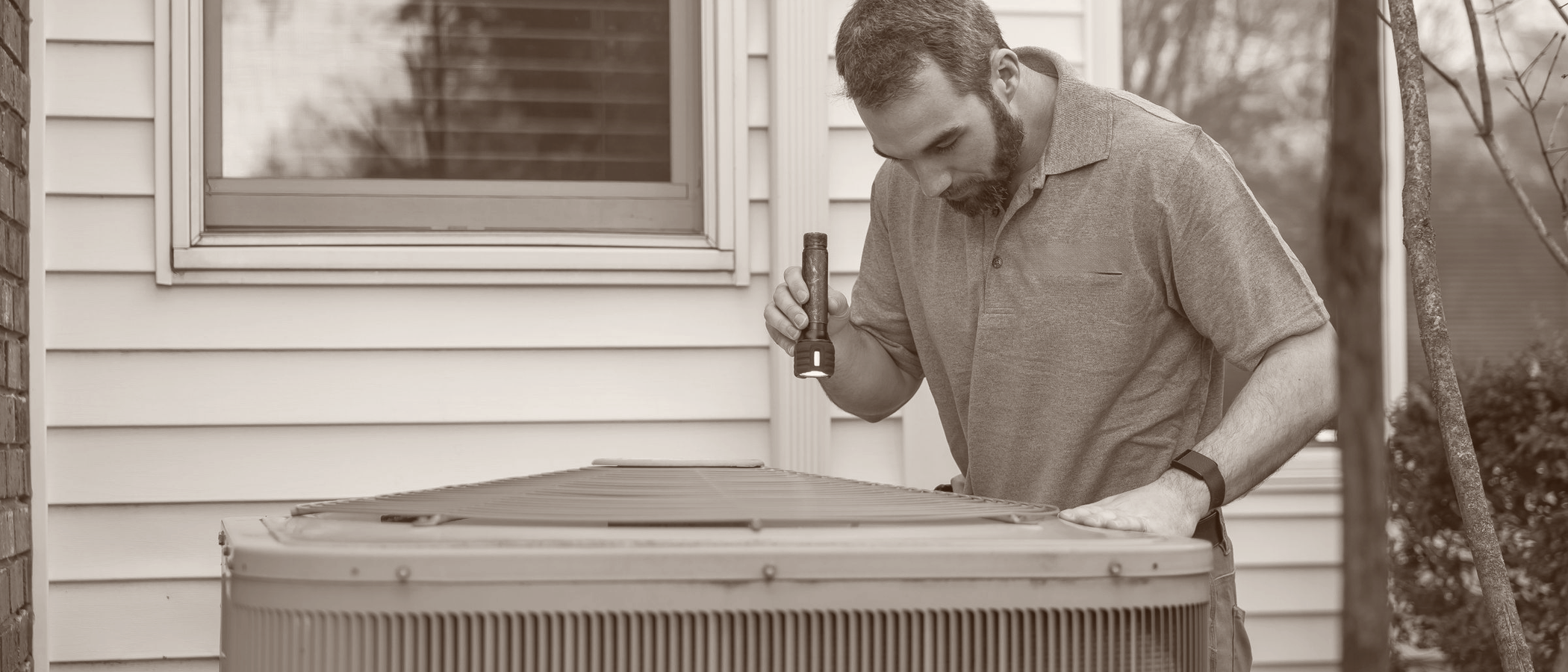
- Check for a dirty outdoor condenser unit. In cooling season, tall grass, leaves, or dirt packed against the outdoor coil hurts performance. Kill power to the unit at the disconnect before you clean anything near it.
- Test the thermostat location and reading. A thermostat in direct sun, near a lamp, or above a heat source can read several degrees off. Put a separate thermometer next to it and compare. If they disagree by more than a couple of degrees, the thermostat may need recalibration or replacement.
- Watch for ice on the indoor coil or refrigerant line. A frozen coil in cooling mode points to airflow or refrigerant trouble. Turn the system to fan-only to let it thaw, and note it for the technician.
If the setpoint is still out of reach after these checks, the cause is likely beyond a quick fix.
Causes That Need a Professional
Some issues look similar from the thermostat but sit well outside DIY territory. These are worth understanding so you can describe the symptom accurately when you call.
Low refrigerant. If the system runs but blows air that is not cold enough, refrigerant may be low, and low refrigerant almost always means a leak. Do not attempt to add refrigerant yourself. It is regulated, it requires certification, and adding it without fixing the leak solves nothing. This is a licensed-technician job.
Thermostat wiring or calibration faults. A thermostat that misreads the room or loses its connection to the equipment can cause exactly this symptom. If you are checking wiring behind the thermostat, kill power at the breaker first. Anything beyond swapping batteries or reseating the faceplate is best left to a pro.
Duct leaks or undersized ductwork. If conditioned air is escaping into an attic or crawlspace before it reaches your rooms, the system runs and runs while the house never catches up. Finding and sealing leaks, or correcting duct sizing, takes diagnostic tools and access you probably do not have.
Failing compressor or aging equipment. An older system may simply have lost the capacity to keep up on the hottest or coldest days. A technician can measure it and tell you whether a repair or replacement makes sense.
Here is where timing matters. When a homeowner searches a symptom like this, the next step is almost always a phone call, and homeowners tend to reach the first contractor who actually answers. A call that goes to voicemail goes to the next shop on the list. This is the gap Answara is built for. It answers homeowner calls 24/7 so a contractor does not miss inbound work while on a job, on a ladder, or asleep. It does not diagnose the furnace. It makes sure the call gets picked up instead of lost.
When to Call a Pro
Call a licensed HVAC technician if any of the following is true. The filter is clean and airflow is still weak. The air is running but not hot or cold enough. You see ice on the coil or refrigerant line that keeps coming back. You suspect a duct leak. The thermostat reads the room incorrectly after you have ruled out sun and heat sources. Or the system is simply old and struggling on extreme days. Anything involving refrigerant, electrical wiring, or sealed ductwork warrants a pro, both for safety and because the fix requires certification and tools.
Frequently Asked Questions
Why is my house warmer than the thermostat setting even though the AC is running? The most likely causes are a dirty filter or blocked vents choking airflow, a thermostat reading the room wrong, or low refrigerant. Start with the filter and vents. If those are clear and the air still is not cold enough, it is time for a technician.
Can a dirty filter really stop my system from reaching temperature? Yes. A clogged filter is one of the most common reasons a system runs constantly without catching up. Restricted airflow reduces how much heated or cooled air reaches your rooms and can even freeze the coil. Check it first.
Should I add refrigerant myself if I think it is low? No. Refrigerant work requires certification and the right equipment, and low refrigerant almost always means a leak that needs to be found and fixed. Adding refrigerant without repairing the leak does not solve the problem. Call a licensed pro.
How do I know if my thermostat is the problem? Place a separate thermometer next to the thermostat and compare readings after 20 minutes. If they differ by more than a couple of degrees, or if the thermostat sits in sunlight or near a heat source, the thermostat may be misreading the room and telling the system to stop early.
Still stuck after the simple checks? A licensed HVAC technician can measure what the thermostat cannot, so make the call while the symptom is fresh.