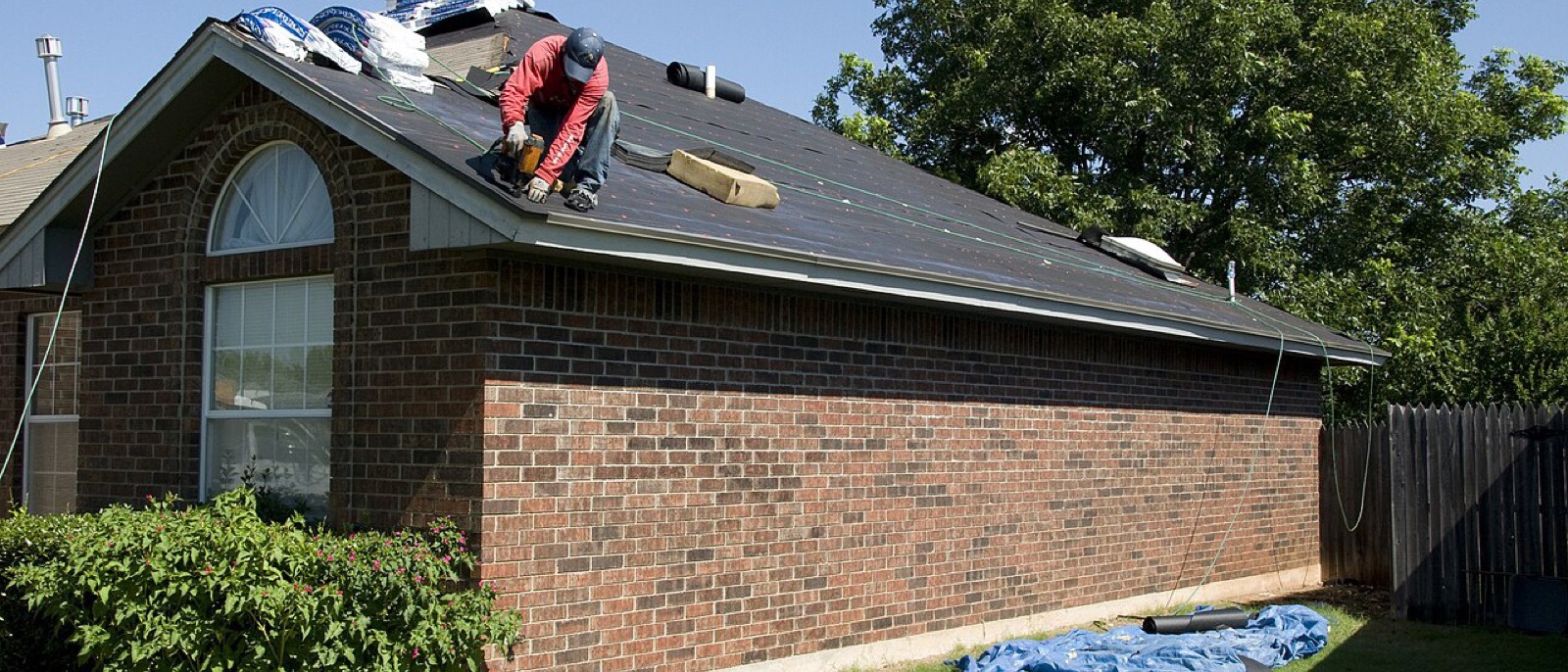
Gutters do quiet work until they stop working. Then a summer storm sends water sheeting over the front edge, a corner starts to sag, or a damp line shows up on the siding that was dry last year. The question every homeowner faces at that point is the same: patch what you have, or replace the whole run?
The honest answer depends on what is actually failing. A single loose spike is a different problem than a gutter system that has pulled away from the fascia along an entire side of the house. This guide walks through how to read the symptoms, when a repair is enough, and when replacement is the smarter call.
Read the Symptom First
Gutter trouble usually announces itself in one of three ways. Learning to tell them apart saves you from paying for a full replacement when a repair would do, and from paying twice when a patch was never going to hold.
Sagging or Pulling Away
A gutter that dips in the middle or leans out from the roofline has lost its grip. The hangers or spikes that hold it to the fascia have worked loose, or the fascia board behind them has softened from trapped moisture. If the sag is short and the metal is otherwise sound, re-securing the section with new hidden hangers is a routine fix.
Look closer if the sag runs long. When a gutter pulls away across many feet, the fascia underneath is often the real culprit, and rotten fascia has to be replaced before any new hanger will bite. That is no longer a quick repair.
Leaking
Leaks fall into two buckets. Seams and end caps that drip can be resealed, and that is a common, low-cost repair on sectional gutters. Rust holes and cracks are a different story. Once steel gutters start perforating, more holes are coming, and chasing each one with sealant becomes a losing pattern.
Overflowing
Water spilling over the front edge does not always mean the gutter is broken. Clogs from leaves and grit are the usual reason, and a cleaning often solves it. If the gutters overflow after they have been cleaned, the problem is capacity or slope. Undersized gutters or downspouts, or a run that has lost its pitch toward the outlet, will overflow no matter how clean they are.
Repair or Replace: How the Line Gets Drawn
A few conditions push a job from repair territory into replacement territory. Any one of them is worth taking seriously.
- The damage repeats. If you have resealed the same seam or rehung the same section more than once, the material is telling you it is done.
- Rust or rot is widespread. Scattered rust holes across steel gutters, or soft fascia along much of a run, means the system has aged past patching.
- The layout is wrong. Gutters that were undersized or poorly pitched from the start will keep failing until the design changes.
- You are re-roofing. Coordinating new gutters with a roof replacement is cleaner than working around gutters that will need replacing soon anyway.
There is also the seamless-versus-sectional question. Older homes often have sectional gutters snapped together from stock lengths, and every joint is a future leak. Seamless gutters are rolled to fit each run on site with far fewer joints, which is why a lot of full replacements move in that direction. A repair keeps the sections you have; a replacement is the moment to reconsider the whole design.
Where a Repair Genuinely Wins
Replacement is not always the answer, and a good contractor will say so. If the gutters are a decent gauge of aluminum, the fascia is solid, and the trouble is limited to a loose hanger, a tired seam, or a single clog-prone spot, targeted repairs can add years. Paying to replace a system that has one bad section is money spent early for no reason.
Seasonal Timing
Weather sets the calendar for gutter work more than most exterior projects.
Late spring and summer are the practical window for installation. Sealants cure properly in warm, dry conditions, and crews can work the roofline safely. This is also when storm damage from the previous winter tends to surface, so demand climbs as the season goes on.
Fall matters for a different reason. Gutters carry their heaviest load right before winter, when leaves drop and the first freezes arrive. Water trapped in a failing gutter can freeze, expand, and force joints apart, and ice damming along the eaves adds weight that sagging hangers cannot hold. Getting repairs done before that first hard freeze is the difference between a small fix and a winter of water finding its way inside.
Winter itself is the hardest time to do the work and the easiest time to discover you needed it. If you are seeing symptoms now, the season you are in should push the timeline, not set it aside.
Why Homeowners Wait Too Long
The most expensive gutter problems are almost always the ones that started small. Overflow that never got looked at soaks the fascia. Soft fascia lets the gutter pull away. A detached gutter dumps water at the foundation. What began as a fifteen-minute cleaning turns into fascia work, and sometimes into the basement.
Calling a contractor early, while the symptom is still just a symptom, keeps the job small. The hard part is often reaching someone. Reputable exterior contractors run lean crews and stay booked through storm season, and a call that goes to voicemail on a Saturday morning is a call that may not turn into an appointment. Some contractors use tools like Answara, an AI voice receptionist, to make sure those calls get answered and scheduled instead of lost.
You can read more on how these decisions play out across roofing and exterior work in our roofing resources.
FAQ
How do I know if my gutters need to be replaced or just repaired?
Look at how widespread the damage is. Isolated problems, one loose section, a leaky seam, a single clog, usually call for a repair. Rust holes across the run, sagging along a whole side, or repeat failures in the same spot point toward replacement.
Can sagging gutters be fixed without replacing them?
Often, yes. If the metal is sound and the fascia behind it is solid, re-securing the gutter with new hangers handles the sag. If the fascia has rotted, it needs to be replaced first, which turns the job into a larger project.
What time of year is best for gutter work?
Late spring through summer is ideal for installation because sealants cure well in warm, dry weather. Repairs are worth completing before the first hard freeze, since trapped water and ice put extra stress on gutters that are already weak.
Are seamless gutters worth it over sectional ones?
Seamless gutters have far fewer joints, which removes most of the spots where sectional gutters tend to leak over time. If you are already facing a full replacement, it is a reasonable point to weigh the switch.
Should I clean my gutters before calling a contractor about overflow?
If you can do it safely, a cleaning is a sensible first step, because clogs are the most common cause of overflow. If the gutters still overflow after cleaning, the issue is likely slope or capacity, and that is worth a professional look.