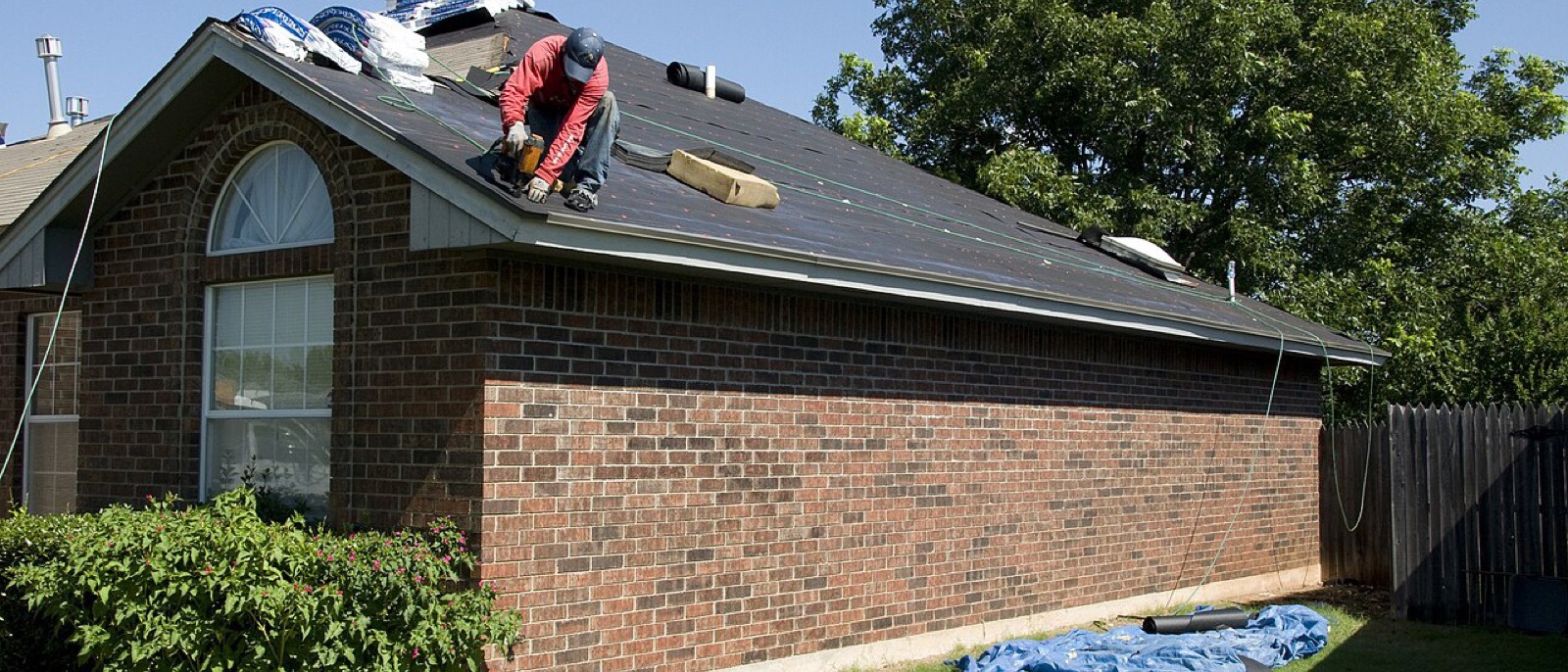
Rain does not check your calendar. A front that was supposed to hold off until evening rolls in at 10 a.m., and the tear-off you started at dawn is now an open deck with felt going down in a hurry. Every roofing contractor has lived some version of this.
The scheduling problem is not really about the weather itself. It is about what the weather does to your queue. One storm window pushes three jobs, those three jobs collide with next week's bookings, and suddenly your dispatcher is rebuilding the board while the phone keeps ringing. This guide covers how to keep crews moving when the forecast turns, and how to keep customers from feeling stranded while you do it.
Why storm season breaks a static schedule
Most roofing schedules assume every job takes the estimated number of days and the sky cooperates. Real seasons do not work that way. A wet spring or an active storm season stacks delays on top of delays, and the effect compounds.
Two things happen at once during a weather event. First, your active jobs stall. Crews cannot safely work a wet or high-wind roof, so anything mid-tear-off has to be dried in and paused. Second, your call volume spikes. Storms create damage, and damage creates leads. Homeowners who ignored a soft spot for a year suddenly have water in the ceiling and want someone out today.
That combination is the hard part. You are reslotting the jobs you already sold at the exact moment new demand is flooding in. If the office cannot keep up, calls go unanswered, and in roofing an unanswered call is a well-known way to lose a lead to the next contractor on the homeowner's list. People with an active leak do not leave a voicemail and wait. They dial the next number.
Build the schedule to absorb weather, not fight it
You cannot forecast your way out of this, but you can design a schedule that bends instead of breaking.
Leave deliberate slack in the week
Booking crews to 100 percent capacity feels efficient until the first rain day, when you have nowhere to put the displaced work. Contractors who run smoother storm seasons tend to hold a buffer, often a half day or a full day per crew per week, that stays unbooked on purpose. When the weather cooperates, you pull work forward into it. When it does not, that slack absorbs the slip instead of pushing it onto next week's customers.
Sequence jobs by weather exposure
Not every job carries the same risk if the sky opens up. A full tear-off leaves a home exposed and demands a dry window long enough to dry-in before the rain. A repair, a small section, or work under a covered porch can tolerate a tighter forecast. When you know weather is coming, front-load the high-exposure tear-offs into the clearest days and hold the flexible work for the marginal ones. That way a surprise shower costs you a repair delay, not an open deck over someone's living room.
Keep a rain-day playbook
Crews standing around during a washout is pure cost. Some contractors keep a running list of weather-tolerant tasks: shop organization, material staging for upcoming jobs, gutter work, ventilation installs, or estimates that have piled up. It will not replace a production day, but it keeps people paid and moving instead of sent home.
Reslotting crews after the front passes
Once the weather clears, the scramble begins. The board you built on Monday is fiction by Thursday. A few habits make the rebuild faster.
Group the recovery by geography. When you are pushing five jobs into new slots, cluster them so a crew is not crossing the metro twice in a day. Windshield time is dead time, and after a delay you have none to spare.
Protect the jobs that are already open. A home that is dried in but not finished should jump ahead of a tear-off that has not started. Every extra day under a temporary cover is a day of risk for the homeowner and a callback waiting to happen for you.
Confirm material and dumpster timing before you commit a new date. Nothing wastes a hard-won clear day like a crew arriving to no shingles on site because the supplier reslotted their delivery around the same storm you did.
Keeping customers informed by phone
This is what separates contractors who keep their reputation through a rough season from the ones who bleed reviews. Customers will forgive a weather delay. They rarely forgive silence.
When a job slips, the homeowner does not know whether they have been forgotten or bumped. A short, proactive call changes the tone: you tell them the roof was too wet to work safely, you give them the new date, and you explain what you did to protect their home in the meantime. That call takes two minutes and prevents the anxious voicemail, the angry follow-up, and the one-star review that starts with "no communication."
The trouble is that the moment you most need to make those calls is the moment your office is buried. The storm that delayed the job is also generating new inquiries. Your team cannot dial existing customers and answer new leads at the same time, so one of them gets dropped. Usually it is both, in turns.
This is the narrow spot where an AI voice receptionist like Answara can take pressure off the phones, catching overflow calls and routing storm inquiries so your dispatcher can focus on rebuilding the board.
A simple weather-delay workflow
When the forecast turns, run the same sequence every time so nothing gets improvised:
- Identify which active jobs must pause and confirm each is dried in and safe.
- Move high-exposure work off the risky days and pull flexible work into the marginal ones.
- Call every affected customer with a new date before they call you.
- Cluster the recovery jobs by location and confirm materials for each new slot.
- Keep the phones covered so incoming storm leads do not fall through while you reschedule.
Repetition is what makes it work. A crew and an office that have run the drill a dozen times reslot a storm week in an afternoon. One that improvises every time loses a day to the chaos alone.
FAQ
How much buffer should I leave in a roofing schedule during storm season?
There is no universal number, but many contractors hold roughly a half to a full day per crew per week during active seasons. The right amount depends on your climate and your typical job length. Track how often weather displaces work over a season and size the buffer to match what you actually see.
Should I reschedule the delayed job or the next booked job first?
Prioritize whatever carries the most risk. An open or dried-in roof should come before a job that has not started, because every day under a temporary cover raises the chance of a leak and a callback. After the exposed work, sequence the rest by geography and material availability.
What do I tell a customer whose job got pushed by weather?
Keep it short and specific. Say the roof was too wet or too windy to work safely, give a firm new date, and mention what you did to protect their home in the meantime. Homeowners accept weather delays. What they hold against you is being left in the dark.
How do I avoid losing new leads while I am busy rescheduling?
Storm calls are time-sensitive, and many homeowners move on if no one picks up. Make sure someone or something answers every call, even when your team is heads-down on the reschedule. Overflow coverage, a dedicated intake person, or an automated receptionist can all fill that gap.
Can crews do anything productive on a full rain day?
Yes. Keep a standing list of weather-tolerant tasks such as material staging, shop work, gutter or ventilation jobs, and backlogged estimates. It will not match a production day, but it keeps the crew paid and the pipeline moving.
Storm season rewards the contractor who planned for the interruption before it arrived. Build the slack in, sequence by exposure, and pick up the phone before the customer does. The weather will still surprise you. Your schedule does not have to.