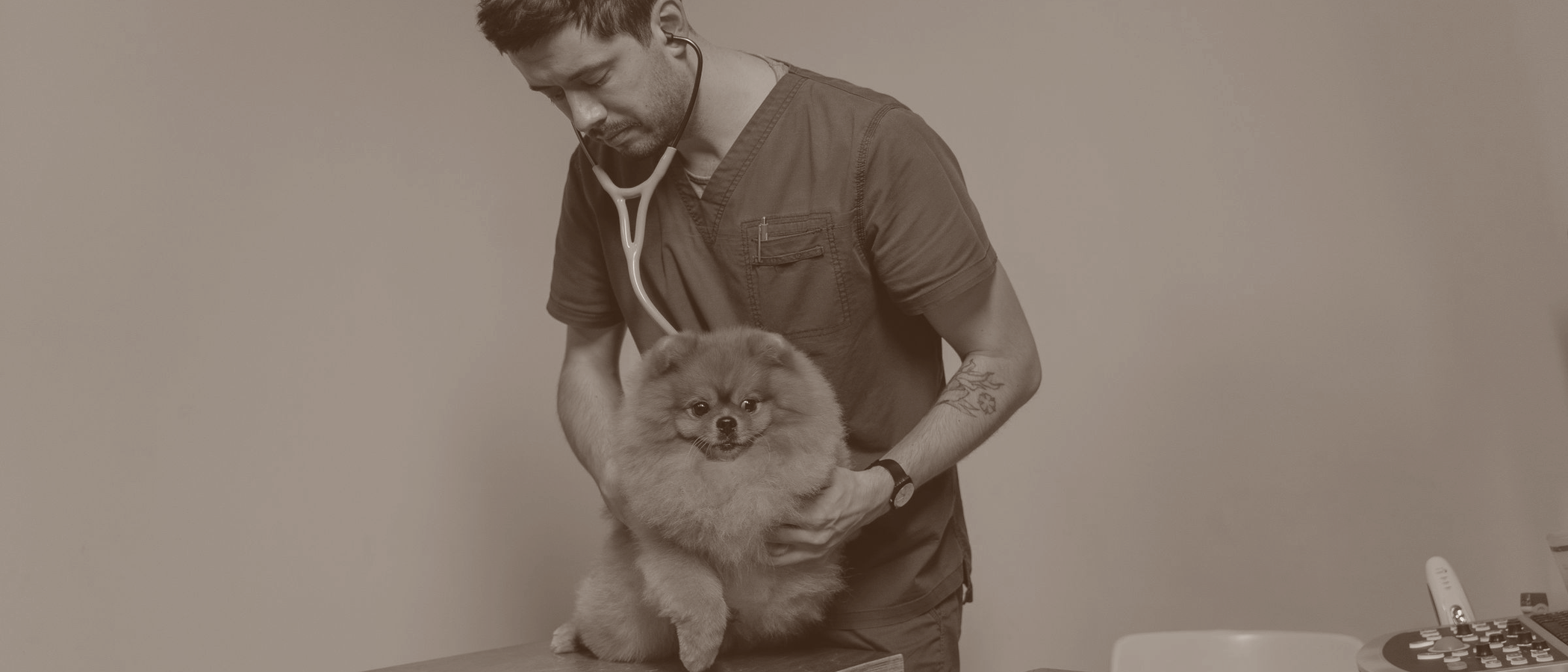
The doctor comes out of room two, says the mass needs oncology, writes the hospital's name on a sticky note, and walks into room three. The technician takes the note, gets pulled into a recovery, and sets it on the front desk. The front desk is on the phone moving a nail trim, with two lines holding behind it.
That referral is now a piece of paper on a counter. Whether it turns into an oncology appointment depends entirely on what happens to that paper in the next two days.
The medicine in a referral is the part your practice is already good at. The handoff is a different job, and it runs almost entirely on the phone: your call out to the specialist, the coordinator's call back to you, the owner's call to whoever they trust most. Referrals fail in the gaps between those calls, and they fail quietly.
Decide who owns the call before anything else
Practices run referrals one of two ways, and the choice determines how much phone work lands on your desk.
In a client-initiated referral, you hand the owner a number and they book it themselves. Cheap for your team. It also parks the referral inside the memory of a person who just found out their dog has a mass, and you get no signal about whether they ever dialed.
In a clinic-initiated referral, your staff calls the specialty hospital, puts the case in front of a coordinator, and often holds a slot before the owner leaves the building. It costs you a phone call. What you buy is a referral that exists somewhere outside the client's head.
Urgency erases the distinction. If a patient is going to an emergency or specialty facility today, someone from your clinic calls ahead. The receiving hospital wants to know what is walking through the door and roughly when. An owner arriving cold with a verbal summary and a printout is the slowest version of that handoff, and it puts the receiving team in the position of rebuilding your workup from scratch.
Most practices should default to clinic-initiated for anything with a clock on it, and be honest that client-initiated referrals need a follow-up call anyway. You are paying for the call either way. Better to pay for it while you still control the outcome.
The packet is the appointment
An incomplete record is the easiest way to lose a week. The coordinator opens what you sent, cannot plan around it, and the case waits for a callback that has to fight its way through your phone system.
Build a standing referral packet so nobody is assembling one from scratch at 5:45 on a Friday. What travels with the patient:
- A referral letter from the doctor. The presenting complaint, the working problem, what has already been done, and the specific question you are asking the specialist to answer. That last part gets skipped constantly, and it is the part the specialist actually reads first.
- Medical history going back further than the last visit. Chronic issues and prior procedures shape what gets planned.
- Recent lab work with dates on it. Values without dates are close to useless.
- Diagnostic images as real DICOM files. A phone photo of a monitor is not a radiograph. If you are on a PACS or an imaging platform with sharing, use the sharing.
- The current medication list, with doses, including anything recently stopped.
- Cytology, biopsy, or pathology reports where they exist.
- Owner contact details and the number they actually answer.
Different services weight this differently. Ask the receiving hospital what they want rather than guessing. Most specialty practices publish a referral form, and filling out theirs is faster than defending your own.
Where the handoff leaks
Referrals rarely collapse in one dramatic failure. They drain out through small holes, and most of the holes are a phone line.
The specialty coordinator calls back and gets voicemail. They have a question about a value or an image, they call during your lunch closure, and the case sits until someone replays the message. Your patient's appointment is now waiting on your voicemail box.
The owner calls you instead of the specialist. Owners call the practice they trust. They call you to ask whether the records went, what the visit will cost, whether to keep giving the medication, whether this is even worth doing. That call is the moment they decide whether to follow through, and if it rings out, some of them decide no.
The referral was verbal and never became an artifact. Doctor tells tech, tech tells front desk, front desk is three calls deep. Nothing enters a queue, so nothing gets worked. There is no record of a failure because there is no record at all.
Nobody owns the confirmation. The records went out. Did they land? Did the owner book? Without one person or one field answering that, "referred" and "seen" quietly stop meaning the same thing, and you find out at the recheck.
The after-hours emergency referral never closes out. A patient goes to the ER at midnight. The discharge summary comes back to a general inbox or a fax tray, and if nobody is assigned to pull it into the chart, the primary practice loses the thread on its own patient.
Every one of those is a call that did not connect. Some of that is fixable with staffing, and some of it is fixable by making sure the line is answered when the desk cannot answer it. An AI voice receptionist picks up when your team is in exam rooms, takes the specialty coordinator's callback instead of dropping it into a mailbox, and captures the patient and owner details a specialist needs before anyone calls back. Answara does this for veterinary clinics. It handles the call, not the case. The clinical decisions stay where they belong.
What to have in front of you before you dial
When your team calls the specialty hospital, have this ready. The call takes four minutes instead of two rounds of phone tag.
- Patient name, species, breed, age, weight
- The referring doctor's name and a direct callback line, not the main number
- The reason for referral in one sentence
- Whether the case is urgent, and what "urgent" means for this patient
- Whether records have already been sent, and by what route
- The owner's name, number, and whether they know to expect a call
- Any constraint the owner has already raised about scheduling, travel, or how far they want to go with a workup
That last one saves the most time. If an owner has already told you they cannot do weekdays, or that they have limits on what they want pursued, the coordinator should hear it on the first call rather than after two failed attempts to reach the client.
Closing the loop is somebody's job or it is nobody's
Give the referral a status in your practice management software. Sent, confirmed, scheduled, seen, report received. The labels matter less than the fact that someone can pull a list on Friday and see which referrals are sitting in limbo.
Two follow-ups belong in the routine. Confirm the hospital received a complete record, within a day of sending it. Then confirm the owner actually booked. A short call to the client catches the ones who meant to schedule and did not, and it is the cheapest save available to a practice.
When the specialist's report comes back, it goes into the chart and in front of the primary doctor. That report is the other half of the handoff, and it is the half clinics most often let pile up. More on how clinics handle call load is on our veterinary page.
Frequently asked questions
Should the clinic or the client call the specialist?
For anything urgent, the clinic. The receiving hospital needs to know a patient is coming and what they are dealing with. For routine referrals, a client-initiated call is workable as long as your team follows up to confirm the appointment was made. Referrals handed off with no follow-up have a way of never happening.
What records does a specialist actually need?
A referral letter with the specific question you want answered, full history rather than the last visit, dated lab work, real DICOM imaging, the current medication list with doses, and any pathology or cytology reports. Ask the receiving hospital for their referral form and use it.
Why do specialty referrals stall?
Most often because a call went unanswered. The coordinator had a records question and hit voicemail, or the owner called your clinic with a question and could not get through. The record is usually fine. The phone is where it breaks.
Who should own referral follow-up in a small practice?
One named person, even if it is only part of their week. Referral coordination fails when it is everybody's job. A single owner with a status field and a Friday review will catch more stalled cases than a larger team without one.
Can automated call handling manage a referral?
It can answer the call, capture the patient, owner, and case details, and route the message to the right person so a callback does not die in a mailbox. It does not make clinical decisions and it does not decide who gets referred. That stays with your veterinarian.