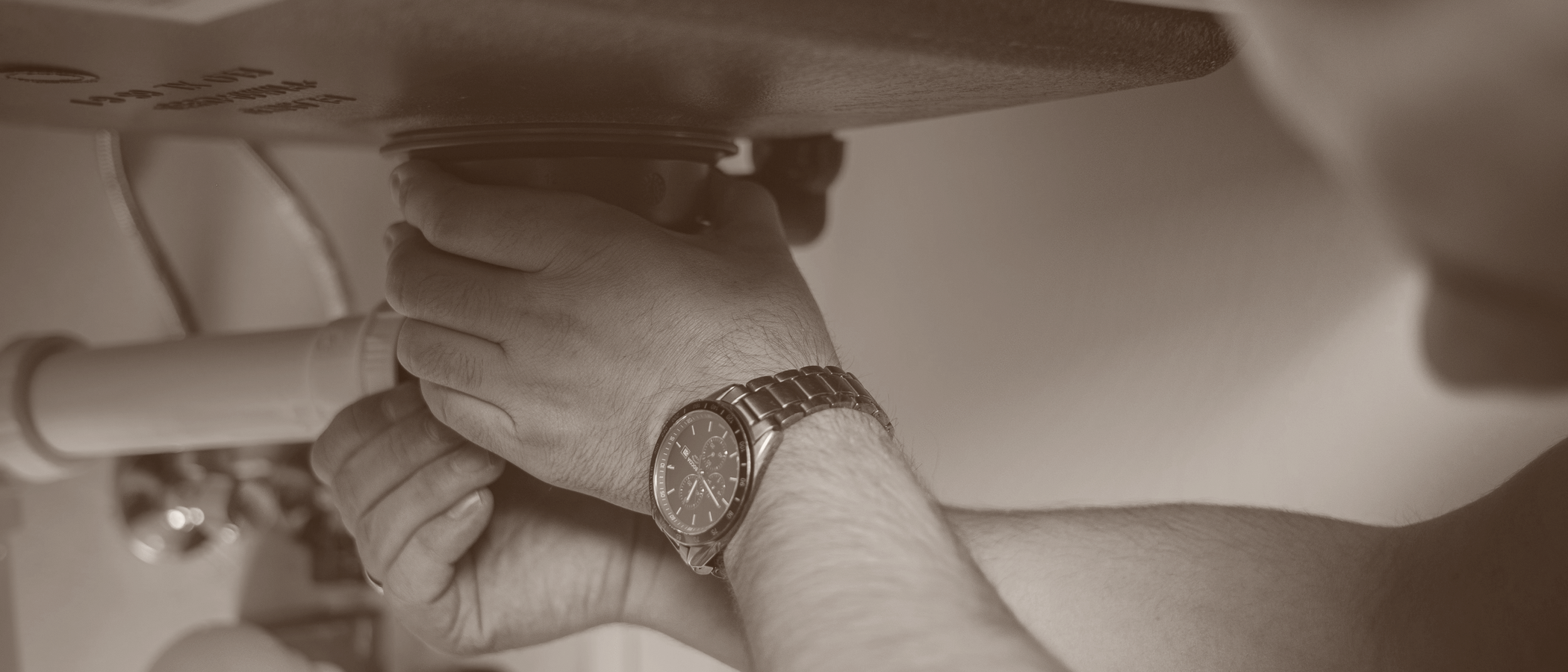
A homeowner in a single-story ranch called me because one square of her hallway tile was warm. Not the whole floor. One tile, roughly where the hot water line ran from the water heater toward the back bathroom. She had been walking over it barefoot for a month and assumed the afternoon sun was hitting it. There is no window in that hallway.
That warm tile was a pinhole in a copper hot line under four inches of concrete. By the time we opened it up, the soil under the slab was saturated and the pipe had a green halo of corrosion around the failure point.
Slab leaks are sneaky in a way that a burst supply line under the sink is not. The water has nowhere to go but sideways and down, into the soil and the concrete, and it will do that quietly for weeks. Knowing what the early tells look like is the difference between a small repair and a demolition project.
What a slab leak actually is
Most houses built on a concrete slab foundation have water lines running either inside the slab, under it, or through the soil beneath it. Copper is common in older construction. Newer builds often use PEX, sometimes routed through the attic instead, which is one reason attic-routed homes rarely see this problem.
The pipe fails for a handful of reasons. Copper reacts with aggressive soil chemistry or with hard, mineral-heavy water and thins from the inside out. A line that was nicked during the original pour rubs against concrete every time it expands and contracts with hot water, and eventually wears a hole. Ground movement, common in expansive clay soils, puts stress on joints. Hot water lines fail more often than cold ones, because heat accelerates corrosion and drives more expansion cycles.
The warning signs, roughly in the order homeowners notice them
A warm or hot spot on the floor. This is the classic. A hot line leaking under the slab heats the concrete above it. It shows up as a patch that feels noticeably warmer than the floor around it, often in a walking path. If the leak is on a cold line you get no temperature clue at all, which is why cold-line slab leaks tend to run longer before anyone catches them.
A water bill that jumps for no reason. Nothing in your usage changed. The bill went up anyway, and then it went up again. A slab leak runs 24 hours a day. Compare a few months of bills side by side rather than reacting to one high month, since irrigation and season swings can muddy a single reading.
The sound of running water with everything off. Turn off every fixture, every appliance, the ice maker. Stand in a quiet house and listen. A faint continuous hiss or trickle you can hear near a wall or floor is worth taking seriously.
Cracked or lifting flooring. Water under a slab softens the soil that supports it, and the concrete can shift. Tile grout cracks, tiles pop loose, hardwood cups or crowns, vinyl bubbles. A single hairline crack in a big tile floor is normal settling. A crack that is growing, or a spot where the floor has visibly moved, is not.
A mildew or musty smell. Water wicking up through concrete feeds mold under carpet pad and behind baseboards. If one room in the house smells like a basement and there is no basement, look down.
A spinning water meter. This is the cheapest test in plumbing. Shut off every fixture, find your meter, and watch the low-flow indicator (the small triangle or dial). If it moves, water is going somewhere. That does not prove the leak is under the slab, but it proves you have one.
How a plumber actually finds it
Nobody should be opening your floor to go looking. Locating a slab leak is its own skill, and the good shops do it with instruments before they touch a hammer.
Acoustic listening. Ground microphones and amplified listening discs pick up the sound of water escaping a pressurized pipe. Under a slab that sound has a characteristic signature, and a technician who has done a few hundred of these can walk a floor and narrow the leak to a small area. Ambient noise fights you here, which is why these appointments often happen early in the morning.
Thermal imaging. An infrared camera reads surface temperature. On a hot water line leak the heat plume under the concrete shows up clearly, and it is fast. It is much less useful on cold lines, and it can be fooled by radiant heating loops or duct runs under the slab.
Pressure testing and isolation. The plumber isolates the hot and cold sides, pressurizes each one, and watches for a drop. This tells you whether you have a leak, which side it is on, and sometimes which branch. It narrows the search before the acoustic work starts.
Tracer gas. For stubborn cases, a nitrogen-hydrogen mix is pushed into the drained line. Hydrogen is small enough to migrate up through concrete, and a gas detector sniffs it out at the surface. It is the fallback when acoustics come up ambiguous.
Repair options, and the honest tradeoffs
Spot repair. Jackhammer the slab at the located leak, cut out the bad section, sleeve or replace it, patch the concrete. It is the least invasive option and the right call when the pipe is otherwise in good shape and this is the first failure. The catch: if the line is failing from generalized corrosion, you are likely to be back for leak number two somewhere else on the same run.
Reroute. Abandon the failed line in the slab and run a new one overhead through the attic or through walls. No jackhammering of the floor, though there is drywall work. This is often the smart move for a single bad run, especially in a house where the slab is finished with something expensive.
Repipe. Replace the whole supply system, usually overhead in PEX. It is the big-ticket option and it is what you do when a house has already had two or three slab leaks. By the third one, the system has told you exactly what it plans to keep doing, and chasing individual holes stops making sense.
Pipe lining. An epoxy coating is cured inside the existing pipe, forming a new interior wall. It avoids demolition entirely. It works best on pinhole corrosion in otherwise structurally sound copper, and it is not a fix for a crushed or separated line. Ask specifically what the installer warranties and for how long.
What to do this week
Shut off the fixtures and read your meter. If the indicator is moving, shut off the valve at the water heater and read it again. Movement that stops when the hot side is isolated points at a hot line, and that is useful information to hand a plumber before they arrive.
Then call someone who does leak detection with equipment, not someone who is going to guess and start cutting. Ask what they use to locate, ask whether the locate is a separate line item, and ask what happens if the first opening misses.
If you run a plumbing shop and these calls are coming in while your techs are already under someone else's slab, that is a real problem: the homeowner with a wet floor calls three shops and books whoever picks up. An AI call handler answers every one of them, gets the address and the symptoms, and puts the job on the schedule while you keep working. More on how we approach plumbing calls is on the plumbing resources hub.
A warm tile is your house telling you something. It rarely stops talking on its own.