A homeowner calls after the heat starts and says, “Little black pieces just came out of the vent over the sofa.” Five minutes later, the office has three photos of dark specks but no photo of the opening, no room name, and no answer to the question that should have come first: did this happen at one supply register or throughout the house?
Start with location and pattern. Identify whether the opening blows air into the room or draws air back toward the equipment. Record every affected room, when the material appears, what it looks and feels like without touching it, and what changed before the first event. Recent drywall work, a filter change, pest activity, water entry, smoke, or service at the air handler belongs in the same note. Leave the cause and remedy open for inspection.
Start with the opening and the pattern
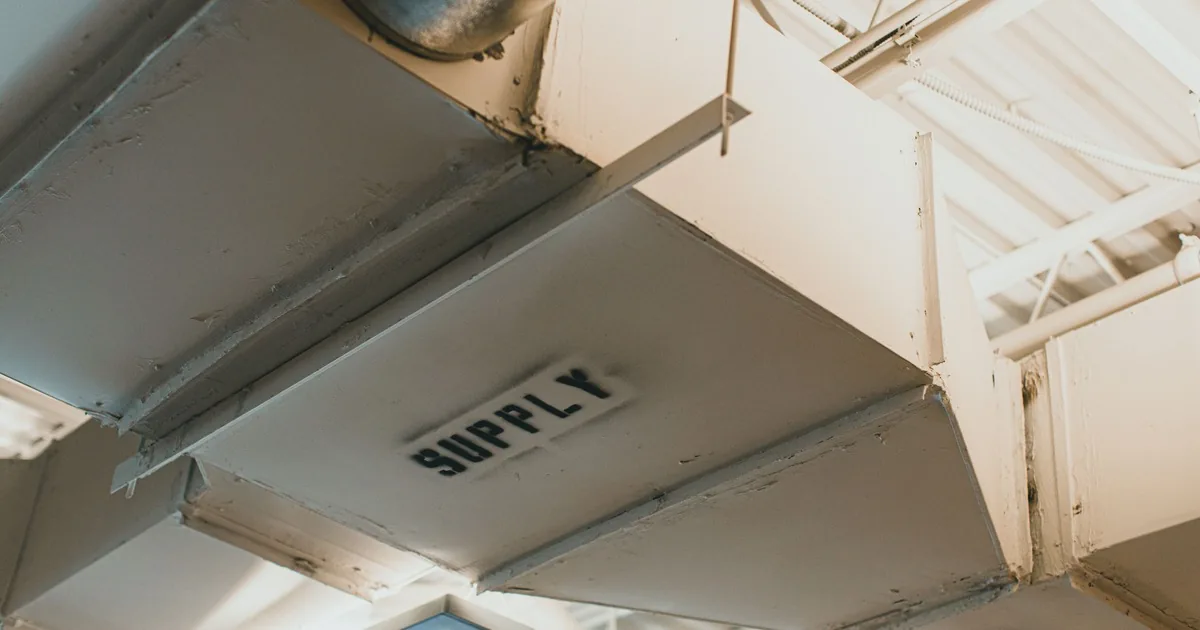
Callers use “vent” for supply registers, return grilles, bathroom exhausts, and almost any louvered opening. Ask what happens when the system runs. Air coming into the room points to a supply opening. Air being drawn inward points to a return. If the caller cannot tell, record “opening type unknown” and ask for a wide photo that shows its size and location.
Then map the pattern. One affected supply can direct an inspector toward that branch, register, or room. Material appearing at several supplies connected to the same system creates a different inspection path. Buildup on a return grille is another observation entirely. So is material found beside the filter cabinet without any report of discharge into a room.
The U.S. Environmental Protection Agency’s duct-cleaning guidance specifically discusses particles released into a home through supply registers and ducts with excessive deposits of dust or debris. It also says routine duct cleaning is not a blanket recommendation for every home. That distinction is useful at the front desk. Visible discharge deserves a clear record, but the office should not promise that cleaning is the answer before somebody evaluates the system and the source.
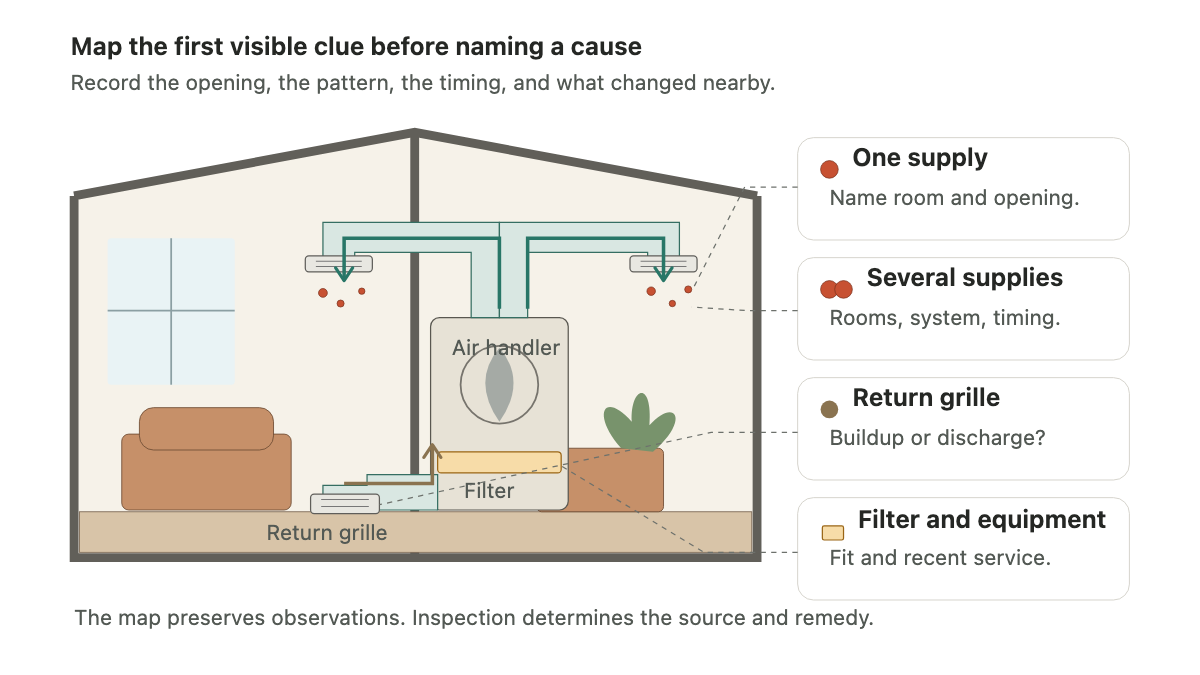
Ask the caller to name each room and opening. “Black flakes at the upstairs hall supply and both bedroom supplies when the blower starts” is useful. “Dust everywhere” is too loose to route. If the home has more than one thermostat or air handler, ask which system serves the affected rooms. The office can use the air-duct cleaning estimate map when system count, opening count, and access also need to be scoped.
Capture the moment the material appears
Timing can narrow the inspection without diagnosing anything. Ask whether the material appears at startup, throughout a heating or cooling cycle, after the system shuts off, or when nobody remembers the equipment running. Note whether this happened once or has repeated. If the caller cleaned the register, record when and whether the debris returned.
Recent work deserves a direct question. Drywall sanding, attic insulation, floor refinishing, demolition, pest treatment, fireplace work, roof work near an attic unit, or service inside the air handler can change what an inspector looks for. Ask whether registers were covered during dusty work and whether the system ran while the work was underway. Do not tell the caller that construction dust must be inside the ducts. Preserve the sequence.
The National Institutes of Health fact sheet on HVAC duct cleaning lists dust discharging from supply diffusers as a condition in which cleaning may be appropriate. The same fact sheet puts source control first. If the source remains, cleaning can become a temporary response to a continuing problem.
Water, pests, and smoke each need their own note. For water, capture where it entered, when it happened, whether the source has stopped, and whether the caller sees wet insulation or staining. For pests, record droppings, nesting material, insects, sounds, odor, and any pest-control findings in the caller’s words. For smoke or soot, ask about a fireplace, candle, cooking event, fire, fuel-burning equipment, or outdoor smoke exposure. Route these reports under company policy and involve the appropriate trade when the evidence points beyond duct cleaning.
Treat the filter as context, not a verdict
Ask where the filter is located, when it was last changed or cleaned, and whether it appears seated in its slot. A useful photo shows the filter cabinet and surrounding equipment as well as the filter face. Reception should not tell a caller to remove a filter from an unfamiliar attic unit, open a service panel, or reach into a return.
The Department of Energy’s filter guidance explains that a return-side filter protects HVAC equipment and that a dirty or clogged filter can reduce airflow. That supports including filter condition in the record. It does not prove that a particular filter caused the debris, and it does not support prescribing a filter rating over the phone. System compatibility belongs with the qualified person reviewing the equipment.
Record recent filter changes because the sequence may matter. Did debris appear before or after the change? Was the old filter torn, collapsed, or unusually dirty according to the caller? Did somebody leave the filter slot open during work? Write each answer as a reported observation.
Keep mold and health claims out of reception
A caller may say the black flecks are mold. The office note should say, “Caller reports black flecks and is concerned about mold.” EPA cautions that material can look like mold without being confirmed as mold, and inaccessible parts of a heating or cooling system may require professional evaluation. A phone photo cannot settle the question.
Use the same restraint with insulation, rust, pest material, soot, and deteriorated lining. Ask about color, shape, texture as seen, odor, affected locations, and whether the material returns after cleaning the room surface. Do not ask the caller to crush, smell closely, vacuum, wet, scrape, or bag unknown material for the contractor.
Health symptoms should be documented in the caller’s own words and separated from the service conclusion. Reception should not say that the HVAC system caused coughing, headaches, irritation, or an allergy flare. Follow the company’s escalation policy, and advise the caller to seek medical guidance for health concerns. The broader HVAC indoor-air-quality call guide is useful when the request includes humidity, odors, filtration, or symptoms that extend beyond visible debris.
Ask for photos that preserve location
Close-up images show the specks. They often hide the evidence around them. Request a short, labeled set taken from safe standing positions:
- one wide photo of the room and affected opening;
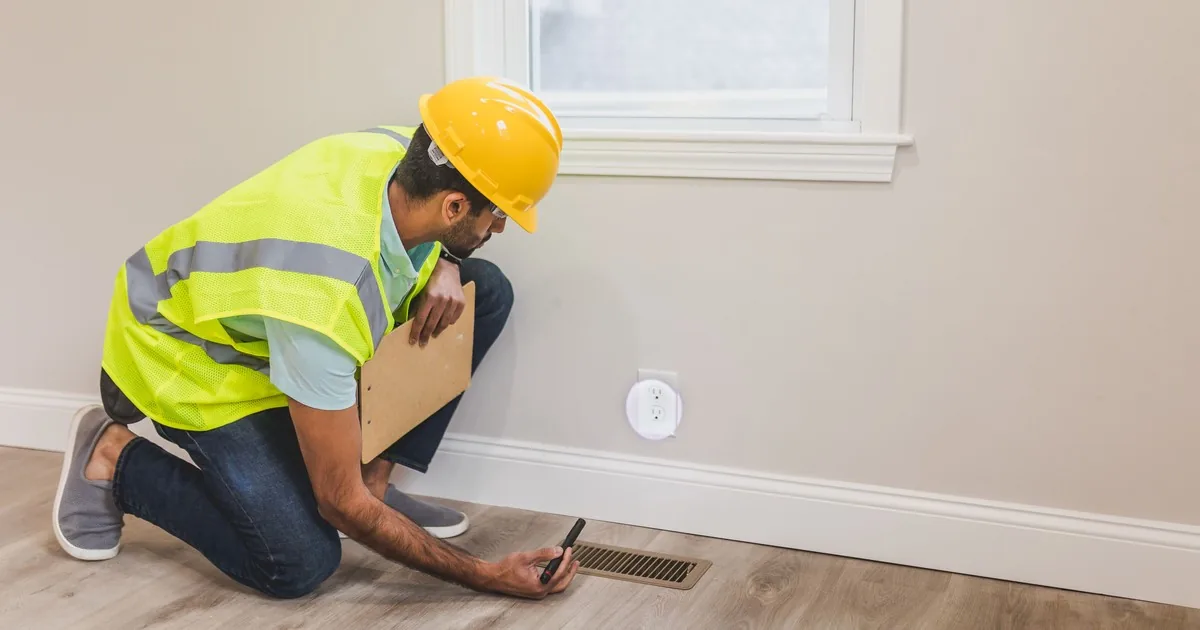
- one closer photo of the register or grille before it is cleaned;
- the surface where material landed, with a common object nearby for scale if that can be done without touching the debris;
- the filter cabinet and equipment area, only when safely visible without opening a panel;
- any recent renovation area, water stain, damaged duct covering, pest evidence, or smoke source the caller already observed;
- the thermostat or system name that serves the room, if known.
Label every image with the room and whether the opening is believed to be a supply or return. If several supplies are affected, ask for one wide and one close photo at each location. A caller who cannot safely reach a ceiling register should stay on the floor. “No photo available” is better than a ladder fall.
Do not let an image turn into a diagnosis. Its job is to preserve the location, amount, and visible condition before the visit.
Route the call without promising a cleaning
The final record should contain the property address, affected rooms, opening type, system or thermostat if known, timing, repeat pattern, material description, recent work, filter context, moisture, pests, smoke, odors, reported symptoms, prior duct or HVAC service, and labeled photos. Add access notes for the air handler, attic, basement, crawlspace, or mechanical closet.
Read the handoff back in plain language:
“Debris was reported at three upstairs supply registers when the heat started this morning. The pieces are described as dry black flakes. The caller saw none at the first-floor supplies and reports no material on the upstairs return grille. Drywall sanding took place in the upstairs hall last week, and the system ran during part of the work. The filter was changed two days ago. No water entry, pest evidence, smoke event, or odor was reported. Photos are labeled by room. The cause and service scope remain unconfirmed pending inspection.”
That summary gives the field team a pattern to investigate and protects the office from selling a remedy before the evidence is in. An AI receptionist can collect the same approved fields after hours, but the routing rules should come from the contractor. The useful call ends with an inspection record, not a confident guess about a black speck on someone’s sofa.