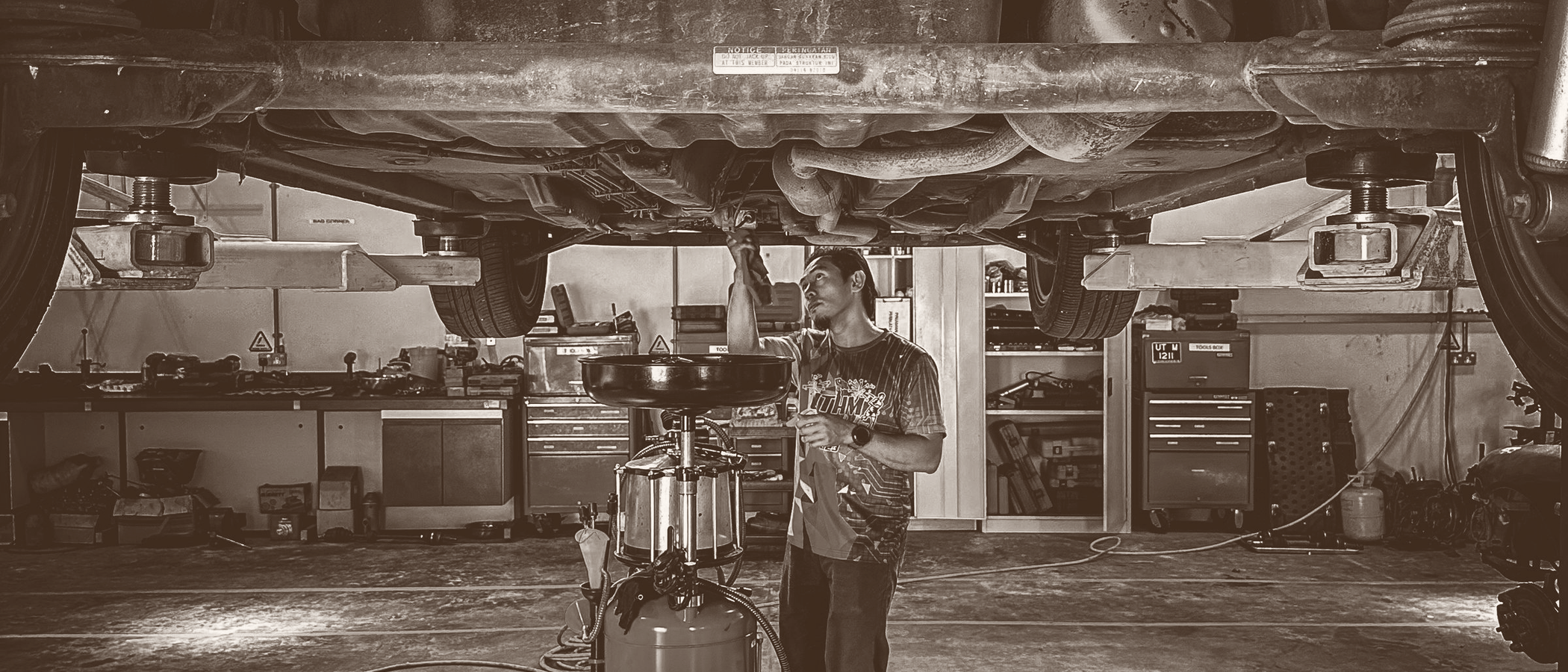
It is 7:40 in the morning and you are looking at the whiteboard. Six stops, one van, one tech. The first job is an apartment complex with no covered parking and a sky that has been threatening since dawn. The second is an insurance job where nobody has confirmed the claim is open. The third sits nineteen miles the wrong direction, because the customer said "afternoon works better" and somebody wrote it down without looking at a map.
You already know how this day ends. You send the van anyway.
Routing is where mobile glass shops bleed. Intake can be perfect and the day still collapses, because the decision that matters is what you do with the call after you take it. Which jobs go mobile, which come to you, and in what order the mobile ones happen.
Mobile vs in-shop is a dispatch call, not a customer preference
Every inbound call is a fork. Most shops resolve it by asking the customer what they'd like, which is roughly the same as letting the customer load your van.
Preference is an input. The answer comes from things you can establish on the phone in about two minutes.
Repair or replacement, at the level of detail routing needs. You do not have to relitigate that whole question on the call, and we wrote the decision up for drivers in windshield chip repair vs replacement. For dispatch you only need enough to route. A single chip away from the edge and away from the driver's sightline is a light job with a small part footprint and a short site window. That is your ideal mobile stop. A full replacement on a late-model vehicle with a camera bonded to the glass may require a controlled indoor setting per the manufacturer's procedure, and if it does, mobile was never on the table. Deciding that on the phone is free. Discovering it in a driveway costs you the morning.
Whether the adhesive can cure where the car is parked. Urethane is chemistry, and chemistry does not care about your schedule.
Whether the site is workable. Shelter, power, and room to swing a windshield.
Whether the paperwork is clean enough to start. Which is the one that stalls more jobs than weather does.
Get the insurance details before the van rolls
A tech in a driveway holding a windshield while the customer says "I think I'm covered, let me find my card" is a job that has already gone sideways.
Insurance is a routing input and it belongs on the booking call. What dispatch needs:
- Carrier and policy number.
- Whether the policy carries glass coverage, and whether the caller knows it.
- The deductible, and whether the customer understands they owe it.
- Whether a claim is open, and its reference number.
- If none of that exists: is this a cash job, and has the customer agreed to a price?
That last one is the fork. A cash job with an agreed number is ready to dispatch. An insurance job with an approved claim is ready to dispatch. An insurance job where the customer thinks they are covered and has called nobody is not a job yet. It is a lead. It goes to the follow-up pile, not the van.
The failure mode is quiet. The tech does the work, the deductible surprises the customer, and you are chasing money on a job you already paid a tech to drive to. Or he burns forty minutes at the curb while the customer digs through a glovebox. One stalled call propagates through the whole route.
Weather is a filter you apply before you build the day
Urethane needs specific conditions to cure, and safe drive-away time is set by the adhesive manufacturer's spec for the system you run, under the conditions on the day. Look it up for your product. Do not carry a number in your head from a supplier rep you talked to years ago, and do not let a tech in a driveway decide it is probably fine.
For dispatch this is mechanical. Before you sequence anything, sort the day's stops into covered, exposed, and unknown. Covered stops (garage, carport, a client's loading dock) survive a wet forecast. Exposed stops in rain get moved, and you move them, on the phone, the night before. Unknown stops are a booking failure, and they are the ones that turn into a tech calling you from the curb.
Cold works the same way. A morning outside your adhesive's spec is a morning where the exposed replacements should already have been converted to in-shop appointments. That conversion is a phone call, and it is easier to make at 6 a.m. than at 9:15 with a van already committed.
The site has to actually work
Power gets skipped on booking calls constantly. Some of your work needs it, and if the tech is running equipment at a street spot with no outlet, you needed to know that before the van was loaded.
Space and shelter get skipped too. A garage is a gift. A carport is fine. A driveway under a tree in July is workable. A tandem spot in an underground garage with low clearance and a car boxed in on three sides is not a mobile stop, and one question on the phone tells you so.
A site that does not work is still a job. It is an in-shop job. That conversion is available the whole time, and it only happens if whoever answers the phone knows to offer it.
Sequence so one job cannot eat the day
Cluster geographically. Obvious, and shops still do not do it, because bookings arrive one at a time and get slotted by whatever time the customer asked for.
The fix is to hold zones instead of holding times. Tuesday morning is the north side. Tuesday afternoon is the highway corridor. When a caller wants Tuesday on the south side, the answer is Wednesday morning, said pleasantly and without apology. Most people take it. The ones who cannot wait become in-shop appointments, which is a fine outcome.
Then sequence within the zone by risk. The job most likely to blow up (newest vehicle, messiest insurance, a site you have never seen) goes first, while you still have a day left to absorb it. The clean chip repair at the office park goes last, because if it slips, it slips into tomorrow and nobody is upset.
Keep one slot empty. Not for emergencies, though it will catch those. Keep it empty because something today will run long, and a route with no slack turns one bad stop into four late ones.
Sometimes the right answer is "come to the shop"
Say it on the first call, without hedging. "That one we should do here."
Do it when the vehicle needs a procedure the manufacturer specifies for a controlled indoor setting. Do it when conditions will not support a cure at an exposed site. Do it when the parking situation is a coin flip. Do it when the insurance is unresolved and the customer wants same-day, because in-shop gives you somewhere to sort the claim with the car in front of you.
Customers accept this far more readily than shop owners expect. What they will not accept is a tech showing up, looking at the car, and driving away.
All of it gets decided on the phone
Here is the bind. Every routing decision above depends on information collected while somebody is calling you, and the person qualified to make the call is under a car or halfway across the county. So the phone rings during an install, it goes to voicemail, and the caller with a spreading crack dials the next shop. Missed calls are a known drain in this trade, and mobile shops are structurally the worst positioned to answer them.
Shops handle it with a dispatcher, an answering service, or an AI receptionist that picks up every time and asks the same routing questions on every call, so what reaches your board is a job with a zone, a cure situation, and an insurance status already attached. Answara does this for auto shops, and it holds the scheduling logic, so a caller who cannot be routed mobile gets offered an in-shop slot instead of a callback.
The intake side (VIN, trim, sensors, load-out) is its own discipline, and we broke it down in scheduling mobile service calls. Intake decides what goes in the van. Routing decides where the van goes. Get the second one wrong and the first one does not save you.
FAQ
How do you decide mobile vs in-shop on the phone?
Establish whether the job is a repair or a replacement, whether the vehicle's procedure allows on-site work, whether the car will sit somewhere the adhesive can cure, and whether the payment path is settled. If any of those is a no, offer an in-shop slot on the same call.
What insurance information do you need before dispatching a mobile job?
Carrier, policy number, whether glass coverage applies, the deductible, and whether a claim is open with a reference number. If the customer has not contacted their insurer, treat the job as unbooked until they do, or convert it to a cash job at an agreed price.
Can mobile glass work happen in rain or cold?
Not on an exposed vehicle. Cure conditions come from the adhesive manufacturer's specification, and both moisture and temperature affect them. A garage or carport can save the stop. An open driveway in bad weather is a reschedule or an in-shop conversion, and the earlier you make that call, the fewer stops it disrupts.
How should a mobile route be sequenced?
Batch by zone rather than by the time the customer happened to ask for, run the riskiest job first so you have room to recover, and leave a slot open. That empty slot is the difference between one job running long and the afternoon collapsing.