"Wait, you charge just to look at it?"
Every service advisor has heard it, usually in the same tone, about ninety seconds into a call that was going fine. What happens next decides whether the car shows up Thursday. Answer defensively and the caller hears a shop that knows the fee is hard to justify. Answer in two plain sentences and most of them book.
The diagnostic fee is the most common friction point on an independent shop's phone, and the problem is almost never the amount. The caller did not expect it, does not know what they are buying, and has no idea whether it disappears if they say yes to the repair.
Say what the fee actually pays for
Most callers assume a diagnostic fee is a cover charge for opening the hood. Nobody has ever explained otherwise, so they price it against the free code scan at the parts store down the road, and by that comparison your fee looks like a markup on nothing.
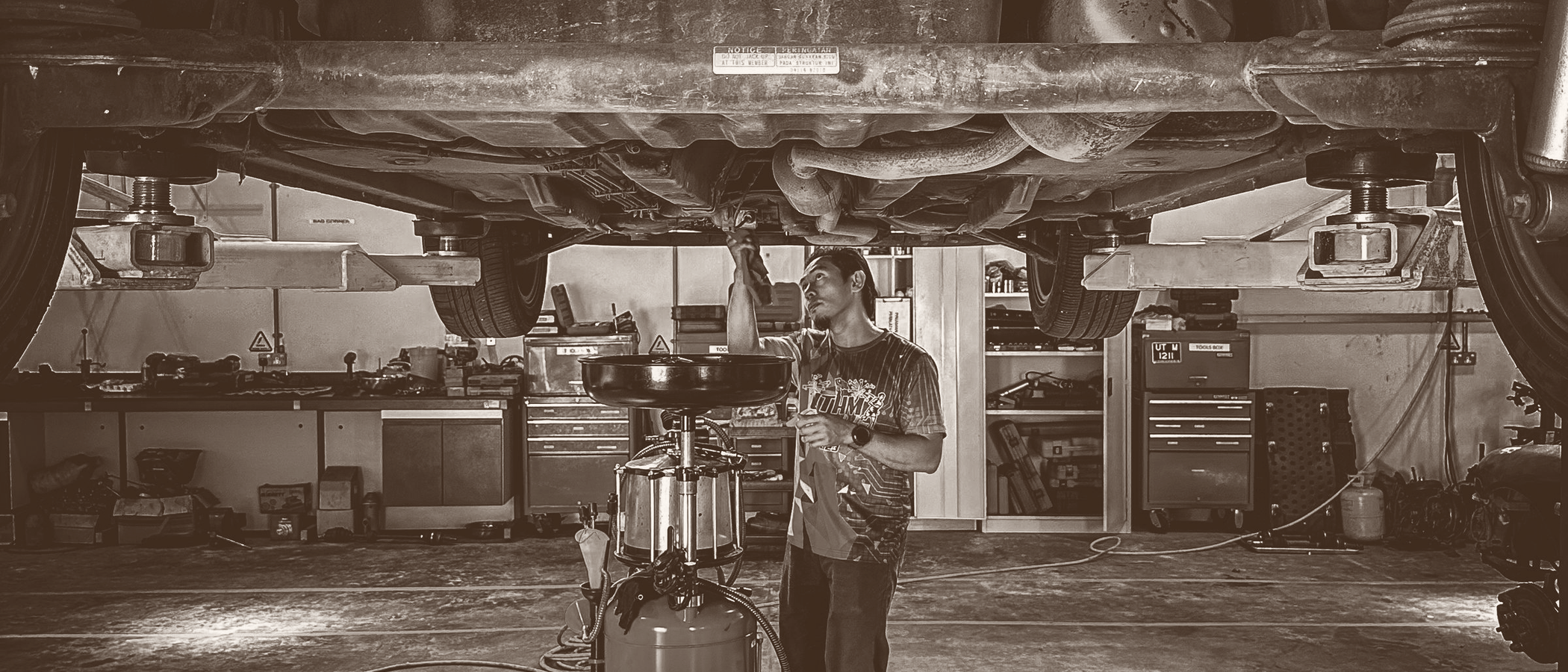
The correction is short and it works. A code is a symptom, not a diagnosis. A P0171 tells you the engine is running lean. It does not tell you whether that is a torn intake boot, a failing MAF sensor, a stuck purge valve, or a vacuum leak at a brittle PCV hose, and those repairs are not remotely the same job. What the caller is paying for is a technician with a scope, a smoke machine, and a bay, spending measured time proving which one it is before anyone buys a part.
Say it in the caller's terms:
"The fee covers a tech putting your car on a lift and testing it until we know what is actually wrong. The free scan at the parts store gives you a code. A code narrows it to about four possibilities, and we would rather find the right one than sell you a sensor and have you back here in a week."
That last clause is the one that lands. Almost everyone calling has, at some point, replaced a part that did not fix the problem.
Put the number in front of them before they ask
The ambush is what people resent. A caller who hears the fee at drop-off, or worse at pickup, feels handled. The same caller told the same number on the phone will often not react at all.
So put it in the booking flow, not in the objection-handling flow. Once you understand roughly what the car is doing, and before you talk about appointment times, state it once, flatly, with the credit policy attached:
"For a check engine light we run a diagnostic. That is $149 for the first hour of testing, and if you go ahead with the repair here, we apply the $149 to the repair ticket."
Then keep going into scheduling. Do not pause for a reaction, do not soften it, do not stack three justifications behind it. A confident half-sentence reads as normal business. A paragraph of pre-emptive defense reads as an apology, and callers apologize back by hanging up.
The wording matters more than the amount. "It comes off the ticket" is concrete. "It may be applied toward the repair" is not, and vague hedging invites a follow-up question you would rather not be answering.
Decide the waive-or-credit rule before the phone rings
Shops handle this three different ways and all of them are defensible. What is not defensible is deciding case by case at the counter, because your advisors will each land somewhere different and the inconsistency will show up in reviews.
Pick one and write it down:
- Credited toward the repair. The most common structure. The caller pays for diagnosis, and if they authorize the work, the fee is deducted from the final invoice. It rewards the booking without giving the labor away.
- Charged flat, never credited. Diagnosis is a service you sell, priced on its own. Cleaner accounting, harder phone call, and it works best for shops with a strong reputation for difficult electrical and driveability work.
- Waived for a defined, narrow case. Some shops waive it when the failure is obvious on arrival, or when the car is back for something related to a prior repair. Keep the list short and specific enough that an advisor can apply it without asking anyone.
Whichever you choose, the phone script changes very little. What changes is that every advisor says the same thing, so the caller who phones twice and speaks to two people hears one shop.
One more rule worth setting: what happens when the tech needs a second or third hour on a hard intermittent. Say on the phone that the fee covers the first hour and that you call for authorization before going past it. Callers accept that easily in advance. They do not accept it as a surprise line item.
The caller who is phoning three shops
You can hear it early. They are moving fast, they lead with price, they do not really want to describe the symptom, and they are working down a list.
The shop that quotes lowest on the phone frequently is not the shop that gets the car, because the caller has no way to compare what each quote includes. What they are actually doing on those three calls is deciding who sounded like they knew what they were doing.
So compete on specificity. Ask one real diagnostic question the other two shops did not bother to ask. "Does the light flash or stay solid?" is a good one, because flashing means active misfire and possible converter damage, and telling them that changes the entire call. Suddenly you are the shop that told them something useful.
Then be direct about the comparison itself:
"If you are calling around, ask each shop what their diagnostic fee includes and whether it credits back. Some quote a half hour, some quote an hour, and some give you a code read and call it diagnosis. That is usually where the difference is."
It is true, and it reframes their shopping toward a shop doing real testing. Callers remember who gave them a way to evaluate the other calls.
Missed calls and abandoned bookings are a well-documented drag on independent shops, and comparison shoppers are the least patient callers you have. They are not leaving a voicemail. They are dialing the next number on the list.
Capture the car before you talk about money
Nothing about the fee conversation should happen before you know what is sitting in the driveway. Get these first, every time:
- Year, make, model, engine, and mileage. A European turbo four with 140,000 miles and a domestic V6 with 60,000 are different diagnostic jobs even when the complaint is identical.
- The symptom in the customer's words. Write down what they said, not your translation of it. "Shudders between 40 and 50" is a usable note. "Transmission issue" is you guessing.
- When it happens. Cold start, after twenty minutes of highway, only in the rain, only turning left. Intermittents are where the hours go, and knowing this on the phone tells you whether one hour is a realistic estimate.
- Warning lights. Which ones, and flashing or steady.
- Is it drivable, and is it safe to drive. This one decides the whole call. A car that will not start needs a tow conversation, not an appointment slot.
- Any recent work. A car that was just at another shop for the same complaint is a different job, and sometimes a different fee.
Quoting anything meaningful before you have this is impossible, which is useful on the phone. "Let me get a few things about the car first" is a natural reason to delay the price question, and by the time you answer it the caller has invested five minutes describing the problem to someone who is listening.
Take the notes into the ticket verbatim. The tech who reads "customer says it shudders between 40 and 50, only when warm, no light" starts in the right place. The tech who reads "check trans" starts by calling the front desk.
After hours is when these calls happen
Check engine lights come on during the evening commute, and that is when people start calling shops. A call that hits voicemail at 6:15 on a Tuesday is usually a caller who dials the next shop before you hear the message. If your phones go unanswered after close, an AI receptionist like Answara can run the same intake, state the fee and the credit policy exactly as your advisors would, and leave the vehicle details in the morning queue.
None of this requires a longer conversation. It requires the fee to arrive early, in one sentence, attached to what it buys, from someone who already knows what year the car is.