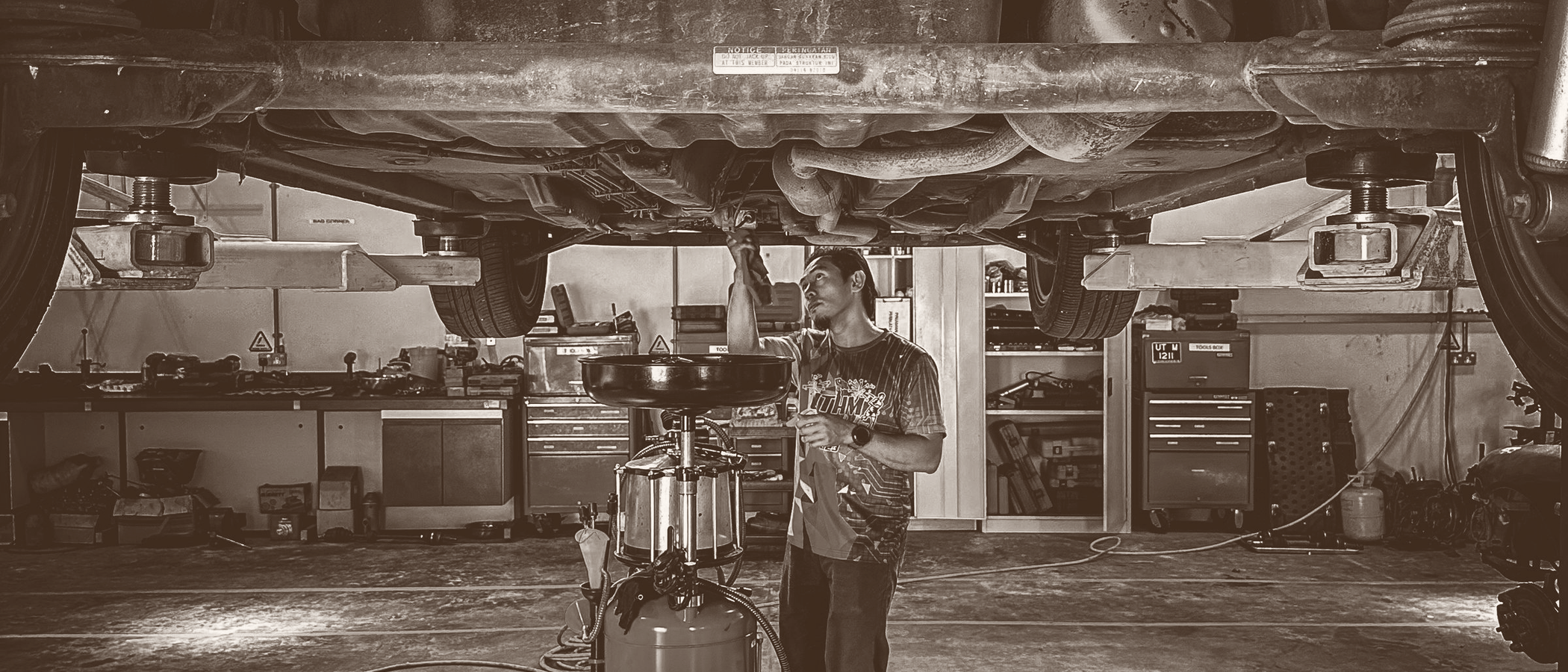
A man calls on a Tuesday and says the fridge in his camper quit, can you look at it Thursday. The writer says sure, takes a first name and a cell number, and puts "camper, fridge" on the schedule.
Thursday a 41-foot fifth wheel turns into the lot. With the air conditioner shrouds on the roof it will not clear your tallest bay door. The refrigerator turns out to be a residential-style unit from a component maker that runs its own warranty desk, and the owner is not sure whether his extended service contract touches appliances. He has been living in the trailer since March, so leaving it with you is leaving his house with you. And he has a campground reservation in Colorado in nine days.
None of that was fixable on Thursday. All of it was answerable on Tuesday, on the phone, in about four minutes.
Why RV calls need their own question set
The RV Industry Association counted 342,220 RV shipments in 2025, split 306,191 towables against 36,029 motorhomes. Your service lane sees some version of that ratio. Most of what rolls in has no engine and no drivetrain, arrives behind a truck nobody is asking you to fix, and was assembled from parts a dozen other companies built.
That is the structural difference from car work. A Civic is one manufacturer's problem. A Class A motorhome sitting in your lot is at least two: a chassis from Ford or Freightliner underneath, a coach built by somebody else on top, and then a refrigerator, a furnace, an awning, a set of leveling jacks, and a slide-out mechanism from vendors with their own part numbers and their own warranty channels. When the caller says "it's under warranty," the honest answer is a question. Under whose?
Car intake also assumes the vehicle leaves the same day. RV intake cannot, because the parts pipeline runs on a slower clock and the unit is big enough that where it sits during the wait becomes its own conversation.
The six things worth getting on the first call
What it is, in numbers
Type first: travel trailer, fifth wheel, toy hauler, pop-up, truck camper, Class A, Class B, or Class C. Then year, make, and model of the coach.
Then the measurements, which is the question car shops never have to ask. Overall length including the tongue or hitch. Exterior height at the tallest point, which is usually an air conditioner shroud rather than the roofline. Whether it has slide-outs, and how many, because a unit you need to open indoors needs clearance on both sides that its towing dimensions do not tell you.
Compare those against your own limits before you book anything: door height, bay depth, turning room, and how many units you can park overnight without blocking your gate. Measure them once and write them on the wall by the phone. Every shop has a size past which it can only work outside, and the phone call is where that gets caught.
Chassis or coach
Ask what the symptom is attached to. Engine, transmission, brakes, steering, suspension, or tires puts you on the chassis. Roof, slides, jacks, plumbing, propane, appliances, generator, or house batteries puts you on the coach.
That split decides whether the job is yours at all. Many RV shops take coach work and send chassis work to a truck dealer, and some do the reverse. Sorting it on the phone saves a customer a tow they did not need to pay for.
Electrical needs one extra question, because "no power" is four different jobs. Ask whether the unit is on shore power, on the generator, on the inverter, or on batteries when the problem shows up, and whether anything else in the coach still works. Twelve-volt house power and 120-volt shore power fail differently, and the answer usually points at a converter, a transfer switch, a battery bank, or a single breaker before anyone opens a panel.
Who is paying
RV service has four possible payers and they run on separate tracks. Customer pay. Manufacturer warranty, which splits again into coach, chassis, and component. An extended service contract or third-party warranty. Or an insurance claim, which is what roof damage, hail, water intrusion, and anything involving a low bridge usually turns into.
Ask which one the caller believes applies, then ask the follow-ups that make it actionable. For a service contract, get the administrator name and the contract number, because these commonly require authorization before you touch the unit and sometimes an inspector before you disassemble anything. For insurance, get the carrier, the claim number, and whether an adjuster has been assigned. For component warranty, get the model and serial off the data plate on the appliance, which the customer can read to you while standing in the unit.
Work performed before an authorization exists is work somebody argues about later, after your tech has already spent the hours.
How it gets to you, and where it sits
Ask whether the unit is driveable or towable right now, and who is bringing it. A motorhome that will not start needs a heavy-duty wrecker, not the tow service the caller uses for their car. A trailer with a failed bearing, a shredded tire, or a bent axle should not be towed at all until somebody looks at it, and the caller may not know that.
Then ask the storage question out loud, before the unit arrives. If the diagnosis leads to a part with a long lead time, is the customer taking the unit home or is it sitting on your lot? Say what you charge for that, if you charge, and whether they can come get things out of it while it waits. Skip this and you end up with a lot full of units you cannot move and no agreement about who pays for the space.
Whether anyone lives in it
Ask directly whether the unit is somebody's residence, and whether anyone or any pet will be staying in it while it is with you.
A full-timer changes every downstream decision. You cannot keep the unit three weeks waiting on a slide motor if it is the customer's only address, which means the plan has to be a short diagnostic visit, parts ordered, and a return appointment. It also changes what counts as urgent. No water in a trailer that lives in a driveway is an annoyance. No water in a trailer somebody sleeps in is today's job.
The travel date
Ask when they next need to be somewhere. Not "when would you like it back," which gets you a shrug, but the actual date of the trip, the rally, the reservation, or the closing on a seasonal site.
That answer tells you whether to book a diagnostic slot this week or a repair slot next month, and it lets you be honest early. "We can diagnose Friday, but if it needs a control board I would not count on the fourteenth" is a hard sentence. It is harder on day twelve, to somebody who already cancelled the reservation.
Scheduling around parts you do not have yet
The failure pattern in RV service is familiar: take the unit in, diagnose it on day nine, order the part on day ten, wait, and let the unit occupy your lot for the entire wait while the customer calls every few days. One job holds a space for weeks and produces almost no billable hours across most of them.
Splitting the visit is the common fix. Book a short diagnostic appointment, find the failure, order parts, and send the unit home. Schedule the repair when the parts are physically on your shelf. Two short visits instead of one long occupation, and the customer keeps their trailer for the wait rather than staring at your fence.
That only works if intake sorts calls into the right bucket, so the question at booking is whether this caller needs diagnosis or already knows the part. A customer who can read you the model and serial off the water heater, or who has the failed part in hand, can sometimes skip the diagnostic visit entirely. Ask for those numbers on the phone. It costs the caller a walk to the compartment and it can convert a two-visit job into one.
Then protect the parts-in-hand slots on your calendar. If every open hour goes to new diagnostics, the units waiting on ordered parts have nowhere to land when the boxes arrive, and the backlog grows in a way that no amount of hustle clears. Book against your parts pipeline, not against your optimism.
Seasonality does the rest of the damage. De-winterizing and pre-trip inspection calls stack into a few spring weeks, winterizing stacks in the fall, and both arrive by phone at the same time as your regular repair volume. The shops that survive those weeks decided in advance what happens on the fourth ring instead of discovering it live.
Three weeks of "any news?"
A multi-week job generates inbound calls the way a leak generates buckets. Every open repair order with a part on order is a customer who will call, and they will call more often as their trip date gets closer.
Two things reduce that volume more than anything else.
Name the update cadence at intake and then hold it. "You will hear from us every Friday, whether or not anything has changed" beats "we will call when we know something," because the second one guarantees a call on Wednesday from a customer who has decided you forgot about them. A Friday text saying the board still has not shipped is not a satisfying update, but it stops five phone calls.
Be specific about which wait you are in. "Waiting on the warranty administrator to approve" and "approved, part ships Tuesday" are different states and customers respond to them differently. Vague status is what turns a patient owner into a daily caller.
For the calls that still come, most are asking three things: is my part in, when is my appointment, and is it ready. None of those need a service writer to walk out of the shop. A shop phone that can answer them, or a proactive text that arrives before the question does, keeps your writers on the units instead of on hold.
That is also where overflow coverage earns its keep. Tools like Answara answer when the counter is buried, ask the same RV questions every time including length, height, payer, and travel date, then hand back a structured record instead of a stack of callback slips. A briefed answering service does the same job if the operators are working from your actual field list rather than generic message taking. The call handling and scheduling pages cover how that capture connects to a bookable calendar, and messaging covers the status updates that never should have been phone calls.