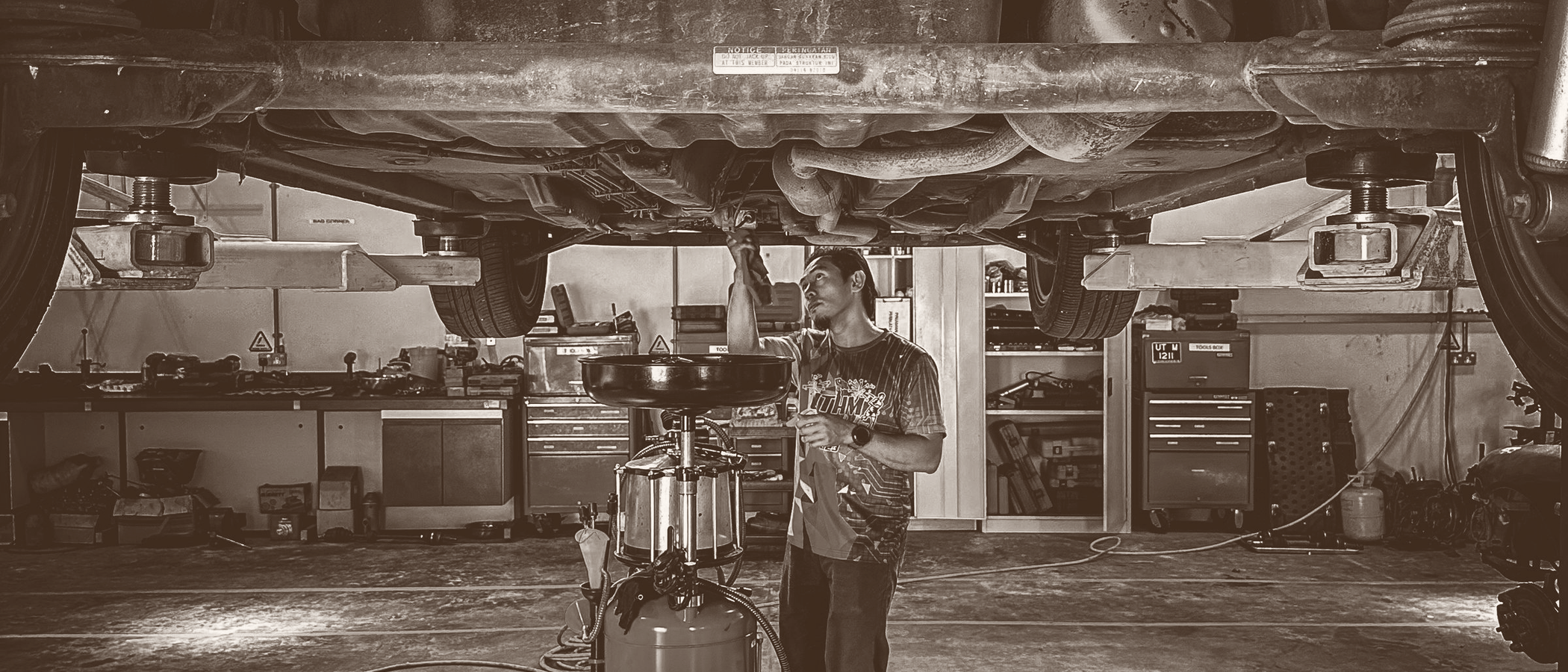
A woman calls a three-bay independent shop on a Thursday morning. She got a letter in the mail about her 2019 Honda, something about a fuel pump, and she wants to know if the shop can take care of it. The advisor is under a car with a customer standing next to him and takes the call on speaker. He says the shop does not do recall work, she should call the dealer. Twenty seconds, call over.
That was the wrong twenty seconds. The letter was a factory recall, so the dealer does have to do it, and he was right about that part. But she also mentioned in passing that the car pulls to the right and the front tires are wearing funny. That is an alignment and a tire set, neither of which is covered by anything, and she was ready to book it. Instead she went to the dealer, the dealer's service advisor walked her tires, and the shop lost a job it was fully authorized to do because nobody spent ninety seconds sorting warranty from not-warranty.
Warranty and recall calls are the ones most independent shops handle worst, and it is not because the advisors are bad at their jobs. It is because these calls arrive sounding like a dead end. The customer says "warranty" and the advisor hears "not my work," and the call ends before anyone finds out what is actually wrong with the car.
The three things a caller means when they say "warranty"
Callers use one word for at least three different situations, and the shop's answer is different in each case. Sorting them is the first job on the call.
- A factory recall or a safety campaign. The manufacturer has identified a defect and is obligated to fix it. This work is performed at a franchised dealer for that brand, at no cost to the owner, regardless of mileage or how many owners the car has had. An independent shop cannot claim it and cannot get paid for it.
- Factory warranty still in force. Bumper-to-bumper on a late-model car, or a powertrain warranty that runs longer. Also dealer-side work in nearly all cases. If a car is two years old with 18,000 miles and the transmission is shifting hard, that is a dealer conversation.
- A third-party extended service contract. This is the big one, and it is the one shops most often turn away by mistake. These are sold by dealers at signing, by credit unions, and by direct-mail companies, and most of them explicitly allow the customer to use any licensed repair facility. The shop diagnoses, calls the administrator, gets an authorization number, does the work, and bills the contract. Independent shops do this every day.
The third category is why "we don't do warranty work" is an expensive sentence. A caller holding an extended service contract is a paying customer with a funded repair, and the only thing standing between the shop and that job is someone on the phone who assumed the word meant dealer.
There is a fourth item worth naming because it comes up constantly: aftermarket parts warranties. If the shop installed an alternator eight months ago and it failed, that is a parts warranty claim through the shop's own supplier, and it is entirely in-house. Callers describe it the same way. "It's under warranty, right?"
Capture the VIN before anything else
Almost every question on these calls resolves against the VIN, and almost none of them resolve against a year, make, and model. Get the seventeen characters early, before the diagnosis conversation, before the scheduling conversation.
The VIN is on the driver-side dashboard at the base of the windshield, on the door jamb sticker, and on the insurance card. That last one matters, because a caller sitting at a desk at work can read a VIN off the insurance card in their wallet without walking to the car. Ask for it that way and the capture rate goes up.
With the VIN, an advisor can pull up the NHTSA recall lookup and see open, unrepaired recalls for that specific vehicle in a few seconds. That tool is free and public, it covers the last fifteen model years, and it is the single fastest way to convert a vague "I got a letter" into a factual answer. It also tells you what the letter did not. Owners routinely have two open recalls and only know about the one that generated mail.
The VIN also settles in-service date questions, which is what actually determines whether a factory warranty is live. Warranty clocks start at the original in-service date, not the model year, and a car that spent nine months on a lot has a different expiration than its twin sold the same week. If the caller is close to a boundary, the dealer can confirm the exact date from the VIN, and telling the customer to ask that specific question makes the shop look like it knows something.
Separating a recall from an extended service contract on the phone
The tell is usually in how the customer describes where the coverage came from. A recall arrives unrequested, in the mail, from the manufacturer, and mentions a specific component and a safety concern. A service contract was purchased, has a monthly or one-time price attached, and came from a finance office, a mailer, or a phone salesperson.
Ask two questions. First, did you pay for this coverage, or did it come in the mail on its own? Second, who is the letter or the contract from, the carmaker or a company name you do not recognize? Those two answers sort the call correctly the large majority of the time, and they take about fifteen seconds.
When it is a service contract, the next set of details determines whether the shop can proceed: the administrator's name, the contract or policy number, the customer service phone number on the card, the deductible, and whether there is a labor rate cap. Shops that take these jobs regularly know the friction points already. The administrator usually requires diagnosis before authorization, which means the customer owes diagnostic time up front and may or may not get it reimbursed. Many contracts require pre-authorization before any repair begins, and work performed without an authorization number is work the shop eats. Some send an inspector for larger claims, which adds a day or two to the car's stay. Some pay a fixed labor rate below the shop's posted rate, and the customer covers the difference.
None of that is a reason to refuse the call. It is a reason to set expectations on the phone rather than at the counter, because a customer who learns about the deductible and the inspection delay on day one is a customer, and one who learns on day three is a complaint.
When to send the caller to a dealer, and how
For an open recall, the referral is simply correct and there is no version of this where the independent shop does the work. Say so plainly and say why: the manufacturer pays the dealer to do it, the parts come from the manufacturer, and it costs the owner nothing. Framed that way, the referral sounds like advice instead of a brush-off.
Be specific about the handoff. Give the caller the brand's nearest dealer service department by name, tell them to reference the recall campaign number if they have the letter, and tell them to ask about parts availability when they call, since recall parts on high-volume campaigns are frequently backordered for weeks. If the recall is drivability-related or the caller sounds worried about safety, tell them what the letter probably says about whether the car is safe to drive in the meantime, and tell them to read that section.
Then keep going. The referral is not the end of the call, it is the middle. "While I have you, is there anything else going on with the car?" is the highest-value sentence on this entire call type, and it is the one that gets skipped when an advisor is trying to get off the phone.
Document the referral like it is a repair order
Referrals evaporate from memory. Write them down the same way a declined repair gets written down, because that is what this is.
The record should carry the VIN, the customer's name and mobile number, the date, what they called about, what the NHTSA lookup showed, which dealer they were sent to, and anything else they mentioned about the car. That last field is where the money is. "Recall referral, also mentioned pulling right and front tire wear" is a follow-up call in ten days with a specific reason to exist.
There is a liability dimension too. A shop that inspects a vehicle, spots an open safety recall, and says nothing is in a worse position than one with a note in the file saying the customer was told on a specific date. This matters most on used-car pre-purchase inspections and on fleet accounts, where an open airbag or fuel system recall on a vehicle the shop just touched is exactly the fact that surfaces later.
Keeping the customer for the work you can actually do
A recall referral hands the customer to a dealer service drive that is compensated for finding additional work. The dealer will inspect the car. The dealer will present a list. If the independent shop has not made its own claim on that vehicle's non-warranty maintenance, it will lose the tires, the brakes, the alignment, and the next four years of service.
The counter to that is doing the same thing first, on the phone, honestly. Before the caller hangs up, run through what is not covered by anything: brakes, tires, alignment, batteries, suspension, wear items, and all scheduled maintenance, none of which a recall or a powertrain warranty touches. Ask when the car was last serviced and what the mileage is. If they are at 78,000 miles and have never mentioned a transmission service, that is a conversation the shop should be having.
Say the part customers do not expect to hear, too, because it earns more trust than anything else on the call: using an independent shop for maintenance does not void a factory warranty. Federal law protects the owner's right to have routine service done wherever they choose, as long as the work is done properly and documented. Plenty of drivers genuinely believe they are locked into the dealer for oil changes, and correcting that belief on the phone is often what wins the account.
Then book something. Even if the recall is going to the dealer next Tuesday, an alignment check the following week keeps the relationship pointed at the shop.
The calls that never reach an advisor
Most of the above assumes someone picked up. On a busy Thursday with two advisors and a full board, that is the shaky assumption. Warranty and recall calls tend to be long, uncertain, and low on immediate revenue, which puts them at the bottom of the pile precisely because they sound like they belong there. So they roll to voicemail, and a caller who got a scary letter about their fuel pump does not leave a message. They call the next shop or they call the dealer, and the dealer keeps them.
An AI receptionist covers that gap. Answara answers inbound calls when the advisors are buried or the shop is closed, captures the caller's name, number, vehicle details, and VIN, and books appointments against the shop's schedule. What comes back in the morning is a complete, readable intake instead of a missed-call number, which is the difference between a follow-up that opens with the customer's VIN and one that opens with an apology. Shops that want to see how it handles automotive calls can look at answara.ai/auto.
FAQ
Can an independent shop perform a manufacturer recall? No. Recall repairs are paid for by the manufacturer and performed by franchised dealers for that brand. The independent shop's role is to identify the open recall, explain that it costs the owner nothing, and refer the customer to a dealer service department.
How do I check whether a vehicle has an open recall? Use the NHTSA recall lookup with the seventeen-character VIN. It reports open, unrepaired recalls for that specific vehicle across roughly the last fifteen model years. It will not show recalls already completed, and it will not show manufacturer service bulletins, which are a separate category.
What should I ask a caller with an extended service contract? Administrator name, contract number, the phone number on the card, the deductible, and whether there is a labor rate cap. Confirm the administrator's pre-authorization process before any work starts, and tell the customer up front that diagnosis usually has to happen before the claim can be authorized.
Does servicing a car at an independent shop void the factory warranty? No. Owners are entitled to have routine maintenance performed at the facility of their choice, provided the work is done correctly and records are kept. Keep clean documentation of parts and services on any vehicle still inside its factory coverage period.