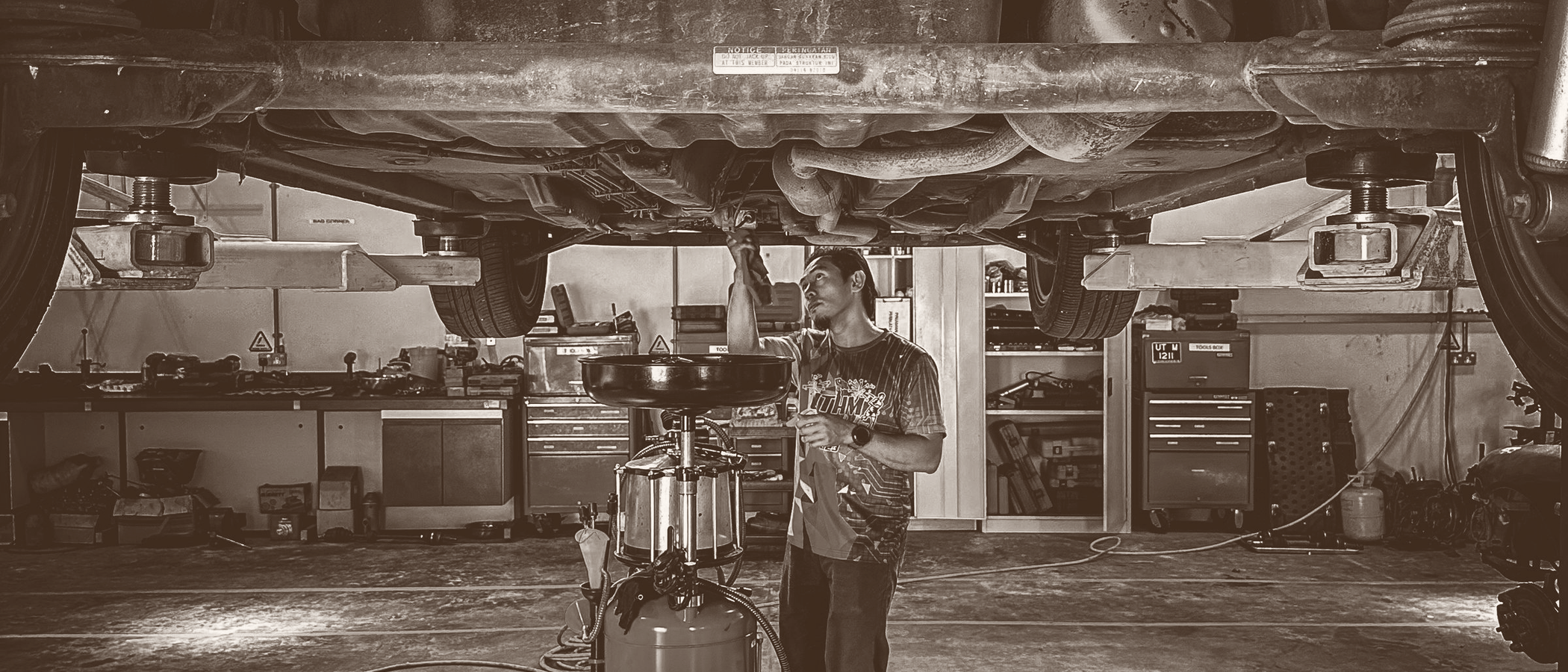
It is 3:50 on a Tuesday in late October and the service writer at a four-bay tire shop picks up the phone with a torque wrench still in his other hand. The caller says she needs her winter tires put on. He says he can do Thursday at ten. She says great, gives her name, hangs up.
Thursday at ten she arrives in a 2019 RAV4 with nothing in the back. Her winters are in the shop's storage rack, or she thinks they are, and nobody wrote down a tag number. They are actually not there, because she moved her account two years ago and the set went home with her. So now she is standing at the counter needing four new tires in 225/65R17, which the shop may or may not have on the shelf, and the thirty-minute rim swap that was booked is really a ninety-minute sale plus a mount and balance. Two appointments behind her slide. The bay clock never recovers.
Nothing about that went wrong on the shop floor. It went wrong in about forty seconds on the phone, two days earlier. Changeover season is won and lost inside the individual appointment call, and the difference between a call that produces a clean booking and a call that produces a Thursday morning problem comes down to what gets asked, in what order, before anyone says a date out loud.
The first fork: stored set or new rubber
Every changeover call splits immediately into one of two jobs, and they are not close to the same job.
The storage customer already owns the tires. If they are mounted on their own rims, the work is a wheel-off, wheel-on swap, a pressure set, a TPMS relearn if the vehicle needs one, and a torque. It is fast, it is priced flat, and it consumes almost no parts. The whole call should be a lookup.
The new-purchase caller is a different animal. They need a fitment, a price, availability on the shelf or an order lead time, mount and balance on all four, new valve service, and a longer bay slot. That call is a sale, not a booking, and it can run five minutes.
The mistake is treating them as one intake and sorting it out at drop-off. The fix is a single question near the top of the call, before availability ever comes up: are your winter tires here with us, at home, or are you looking to buy a set. Ask it that way, with three options, because a surprising number of callers genuinely do not know. "At home" is its own answer and it matters, since that caller has to be told to bring the tires and told what happens if they arrive empty.
One more branch sits under "here with us." A stored set is not automatically usable. If last spring's tag noted 4/32nds on the fronts, this is the call where somebody says so, not the moment the tech pulls them off the rack in front of a customer who is already late for work.
Get the vehicle before you get the story
Callers want to explain. They will tell you about the noise, the trip to see their sister, the guy at the dealership. Let them, but not first. Get the vehicle on the ticket before the narrative starts, because everything downstream is derived from it.
What a changeover booking actually needs:
- Year, make, model, and trim. Trim is not optional. A base Highlander and a Limited do not run the same wheel, and one of them will not accept the tire the other one takes.
- Tire size off the sidewall or the door jamb sticker. 225/65R17, 235/55R19, whatever it reads. Ask them to read it rather than guess, and take it in that exact notation. A size that gets written as "17 inch" is a size that has to be re-established at the counter.
- Whether the set is on its own rims. This single field decides the length of the slot more than anything else on the ticket. Rims-mounted is a swap. Loose tires are a dismount and remount on all four.
- Wheel lock key location. Glovebox, trunk, or missing. A missing lock key stops the job dead, and it is much cheaper to learn about it on the phone than with the vehicle already on the hoist.
- TPMS situation. Whether the vehicle has sensors in both sets, whether the light is on now, and whether the shop is rebuilding valve kits at this service. Grommets, nuts, and cores are consumables, and pulling them at the point of booking means the parts are in the drawer on the day.
- Anything unusual about the fitment. Staggered sizes front to rear, directional tread, run-flats, aftermarket wheels. Each one changes the time and sometimes changes whether the shop can do the job at all.
That is not a long list and it does not need to sound like an interrogation. It sounds like a person who has done this before: "Let me get the vehicle first so I book you the right amount of time." Callers respond well to that framing, because it reads as competence rather than paperwork.
For storage customers, most of these fields should already exist. The tag from last season carries position markings, LF, RF, LR, RR, plus the rack location and the tread depths recorded when the set came in. Reading that record back on the phone is the single most reassuring thing a shop can do during changeover. It tells the caller the tires are real, the shop knows where they are, and nobody is going to be hunting the racks on Thursday morning.
The slot you offer depends on the answers
Once the ticket has a vehicle and a job type, the person on the phone is no longer guessing at a time. They are matching to a known length. Most shops end up with roughly four shapes:
A rims-mounted swap on a passenger car or crossover. Short, predictable, no parts.
A loose-tire changeover, four dismounts and four remounts with balancing. Meaningfully longer, and it ties a mounting machine up for the duration.
A new-set sale. Longest of the three, includes the consultation time at the counter, and depends on stock.
A light truck or oversized fitment. Heavier wheels, sometimes a second tech, and it should never be dropped into a slot sized for a Corolla.
The value of naming these is that the phone can book them without asking the shop floor. When the person answering knows a rims-mounted swap fits a given slot and a loose-tire job does not, availability becomes an answer instead of a callback. And callbacks are where changeover bookings die. A driver working down a list of four shops takes the first real time they hear.
There is a second-order benefit. Bookings sorted by job shape naturally cluster. Runs of short swaps land together, the mounting machine gets its own stretch of the morning, and the day stops alternating between thirty-minute jobs and ninety-minute jobs in a pattern that leaves techs idle between them. That clustering comes from the phone, not the schedule board.
Answering "can I just come in" honestly
Every shop takes this question fifty times a season, and the answer costs more when it is optimistic than when it is unwelcome.
The failure is rarely the policy. It is the vagueness. "Yeah, come on down, we'll get to you" is what gets said when the counter is busy and the writer does not want to lose the caller. What it produces is a driver sitting in the waiting room for two and a half hours, and a shop that has quietly traded a booked appointment slot for a walk-in who is now angry.
Whatever the shop's walk-in rule is, the phone version of it needs three parts. State whether there is room today, yes or no. If yes, give a real number for the wait and give it as a range with the top end honest, not the bottom end hopeful. If no, offer the nearest actual slot immediately in the same breath, because a caller who hears "not today, but I can put you in tomorrow at eight" books far more often than one who hears "we're slammed" and has to ask what comes next.
The one thing worth holding firm on: a loose-tire job or a new-set purchase should almost never be accepted as a same-day walk-in during peak weeks. Those are the jobs that consume bay time unpredictably, and taking one on a whim is what makes the booked customers behind it late. Rims-mounted swaps are the ones that absorb into gaps.
The 8:15 p.m. call
Drivers do not think about winter tires during business hours. They think about it after dinner when the forecast on their phone shows a low of 28 for Friday, or on a Sunday afternoon when the car feels loose on a wet on-ramp. That is when the calls come, and that is when most tire shops are dark.
Those calls are not low-value. A caller at 8:15 on a Wednesday in changeover season is about as ready to book as a customer ever gets. The question is only whether the shop captures the booking that night or hopes to be remembered in the morning, competing against every other number on the caller's list.
An after-hours voicemail that says "leave your name and number" does not solve this, because it captures the least useful version of the information. What is needed at 8:15 is the same intake as at 2 p.m.: vehicle, size, storage or purchase, rims or loose, and a held time. Then the morning callback opens with "we have you at nine on Thursday, I just want to confirm your set is the 225/65R17s" rather than starting the whole conversation over with someone who has been shopping all evening.
An AI voice receptionist is a reasonable fit for this specific shape of work, because the intake is narrow and repeatable. Answara answers changeover calls when the counter is buried or the shop is closed, works through the same field list every time including vehicle, tire size, storage status, and rim configuration, and books the appointment into the calendar. It does not mount tires or decide fitments. It handles the part of the call that is structured, so the people who can quote a set are talking to the customers who need a set quoted.
Whatever route a shop takes, the intake list is the asset. Write it down before the first cold snap, put it where whoever answers can see it, and the Thursday morning surprises mostly stop happening.
FAQ
What is the most important question to ask on a changeover call? Whether the caller's seasonal tires are in the shop's storage, at their home, or need to be purchased. That single answer determines the job type, the slot length, the parts needed, and the price, so it belongs near the top of the call rather than at drop-off.
Why does it matter whether tires are mounted on their own rims? A rims-mounted set is a wheel swap. Loose tires require dismounting and remounting all four with balancing, which takes considerably longer and occupies a mounting machine. Booking both into the same length of slot is how changeover schedules fall behind by mid-morning.
What vehicle information should be captured before offering an appointment time? Year, make, model, trim, the tire size exactly as it reads on the sidewall or door jamb, whether the set is on rims, where the wheel lock key is, and the TPMS situation. Any staggered fitment, directional tread, or run-flat should be noted too.
Should tire shops take same-day walk-ins during changeover season? Rims-mounted swaps absorb into schedule gaps reasonably well. Loose-tire changeovers and new-set purchases generally should not be taken on a walk-in basis during peak weeks, because their bay time is longer and less predictable and they push booked appointments late.