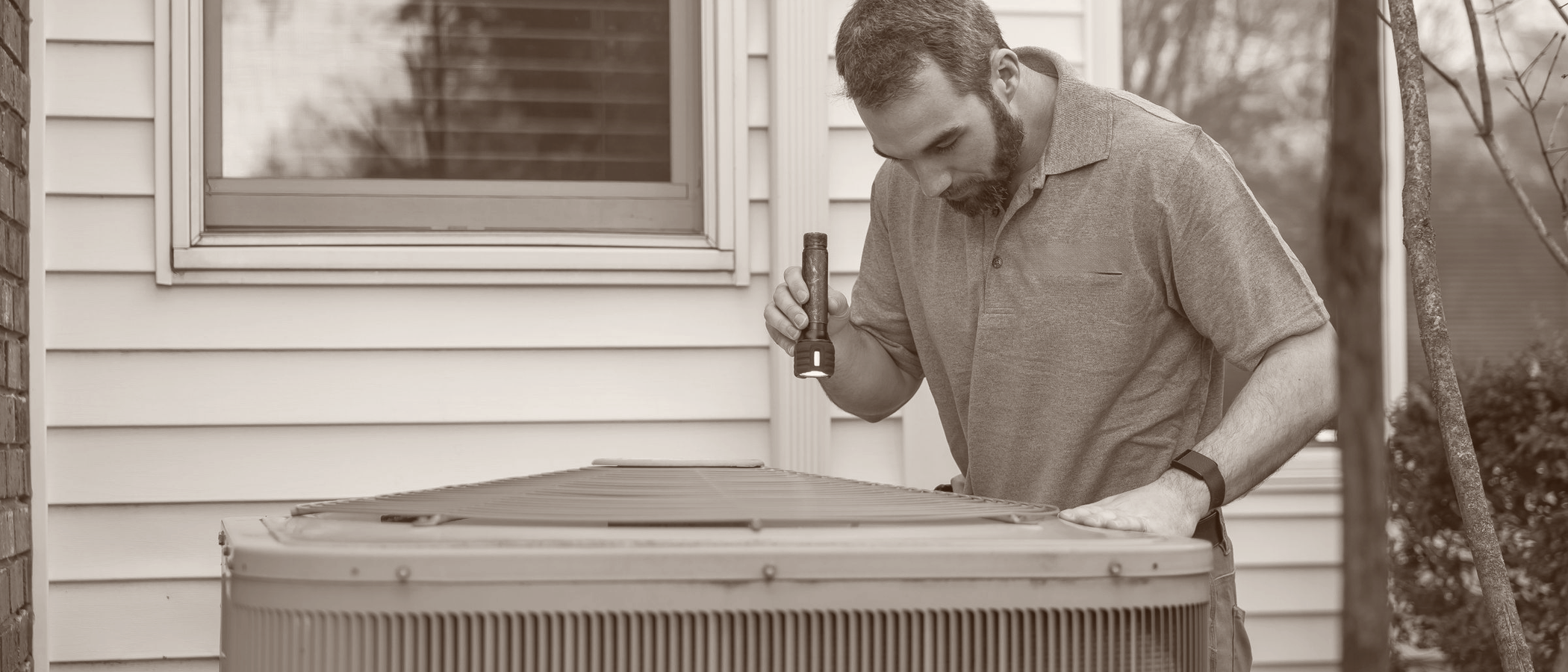
The first winter with a heat pump, most homeowners get a scare. You look out the window and the outdoor unit is wrapped in what looks like smoke, the fan has stopped, and the thing just made a loud clunk. Nothing is on fire. You are watching a defrost cycle, and it is the system doing what it was designed to do.
Here is the useful distinction: defrost happening is normal, defrost happening constantly is not. This guide covers what a healthy cycle looks like, how long it should run, and the symptoms worth a service call.
Why a Heat Pump Frosts Up at All
In heating mode, a heat pump runs backwards from an air conditioner. The outdoor coil becomes the cold side, pulling heat out of winter air and moving it inside. To absorb heat from 35-degree air, that coil has to sit colder than 35 degrees, often below freezing.
Cold air still holds moisture. When it hits a coil below freezing, the moisture condenses and freezes onto the fins. A thin layer of frost is unavoidable and harmless. A thick layer blocks airflow, and a blocked coil cannot pull heat out of the air.
So the system melts it off. It reverses into cooling mode for a few minutes, sending hot refrigerant out to the coil, and the ice comes off as water and steam. Then it flips back to heating. Frost builds worst between about 25 and 40 degrees with damp air, so a wet 35-degree day triggers far more defrost cycles than a dry 15-degree night.
What a Normal Defrost Cycle Looks and Sounds Like
A healthy cycle has a recognizable sequence, and it happens in this order almost every time.
The outdoor fan stops. This is the giveaway. In normal heating the fan runs whenever the compressor runs. During defrost, the control board shuts the fan off deliberately so heat stays at the coil instead of being blown away. A stopped fan with a running compressor is correct behavior, not a failure.
You hear a whoosh or a loud clunk. That is the reversing valve shifting and refrigerant pressures equalizing. On some units it is a soft swoosh, on others a bang loud enough to hear indoors. A valve that has always been loud is not suddenly a defect.
Steam pours off the unit. Hot coil, melting ice, cold air. The result is water vapor, and on a still morning it can billow enough to look alarming from a distance.
Water drips and puddles underneath. That is the melted ice draining out. On a very cold day some refreezes into a thin sheet on the pad below.
Your indoor vents may blow cooler for a minute. The system is technically in cooling mode during defrost. Most units fire the backup electric heat strips to compensate, which is why your energy monitor may spike briefly.
Steam or Smoke? How to Tell
Steam dissipates fast. It rises off the coil, thins out within a few feet, and leaves no residue or smell. It looks thickest on cold, still mornings for the same reason your breath does.
Smoke behaves differently. It has color, usually gray or blue rather than white, and it carries a burning smell: hot plastic, scorched insulation, or an electrical odor. It keeps coming after the cycle should have ended. And it tends to come from one spot, like the top of the unit near the fan motor, rather than off the whole face of the coil.
If you smell burning, shut the system off at the thermostat, then at the outdoor disconnect, and call an HVAC contractor. Do not run it again to check whether it happens twice.
How Long Should a Defrost Cycle Last?
Most cycles run between 5 and 15 minutes. Ten is typical. Once the coil is clear, a sensor on the coil (or a timer, on older units) sends the system back to heating.
Frequency varies with the weather. In damp near-freezing conditions, a cycle every 30 to 60 minutes is reasonable. In dry cold, you might go hours without one. Older units often use a fixed timer that calls for defrost every 30, 60, or 90 minutes whether ice is present or not, so a rigid schedule on an older system is a design quirk rather than a fault.
The number to remember is 20. A cycle that runs past roughly 20 minutes without returning to heating means the system cannot clear the coil or cannot sense that it has. That is worth a phone call.
Symptoms That Mean You Should Call an HVAC Tech
Normal defrost is brief, occasional, and self-resolving. These are not.
- The coil is encased in solid ice. Frost patterns on the fins are fine. A solid block, ice filling the fin gaps, or ice covering the top fan grille means defrost is failing. That points to a bad defrost control board, a failed defrost thermostat or coil sensor, or a reversing valve that is not shifting.
- Defrost runs longer than 20 minutes, or the unit never returns to heating. The system is stuck in the cycle.
- Cycles every 10 to 15 minutes, all day. Constant defrosting usually signals low refrigerant charge from a leak, a dirty coil, or a sensor reading the wrong temperature. It also burns a lot of backup heat.
- Ice underneath the unit that keeps growing. If meltwater cannot drain because the pad settled or the drain holes are blocked, it refreezes and builds a layer that eventually reaches the fan blades. That is how a cheap repair becomes a motor replacement.
- The outdoor fan never stops during heating. If it runs continuously while ice accumulates, the control board is probably not calling for defrost at all.
- Grinding, scraping, or repeated hard banging. A single clunk at the valve is normal. Metal-on-metal scraping is a fan blade meeting ice or a failing motor bearing.
- The house stays cold and backup heat runs constantly. If your emergency or auxiliary heat light is on for hours, the heat pump is not doing its share.
What you can safely do yourself is short. Clear snow, leaves, and drifted debris away from the unit so air moves freely, keeping a foot or two of clearance on all sides. Check that it is not sitting in a puddle or under a roofline dripping onto it. And make sure your indoor filter is clean, since poor indoor airflow shows up as odd outdoor behavior.
Never chip ice off the coil with a screwdriver or a hammer. The fins and the copper tubing behind them puncture easily, and a punctured coil turns a defrost problem into a refrigerant leak. If you must speed a thaw, run the system in cooling mode for a few minutes or use plain lukewarm water.
What to Tell the Shop When You Call
Details up front help a dispatcher send the right technician:
- How often it defrosts and roughly how long each cycle lasts.
- Where the ice is. On the fins, over the fan grille, or built up underneath.
- Whether the outdoor fan stops during the cycle.
- What your thermostat shows. Whether auxiliary or emergency heat has been running.
- The system's age, if you know it, and when it was last serviced.
Frequently Asked Questions
Is steam coming off my heat pump normal? Yes, during a defrost cycle. The coil gets hot to melt accumulated ice, and the melt turns to visible vapor in cold air. It should thin out within a few feet and carry no smell. Colored smoke or a burning odor is a different problem, and you should shut the system down.
Why did my heat pump make a loud bang and stop the fan? That is the reversing valve switching into defrost, with the fan shutting off on purpose so heat stays at the coil. Standard operation. Get it checked if the bang is new, much louder than it used to be, or comes with grinding.
How often should a heat pump defrost? It depends on the weather. Every 30 to 90 minutes in damp conditions near freezing is normal, much less often in dry cold. Every 10 to 15 minutes all day usually points to low refrigerant, a dirty coil, or a faulty sensor.
Should I pour hot water on a frozen heat pump? Lukewarm, never boiling. A sudden temperature swing can crack components. Chipping at ice with a tool is the bigger risk, since it punctures the coil.
Is it bad if my backup heat runs during defrost? No. Most systems energize the electric heat strips during defrost so vent air does not turn cold. It is only a concern when backup heat runs for hours outside of defrost cycles.
Getting an HVAC Shop on the Phone in January
Heat pump questions cluster on the coldest mornings of the year, exactly when contractors are buried and the phone rings nonstop. A homeowner staring at an iced-over unit wants one thing: someone who picks up and says whether it can wait until Tuesday.
Answara.ai answers those calls for home-services businesses around the clock, captures the symptom and the address, and gets the job on the schedule instead of into a voicemail box. More homeowner guides on heating and cooling problems are in the HVAC resources hub.