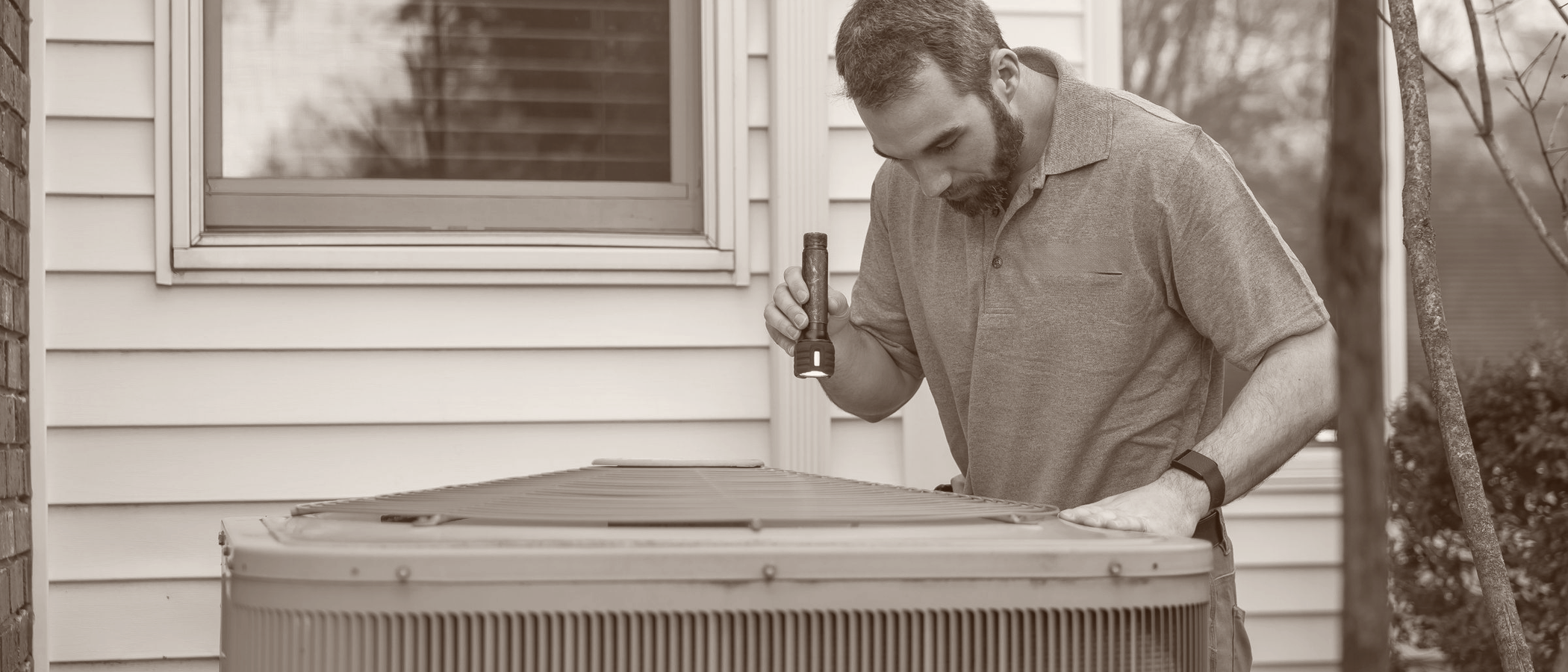
At 10:40 on the first eighty-five degree Tuesday in April, two people are on hold with the same three-truck HVAC shop. One is a woman who wants her annual checkup done before her daughter's graduation party in May, and she has said twice that there is no rush. The other is a man whose house is at 88 degrees with a 79-year-old mother in the back bedroom and an outdoor unit that hums and does nothing.
The dispatcher takes the second call. That is the right call. Four minutes later the first caller hangs up, opens the map on her phone, and books a tune-up with the contractor two towns over who answered on the second ring.
She was worth more than one visit. Tune-up customers are how shops find failing capacitors in April instead of failed compressors in July, and they are the pool that maintenance agreements come out of. Losing her on hold is the quiet cost of the first warm week.
Why the spike is this sharp
Air conditioning is close to universal in American housing. The U.S. Energy Information Administration's 2020 Residential Energy Consumption Survey found that 88% of U.S. households used air conditioning, rising to 93% in the South and 92% in the Midwest. Most of those systems sat untouched from September to April.
Then the weather turns, and every one of them gets switched on within about 72 hours of every other one. A whole service area runs a simultaneous system test. The units that were going to fail mostly fail that week, which is exactly the week your phone also fills with people who read a spring maintenance reminder and decided to be responsible.
Two demand curves land on one dispatch board. Emergency work wins every time it competes, and it should. But the maintenance callers do not wait politely in a queue while you handle a run of no-cool calls. They call somebody else, and if that somebody else does good work, you have lost the customer and the agreement renewal behind them.
Triage rules worth deciding before the warm week
Write these down before you need them, because the person answering the phone at 10:40 on that Tuesday will not invent a policy under pressure.
The sorting question is not whether the caller sounds urgent. Homeowners are bad narrators of their own HVAC systems, and the calmest caller on the line is sometimes the one with water running down a ceiling joist. Ask for facts instead.
Is the system running at all? Air moving but warm points somewhere different from nothing happening at all. Nothing at all with a tripped breaker that trips again on reset is an electrical fault, and it goes to the front of the line no matter how politely the caller describes it.
What does the thermostat read, and what is it set to? A 12-degree gap is a different job from a 2-degree gap. Get the number, not the adjective.
Who is in the house? Anyone over 65, an infant, someone on oxygen or in treatment, or pets shut in during the day. This is the single question that turns a Thursday call into a today call, and it is the one most scripts leave out.
Is there ice on the copper line at the outdoor unit, or on the indoor coil? Iced systems need hours of thaw before anyone can read pressures, so telling that caller to shut off cooling and run the fan buys real diagnostic time before your tech arrives.
Is there water anywhere it should not be? A condensate backup dripping through a hallway ceiling is property damage in progress. It gets treated as an emergency even though the house is comfortable.
Any burning smell, or a breaker that will not hold? Stop the intake and dispatch.
From those answers, three buckets. Today: no cooling with a heat advisory or a vulnerable occupant, active water damage, electrical or burning symptoms, and commercial sites with a server room, a walk-in, or product at risk. This week: the system cools but underperforms, makes a new noise, ices intermittently, or short cycles. Scheduled maintenance: no symptom at all, just a homeowner doing the right thing in April.
One rule that saves the week: a tune-up call that reveals a symptom stops being a tune-up. If somebody books a maintenance visit and mentions in passing that the unit was loud last summer, that is a diagnostic, and it needs the longer slot. Booking it as a 45-minute maintenance stop is how a route falls apart at two in the afternoon.
Book the agreement holders before the weather does
The shops that survive the first warm week did their maintenance scheduling in February.
If your maintenance agreement holders are calling you in April, the agreement is working as a discount coupon rather than as a schedule. The point of selling a plan is that you control when the visit happens, which means you can spread 400 spring tune-ups across ten weeks of your choosing instead of absorbing them in the nine days when your techs are already on emergency calls.
Three mechanisms do most of that work.
Book the next visit at the end of the current visit. When your tech closes out a fall heating check, the spring cooling date goes on the calendar before he leaves the driveway. Dentists have done this for decades and HVAC shops mostly have not.
Run a February and early-March outbound pass to every agreement holder without a spring date, offering specific slots. Outbound calls in a quiet month cost you far less than inbound calls in a loud one, and the customer who picks a date in February will keep it.
Hold a self-scheduling link with a capped number of daily maintenance slots. Some customers will never answer the phone and will happily book at 11pm on a Sunday.
ANSI/ACCA 4 QM, the residential HVAC maintenance standard from the Air Conditioning Contractors of America, reaffirmed in 2024, gives you checklists of minimum inspection tasks by equipment type. Use them to define what a tune-up actually is and how long it takes, because a maintenance slot that is really 70 minutes and gets booked as 45 is a scheduling problem disguised as a technician problem. ENERGY STAR's guidance is a yearly tune-up of the heating and cooling system, which is the language to use with a homeowner asking whether the visit is worth it. There is more on that in is an HVAC maintenance plan worth it.
Route density: schedule maintenance by geography
First-come-first-served booking is what produces a Wednesday where a tech drives 140 miles for four maintenance visits.
Maintenance work is the most route-flexible work you have. Nobody's house is on fire. Use that. Assign geography to days: north half of the county Tuesday and Thursday, south half Monday and Wednesday, and offer callers the dates that match their zip code rather than the dates they ask for. Most tune-up callers accept a date suggestion if it comes with confidence. "I have Thursday the 24th, morning" books better than "when works for you?"
Then build the day so emergencies do not shred it. A common pattern is one float truck that takes no-cool calls all day while the other trucks run their maintenance routes with two protected slots each for same-day work in the neighborhood they are already standing in. When an emergency lands three streets from a tech doing a tune-up, that is the cheapest emergency you will run all week.
Cluster new construction and multi-unit properties tighter than single-family. Eight units at one address is a half day with no windshield time, and it is the best possible use of an afternoon during a surge.
Watch the tail end of the route. Maintenance visits at 4pm are where techs cut corners because they want to go home, and a rushed tune-up in April is a callback in July. If the day is full, the honest move is to book the ninth customer next week rather than squeeze her in.
Keeping the tune-up caller from calling the next contractor
The maintenance caller has the lowest urgency and therefore the least patience. She has no crisis forcing her to stay on your line, four other contractors are one search away, and the difference between winning her and losing her is usually 90 seconds of hold music.
What holds her:
Answer, or call back within the hour with a real date. A same-day callback that offers May 6th beats a live conversation that ends in "we'll get back to you."
Give a specific date even when it is far out. Homeowners tolerate a four-week wait for maintenance surprisingly well. What they will not tolerate is vagueness, because vagueness reads as "we do not want your small job."
Say the emergency policy out loud rather than hiding it. "If we get an emergency call that day we may need to move you, and if that happens I will call you personally and we will find the next slot." Customers understand triage when you explain it. They resent it when it happens to them unannounced.
Take a card on file or a small deposit for far-out maintenance bookings. A date somebody has paid something toward is a date they keep, and it cuts the April no-show rate that makes shops reluctant to book far out in the first place.
Text the confirmation, and text again the day before. The tune-up booked on April 8th for May 6th is easy to forget on both sides.
Keep a cancellation waitlist by neighborhood. When a Tuesday morning opens up, the right call goes to the customer three blocks from your tech's next stop.
Where an AI receptionist fits
The overflow pass during a surge week is repetitive by nature: the same six triage questions, the same date offers, the same confirmation. That is the part a voice AI can run consistently at 10:40 on a Tuesday while your dispatcher is on an emergency.
Answara answers the calls your team cannot pick up, asks the triage set in the same order every time including thermostat reading, system behavior, and who is in the house, then books maintenance visits into open slots and routes anything carrying an emergency marker to a human immediately. What you get back is a structured record of the call rather than a voicemail backlog somebody works through at 6pm. A well-briefed answering service does similar work if the operators are running your actual triage list rather than generic message taking.