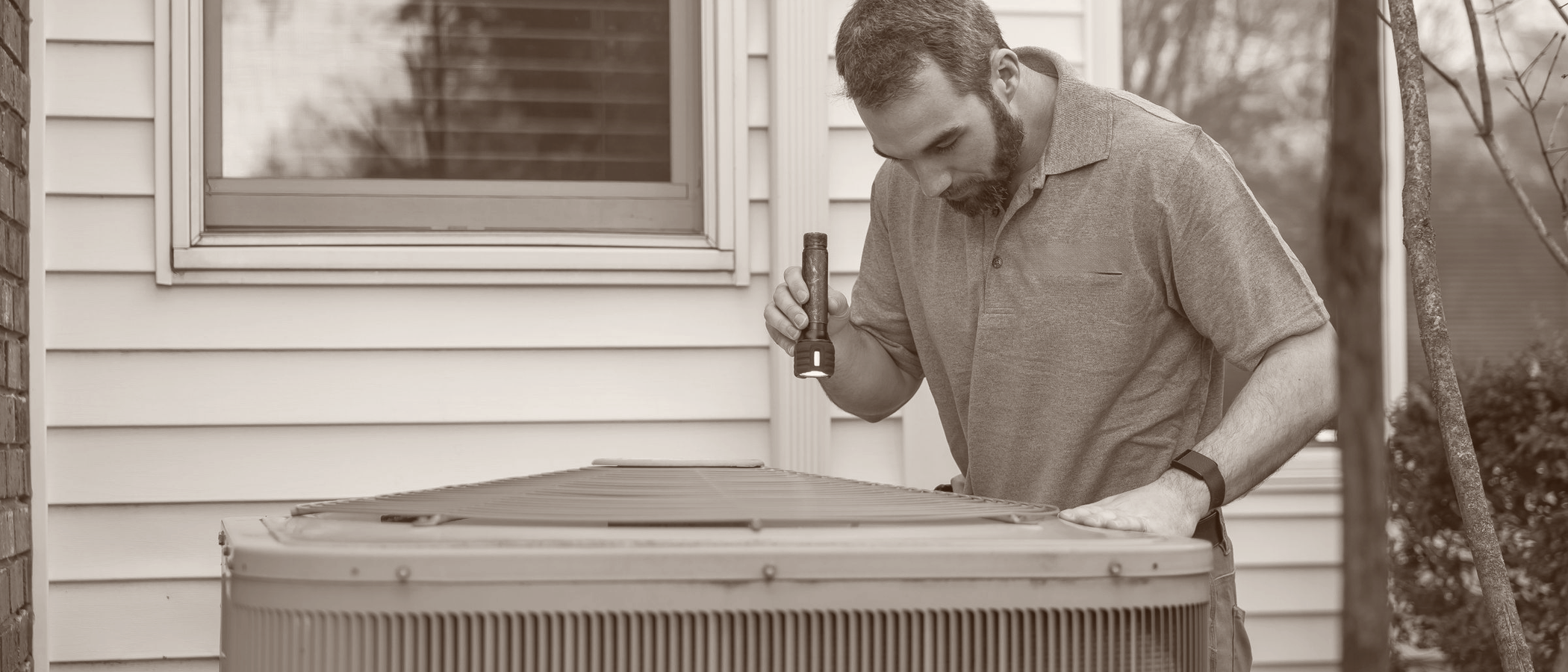
A ball of ice on the copper line running into the side of your air handler is not a sign the system is working extra hard. It usually means the opposite. That line should be cold and sweating, not frozen. When a tech sees frost creeping down the suction line on a 90 degree afternoon, low refrigerant charge is the first thing on the list, and low charge almost always means a leak.
Air conditioners do not consume refrigerant. It is a sealed loop. The same charge that was in the system on install day should still be there a decade later. If it is low, it went somewhere, and the only way out is a hole.
What a refrigerant leak actually looks like
The symptoms tend to arrive together, and they get worse over weeks rather than overnight.
Ice on the evaporator coil or line set. A low charge drops the pressure inside the evaporator, which drops the coil temperature below freezing. Moisture in the air condenses on the coil and freezes instead of draining. Ice insulates the coil, cooling gets worse, and more ice forms. By the time you can see frost on the line set, the coil behind the access panel is often a solid block.
Weak cooling and long run times. The system runs and runs and never quite reaches the setpoint. On a mild day it might keep up. On the hottest afternoon of the year it falls behind and never catches back up.
Higher indoor humidity. An air conditioner pulls moisture out of the air as a side effect of cooling it. A short charge does that job poorly. The house can hit 75 degrees on the thermostat and still feel clammy and heavy.
Hissing or bubbling. A larger leak on the high-pressure side can hiss. A gurgling or bubbling sound near the indoor unit can mean vapor is moving through a section of the line that should be full liquid.
A compressor that keeps failing. Many residential compressors are cooled by the returning suction gas. Starve the compressor of refrigerant and it runs hot. Leaks left alone for a couple of seasons have a way of turning into compressor replacement.
How a tech finds the leak
Finding a leak is the actual work. Anyone can add refrigerant. Here is what a real diagnosis involves.
Electronic leak detector. The sniffer. A heated diode or infrared sensor probe gets walked slowly along joints, coil returns, service valves, and the length of the line set. It is sensitive and it is also good at crying wolf: a breeze, a solvent smell, or a dirty sensor will set it off. A careful tech confirms every hit a second way before cutting into anything.
Bubble solution. Old and still excellent. Brush a soapy leak-detection solution on a suspect joint and watch for foam. It works when the leak is accessible and big enough to push bubbles. It will not help you inside a coil casing.
Nitrogen pressure test. The system gets recovered, then pressurized with dry nitrogen, which is inert and cheap. The tech watches the gauge over time, allowing for temperature swings, and looks for a drop. This is how you confirm the system holds after a repair, and how you prove a leak exists when the sniffer keeps hinting at one and nobody can pin it down.
UV dye. Fluorescent dye circulates with the oil, weeps out at the leak, and glows under a UV lamp. Dye is patient. It is the right tool for a slow, intermittent leak, though it means a return visit days or weeks later.
Common leak locations: brazed joints, Schrader valve cores under the service caps, line sets that have rubbed against a joist or a wall penetration for years, and evaporator coils themselves. Coils can develop pinhole corrosion from the inside out, sometimes called formicary or "ant nest" corrosion, which is why an aging coil can leak in a dozen places at once and be effectively unrepairable.
Why "topping it off" is not a repair
A tech who adds refrigerant, collects payment, and leaves without finding the leak has sold you a countdown. The charge goes back out the same hole it went out last time. Next summer you are icing up again.
There is a legal dimension too. Under the Clean Air Act, knowingly venting refrigerant into the atmosphere during service, maintenance, or disposal is illegal. It has to be recovered with proper equipment, and the people handling it are required to hold EPA Section 608 certification. Refrigerant a system has quietly bled into the sky for two years is exactly the outcome those rules exist to prevent. A recharge on a known leaking system, with no repair and no plan, is not something a reputable contractor should be selling you.
The R-410A phase-down changes the math
For years, R-410A was the default refrigerant in residential systems. It is a hydrofluorocarbon (HFC) with a high global warming potential, and under the AIM Act the EPA is phasing down the production and import of HFCs in the United States on a stepped-down schedule.
What that means in practice:
- Servicing existing R-410A equipment is still allowed. Your system does not become illegal. Nobody is coming to take your condenser.
- The supply of new R-410A is shrinking over time, and reclaimed refrigerant is taking on a larger role in servicing the installed base.
- Pricing pressure runs one direction. As allowances step down, a large refrigerant charge on an older system is a rising cost, and that cost is passed to homeowners.
- New equipment has moved to lower-GWP refrigerants, notably R-454B and R-32. These are classified A2L, meaning mildly flammable, and they carry different handling, tooling, and leak-detection requirements. They are not drop-in replacements for R-410A in an existing system.
I am deliberately not quoting you a percentage or a date. The schedule has steps and the details matter, so ask your contractor what the current step means for your specific system and your specific charge size.
Recharge, repair, or replace
Here is the decision, roughly in the order a good tech thinks about it.
Repair the leak when it is accessible and the system is otherwise healthy. A failed Schrader core, a bad flare, a rubbed line, a leaking service valve: these are ordinary repairs on a system with life left in it.
Replace the leaking component when the coil is the problem and the rest of the system is sound. An evaporator coil replacement is a real repair. Worth checking whether the coil is still under a parts warranty, because many are covered longer than people expect.
Replace the system when several factors stack up. An old unit, a leaking coil with corrosion in multiple spots, a large R-410A charge, a failing compressor, or a system already limping on efficiency. When the repair starts approaching a meaningful fraction of a new system, and the new system runs a refrigerant that will still be plentiful in ten years, replacement is the honest recommendation.
Recharge alone is defensible in exactly one case: as a stopgap after the leak has been found and the repair is scheduled. As a standalone service on a system with an unfound leak, it is a way to spend money twice.
The call that starts all of this
Every one of these jobs begins with a homeowner on the phone in July, describing ice on a pipe, wondering if it can wait until Monday. Contractors lose work at that exact moment. The phone rings while the tech is on a roof or under a house, it goes to voicemail, and the homeowner calls the next company on the list. Missed calls are one of the quietest ways a home services business bleeds work.
That is the gap Answara's AI call handling fills. It answers on the first ring, asks the questions a dispatcher would ask (is it cooling at all, is there ice, how old is the system), triages the emergencies, and books the visit straight into the calendar with scheduling. More on how HVAC shops handle peak-season call volume in our HVAC resources hub.
If you are the homeowner reading this: turn the system off, let the coil thaw completely, and run the fan to help it along. Then get a tech out who will bring a sniffer and a nitrogen tank instead of just a jug of refrigerant and an invoice.