Most articles about panel upgrades start with flickering lights. This one starts with a number.
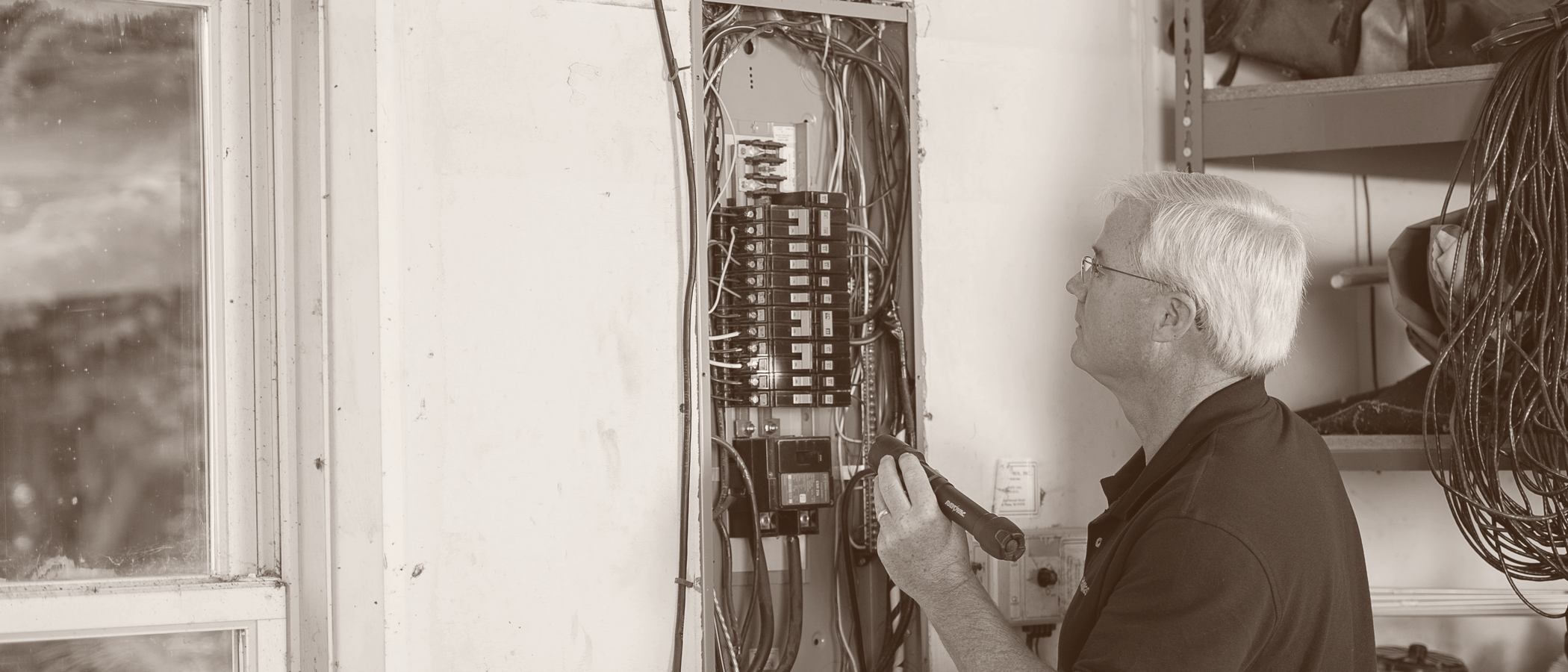
Open the door on your panel and find the largest breaker, usually sitting alone at the top or in the middle. The number stamped on it is your service size: 60, 100, 150, or 200 amps. That figure caps how much power the utility can push into your house at any one moment, and it decides more about your next ten years of home projects than any warning sign on a checklist.
What the amp rating on your main breaker means
Amps measure the rate of electrical flow. A 100 amp service delivers roughly 100 amps at 240 volts to the whole house at once, split among every circuit you have. What matters is the peak: a January evening when the heat is running, the dryer is going, dinner is on the electric range, and the car is charging in the garage.
Electricians work this out with a load calculation, a procedure set out in Article 220 of the National Electrical Code. It totals the square footage, the fixed appliances, the heating and cooling equipment, and any large dedicated loads, then applies demand factors because you never run everything at once. The output is a number in amps. If that number lands near or above your service rating, the panel is undersized, and rearranging circuits will not fix it.
Homeowners tend to assume the panel is fine because nothing has caught fire. The load calculation is the honest answer, and it is the first thing to ask for when you call an electrician about capacity.
60, 100, and 200 amp service, and what each one can actually carry
60 amp service. Common in homes built before the 1960s and occasionally still in place. Sixty amps was sized for lights, a refrigerator, and a gas stove. It cannot carry central air conditioning plus electric heat plus a modern kitchen, and it will not carry a Level 2 car charger with anything left over. If you have 60 amp service and a house you intend to keep, the upgrade is a question of when.
100 amp service. The standard for decades and still adequate for plenty of houses. A smaller home that heats with gas, cooks with gas, and has a gas water heater runs comfortably on 100 amps. The trouble is the direction homes are moving. Every appliance that switches from gas to electric eats into the same 100 amps. A heat pump, an induction range, and a heat pump water heater in one house will use most of it before you plug anything in out in the garage.
150 and 200 amp service. Two hundred amps is the common target in new construction and the usual landing spot for an upgrade. It gives room for electric heat, electric cooking, and vehicle charging without living against the main breaker. One hundred fifty shows up as a middle option when the utility drop or the meter base limits what can be installed.
The right size for your house depends on what is in it and what you plan to add, not on what the neighbors have.
EV chargers and heat pumps are the loads that force the issue
A Level 2 charger is the most common reason a homeowner discovers their panel is full. Chargers are usually installed on a 240 volt circuit at 40 or 50 amps. Because vehicle charging is a continuous load, the code requires the circuit and breaker to be sized at 125 percent of the charger's rating, so a 40 amp charger needs a 50 amp breaker and wire to match. That is a large, permanent bite out of a 100 amp service.
Heat pumps do something similar, with a wrinkle. Many are installed with electric resistance backup heat for the coldest days, and that backup strip is a heavy load arriving at exactly the moment everything else in the house is working hard. A load calculation for a heat pump has to account for that winter evening, not the mild afternoon when the installer visits.
There are ways to add a big load without a full service upgrade. Load management devices can pause the car charger when the dryer and the range are both running. A subpanel adds breaker positions if the total service capacity is genuinely there. An electrician who reaches for the upgrade quote before running the calculation is skipping the step that tells you whether you need it.
Sort out two things before you buy the equipment. Get the load calculation done, and ask your utility what it takes to bring a larger service to the house. A heavier drop, a new meter base, or a trenched underground feed changes both the timeline and the scope.
Aluminum branch wiring: an urgent conversation, and a separate one
Between roughly 1965 and 1973, a copper shortage pushed many builders to use aluminum for the branch circuits that feed outlets and switches. Aluminum expands and contracts more than copper as it heats and cools, and it oxidizes, so connections at receptacles and switches can loosen over time and run hot.
The US Consumer Product Safety Commission has published guidance on this. The CPSC states that homes wired with pre-1972 aluminum branch circuit wiring are far more likely than copper-wired homes to have a connection at an outlet reach what the agency classifies as fire hazard conditions. If you suspect aluminum in your walls, read the CPSC material before you do anything else.
Two clarifications, because this is the most misunderstood item here. Aluminum service entrance and feeder cable, the thick conductors running from the meter to the panel, is normal and current practice. The concern is aluminum in the small branch circuits. And a new panel does not fix aluminum branch wiring. The remediation happens at the connections, usually with approved connectors or pigtailing to copper, done by a qualified electrician. Upgrading the panel is a sensible moment to have the branch wiring evaluated, but they are two different jobs.
Urgent versus planned
Urgency comes down to whether the panel is failing or simply full. These are different problems on different clocks.
Treat it as urgent, and stop using the affected circuits, if the panel is warm to the touch through a closed cover, if you see scorch marks or corrosion, if you smell burning plastic, or if the panel buzzes or crackles. Heat and sound mean a connection is arcing, and arcing near wiring is how fires start. Call a licensed electrician the same day. If you smell smoke, call the fire department first.
It is also urgent in a slower sense if the panel is a brand with a documented safety record, or if aluminum branch wiring is confirmed and the connections have never been remediated. These are not wait-and-see items even when nothing has gone wrong yet.
It is planned work, with time to shop quotes, when the panel is simply out of room or out of capacity. No free slots. Tandem breakers doubled up wherever the panel allows them. An EV charger, an addition, or a heat pump on the horizon. Here you can do it properly: load calculation first, then two or three quotes, confirm the permit and inspection are in the price, and check what the utility needs on their side.
Panel work is licensed-electrician work everywhere. The conductors feeding the panel stay energized with the main breaker off, and most jurisdictions require a permit and inspection. Read the numbers from the outside, then hand it over.
Frequently asked questions
How do I find out what amp service I have? Read the number printed on the handle of the main breaker, the largest one in the panel. If nothing is legible, an electrician can confirm it in a few minutes during any service call.
Is 100 amp service enough for an EV charger? Sometimes. It depends on the rest of the house and the charger's rating. A gas-heated home with a modest kitchen may have headroom for a 40 amp charger. An all-electric home probably does not. A load calculation settles it, and load management hardware is a real alternative when the margin is thin.
Do I need to upgrade my panel to install a heat pump? Not necessarily, but you do need a load calculation that includes any electric backup heat. Heat pumps draw hardest on the coldest days, which is when the rest of the house is working hardest too.
Does a panel upgrade fix aluminum wiring? No. Aluminum branch circuit wiring is remediated at the connections behind outlets and switches, not at the panel. Have the wiring evaluated separately, and read the CPSC guidance on it.
Will the utility need to be involved? Usually, for a service size increase. The service drop, the meter base, and sometimes the transformer have to support the new rating. Your electrician coordinates it, but ask early, because utility scheduling often sets the calendar for the whole project.
Before you dial
Write down three things before you call: the number on your main breaker, the loads you plan to add in the next few years, and anything odd you have noticed about the panel. That short list turns a vague call into a specific one, and it gets you a load calculation instead of a guess. More homeowner guides are on our electrical resources page.
One practical note about the calling. Electricians spend their days in crawlspaces and attics, which is exactly where a phone does not get answered. Some shops run an AI voice receptionist like Answara so a homeowner asking about a 100 amp panel and a new car charger gets a real answer and a booked slot instead of a voicemail box. If the first number rings out, move to the next one on your list. The shop that picks up is usually the shop that shows up.