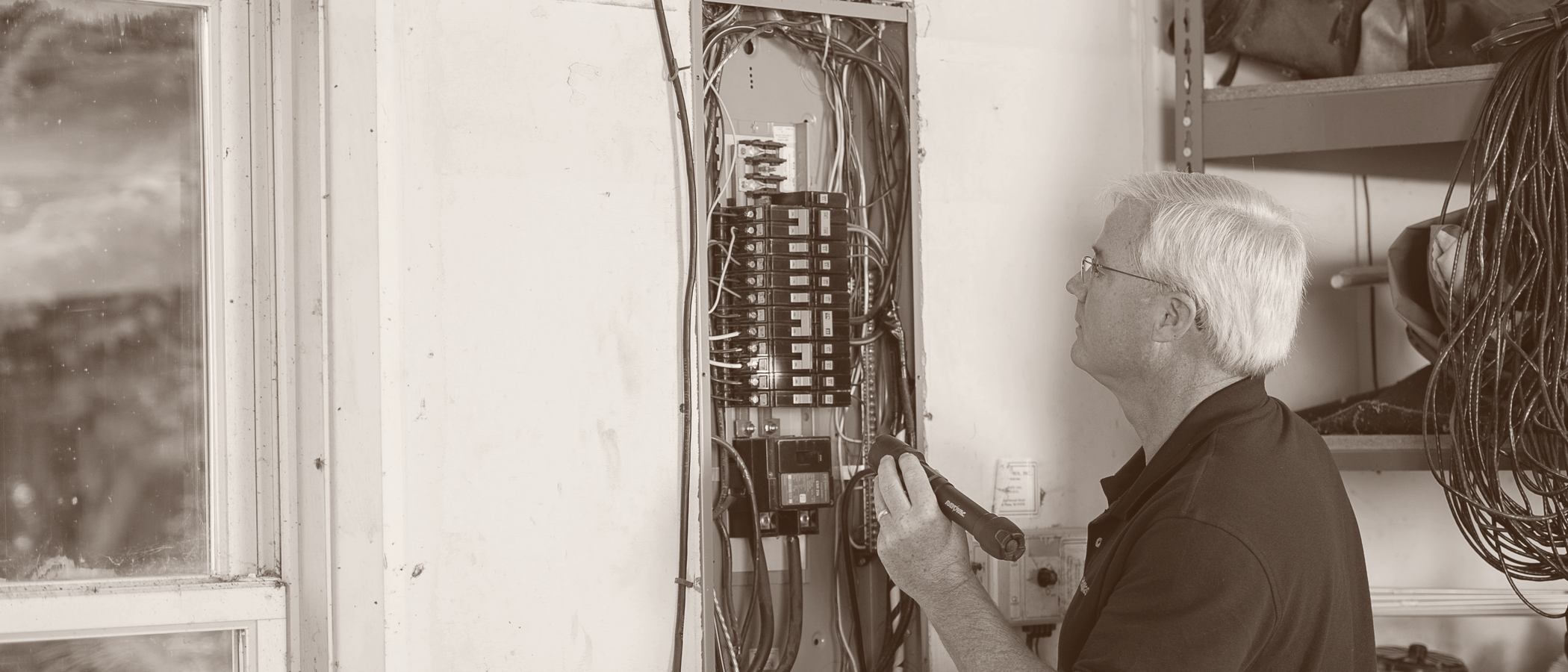
A woman calls on a Thursday morning. A solar company sat at her kitchen table Tuesday night, walked her through a proposal on a tablet, and told her at the end that her electrical panel "might need to be looked at" before anything gets installed. She has not signed. She wants to know what the panel part involves and whether she should be worried.
An hour later a different call comes in. This one is a man who already has solar on his roof, put there four years ago by a company that no longer answers its phone. During the outage last month he stood in a dark kitchen on a bright afternoon and watched his array do nothing at all. He wants a battery. He assumes it bolts on.
Both are good leads. Neither is a job you can scope from the words the caller opens with. Solar-adjacent inquiries arrive with more unknowns than almost anything else an electrical contractor fields, because the caller is usually repeating a third party's summary of their own house.
First, find out who else is already in the room
This is the question most intake scripts skip, and it changes everything downstream. Ask it early and ask it plainly: is anyone else already working on this?
The answers sort into a handful of very different jobs.
Some callers have a signed contract with a solar company and you are being brought in as the electrical sub, or as the panel work the solar contract explicitly excluded. Some have a proposal in hand and want a second opinion before signing. Some bought equipment themselves, sometimes online, and need someone to install it. Some have existing solar and want a battery added, which raises a compatibility question about the inverter that is already on the wall. And a few want the whole thing from one contractor and have not talked to anybody yet.
Get the solar company's name if there is one, whether a contract is signed, and whether a deposit has moved. If the caller has a proposal document, ask them to text a photo of it before the visit. The equipment list on that document answers half the technical questions you would otherwise ask over the phone.
Ask what the salesperson told them about their panel. You will hear "he said it was fine," "he said it needs an upgrade," and "he took a picture of it and never said anything." The third one is the most common.
The panel questions
Battery and solar work both land at the service equipment, so the panel details are the core of the intake. Most homeowners will walk over and stand in front of the panel while you are on the phone if you ask them to. Do that.
What does the main breaker say? The number stamped on the main breaker handle, usually 100, 150, or 200. If they cannot find a main breaker at all, that is a split-bus configuration and it needs eyes on it.
What does the label inside the door say about the bus rating? This is the question nobody asks and it matters more than the main breaker number. The panel label lists the rating of the busbar itself, and it is not always the same figure as the main. How much room that leaves for a backfed source is a calculation the electrician runs against the applicable code and the panel's listing, and it is jurisdiction-dependent. You are not deciding anything on the phone. You are writing down two numbers so that the person doing the design has them. Ask them to photograph the label and send it, which is faster and more accurate than reading it aloud.
Who made the panel? Square D, Eaton, Siemens, and GE are routine. Federal Pacific Stab-Lok, Zinsco, and Challenger turn a solar interconnection conversation into a panel replacement conversation, and the homeowner should hear that possibility from you rather than discover it on a change order.
How many open breaker spaces are there? Have them count blank slots and filler plates. Also ask whether any breakers look like two switches crammed into one position, because a panel full of tandems is not as open as it looks.
Does anything else already backfeed it? An existing solar array, a generator interlock, or an old transfer switch occupies capacity and changes the design. So does an EV charger, and so does a planned one. Ask about the EV even if they did not bring it up. A homeowner buying a car next year should have that load in the conversation now instead of paying to revisit the panel twice.
Meter, service entry, and where the equipment goes
Battery systems are heavy, they have clearance requirements, and they have to sit within a workable distance of the service equipment. Capture the geometry on the phone.
Ask where the meter is and whether the main disconnect is out at the meter or inside at the panel. A meter-main on an exterior wall with a subpanel in the basement is a different install than a single interior panel with the meter right outside it. Ask whether the service comes in overhead or underground, since that often decides where a new disconnect can reasonably land.
Then ask where they would want a battery to live. Attached garage, unfinished basement, exterior wall, detached garage across the yard. Ask how far that spot is from the panel, whether the space gets hot in summer, and what is on the other side of the wall. If the only candidate is a finished living room, know that before a designer draws anything.
For roof-mounted solar, capture roof age and covering material. A homeowner who is two years from a reroof needs that sequencing conversation on the first call.
Critical loads: what do they want still running
For battery work this is the conversation that determines the entire scope, and it is where callers most need slowing down.
The question is not what size battery they want. It is what they want to still be working at two in the morning with the street dark.
Walk the list. Refrigerator and freezer, including a second one in the garage. Well pump, sump pump, or a septic lift station. Furnace blower or boiler circulator. Air conditioning, and whether they would accept one zone instead of the whole house. Networking gear, which people forget until they are trying to work from home in an outage. Medical equipment, which changes the priority of the entire job.
Ask about motor loads by name, because a well pump draws a large surge on startup and homeowners never volunteer that. Ask how long they want to ride through. Somebody expecting three days of normal life is describing a different system than somebody who wants the fridge and the sump covered until morning.
The output is a circuit wish list, and it feeds directly into whether the design uses a separate critical loads panel or backs up the whole service. That choice drives the budget more than any other decision on the job, so getting the list on the first call is what lets the site visit price rather than discover.
Utility and interconnection status
Anything that pushes power toward the grid involves the utility, and the rules, forms, and timelines belong to that utility and the local authority. Intake does not answer those questions. Intake collects the facts that determine the answer.
Capture the utility name and the account holder's name, which does not always match the person calling. Ask whether they already have solar and whether it received permission to operate, the milestone that tells you an existing system is fully through the utility's process. Ask whether any application has been submitted, by them or by a solar company, because a pending application under another contractor's name is a real complication. Get the exact service address and the jurisdiction that issues permits, remembering that the mailing address and the permitting authority are frequently not the same town.
Ask whether the property is in an HOA or a historic district, either of which can add an approval step for roof equipment or an exterior enclosure. And ask whether the caller owns the home. A tenant cannot authorize this work, and two owners means a second decision maker you have not spoken to.
The misconceptions worth correcting on the phone
Solar-adjacent callers arrive with a specific set of wrong assumptions, and clearing them up during intake prevents most of the friction later.
"I have solar, so I have power during outages." Grid-tied systems are generally designed to stop producing when the grid goes down, which is why the man in the dark kitchen watched his array sit idle on a sunny afternoon. Backup during an outage takes equipment built for it. This is the single most common surprise on these calls and it is better delivered by you than by the next storm.
"The battery just plugs into my existing solar." Sometimes an existing inverter supports adding storage. Sometimes it does not, and the retrofit involves replacing equipment that is working fine. Get the make and model off the inverter, which is usually on a label on the unit itself, and do not promise compatibility before someone reads it.
"My service is 200 amps, so there is plenty of room." Service size and the capacity available for a backfed source are separate questions, and the second one depends on the panel's bus rating and what is already connected. This is exactly why the label photo matters.
"A battery will run the whole house like nothing happened." Some systems are sized and configured for that. Many are not, and an air conditioner or an electric range can draw down a stored reserve fast. Setting that expectation during intake is how you avoid a disappointed customer standing next to equipment doing exactly what it was designed to do.
"This can be done next week." The install is often the short part. Permits, utility review, equipment lead times, and inspection sit around it, and they sit outside your control. Say so early.
Callers also ask about incentives and credits. Those terms change, they vary by state and utility, and a phone intake is the wrong place to interpret them. Log the question and route it to whoever on your team is authorized to answer.
What a good solar or battery lead looks like
By the end of the call you want a record that lets someone design or price rather than investigate:
- Whether a solar company is involved, which one, and whether a contract is signed
- Main breaker rating, panel bus rating from the label, panel brand, and open spaces
- Photos of the panel label, the panel interior if safe to open, and the meter
- Existing solar and inverter make and model, plus permission-to-operate status
- Meter location, service entry type, and whether the main disconnect is outside
- Proposed battery location and its distance from the panel
- Critical loads wish list, with pumps and medical equipment flagged
- Utility name, account holder, exact service address, and permitting jurisdiction
- HOA or historic district status, roof age for rooftop work
- Owner or tenant, and any existing generator, interlock, or EV charger
That is a job sheet. "Wants a battery" is a truck roll.
The call nobody was free to answer
These leads have a timing problem. Battery inquiries cluster after outages, which is exactly when your crew is out restoring service and nobody is near a desk. Solar calls cluster in the evening and on weekends, right after a kitchen-table sales appointment, while the proposal is still open on the counter.
Both callers are shopping, and the one with a proposal in hand is comparing you against a company that just spent ninety minutes in her living room. The pattern across the service trades is unforgiving: a call that reaches voicemail often becomes a call to the next number on the list, with no message left behind.
Coverage is the fix, and there is more than one way to get it. A front-desk person can run the intake. An answering service can catch overflow. An AI receptionist for electrical contractors can answer the Tuesday-night call, ask about the solar company, the panel label, the meter, and the critical loads in the order you would, request the label photo, and book the consultation with those answers attached.