The call arrives as a mood rather than a scope. "The front of the house looks dark and unfriendly." "We just finished the patio and we want it to look like the one on the corner." "My mother almost missed the back step on Thanksgiving."
Three different jobs live inside those sentences. One is a pair of wet-location floods on the garage gable, fed from a circuit that already exists. One is a thirty-fixture low-voltage system with a transformer, a cable route under new pavers, and a design conversation nobody has had yet. One is two step lights and an afternoon.
Landscape lighting is one of the few electrical inquiries where the customer honestly cannot describe what they want, because what they want is an effect they saw in someone else's yard after dark. Your intake call has to turn that into a scope, or at least into enough of one that whoever walks the property is not starting from a blank page.
The first fork in the conversation
Ask early whether the caller is picturing lights on the building or lights in the landscape. The answer routes almost everything that follows.
Line voltage work tends to be building-mounted: floods, soffit and eave lighting, wall packs over a side door, a switched receptacle for holiday circuits. It usually starts from an existing circuit or a new one out of the panel, and it lives under the same rules as any other exterior branch circuit in your jurisdiction.
Low voltage is the usual answer for path lights, uplighting on trees, wash on a stone wall, and anything spread through a planting bed. A transformer takes line voltage down, cable runs out from it, fixtures land on that cable. The fixtures are the easy part. The transformer, the runs, and the routing are where the job gets designed. Plenty of properties end up with both systems, meeting at one transformer location and one control decision.
Keep two things off the phone call entirely: burial depths and protection requirements. Wet-location listing, ground-fault protection, cover over buried cable and conduit, and what needs a permit all vary by code edition and local amendment. Capture what exists on the property and let the estimator confirm the rules against the current book and the local authority. A homeowner telling you "the last guy just laid it in the mulch" is a fact to write down, not a standard to match.
Six answers that shape the site walk
1. What they want lit, and why
Push past "the yard." Ask which parts of the property they picture lit, and what bothers them now.
Security, appearance, and footing are different design problems that callers blend into one request. Someone worried about a dark side yard wants coverage and probably motion control. Someone who just spent a season on a garden wants the wall grazed and the maple uplit, and would hate a flood that lights everything with none of the effect. The reason behind the request tells your estimator what a good answer looks like before they arrive.
2. What power already exists outside
Ask what is out there now. Exterior receptacles and where they are, whether they are protected, whether there is an existing switched exterior circuit, and how the caller currently turns on whatever outdoor lights they have.
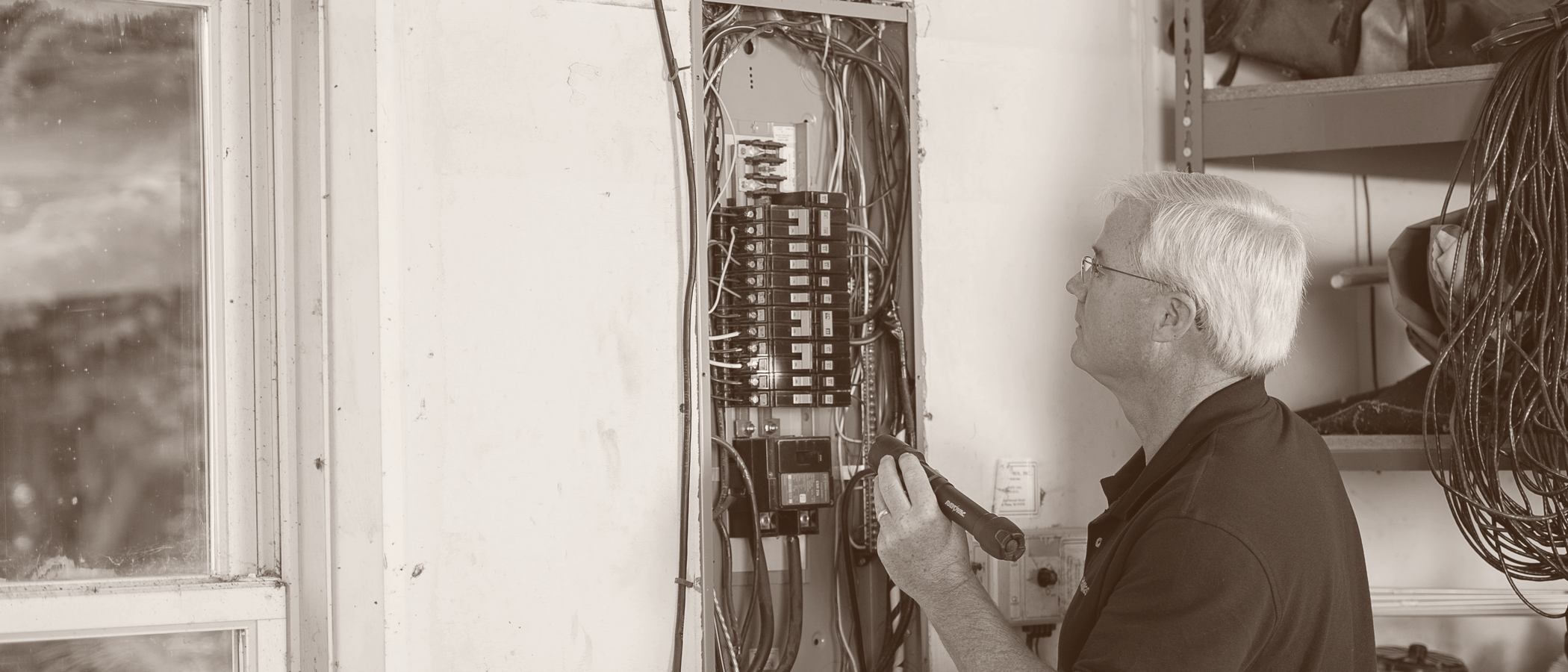
Then ask about the panel. Main breaker rating, rough age of the house, and whether there is open space. A low-voltage system is a modest load, but the call frequently arrives attached to something bigger: a pool, a detached garage, an EV charger the customer mentions in passing. Finding out on the phone that the panel is full turns a lighting conversation into a service conversation, and that is a much better surprise on Tuesday than in the driveway on Thursday.
3. The inputs to transformer sizing, not the size itself
Nobody sizes a transformer on the phone. What you can collect is what the sizing depends on: roughly how many fixtures they imagine and of what kind, how far the far end of the yard is from the house, where an exterior wall or post could carry a transformer, and whether that spot is anywhere near a receptacle.
Then ask the question most intake scripts miss. Do they expect to add to this later? A customer planning a future pool area or a back fence line is telling you the system needs headroom, and headroom is a decision made at the transformer, before anything gets buried. Wattage totals, run lengths, and voltage drop get worked out after the walk. The phone call only has to keep the estimator from arriving blind to the scale.
4. What sits between the transformer and the fixtures
This is where landscape lighting quotes go wrong, and it is almost entirely a phone-answerable question.
Ask what the cable would have to cross. A driveway, a paver patio, a concrete walk, a retaining wall, mature tree roots, a steep grade. Then ask what is already in the ground: irrigation lines and heads, an invisible pet fence, a septic field, a gas line to a grill or fire pit, a previous owner's abandoned wiring. Homeowners know about their own irrigation and dog fence, and they almost never volunteer either. Locating public utilities runs through the 811 process regardless. Private lines are the ones nobody marks, and the ones you want named on the phone.
Finish with restoration. Who puts the sod, the mulch, and the pavers back, and to what standard. A customer with a two-month-old lawn has an opinion about trenching, and they will express it loudly after the fact if nobody raises it first.
5. Existing controls, and any existing system
Ask how they want the lights to come on, then ask what is controlling anything out there now.
Timers, photocells, astronomic timers that track sunset through the year, motion sensors, an app, a switch inside the house, or a smart hub the customer already runs everything else through. A caller who wants this in the same app as their thermostat has told you the system needs to be compatible with something you should identify before quoting.
Then the question that saves site visits: is there an old system already in the ground? Half-dead halogen path lights from a previous owner are common, along with corroded connections, brittle cable, and a transformer nobody has opened in a decade. A retrofit onto failing infrastructure and a fresh install carry different risk, and the caller will describe both as "we have some lights out back." Ask whether any of them still work, and how long it has been since they did.
6. Whether they want design help
Some callers have a landscape architect's plan and a fixture schedule. Some have a builder's allowance and a deadline. Some have a folder of saved photos and a strong feeling.
Ask which, because it decides who from your shop should walk the property and how long the visit takes. Installing to someone else's drawing is a bid. Designing the effect yourself is a consultation, and it is worth being clear on the phone about whether you do that, whether you charge for it, and what the customer ends up with.
Why the walk wins and the phone quote loses
A fixture count is not a design. Ten fixtures placed by someone who has aimed lights before and ten fixtures placed evenly along a walkway produce completely different results on the same property, and no version of that conversation happens over the phone.
The specifics you cannot get remotely: how tall the maple actually is and whether it has a trunk worth grazing, where the neighbor's bedroom window faces, how the grade falls away behind the garage, whether the front elevation is brick that takes light well or vinyl that shows every hot spot. Photos help a little. A photo taken at noon tells you almost nothing about what the property looks like at nine at night, which is the only condition the customer cares about.
Which is the argument for doing at least part of the visit after dark. Measuring, panel work, and routing are daylight tasks. Aiming, deciding beam spreads, and showing a customer what an uplit tree looks like against their own house are dusk tasks. Some shops do one visit at sunset. Some do a daytime measure and come back with demo fixtures on a battery pack to show the effect before anything is buried. Either way, the evening slot is the part that sells the job, and it is a slot most electrical shops are not scheduling into.
So say so on the phone. "We do these at dusk, because that is the only way to show you what you are buying" is a specific reason for a specific appointment, and it books far better than "someone will come by and take a look."
Getting the appointment before you hang up
The call should end with a date. Offer the evening slot, confirm who needs to be there, since outdoor lighting is frequently a two-decision-maker purchase, and ask them to text over a few photos in the meantime: the front elevation, the back of the house, the panel with the door open, and the existing transformer if one is hiding on a wall somewhere.
Set the money expectation too. Say whether the visit is free or billed, and what the customer walks away with. A drawing, a fixture count, a written proposal, or a conversation.
Then there is the part no script fixes. Landscape lighting inquiries arrive at night, because that is when the yard is dark and the problem is visible. A homeowner standing on their patio at nine on a Friday with a glass of wine and a dark hedge line is the exact person you want to reach, and they are calling during the hours when every electrical shop in town is closed. By Saturday morning the urgency has cooled, or someone else answered.
Tools like Answara sit in that slot and run the intake as an actual conversation: building or landscape, what power is out there, the fixture count and distances, what the cable would have to cross, the controls, and whether there is an old system already buried. It books the dusk walk on the calendar and hands your estimator a record instead of a name and a number. A briefed answering service does the same work if the operators know your fields rather than taking generic messages. The call handling and scheduling pages cover how the intake connects to a bookable calendar.
Nobody is asking the phone to design a lighting plan. It only has to hold the appointment.