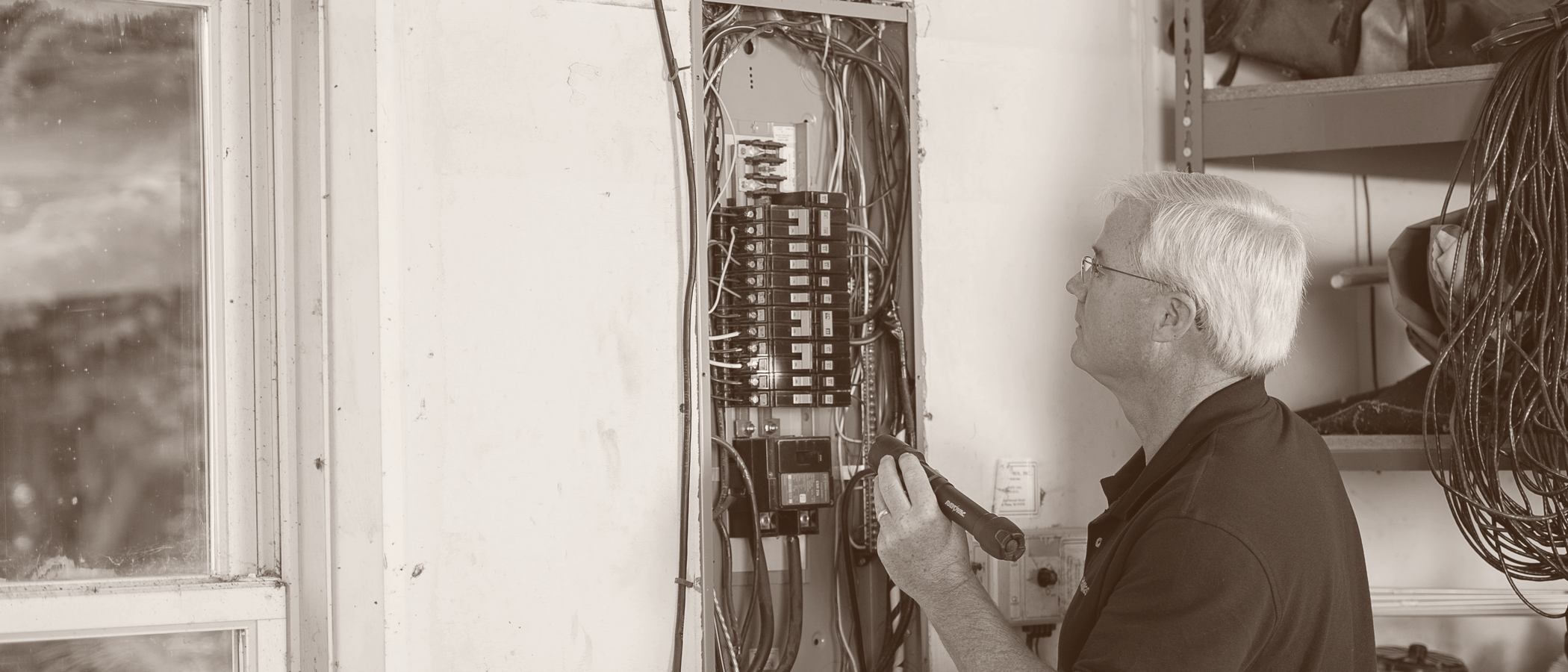
A homeowner calls on a Tuesday holding a home inspection report. Somewhere in it is a line about a Federal Pacific Stab-Lok panel, and the buyer's agent has told her it needs to be replaced before closing. Her first question to your office is not about price. It is "how long does the permit take?"
Whoever picks up that phone usually cannot answer it, and the honest reason is that nobody can. The permit clock belongs to a building department and a utility, and neither of them answers to your schedule. What happens next decides whether that call becomes a site visit or becomes a call to the next electrician on the list. An office person who says "I really don't know, let me have someone call you back" has given a caller with a closing date no reason to wait.
There is a better answer, and it does not require your front desk to learn the electrical code.
What to say about permits without putting a date on it
Panel upgrades are permitted work in essentially every jurisdiction, and that part your office can say plainly. "Yes, a service panel replacement is permitted work. We pull the permit, we schedule the inspection, and that is included in what we quote you." That answers the question the caller was actually asking, which is whether this is something they have to handle themselves.
The timeline is where people get in trouble. Permit turnaround depends on the authority having jurisdiction, whether your area issues over the counter or takes plan review, how backed up the inspector is that month, and how fast the utility can get a crew out for the disconnect. None of that is in your control, so nobody at your office should be quoting a date.
What you can do is describe history rather than make a promise. "In our county, panel permits have been coming back within a few days lately, and the inspection usually happens within a week of us calling for it. That has moved around, so we do not put a date on it until we have the permit in hand." That is a useful answer and it is true. Coupling it with a promise gets somebody a phone call from an angry homeowner who scheduled movers around your guess.
Two phrases worth banning from the office script: "the permit takes about X days" stated flatly, and "we can have you done by" any specific date, before an electrician has seen the service. Write both on the card by the phone as things nobody says.
The questions that make the call worth something
A panel upgrade lead is worth qualifying before anyone drives out, because the difference between a straight breaker panel swap and a full service upgrade with a new mast and meter base is thousands of dollars and a completely different scope. Five answers get you most of the way there.
- Existing panel amperage. Ask the homeowner to read the number on the big main breaker at the top. Sixty, one hundred, one twenty five, two hundred. If they cannot find it, a photo of the open panel door and the label works better than a description.
- Where the meter is. Attached to the house, on a pedestal in the yard, or fed from a mast through the roof edge. Ask whether the panel is inside next to the meter or on the far side of the house, because that distance drives the job.
- Which utility serves them. The utility owns the disconnect, the reconnect, and sometimes the meter base spec. Their queue is a real constraint on scheduling, and their rules differ enough that you want the name written down before anyone quotes anything.
- Age of the home. A 1962 house means you are also thinking about the grounding electrode, the service entrance conductors, and whether there is any cloth wiring behind the drywall. A 1998 house is a different conversation.
- Why they want the upgrade. This is the most useful question on the list and the one offices skip.
That last one sorts the lead better than the other four combined. An EV charger install, an insurance company letter demanding the Zinsco panel go, a failed home inspection during a sale, an addition, a heat pump, a panel that is simply full with no space left for a breaker: each of those brings a different urgency, a different scope, and sometimes a different decision maker. Someone with a closing date in nine days is a different customer from someone thinking about solar next spring. Ask, write the answer in the ticket, and let your scheduler see it.
Get a callback number and an address at the same time, and ask whether the panel is accessible or whether there is a finished wall, a storage shelf, or a deck in front of it.
When a site visit stops being optional
For panel and service work, it more or less always is. Anyone offering a firm number over the phone is guessing at the parts of the job that cost money.
The things that decide scope cannot be seen from a phone call. The condition of the service entrance conductors and the meter base. Whether the mast and weatherhead need replacing. Where the grounding electrode is and whether it meets current requirements. How much slack exists in the branch circuit wiring, because a panel that was wired tight thirty years ago may need every circuit extended with junctions. Whether the load calculation supports what the homeowner actually wants to add. Whether the utility drop lands somewhere the new equipment can be placed.
Say that plainly to the caller and it lands as competence rather than evasion. "We do not quote panels over the phone, because the price swings on things we have to see: your meter base, your service entrance, how the existing circuits are run. The visit takes about forty five minutes and we bring you a written number." Then book the visit while they are on the line. That is the whole point of the call.
If the caller pushes for a number anyway, a range from your recent jobs is fine as long as it is labeled as a range and tied to what varies. What is worth avoiding is a specific figure that a homeowner will treat as the price.
Set expectations about the utility disconnect early
The part homeowners never see coming is that their power goes off, and that the electrician does not fully control when.
A service change means the utility pulls the meter or drops the service so the work can happen safely, then comes back to reconnect once the inspection passes. Utilities schedule that on their own calendar. In some areas a crew shows up the same week, in others the disconnect and the reconnect are separate appointments with days between them, and in some jurisdictions the inspector has to sign off before the utility will even schedule the reconnect.
Tell the caller the sequence on the first call, before anyone commits to anything: permit, then the utility disconnect appointment, then the work, then the inspection, then the utility reconnect. Tell them their power will be off for a chunk of a day, that the exact date depends on the utility's schedule and not yours, and that you will confirm each step as it gets locked in. Homeowners with medical equipment, home offices, a chest freezer full of food, or well pumps need to hear this early enough to plan for it.
Then keep the promise your office can actually keep, which is communication. Confirm when the permit is issued, confirm the utility date the day you get it, and call the same day if anything slips. A customer who knows their power comes back Thursday afternoon does not call you three times on Wednesday.
An AI voice receptionist can run this intake when your electricians are on the roof and your office is at lunch, capturing the panel amperage, meter location, utility, and reason for the upgrade, then booking the site visit instead of leaving a stranger with a closing date at voicemail. Answara answers electrical phones on that basis. More on how trades shops manage call load is on our electrical resources page.