The car usually arrives before the caller thinks about the wiring. Someone takes delivery on a Saturday, plugs into a standard outlet, watches the estimated charge time, and calls an electrician on Monday morning asking what a "fast charger" costs. They have a dealer brochure, a garage, and no idea whether their panel can carry it.
That call can go two ways. Handled loosely, it becomes a truck roll to a house where the panel is full, the charger has to sit on the far side of the garage, and the quote triples on the spot. Handled well, it becomes a scoped job before anyone drives out. The difference is five or six questions asked in the right order.
Here is what to pull out of an EV charger call.
Start with the panel, not the charger
Most shops ask about the charger first because that is what the caller wants to talk about. Flip it. The panel decides whether this is a half-day job or a service upgrade conversation, and you want to know that early enough to set expectations on the same call.
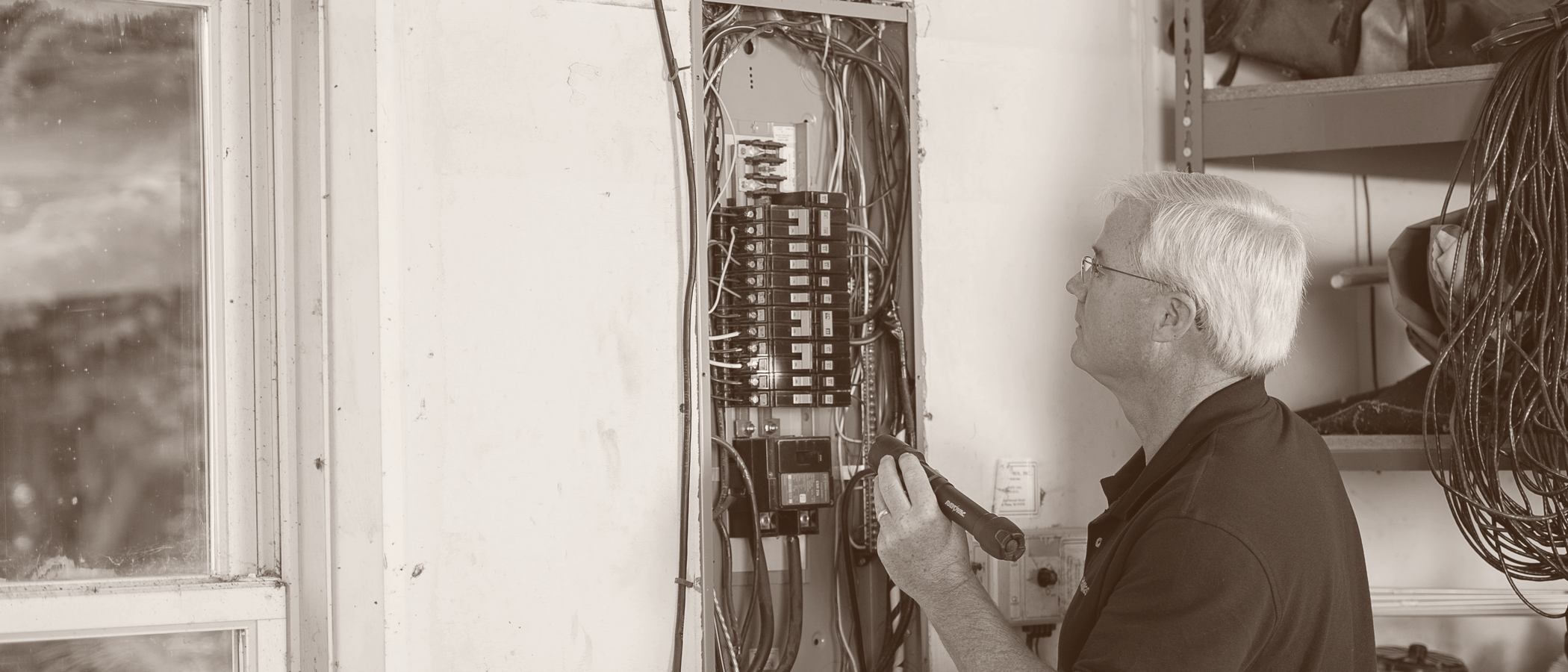
Ask for the main breaker rating. The number is printed on the main breaker itself, and most callers can read it back to you: 100, 125, 150, or 200 amps. Ask how old the home is. Then ask for a photo of the panel with the door open, texted over while you are still talking. That single photo tells you the brand, how many open spaces are left, whether the busbar has room, and whether you are looking at a Federal Pacific or Zinsco panel that changes the entire quote.
Then get an inventory of what else draws heavily in the house. Electric range, electric dryer, electric water heater, central air, a heat pump, a well pump, a hot tub, and any charger already installed. A 100 amp service with electric heat and a spa is a different problem than a 200 amp service in a house with gas appliances. You are not running the load calculation on the phone. You are finding out whether one is going to be the deciding factor, and whether the homeowner needs to hear the words "service upgrade" before you arrive.
If the caller mentions a second EV, or says their partner's car is on order, write that down. Planning for two chargers changes the panel conversation now rather than in a year.
Which charger, and does the customer already own it?
Charging equipment sorts into rough levels. Level 1 means the cordset that shipped with the car, plugged into an ordinary 120 volt outlet. Level 2 means a 240 volt circuit and a wall unit, which is what almost everyone actually means when they call about "installing a charger." DC fast charging is commercial infrastructure and does not belong in a residential garage, though callers occasionally ask, and it is worth clearing up quickly.
Once you establish it is a Level 2 job, ask these:
- Has the charger been purchased? Some callers have a unit in a box already. Others expect you to supply it. That is a materials question and a scheduling question, because a charger that has not shipped yet means the install date is not yours to pick.
- What brand and model? Get it, then look up the spec sheet yourself instead of relying on the caller's summary. The unit's rated current is the input to everything downstream.
- Hardwired or plug-in? Some units are designed to hardwire, some terminate in a receptacle, and some can do either. This changes the receptacle, the wiring method, and sometimes the permit conversation.
- Adjustable output? Many Level 2 units let the installer dial the current down at commissioning. On a tight service, that flexibility is sometimes what makes the job possible without a panel upgrade, so it is worth knowing before you quote.
If the caller has not bought anything yet and is asking what to get, that is a good sign. It means you can steer the equipment choice toward something that fits their service instead of retrofitting around a unit they picked on price.
Distance, route, and what the wire has to cross
The run is where EV charger quotes go wrong. A charger mounted on the wall shared with the panel is a short job. The same charger on the opposite wall of a detached garage is a different project entirely.
Ask where the panel lives and where the customer wants the charger. Get a rough distance in feet, then ask what sits between the two points. Open basement ceiling, a finished wall, an attic, a crawlspace, a concrete slab, or a stretch of lawn between the house and a detached garage. Each answer changes the method and the hours.
A few things worth asking directly:
Attached or detached garage? A detached structure may mean a trench, a subpanel, or both. Ask whether the garage already has power and, if it does, what feeds it.
Which side does the car's charge port sit on? Cable lengths are finite and cars park in a fixed direction. Getting this wrong means the customer cannot reach the port without draping cable across the hood.
Indoor or outdoor mount? Outdoor placement raises weather rating and mounting height questions, and it changes the conduit.
Is the wall finished, and is the customer willing to have it opened? Some homeowners would rather see surface conduit than drywall repair. Others feel the opposite strongly. Ask instead of assuming.
Does the garage have anything in the way? Cabinets, a workbench, a water heater, or a stored boat all narrow the practical mounting options.
Set the permit expectation on the first call
Residential EV charger installs are permitted work in most jurisdictions, with an inspection before the circuit is signed off. Requirements for the circuit itself, the overcurrent protection, the ground-fault provisions, and the wiring method are set by the code edition your jurisdiction has adopted, along with any local amendments, so confirm the specifics against your current code book rather than a rule of thumb from three years ago. This part of the code has been revised more than once as EV loads became common.
What matters at intake is simpler. Get the service address so you can identify the jurisdiction. Ask whether the property is owned or rented, because a tenant cannot authorize this work. Ask whether there is an HOA, which occasionally matters for an outdoor mount. And ask whether the customer is pursuing a utility program or a rebate, since some of those require documentation, a specific meter arrangement, or an approved installer, and finding that out after the work is done helps nobody.
Then tell them the real timeline, including the inspector's schedule. A person who just bought a car wants the charger live this week. Saying so early is a slightly harder call and a much easier month.
Why the charger call you miss goes to the next electrician
EV charger leads are competitive and they move fast. Dealers hand out installer names at delivery, charger manufacturers run their own installer directories, and the homeowner is usually working down a short list. Whoever picks up and sounds like they have done a dozen of these tends to get the job.
That is a hard standard for a small shop. You are in a crawlspace, on a ladder, or driving between calls, and the phone is the thing you cannot always get to. Evenings are worse, because that is when someone finally sits down with the brochure and starts dialing. A caller who reaches voicemail on a job this shoppable often does not leave a message.
Some shops close that gap by pairing the crew with an AI receptionist like Answara, which answers around the clock and captures the panel rating, the charger model, the distance from panel to mounting spot, and the address, so the callback starts from real information instead of a name scribbled on a pad. It does not quote the job and it does not replace the electrician. It makes sure the caller reaches an intake instead of a voicemail box. The AI call handling overview covers how that works, and the electrical resources hub has more on scoping residential jobs like this.
What good intake buys you
An electrician who arrives already knowing the service is 200 amp with four open spaces, the charger is a hardwired 48 amp unit the customer bought, the run is 35 feet through an open basement ceiling, and the car parks nose-in with the port on the driver's side is doing a confirmation visit. The quote is accurate because the surprises already surfaced on the phone.
Keep the question list short and use it the same way every time, whether your best tech takes the call or it comes in at ten at night. The install itself is repeatable work. The two minute conversation in front of it is what decides whether you are the one doing it.
FAQ
What should I ask first on an EV charger call? The panel. Main breaker rating, panel brand, open spaces, and what else in the house draws heavily. That determines whether the job is a straightforward circuit or a service upgrade conversation, and it is better raised on the phone than at the quote.
How do I know what size circuit the job needs? Get the charger's brand and model and read the manufacturer's spec sheet yourself. The unit's rated current drives the circuit, and many Level 2 chargers can be set to a lower output at commissioning, which sometimes matters on a tight service.
What run details should intake capture? Panel location, desired charger location, approximate distance in feet, and what the wire has to cross. Also ask whether the garage is attached or detached, whether the mount is indoors or out, and which side the car's charge port is on.
Do residential EV charger installs need a permit? In most jurisdictions yes, with an inspection before sign-off. The specific circuit and protection requirements come from the code edition your area has adopted plus local amendments, so verify against your current code book rather than assuming last cycle's rules still apply.