Most electrical problems can wait for a weekday appointment. A dead outlet in the guest room, a light switch gone mushy, a breaker that tripped once when the space heater and the hair dryer shared a circuit. Annoying, not urgent.
A few cannot wait, and the difference matters, because the dangerous faults are the ones that get worse while you sleep on them. A loose connection that is arcing does not settle down overnight. It heats the wire around it, and it keeps heating.
So here is the triage. What is an emergency, what is a next-day job, and what to do between placing the call and the electrician arriving.
The five things that mean call now
If any of these are happening in your home right now, stop reading and make the call.
1. A burning smell
Burning plastic, hot metal, or an odd fishy chemical smell near an outlet, a switch, or the panel. That fishy note is melting insulation, one of the clearest warnings a home's wiring gives before something catches.
You are smelling heat, and heat inside a wall means current is going somewhere it should not. Get out if the smell is strong, if you see smoke, or if you cannot find the source in a few seconds. Call 911 or your fire department first when there is smoke or flame. The electrician comes after the fire risk is handled, not instead of it.
2. Sparking outlets or a sparking switch
A tiny blue snap when a plug seats can be normal, the same way static happens. Sparks that keep coming, sparks with a pop or a sizzle, sparks that leave a scorch mark, or an outlet that throws them with nothing plugged in are all a different story.
Stop using that outlet. Do not plug anything else into it, and do not test it once more to see if it does it again. If you know which breaker feeds that room, switching that one breaker off is a reasonable thing for a homeowner to do. Leave the panel cover closed.
3. Exposed or damaged wiring
A cable chewed by a rodent, a cord with the copper showing, a wire hanging loose where a fixture used to be, a burned-back outlet face. Anything that puts bare conductor where a person or a pet could reach it.
Keep everyone away from it. Do not tape it, do not push it back into the box, do not tuck it behind the drywall to deal with later. Live bare wire is an electrocution risk, and there is no way to know it is dead by looking at it.
4. Water touching anything electrical
A flooded basement with outlets near the floor. A leaking roof dripping into a light fixture. A burst pipe above the panel. The water does not have to be deep to make the room dangerous.
Do not walk into standing water where the power might still be on, and do not reach for the panel with wet hands or wet feet. If you cannot cut power to that area from a dry spot, call the utility, call an emergency electrician, and stay out of the room. Nobody should be wading through water to reach a breaker.
5. A total outage that is yours alone
Check outside first. If the whole street is dark, that is a utility outage and your electrician cannot fix it. Report it and wait.
If your neighbors have lights and you do not, the fault is on your side of the meter and it belongs to an electrician. Same when half the house works and half is dead, which points at the service or the panel rather than any one circuit. Losing all power in a cold snap, in serious heat, or in a home running medical equipment is urgent on its own.
What is a next-day call instead
Not everything electrical is a five-alarm event, and treating it that way costs you an after-hours rate for nothing. These can generally wait for a scheduled visit:
- One dead outlet or one dead switch, with no smell, no heat, and no scorching
- A breaker that tripped once and reset cleanly and has stayed on since
- A light fixture that flickers on its own but is cool to the touch
- A GFCI outlet that will not reset, when nothing else is wrong
- Planning work: a new circuit, a car charger, an appliance install, a panel assessment
What decides the list is heat, arcing, or exposed conductor, not how much power you have lost. A dead outlet is inconvenient. A warm outlet belongs in the first list.
One case people get wrong: a breaker that snaps back off the instant you reset it. That breaker is protecting you from a real fault downstream. Leave it off and call. Do not tape it, and never swap in a bigger one to make the tripping stop.
What to do while you wait
Get people and pets away from the affected area, and unplug what you can safely reach well away from the fault. If a single breaker feeds the problem and the panel is dry and cool, switching that breaker off is fine. If the fault is spreading or you cannot isolate it, the main breaker is the blanket answer. Flipping it is operating a switch, not performing a repair.
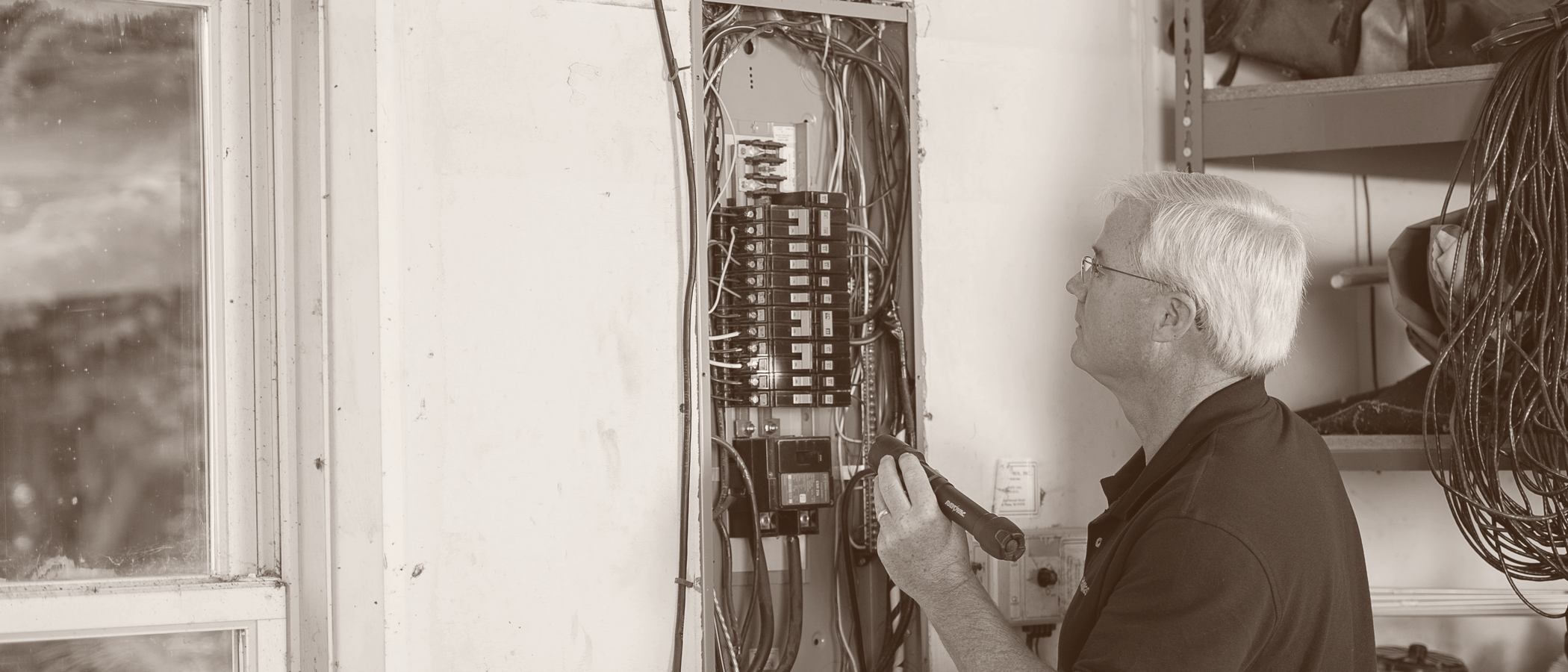
Then leave the panel alone. This is the step that gets people hurt. The service wires feeding a panel stay energized even with the main breaker off, and there is no version of poking around inside one that is safe without training and the right gear. Reading the signs is the homeowner's job. Opening the panel is not.
Do not run water on an electrical fire, do not touch a wire to see if it is live, and do not restore power to a circuit that just gave you a burning smell because things seem calm now.
When you call, describe what you are seeing and smelling and when it started. A licensed electrician can often tell you over the phone what to shut off before anyone gets in a truck, which is the whole reason the call is worth making tonight rather than in the morning.
That short window is also why decent electrical contractors keep their after-hours lines genuinely covered, whether with a live answering service or a tool like Answara that picks up around the clock, takes the address and the nature of the hazard, and gets a real emergency in front of the on-call electrician instead of a voicemail box. At 11pm with a hot panel, the only thing you need is for someone to answer.
Frequently asked questions
Should I call an electrician or 911 first? If there is smoke, flame, or a burning smell you cannot immediately locate and stop, call 911 and get everyone out. The electrician handles the fault after the fire risk is handled.
Is it safe to turn off my own main breaker? Switching the main off is generally safe when the panel is dry, cool to the touch, undamaged, and you are standing on a dry surface. You are operating a switch on the outside of the box. Do not remove the cover, and if the panel is wet, hot, buzzing, or scorched, stay back and call from another room.
My power is out. How do I know if it is the utility or me? Look up and down the street. Dark neighbors mean a utility outage, so report it and wait. Lit neighbors and a dark house point at your service, meter, or panel, which is an electrician's job.
One outlet is dead. Is that an emergency? On its own, no. Book a normal appointment. It changes the moment the outlet is warm, discolored, buzzing, or smells like anything at all.
Can I use the outlet again if the sparking stopped? No. Sparking that has stopped is not sparking that is fixed. Leave the circuit off and have it checked.
The better version of this whole article is the one you never need, which means learning what your panel is telling you before it starts smelling like anything. Our electrical resources hub covers the warning signs that show up long before the 11pm call, and most of them are visible from outside a closed panel door.