Flickering lights sit somewhere between a shrug and a genuine hazard, and the hard part is telling which one you have. Sometimes it is a bulb that needs a quarter-turn. Sometimes it is the first visible sign that the wiring feeding your home is coming apart. This guide walks through the causes, from harmless to urgent, and tells you when to stop troubleshooting and call a licensed electrician.
Start with the easy stuff
Before you assume the worst, rule out the cheap fixes. A surprising share of flickering traces back to the bulb itself or its immediate connection.
If a single fixture flickers and nothing else in the house does, the bulb is the first suspect. LED bulbs flicker when they are loose in the socket, when they are paired with a dimmer they were never rated for, or when the bulb is simply failing. Fluorescent tubes flicker more as they age and in cold rooms, which is why the garage light stutters on a January morning. Screw the bulb in snugly, swap it for a known-good one, and check that any dimmer switch lists LED compatibility. If the flicker follows the bulb to a new fixture, you found your answer.
A loose connection at the fixture or switch is the next layer down. Wires back out of their terminals over years of thermal cycling, and the resulting intermittent contact reads as a flicker. This is already the point where a homeowner should be cautious, because a loose connection is also how connections overheat.
When flickering points to something larger
Now the causes that are worth taking seriously.
Large appliances dimming the lights. If your lights dip the moment the air conditioner, well pump, or clothes dryer kicks on, you are watching a voltage drop under load. A brief, slight dim on startup is normal. A deep dip, or one that happens every cycle, suggests the circuit is undersized for the draw or a connection somewhere is struggling to carry the current.
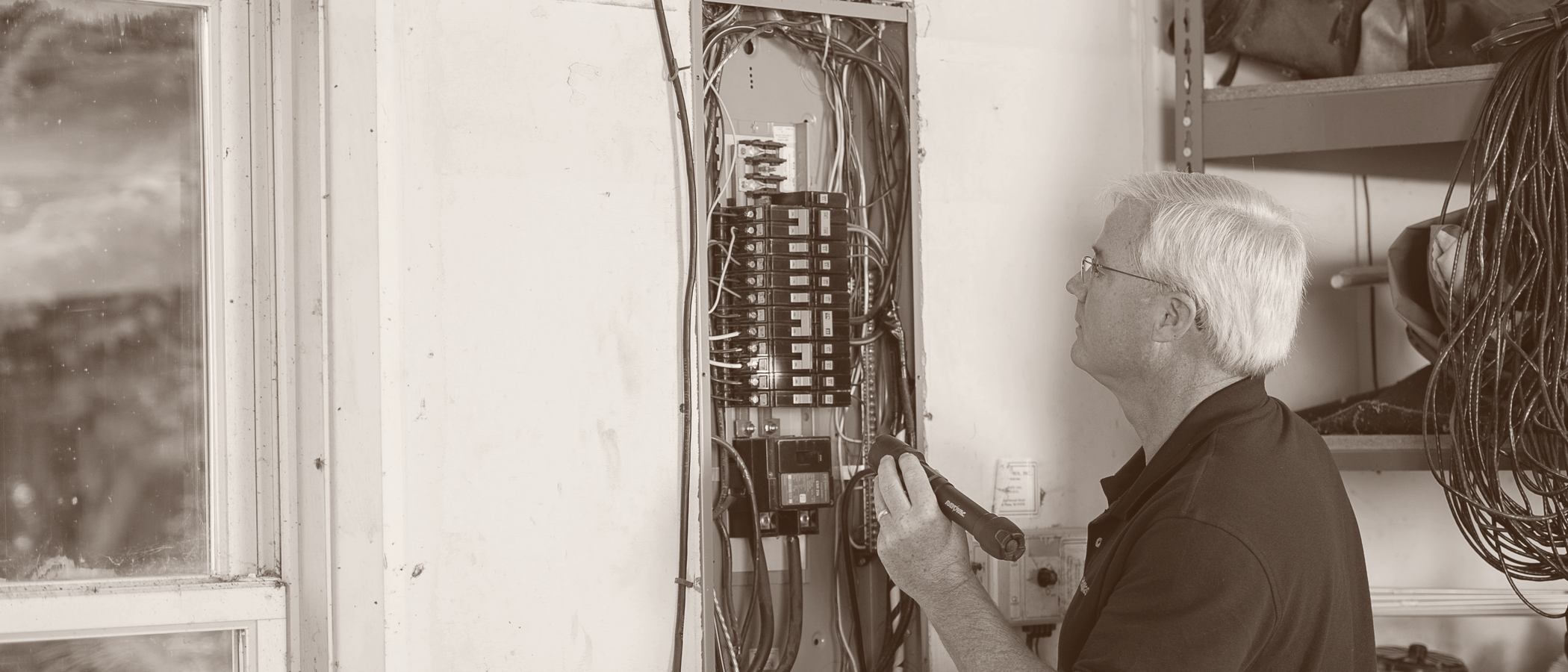
Whole-house flickering. When lights across multiple rooms flicker together, the problem is upstream of any single fixture. This can be the main panel, the neutral connection, or the service line from the utility. Whole-house flickering is not a bulb problem and should not be treated like one.
The neutral connection. A loose or corroded neutral is one of the more dangerous causes on this list. It can make lights brighten and dim unpredictably, and it can push too much voltage onto some circuits while starving others. A failing neutral has a real fire and equipment-damage risk, and it is not a diagnosis you make from a ladder. It is a call.
Utility-side issues. Sometimes the fault is outside your walls entirely, at the weatherhead, the meter, or the drop from the pole. If your neighbors mention the same thing, or the flickering tracks with weather, the utility may need to inspect the service connection. A licensed electrician can confirm whether the trouble is yours to fix or theirs.
Warning signs that mean call now
Some symptoms move flickering out of the "watch it" category and into the "stop and call" category. Treat any of these as a reason to get a licensed electrician out promptly:
- A burning or fishy plastic smell near an outlet, switch, or the panel
- Outlets, switch plates, or the panel that feel warm or hot to the touch
- Scorch marks, discoloration, or buzzing at a receptacle or breaker
- Lights that brighten and dim on their own, especially across the house
- Flickering that started right after you added a major appliance or a room
- Breakers that trip repeatedly around the same circuit
Any smell of burning or sign of heat means shut off the affected circuit at the panel if you can do so safely, and call. These are the fingerprints of the arcing and overheating that cause electrical fires, and they do not fix themselves.
What to tell the electrician on the intake call
A good intake call gets you the right technician with the right parts, and it starts with a clear picture. When you reach the shop, have these ready:
- Where and how much. One fixture, one room, or the whole house? Constant flicker or only sometimes?
- The trigger. Does it happen when an appliance turns on, at a certain time of day, or after recent electrical work?
- The scary signs. Mention any smell, heat, buzzing, or discoloration first. That is what decides whether this is a same-day safety visit.
- Your setup. Age of the home, whether you have LED bulbs on dimmers, and any recent additions or renovations.
The clearer you are, the faster the shop can triage. A description that includes a warm panel and a burning smell tells the dispatcher to prioritize you over a routine bulb question, which is exactly what you want when the cause is serious.
What this means for the electrical shop taking the call
Flickering-light calls are unusual because the same search term covers a fifty-cent bulb and a genuine fire risk. The homeowner on the other end often cannot tell which one they have, so they call already uneasy. How the shop handles that first contact shapes everything after it.
Two things matter most. The first is answering. A worried caller who hits voicemail rarely leaves a message and waits. They call the next electrician on the list, and the shop that missed the phone never knew the job existed. Flickering calls tend to arrive off-hours too, in the evening when the homeowner finally notices the lights stuttering, which is precisely when a front desk is closed.
The second is triage. A real emergency, a warm panel or a burning smell, needs to be pulled to the front of the queue immediately, while a loose-bulb question can be booked as a routine visit. Getting that sorting right at the moment of the call protects both the customer and the schedule.
This is where an AI voice receptionist earns its place. It answers every call, including the after-hours ones, asks the same triage questions a trained dispatcher would, and captures the details that separate an emergency from a bulb swap. Instead of a full voicemail box the next morning, the shop opens the day with organized call notes and the urgent jobs already flagged. If you run an electrical business and want to see how automated call handling fits a trade where the stakes on any given call are hard to predict, our electrical resources hub covers it in more depth.
Flickering lights are worth respecting. Rule out the bulb, watch for heat and smell, and when the whole house starts pulsing or anything feels warm, make the call rather than climbing another ladder.