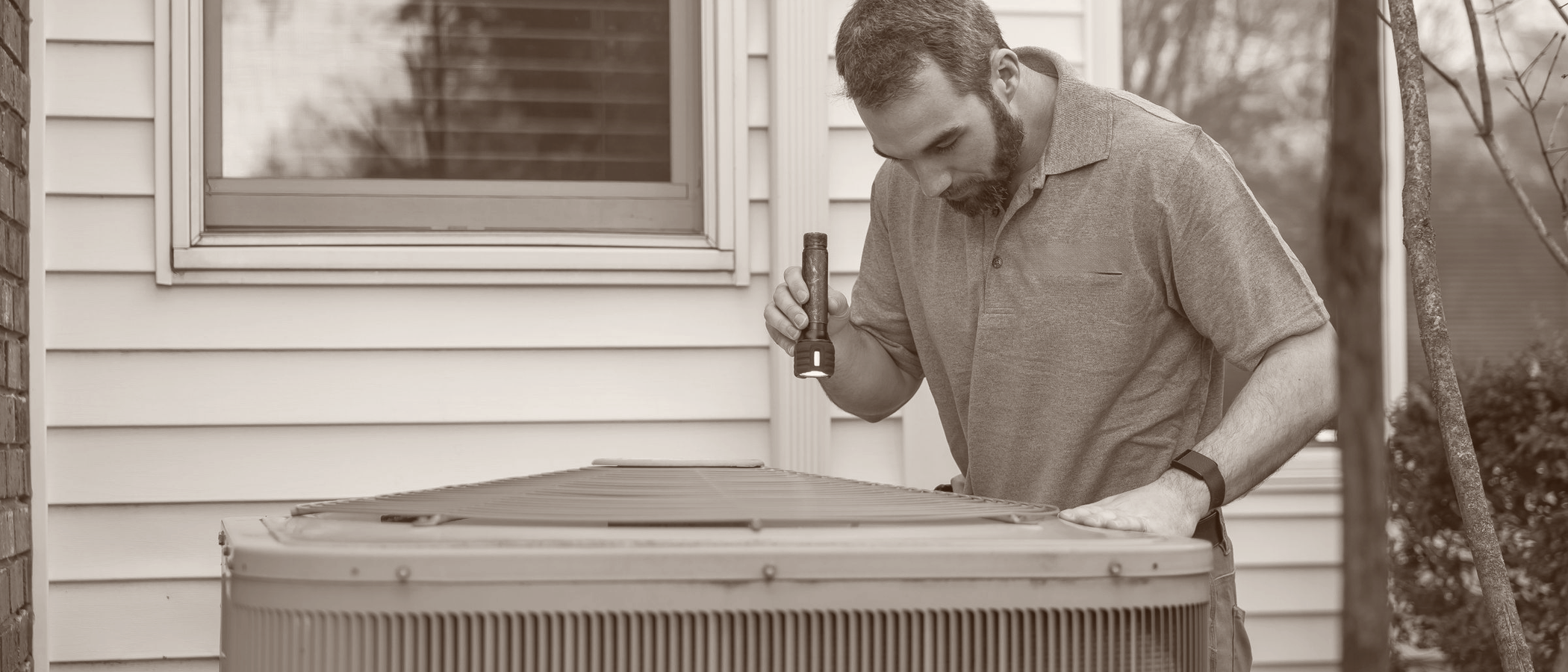
Your air conditioner is supposed to run in steady stretches. It kicks on, cools the house down to the temperature you set, and shuts off. On a hot afternoon a healthy cycle might last ten to fifteen minutes. When the unit instead flicks on for a minute or two, shuts down, then fires up again a few minutes later, that pattern is called short cycling. It is one of the clearest warning signs a system gives you, and it is worth paying attention to before a small problem turns into a compressor you have to replace.
What short cycling actually does to the system
Every time the compressor starts, it draws a heavy surge of current and works hard for a moment before settling. That startup is the most stressful part of the whole cooling cycle. A system running normally does this a handful of times an hour. A short-cycling system might do it three or four times as often, and all that extra starting wears out the compressor, the capacitor, and the contactor far faster than steady running ever would.
There is a comfort cost too. Short bursts of cooling do not run long enough to pull humidity out of the air, so the house can feel clammy even when the thermostat reads the right number. And your electric bill tends to creep up because those repeated startups are the least efficient thing the unit does.
Common causes, from simple to serious
Short cycling is a symptom, not a diagnosis. Several very different problems produce the same on-off pattern, which is exactly why it trips up homeowners.
Dirty air filter. A clogged filter starves the system of airflow. The evaporator coil gets too cold, the unit trips a safety, and it shuts down early. This is the single most common cause and the easiest to rule out.
Thermostat placement. If the thermostat sits in direct sun, above a lamp, near a supply vent, or on a wall that gets warm, it reads the temperature of that hot spot instead of the room. It satisfies quickly, shuts the system off, then re-reads a warm number and starts it again. A thermostat placed near a heat source will short cycle a perfectly healthy AC.
An oversized unit. A system too large for the house blasts the space to temperature almost instantly, then shuts off before completing a proper cycle. It feels powerful and cools poorly, because it never runs long enough to dehumidify. This one usually traces back to a bad installation, and there is no cheap fix.
Low refrigerant. A leak drops the refrigerant charge, which can freeze the coil or trip the low-pressure safety switch, cutting the cycle short. Refrigerant does not get used up. If it is low, there is a leak somewhere that needs to be found and sealed.
A frozen evaporator coil. Restricted airflow or low refrigerant can ice over the indoor coil. Once it is a block of ice, the system cannot move heat and cuts out. You might spot frost on the copper lines or water pooling near the indoor unit.
A failing capacitor or control board. The capacitor gives the compressor and fan motors the jolt they need to start. When it weakens, the compressor struggles to spin up, overheats, and shuts down on its internal safety. A glitchy control board can send the same erratic start-stop signals.
What you can safely check yourself
A few of these you can investigate without any tools or risk. Start here before you call anyone, because you might solve it in five minutes.
- Replace the air filter. If it is gray and packed with dust, swap it and give the system an hour. This resolves short cycling more often than any other single step.
- Look at where the thermostat lives. Is sun hitting it in the afternoon? Is there a lamp, a TV, or a supply register nearby throwing heat or cold air at it? Relocating a thermostat is pro work, but simply identifying the cause tells you a lot.
- Walk the house and open the vents. Closed or blocked supply registers choke airflow the same way a dirty filter does. Make sure furniture and rugs are not sitting on top of them.
- Check the breaker. A unit tripping a breaker and resetting can mimic short cycling. If the breaker is warm or keeps tripping, stop and call a pro, because that points to an electrical fault.
If the filter is clean, the vents are open, the thermostat is in a sensible spot, and the unit still short cycles, the problem is past the DIY line.
What needs a licensed HVAC pro
Some of these causes are unsafe or outright illegal to touch without training and certification. Here the DIY instinct works against you.
- Anything involving refrigerant. Handling refrigerant requires EPA certification and specialized gauges. A pro finds the leak, repairs it, and recharges to spec. Topping it off without fixing the leak just wastes money and delays the real repair.
- Electrical components. Capacitors hold a charge even with the power off and can deliver a serious shock. Replacing a capacitor, contactor, or control board is a job for someone who knows how to discharge and test them.
- A frozen coil that keeps coming back. Thawing the ice is temporary. Finding out why it froze, whether airflow or refrigerant, is diagnostic work.
- Sizing problems. If the unit was oversized at installation, the fix ranges from adjusting the system to replacing equipment. That is a conversation with a contractor, not a weekend project.
The honest rule of thumb: if the fix involves refrigerant, wiring, or the size of the equipment itself, it belongs to a pro. Homeowners can handle airflow and thermostat basics. Everything past that risks either your safety or the warranty on the equipment.
Timing matters more than people expect. Short cycling driven by a weak capacitor or low refrigerant tends to get worse, not better. Every extra day of stop-start running is more wear on the compressor, and the compressor is the most expensive part in the system. Catching it while it is still a capacitor or a refrigerant leak is the difference between a service call and a replacement.
What this means for the HVAC shop taking the call
Here is the part worth sitting with if you run the business on the other end of that phone. A homeowner searching "why does my AC keep turning on and off" is not window shopping. They have a unit actively failing, they are uncomfortable, and they have already tried the filter. They want a truck at the house.
That call is time-sensitive in a way most service calls are not, because the caller does not know whether their compressor has hours or weeks left. When it rings and nobody picks up, the homeowner does not leave a voicemail and wait. They scroll to the next HVAC company and dial again. The shop that answers books the diagnostic visit and, more often than not, the repair that follows. The shop that misses the call never knows it existed.
This is the quiet leak in a lot of home-services operations. The techs are on jobs, the office is one person deep, and the phone rings during a roof-hot afternoon when every unit in town is straining. A missed diagnostic call is a repair that walked to a competitor.
An AI voice receptionist closes that gap by answering every call on the first ring, day or night, capturing the symptom and the address, and putting the job on the schedule while the caller is still motivated. It does not replace the tech's judgment. It makes sure the tech gets the chance to apply it. You can see how AI call handling fits a busy dispatch day, and there is more on serving home-services callers in the HVAC resources hub.
Short cycling is your system asking for help early, while the fix is still small. For the homeowner, that means checking the easy stuff and calling before the compressor gives out. For the shop, it means being the one who picks up when that call comes in.