A homeowner calls Friday afternoon and says the radon system was installed “yesterday.” They want the verification test dropped off before the weekend. The installer has left, the fan is running, and a real estate closing is ten days away.
The office still needs two separate times: when the work was completed and when the system was activated. It also needs the original test report, the proposed test location, the measurement method, closed-building setup, occupancy, access, recent building work, deadline, responsible tester, and report recipients. Those details decide whether the appointment can be booked as requested.
Start with two times, not one date
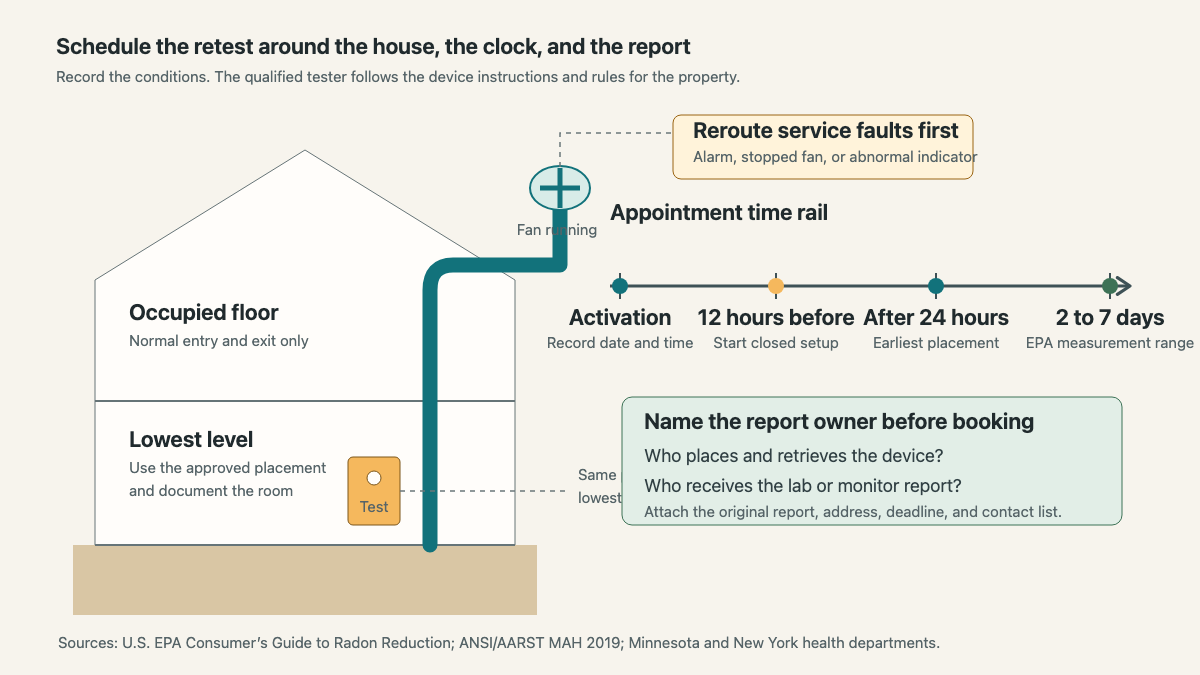
U.S. Environmental Protection Agency guidance says a post-mitigation test should be completed within 30 days of installation, but it should begin no sooner than 24 hours after the system is operating with the fan on. ANSI/AARST home-measurement guidance also uses a 24-hour minimum after fan activation or completion of other mitigation work.
That makes “installed yesterday” too vague for scheduling. Ask:
- On what date and time did the contractor finish the mitigation work?
- On what date and time was the fan switched on for continuous operation?
- Has the fan stayed on since then, including overnight?
- Was any additional sealing, crawlspace membrane work, fan adjustment, or system change completed later?
- Is there a written installation record, invoice, system label, or commissioning note with those times?
Do not backfill an activation time from the appointment calendar. If the crew left at 3 p.m. but returned at 9 a.m. the next day to connect power, the second time controls the earliest placement. Record uncertainty plainly and send it to the qualified tester.
A caller who has an elevated result but no completed system belongs in the radon mitigation estimate intake. This workflow begins after mitigation has been completed and the system is operating.
Confirm who owns the measurement
The installing contractor may offer the post-work measurement. A separate measurement professional may handle it. In some settings, the homeowner can use an approved test kit according to its instructions and applicable rules. EPA consumer guidance recommends an independent follow-up measurement, or a homeowner-conducted measurement, to avoid the appearance of a conflict when the installer checks its own work.
The office should know the arrangement before promising a slot. Record who supplies the device, who places it, who retrieves or ships it, which laboratory or monitor produces the report, and who answers questions about an invalid test. If a real estate agent, buyer, property manager, relocation company, or mitigation warranty is involved, identify who ordered the test and who is authorized to receive the result.
Ask whether the property is subject to a state radon program, transaction requirement, lender condition, or contract term. Rules for providers, devices, laboratories, and reporting vary. The service address matters.
The test method affects the appointment length and handoff. EPA consumer guidance recommends a two- to seven-day measurement to check initial system effectiveness. The qualified provider should choose the device and duration under the instructions and rules that apply. Reception can record the requested method. It should not substitute a shorter period to fit a closing date.
Set up the house before placement
A short-term measurement depends on building conditions. EPA and ANSI/AARST guidance call for closed-building conditions during the test, with the setup beginning 12 hours before a short-term measurement. Normal entry and exit can continue, but the details still need to be explained through the provider’s approved confirmation.
Ask who occupies the property and who can maintain the required conditions. A vacant house with a lockbox presents different coordination than a family home where contractors are replacing windows. Record scheduled cleaners, movers, painters, open-house events, appliance deliveries, renovation crews, and anyone else likely to open exterior doors or windows for extended periods.
Weather can disrupt a measurement too. The tester, device instructions, and current protocol determine what conditions are acceptable. The office should capture a forecast concern and use the company’s rescheduling rule. It should not improvise a weather limit over the phone.
Send one confirmation that states the setup start time, placement window, expected retrieval time, access method, contact number, and actions that could invalidate the measurement. If a tenant occupies the home, send the preparation instructions to both the person granting access and the occupant responsible for the conditions.
Match placement to the original test and foundation
Ask for the full pre-mitigation report. Capture the device location, floor, room, start and end times, result and unit, test provider, laboratory, and any validity note. A verbal summary such as “the basement was over four” leaves out the room and test conditions.
ANSI/AARST guidance places post-mitigation testing in the same location as the pre-mitigation test, or in the lowest level that could be occupied. It also calls for attention to the lowest livable area above a structurally isolated crawlspace. The qualified tester makes the placement decision. Good intake gives that person the physical facts.
Ask how the foundation is divided. The home may have a full basement under the original structure, a slab under an addition, a crawlspace under a porch conversion, or a lower room that was finished after the first test. Record doors, utility rooms, sump areas, bedrooms, storage spaces, and recent changes to the lowest level.
Request a simple floor sketch or a few safe photographs when the room description is unclear. Nobody needs to move the mitigation pipe, open a sealed sump cover, enter an unsafe crawlspace, or climb into an unfinished attic for a scheduling call. The device also should not be placed beside an operating fan, window, exterior door, heat source, or other location unless the tester’s protocol allows it.
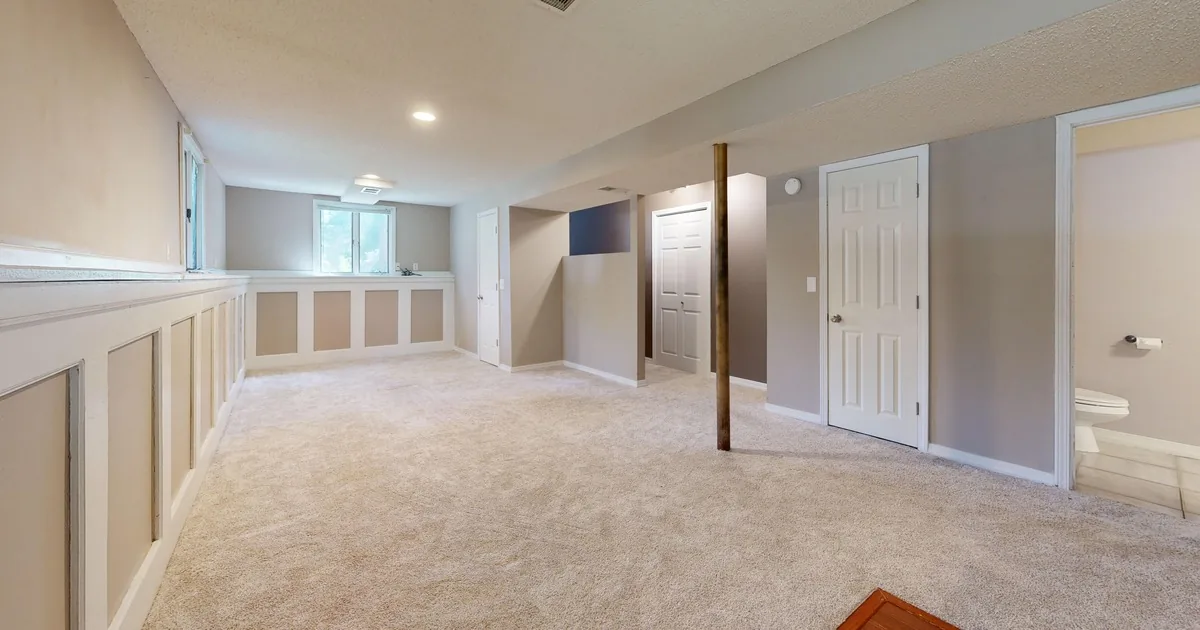
The appointment record should name the approved room, not merely “basement.” A finished basement bedroom, open recreation room, utility area, and isolated crawlspace-adjacent room are different locations.
Reroute service faults before a routine retest
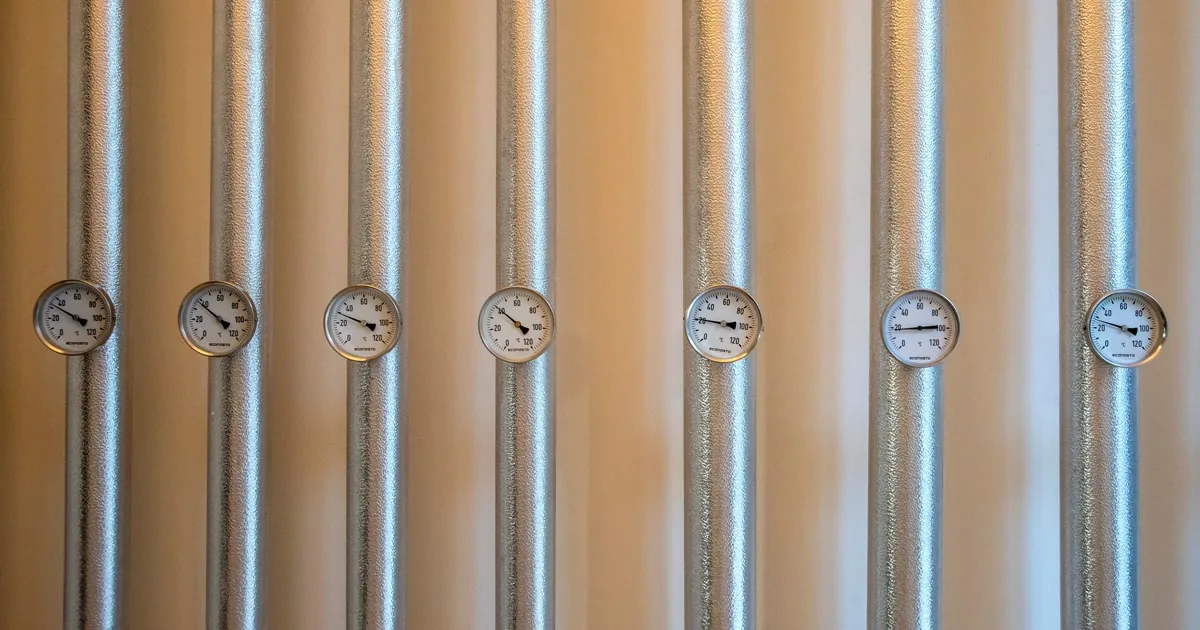
A liquid gauge or other warning device can show whether an active system appears to be operating. It does not measure the indoor radon concentration. Minnesota Department of Health describes the U-tube manometer as a visual fan indicator, while the post-mitigation test provides the indoor measurement.
Before confirming a routine retest, ask whether the fan is running and whether any alarm, warning light, unusual sound, vibration, disconnected pipe, water intrusion, tripped circuit, or abnormal indicator is present. Record what the caller sees. Do not ask them to touch electrical parts, open a fan housing, disconnect the system, or diagnose a gauge.
A stopped fan or alarm may require service before the verification measurement makes sense. Route those calls as system service, not as routine measurement appointments. The radon mitigation resource hub keeps the intake record connected to the broader system history. If a newly activated passive system has incomplete paperwork or uncertain components, hold the test slot until a qualified professional confirms the system status.
Close the loop with a named report owner
The appointment is incomplete until someone owns the result. Record the expected report format, normal turnaround stated by the provider, recipient names and emails, property address, project or transaction reference, and the person authorized to approve follow-up work. Do not promise a passing result or tell the caller what a future number will mean.
A useful handoff sounds like this:
“System installation finished Tuesday at 2:15 p.m.; fan activation is documented at 3:05 p.m. and owner reports continuous operation since then. Original laboratory report is attached for the finished lower-level bedroom. Full basement under the main house; slab addition is separate and was not included in the original test. No alarm, fan noise, power interruption, water intrusion, or recent system adjustment reported. Closed-building setup begins Wednesday at 7 p.m. Owner and tenant received instructions. Approved provider places the device Thursday after 7 a.m. and retrieves it Saturday. Tenant provides access; owner receives the report. Copy also goes to the buyer’s representative and mitigation project file. Closing deadline is the following Friday.”
Later maintenance needs their own reminder. EPA advises retesting at least every two years to confirm levels remain low, and retesting may also be warranted after significant alterations. The first post-work report should be stored with the original result, installation record, warranty, system instructions, and future reminder date. That file gives the next caller something better than “the fan has been running for years.”