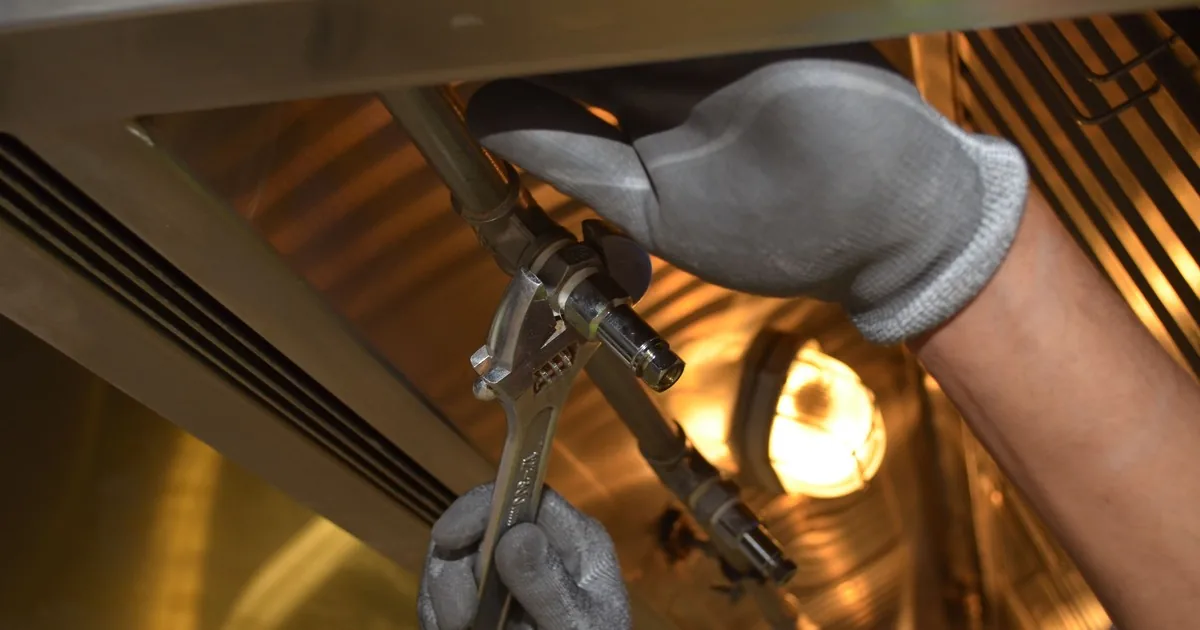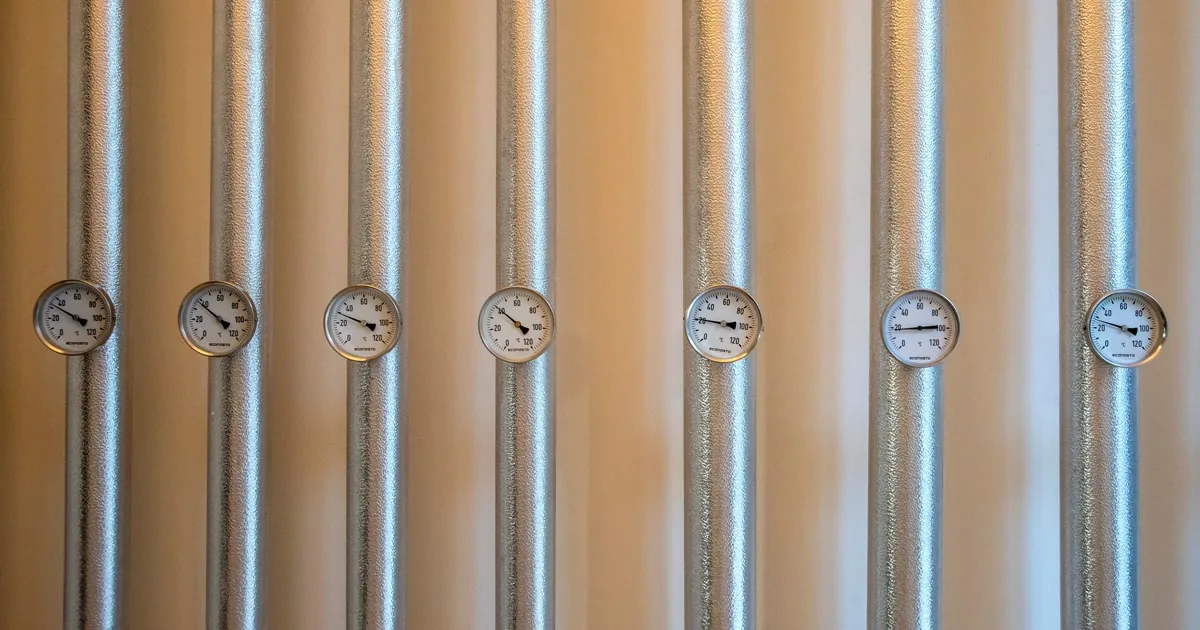
A homeowner calls because the radon fan outside the basement bedroom started rattling overnight. The clear gauge on the pipe looks “about the same,” but she has no idea what the number means. Rain started yesterday, an electrician worked near the panel last week, and the system label names an installer who closed years ago.
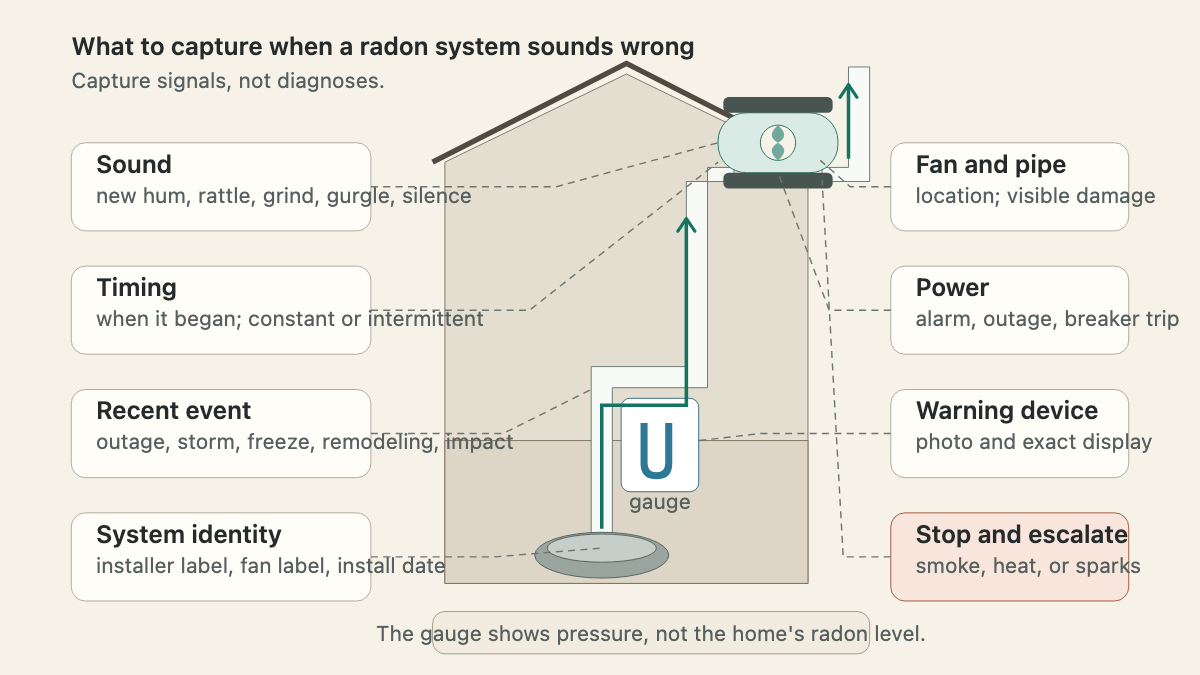
A safe service intake captures the new sound, when it began, whether it is constant, the warning device or gauge exactly as shown, fan and pipe location, recent outages or weather, visible damage, prior installer, latest radon test, and access. The office should not diagnose the fan by sound or ask the caller to open, unplug, or dismantle the system. A qualified radon professional needs the record and the site.
Separate a service symptom from a radon reading
Start with the caller's reason for concern. “The fan is loud,” “the alarm is beeping,” “the gauge went to zero,” and “my new test is high” describe different evidence. Record the words first. Then ask which signal changed.
An active radon reduction system commonly uses a fan to draw soil gas from below the building and vent it outdoors. The U.S. Environmental Protection Agency says these systems need occasional maintenance and that the warning device should be checked regularly. Warning devices may include a liquid gauge, sound alarm, light, dial, or needle display.
A warning device is not a radon test. A U-shaped liquid gauge usually shows a pressure difference in the pipe. It does not report the radon concentration in the room. If the caller reads “1.2” from the gauge, write “caller reports gauge at 1.2” and attach a clear photograph. Do not enter that figure as 1.2 pCi/L.
Ask whether the concern began with a radon test result. If so, capture the complete report, test dates, device location, units, and the level where the test sat. That creates a separate measurement record. The elevated radon estimate intake guide covers the information needed when the customer is seeking a new mitigation proposal. This call is about service on an installed system.
Record the warning device exactly as shown
Ask the caller what kind of indicator they see. Avoid leading them toward a manometer if they have an electronic alarm, light, or dial. Request one wide photo that shows the device on the pipe and one close photo that shows the display. The wide view helps a technician identify where the device sits in the assembly. The close view preserves the reading, fluid position, alarm message, or indicator light.
The Minnesota Department of Health's maintenance checklist for active soil depressurization systems tells property managers to compare the manometer fluid or indicator with the marked reading and contact the installer when it is at zero or substantially different. For a residential call center, the useful lesson is documentation. Ask these questions:
- Are the two liquid columns level or at different heights?
- Is there a line, sticker, or written baseline near the gauge?
- Is an alarm sounding or a light flashing? What does the label say?
- When did anyone last see the display in its usual position?
- Can the caller send a photo without moving or opening anything?
Do not give a universal “normal” number. Installed systems differ, and the original mark or commissioning record matters. A photo taken before a power reset or service visit can preserve a clue that disappears later.
Describe the sound without naming the failure
“Loud” is hard to route. Ask for the sound and where it seems strongest. A caller may report a steady hum, buzz, rattle, grind, whistle, gurgle, pulsing sound, vibration in a wall, or complete silence. Record whether it is constant or intermittent and whether it can be heard indoors, outdoors, or near a particular pipe run.
Timing adds more value than a remote diagnosis. Did the sound begin suddenly? Does it appear during heavy rain, freezing weather, or strong wind? Did it begin after roofing, siding, basement finishing, electrical work, sump service, or an impact near the exterior pipe? Has the sound become louder over days?
Ask for a short video from a safe standing position if company policy accepts video. The caller should not climb onto a roof, enter a cramped crawlspace, remove a fan cover, touch wiring, or loosen a coupling. A recording may help the technician prepare, but it does not prove which part failed.
The EPA notes that fans may eventually need repair or replacement. That supports scheduling qualified service. It does not support telling every caller with a rattle that the fan has failed. A loose pipe support, contact with the building, weather, water in a pipe, electrical trouble, or another condition can produce a complaint that sounds similar over the phone.
Map power, weather, piping, and recent work
Ask where the fan is installed: outside, in an attic, over a garage, or in another unconditioned area. Then capture the visible vent route. Does the caller see a separated joint, cracked housing, loose pipe, damaged support, ice, storm damage, or a changed discharge opening? Record observations without asking the caller to touch the system.
Power history belongs in the same note. Ask whether the home recently lost power, whether an alarm began after power returned, and whether the caller noticed a tripped breaker or GFCI. Do not coach electrical repair. Your company's approved policy may allow a caller to report the position of a labeled breaker or switch from a safe location. Any burning odor, heat, smoke, sparks, buzzing electrical equipment, exposed conductor, or repeated trip needs the company's electrical-hazard escalation path.
The intake should also cover connected building components. Ask whether the radon pipe enters a sealed sump lid, the slab, or a crawlspace membrane. Has the sump been serviced? Is the lid loose? Is crawlspace plastic visibly torn? Did a contractor cut, move, paint around, or enclose the pipe? Recent foundation or basement work can matter, much like the visible-condition record used for a foundation inspection before basement finishing.
Record the weather when it is relevant, but never promise that the problem will disappear after a thaw or dry day. The technician can decide whether conditions affect inspection or service.
Find the installer, records, and person who can grant access
A photograph of the system label may answer several questions at once. Capture the installer name, installation date, fan model or label, service phone, warning-device instructions, and any marked baseline. Ask whether the caller has the original contract, warranty, operating instructions, prior service invoices, and pre- or post-mitigation test reports.
The EPA recommends contacting the state radon office to learn which requirements apply to radon professionals in that state. It also points consumers to national proficiency programs. Route credentials through the property location and company policy. Do not tell a caller that one national credential satisfies every local requirement.
Confirm who owns the property, who occupies it, and who can open the basement, garage, attic access, electrical panel area, sump area, and exterior gate. For a rental or managed property, identify the person authorized to approve work. Note pets, tenants, locked rooms, stored belongings, standing water, or unsafe access.
Ask for the most recent radon test date and result. EPA advises periodic retesting to confirm levels remain low. If the system has been off or a warning device suggests trouble, the qualified professional should set the repair and retesting plan. Reception should not invent a testing interval for the specific fault.
Escalate hazards before ordinary scheduling
Some calls should leave the normal service queue. Use the company's emergency policy when the caller reports smoke, sparks, a burning smell, a fan housing that is unusually hot, exposed wiring, storm impact, a pipe hanging loose above a walkway, water contacting electrical equipment, or another immediate physical hazard.
Keep advice narrow. Tell the caller to stay away from the unsafe area and follow the company's approved emergency direction. Fire, electrical, gas, structural, and medical emergencies belong with the appropriate emergency service. A radon office should not improvise electrical troubleshooting or make health diagnoses.
Radon risk itself deserves clear language. Do not tell the caller that one noisy night created a medical emergency, and do not say the home is safe because the fan still hums. The system indicator, professional inspection, and radon measurement answer different questions.
Close with a service-ready handoff
Read the record back before booking. A useful handoff sounds like this:
“Owner reports a new rattling sound from the exterior fan beside the basement bedroom. It began during heavy rain Tuesday night and is now constant. U-tube gauge remains uneven; photo attached, with caller-reported reading at the marked baseline. No alarm light. Brief outage occurred Monday. Exterior pipe appears intact from ground level. Electrician worked at the main panel last week. System label shows installer, May 2019, and fan model; original installer is no longer operating. Latest radon report is from 2024 and attached. Owner can provide basement, sump, panel, side-yard, and garage access Thursday. No smoke, heat, burning odor, sparks, loose pipe, or standing water reported. Technician to inspect, diagnose, and set any retest plan.”
That note gives the service professional a symptom, timeline, warning-device state, power and weather context, system identity, records, access, and hazard screen. An AI receptionist can collect the approved fields after hours. The diagnosis stays with the qualified person who can see the equipment and the building.