A facilities manager calls about “the trees around our office park.” There are three buildings, two owners, a locked service yard, a daycare tenant, and a loading lane that cannot close before noon. Booking a generic estimate leaves the arborist to discover all of that in the parking lot.
A useful commercial tree maintenance site walk starts on the phone. Capture the exact properties, the caller’s role, who can open restricted areas, when the site is busiest, what written result the customer expects, and which concerns need urgent routing. The arborist can then walk a planned route, assign stable tree tags, document the occupied space around each tree, and return a scope the property team can review.
Define the property before offering a time
Start with the legal site name and every service address. A shopping center may have one street address but several parcels, tenants, management contacts, and maintenance responsibilities. A regional manager may call about twelve properties when the first visit covers only two. Read the list back.
Ask how the caller is connected to the property. Is this the owner, property manager, facilities lead, tenant, association representative, insurer, or maintenance contractor? Confirm who can authorize the walk, approve work, receive reports, and answer questions on site. Those may be four different people.
The office also needs the reason for the request. “Annual maintenance” can mean a budget forecast, a pruning proposal, a tree inventory, a response to tenant complaints, a storm review, or preparation for construction. Ask what decision the customer expects to make after receiving the arborist’s work.
A strong intake note states the deliverable in plain terms: “Baseline walk of Buildings A and B, tagged tree map, photographs, observed maintenance needs, priority order, and a proposed first-year scope.” If the company offers a narrower product, name it. Do not promise an inventory, risk assessment, arborist report, or multi-year plan unless that is what the assigned professional will provide.
Put the right people on the walk
The arborist should meet someone who knows how the property runs. That person can identify tenant boundaries, irrigation controls, school arrival times, delivery windows, past failures, planned paving, and the gate nobody mentioned on the phone.
Ask who holds keys, gate codes, roof or courtyard access, and permission to enter tenant areas. Record visitor check-in rules, parking instructions, required identification, and the meeting point. If procurement requires proof of insurance or vendor onboarding before access, route that work early. An appointment is wasted when the assessor cannot get beyond the lobby.
For multiple sites, agree on the order and the property code used in the customer’s records. “North Plaza” may be clear to the caller but useless to accounting. Put the customer’s site code beside the full address in every photograph folder, proposal line, and future work note.
Map operating zones and access constraints
Commercial grounds are occupied workspaces. The same limb can hang over an empty lawn at dawn and a lunch queue at noon. Ask when employees arrive, deliveries back in, children use outdoor areas, residents walk dogs, waste trucks enter, and parking reaches capacity.
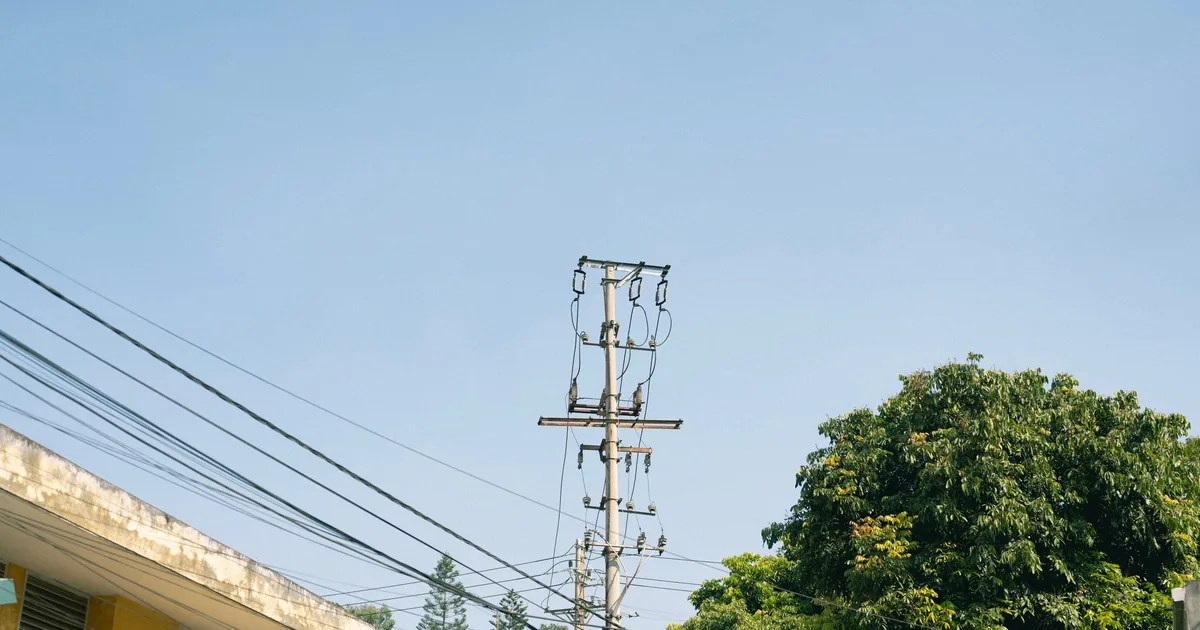
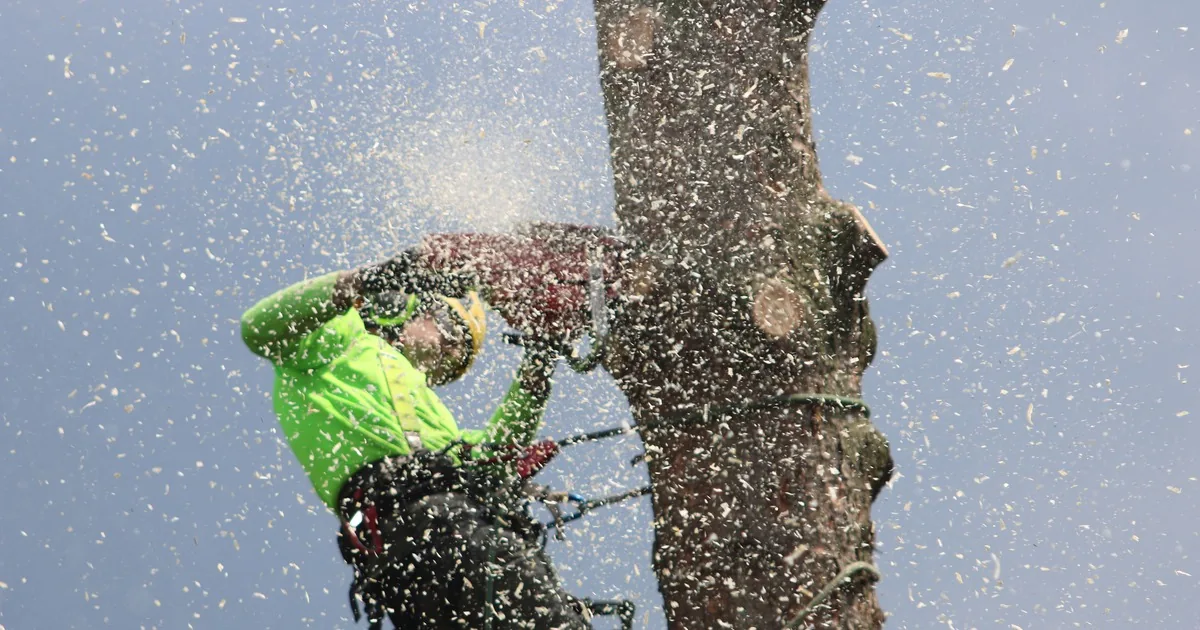
Record the physical constraints that change the assessment or eventual work plan: overhead lines, narrow gates, underground-utility markers, steep banks, retaining walls, ponds, roof edges, loading docks, fire lanes, pedestrian routes, parked vehicles, and limited equipment setup. OSHA identifies overhead power lines and falling branches among the potentially fatal hazards in tree care. Reception staff should flag reported hazards and utility proximity. Qualified field staff decide the controls and whether the requested work fits the company’s capabilities.
Ask about current construction and planned site changes. New paving, trenching, drainage work, signs, lighting, roof work, or additions can affect access and the root zone. Request the relevant plan before the walk when one exists.
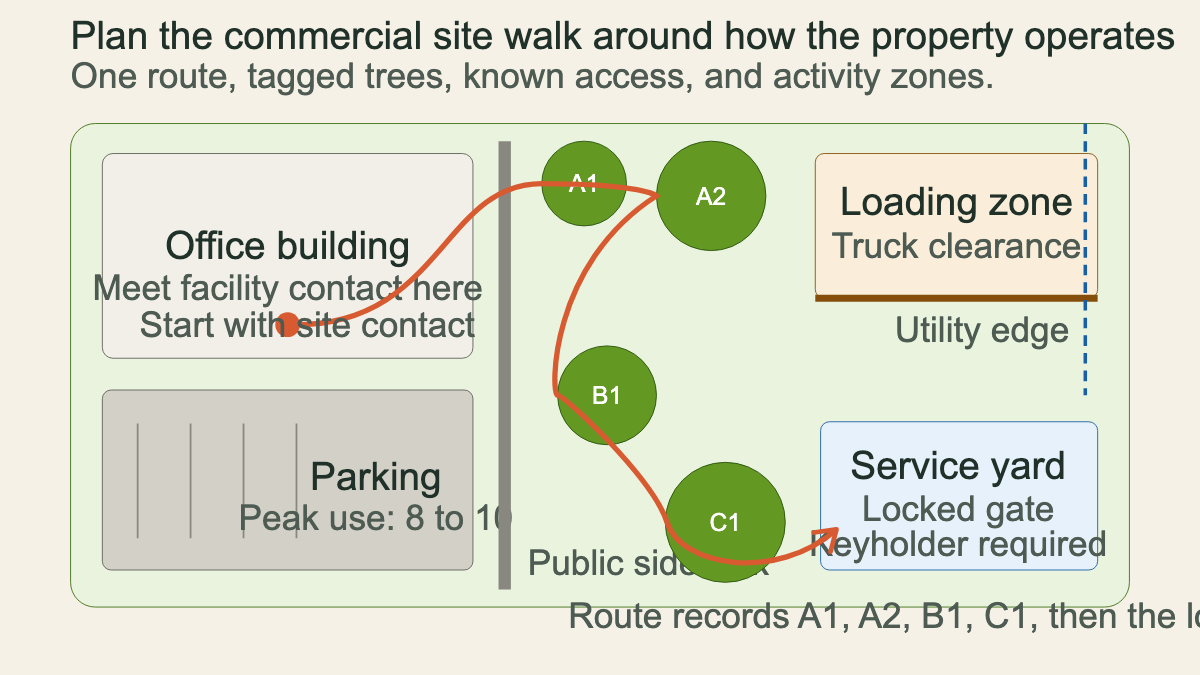
The route above begins with the facility contact, crosses the public-facing zones, records tagged trees in order, and ends at a locked yard with the keyholder present. That sequence prevents a second visit for one inaccessible corner. It also gives each photograph and note a location.
Give every tree a stable identity
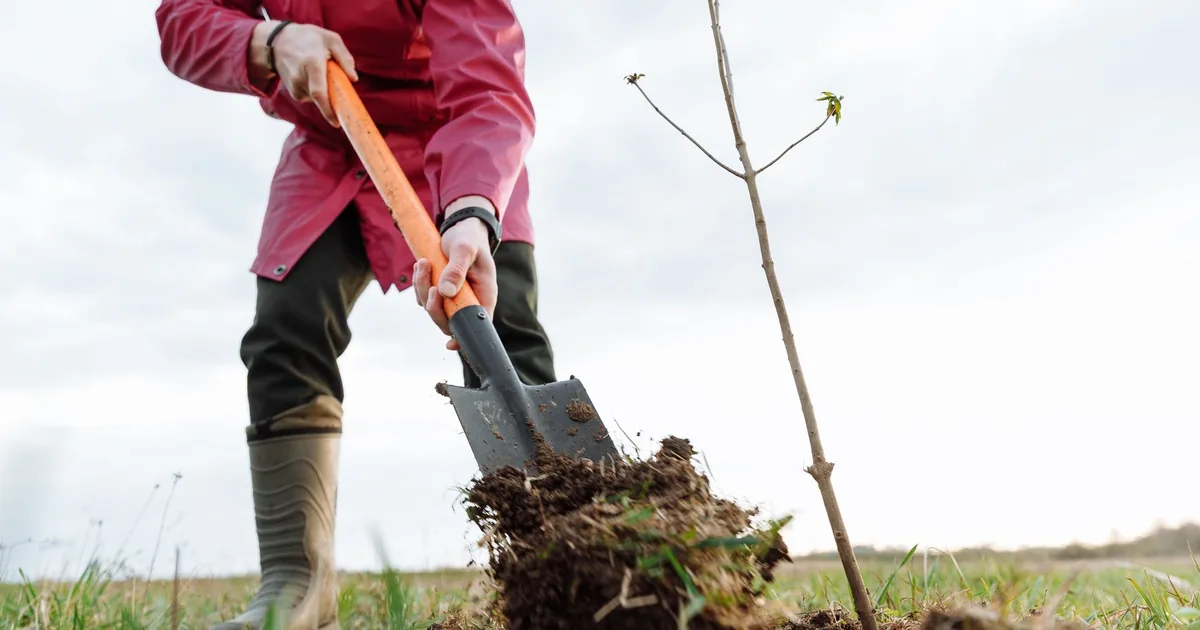
“Large oak by parking” fails as soon as a property has two large oaks. Use the mapping or tagging method defined by the company and customer. A simple record can pair the property code with a tree number such as NP-B1. Keep that identifier in the map, photographs, field notes, proposal, completed-work record, and next inspection.
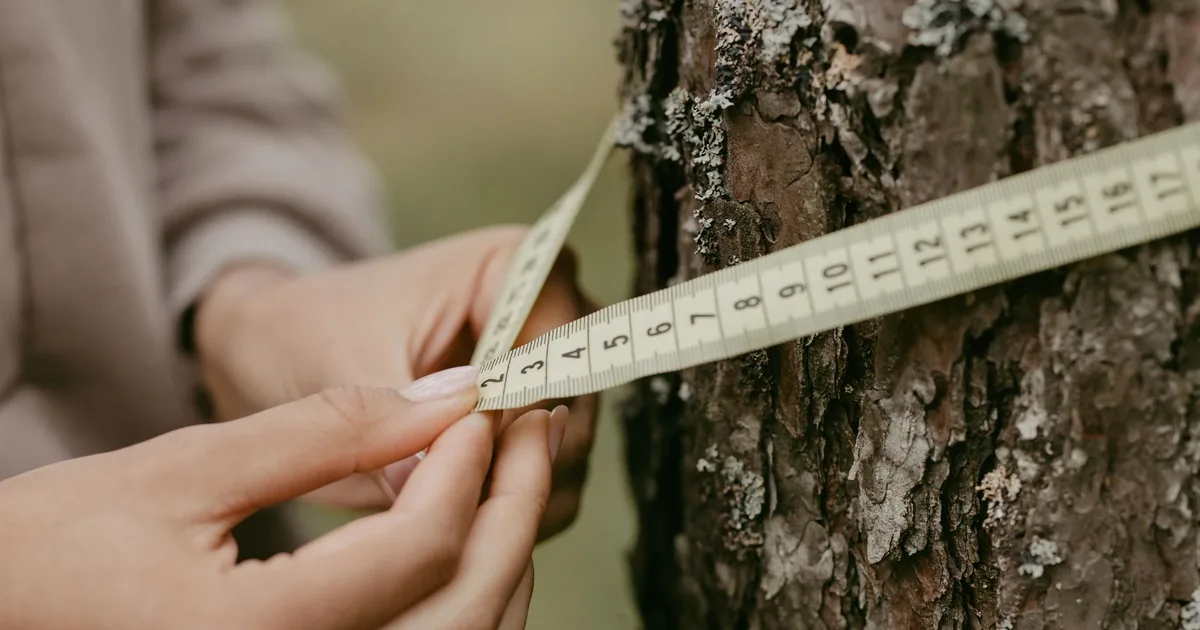
Penn State Extension lists common inventory fields that include location, species, trunk diameter, condition, urgent work, maintenance needs, planting constraints, and damage to sidewalks or curbs. The exact fields should fit the assignment. A first-year maintenance walk may use a lighter record than a formal inventory, but it still needs enough detail to find the same tree later.
Do not turn the initial call into a remote diagnosis. Record “caller reports a hanging branch over employee parking” or “tenant sent a photograph of mushrooms near the trunk.” Leave condition, risk, and treatment conclusions to the qualified person who sees the tree and site.
Photograph requests should be safe and specific. Ask for a wide view showing the whole tree and nearby area, plus any existing image the caller already has of the concern. Do not ask someone to stand beneath a damaged branch, approach a line, climb, cross a barricade, or enter an active work zone for a better angle.
Connect the tree to people, property, and activity
A commercial tree record needs context. Purdue Extension describes targets as people, property, or activities that could be affected by a failure and gives sidewalks and parking areas as examples. The site walk should record how the space is used, when it is occupied, and what sits within the relevant area around the tree.
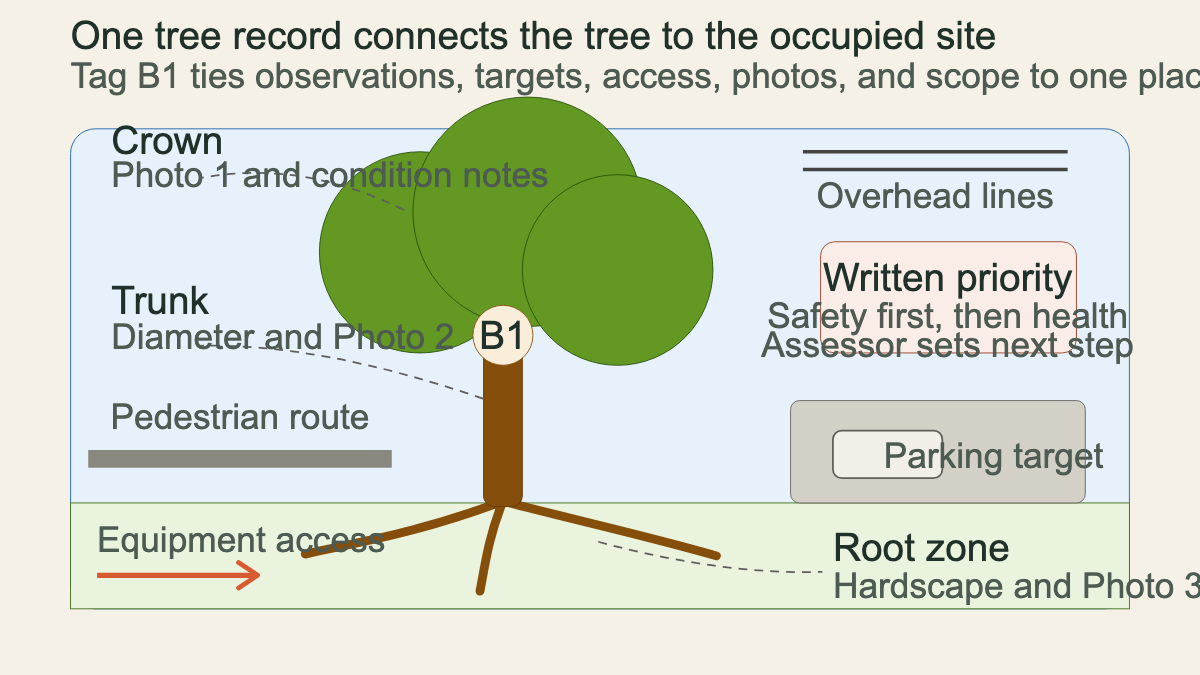
The physical view keeps separate facts in one record. Crown, trunk, and root-zone observations sit beside the pedestrian route, parking, overhead lines, and equipment access. Photographs use the same tree tag. The assessor then assigns the appropriate priority and next step.
This matters because maintenance work competes for attention. Purdue advises property managers to retain inspection records, develop a site policy and care plan, and prioritize work first for safety and then for tree health. That principle supports a clearer scope without pretending that every observed defect requires removal.
Separate urgent routing from planned maintenance
A reported active emergency should not wait for the next portfolio walk. Ask whether material is falling now, the tree or root plate is moving, a road or exit is blocked, a person is injured, a fire is involved, or a branch is contacting a power line. Follow the company’s emergency policy and direct utility or emergency-service situations to the proper local response channel.
Keep the words “urgent,” “priority,” and “hazard” under control. The caller can report an urgent business concern. Office staff can flag it for rapid review. A qualified assessor determines the professional finding and recommendation after considering the tree, possible failure, and occupied site.
Routine concerns belong on the planned walk: clearance near signs or roofs, deadwood reported by the customer, recurring branch drop, blocked lighting, pavement lifting, crowded planting spaces, declining trees, pruning cycles, or replacement planning. If the caller wants a broad assessment before deciding between maintenance and removal, the certified arborist consultation guide helps define that appointment.
Agree on the written handoff
Before ending the call, state what happens after the walk. The customer may expect a same-day price while the company needs to map trees, review photographs, confirm access assumptions, or separate immediate work from phased recommendations. Set the review path without inventing a turnaround time.
A practical handoff can include the site list, walk date, people present, tagged-tree map, photographs, observations, priority categories, proposed scope, access assumptions, exclusions, customer decisions needed, and the next review point. For multiple locations, use one structure at every site. The commercial program found during research provides a useful operational example: a baseline feeds a written standard, visit calendar, and per-site records.
Keep pruning scheduling distinct from assessment. The tree trimming and pruning call guide covers the service appointment once the trees and scope are known. A limb over a building may also require the access and target questions in the tree-over-roof intake guide.
End the intake by reading back the appointment as a field brief: “Tuesday at 7:30, North Plaza Buildings A and B only. Meet Dana at the east lobby. She has the yard key and the previous tree map. Employee parking fills at 9, loading begins at noon, and the daycare yard is available before 8:30. The arborist will complete a baseline walk and prepare the tagged map, photographs, priorities, and proposed first-year scope. The reported limb near the service line has been flagged for separate qualified review.”
That note gives the arborist a route, a contact, and a real assignment before the truck leaves the yard.