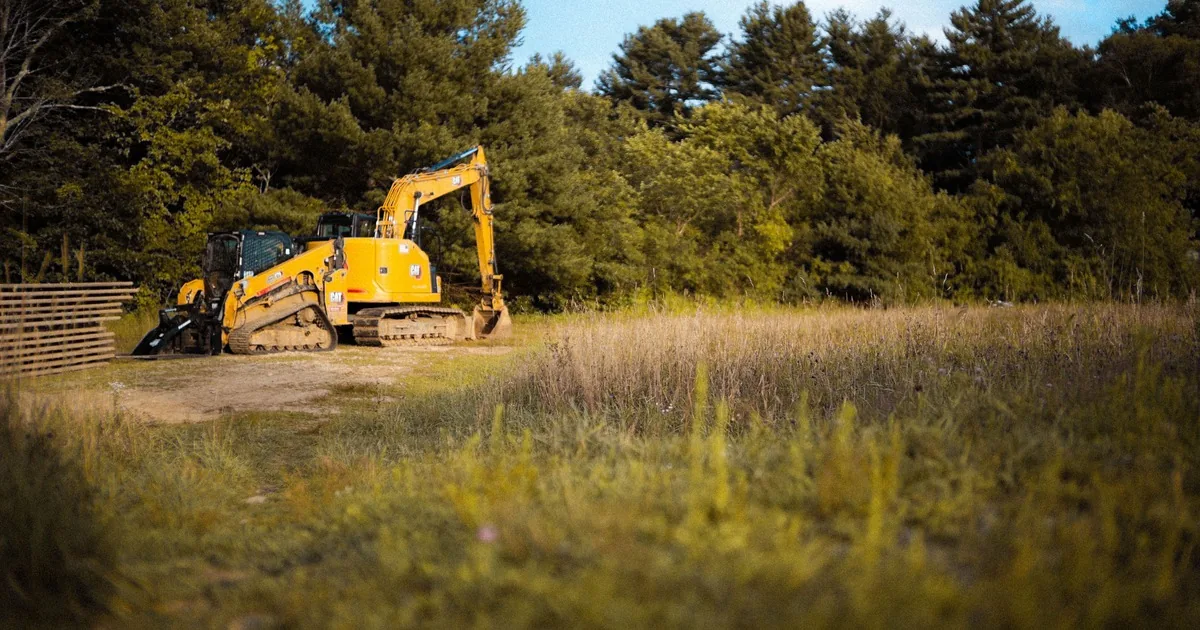
A caller says, “I need two acres cleared for a house. What will that cost?” The tax parcel covers six acres. The proposed house site sits uphill behind a narrow farm gate, an old septic area crosses the likely access route, and the owner wants a stand of oaks left between the clearing and a creek.
Two acres is not enough information for a quote. It is barely enough information to open the record.
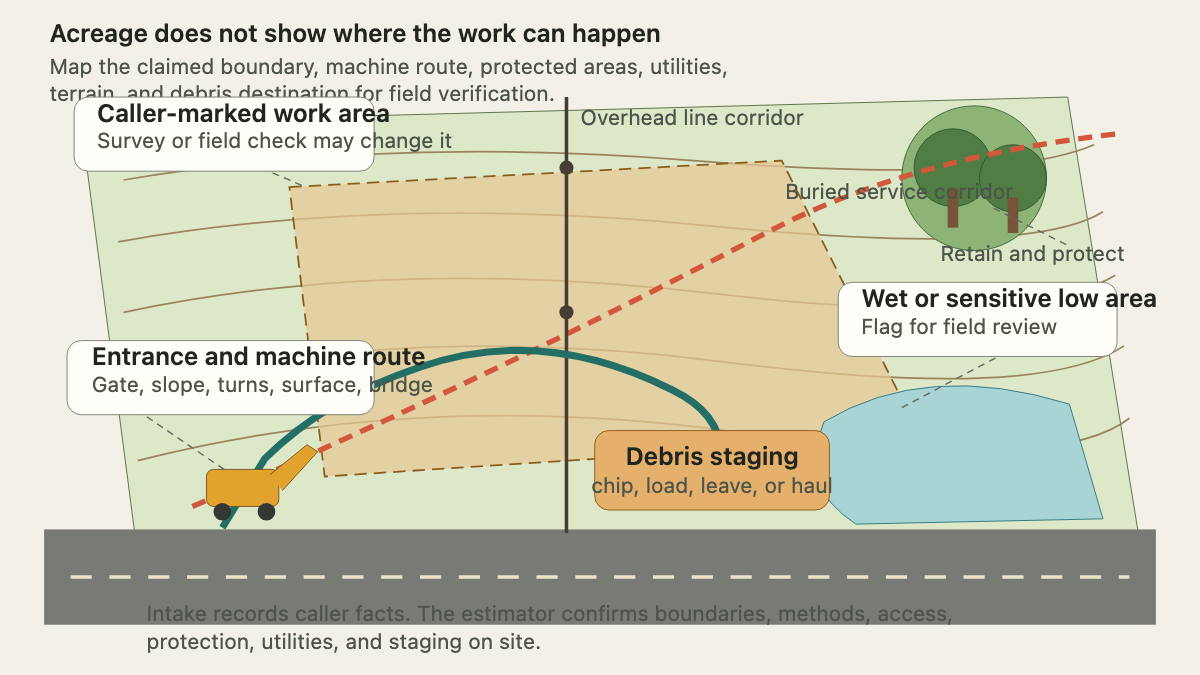
A useful lot-clearing estimate call should establish the requested work boundary, what grows inside it, the terrain and machine route, what must remain protected, the intended condition at handoff, and where logs, brush, chips, stumps, and soil will go. Reception can collect those facts. The estimator still confirms scope, methods, access, safety constraints, and local requirements on site.
Define the work boundary before discussing acreage
Start with the property address and the caller’s relationship to it. Record who can approve the scope and meet the estimator.
Then separate parcel size from clearing size. “The property is two acres” and “clear two acres” describe different things. Ask which part of the parcel is involved and how the caller identified it. Useful references include a current survey, site plan, flagged corners, marked building envelope, driveway plan, septic layout, or a map pin with a rough outline.
Do not turn a caller’s orange ribbon into a legal boundary. Label it accurately: “Caller reports pink flags mark the proposed clearing edge; survey status unknown.” University of Minnesota Extension advises property owners to establish property lines and exact lot dimensions, then use a survey to create a detailed site map. A tree-service office can request that information without interpreting it.
Ask what the clearing is for. A future lawn, solar field, pasture edge, driveway, home site, view corridor, fire-access lane, and utility route can require different finish conditions. The answer also identifies other contractors who may need to coordinate with the estimator.
Record what is on the ground now
“Wooded” hides most of the production detail. Ask the caller to describe the vegetation in ordinary terms. Is the area lawn with scattered saplings, dense brush, young woods, mature timber, storm debris, vines, or a mix? Are there known dead trees, leaning trees, hung branches, old stumps, root plates, piles, dumped material, concrete, wire, or abandoned structures?
Get a rough count or distribution where the caller can provide one. “About twelve large trees near the road, then dense saplings uphill” is useful. Record trunk sizes only as caller estimates and request wide photographs that show density and scale. Do not ask anyone to enter unstable storm damage or stand under broken wood for a better picture.
Terrain belongs in the same note. Ask whether the ground is level, rolling, steep, rocky, rutted, recently filled, soft after rain, or wet through much of the year. Note visible drainage ditches, swales, streams, ponds, wetlands, shoreline, exposed soil, and low areas where water collects. Weather on the estimate date may change what can be inspected safely.
OSHA identifies falling objects, moving equipment, traffic, and electrical contact among the hazards in tree-care and removal work. Reception should flag what the caller reports. It should never declare that the parcel is safe or choose a machine from a phone description.
Separate road access from the working area
A pickup reaching the address does not prove that an excavator, forestry machine, chipper, log truck, or debris container can reach the clearing. Ask the caller to walk through the route in words, beginning at the public road.
- Is the entrance paved, gravel, dirt, grass, or unfinished? How wide is the narrowest gate or opening?
- Does the route include a sharp turn, steep section, weak shoulder, culvert, bridge, soft lane, low branch, overhead line, neighboring land, locked gate, or shared driveway?
- Is there room for a truck and trailer to enter, turn around, stage, and leave without backing into traffic?
- Where could logs, chips, brush, soil, or containers be staged without blocking the road, driveway, emergency access, residents, livestock, or another contractor?
- Are there buried utilities, private lines, a well, septic components, irrigation, drainage pipe, propane, invisible fencing, or other features the caller knows about?
- Which trees, stone walls, plantings, structures, roads, water features, and habitat areas must remain untouched?
Treat dimensions as leads for the site visit. “Gate opening reported as ten feet between posts” is stronger than “good access,” but the estimator still verifies the route and setup space.
The large-tree crane access guide covers reach, setup footprint, overhead lines, landing zones, and truck routing when a clearing includes trees that may need crane review. A parcel can offer plenty of open acreage and still have one narrow entrance that controls the job.
Name what should remain when the crew leaves
The phrase “clear it” causes expensive misunderstandings because callers use it for several end states. Ask the caller to describe what they expect to see and what will happen next on the site.
Does cutting woody growth at or near grade satisfy the request? Should stumps remain, be ground, or be removed for later excavation? Does the caller expect roots and buried wood removed from a building area? Is rough grading part of the request, or will another contractor handle earthwork? Does the surface need to remain stable for future equipment, or is the request limited to vegetation removal?
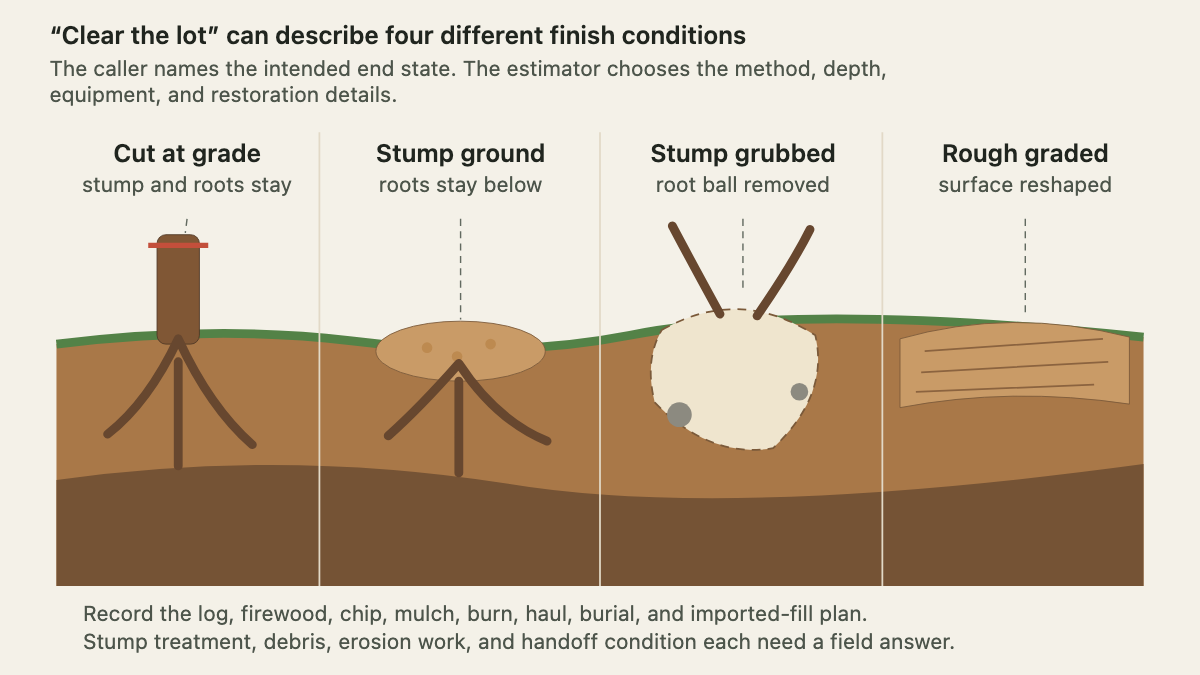
Keep stump depth and finish promises out of reception’s mouth unless the company has a defined service specification. The estimator connects the end use with roots, rocks, disturbed soil, drainage, erosion controls, and the next contractor’s needs.
The same rule applies to individual trees along the edge. Use the tree-removal quote intake guide to capture targets, access, wood handling, and stump scope for specifically identified removals. If the caller reports roots affecting pavement, pipes, or foundations near the preserve line, route that concern through the tree-root consultation guide.
Give every material a destination
Ask separately about merchantable logs, firewood, brush, chips, mulch, stumps, roots, existing trash, rock, soil, and demolition debris. For each one, record whether the caller wants it left, stacked, processed, spread, loaded, hauled, or handled by someone else. Do not assume that “debris removal included” means the same thing to both parties.
Burning, burying, chipping, hauling, and leaving material on site can be limited by local rules, site conditions, market outlets, and the contractor’s services. Reception should collect the preference, then mark it for verification. “Caller prefers chips spread along west trail if permitted and suitable” preserves the request without promising the result.
Old dumping deserves its own line. Tires, drums, household trash, concrete, fencing, treated lumber, tanks, unknown containers, and mixed construction waste may sit beneath brush. Ask whether the caller has walked the full area and whether anything besides vegetation is present. The estimator can decide what the company will handle and what needs a different contractor or disposal route.
Keep permits, utility locates, and erosion decisions open
Lot clearing can overlap with grading, excavation, driveway work, wetland or shoreland rules, tree ordinances, burn restrictions, and construction stormwater requirements. EPA identifies clearing, grading, and excavation as earth-disturbing construction activities. Its federal stormwater overview says qualifying sites can require permit coverage and erosion controls, including smaller pieces of a larger common development plan.
Rules vary by address and project. Ask whether the caller has contacted the city, county, conservation authority, homeowners association, or project engineer, and record any permit number or written condition they already have. Never promise that a permit is unnecessary or will be approved by a date.
For digging, 811 directs property owners and professionals to contact the applicable state center before work begins and provide the address, project type, and exact proposed excavation area. A locate ticket does not replace the estimator’s review, and public utility marking may not cover every private line on a property. Follow the company’s state-specific locate procedure.
Drainage deserves similar care. EPA explains that stormwater can carry sediment and debris from disturbed soil into storm systems and waterways. Ask where water flows now, whether the site has exposed soil or erosion, and who owns stabilization after clearing. The office records the condition. A qualified person selects controls and confirms who is responsible.
Read back the estimate record
A finished handoff might say:
“Owner requests field estimate for a caller-marked clearing area of about two acres within a six-acre parcel at 18 Sample Ridge Road. Purpose is a future home site and access drive. Survey available; caller will send PDF. Pink flags reportedly mark proposed work edge. Mixed mature trees and dense saplings, with storm debris near northeast corner. Ground rises from road, then slopes toward a wet low area on west edge. Ten-foot farm gate reported at entrance; gravel lane includes one culvert and a sharp uphill turn. Overhead service crosses lane. Private well and septic locations known; plans requested. Oak stand and creek buffer are to remain. Caller expects stumps removed in building area, rough grade by another contractor, logs evaluated, chips possibly retained, and remaining brush hauled. Permit, boundary, utilities, access, equipment, debris route, erosion work, and final scope require verification.”
Read it back before scheduling. The caller may correct the acreage, gate width, wet area, or desired finish while the map is still open.
An AI receptionist can collect the same field labels after hours if its script keeps caller statements separate from company findings. The best closing request is simple: send the survey or site plan, then mark the requested work edge, protected areas, access route, and debris staging on one copy for the estimator.
Sources
- OSHA: Enforcement Inspection Guidance for Tree Care and Tree Removal Operations
- U.S. EPA: Stormwater Discharges from Construction Activities
- University of Minnesota Extension: Tips for Purchasing and Building on Shoreland Property
- 811 Before You Dig