A homeowner calls and says, “The tree is dead, so I do not need a permit, right?” The tree service has an opening on Thursday. The caller wants a price today. One careless yes can turn a routine estimate into unpermitted work.
The safest useful answer begins with the exact address, the tree’s location on the site, and the current instructions from the authority responsible for that property. The office can collect measurements, photographs, notices, and reports. It can explain the company’s permit-support process. Approval, exemptions, deadlines, replacement conditions, and tree status remain with the local authority and qualified reviewer.
Start with the address, property, and trunk location
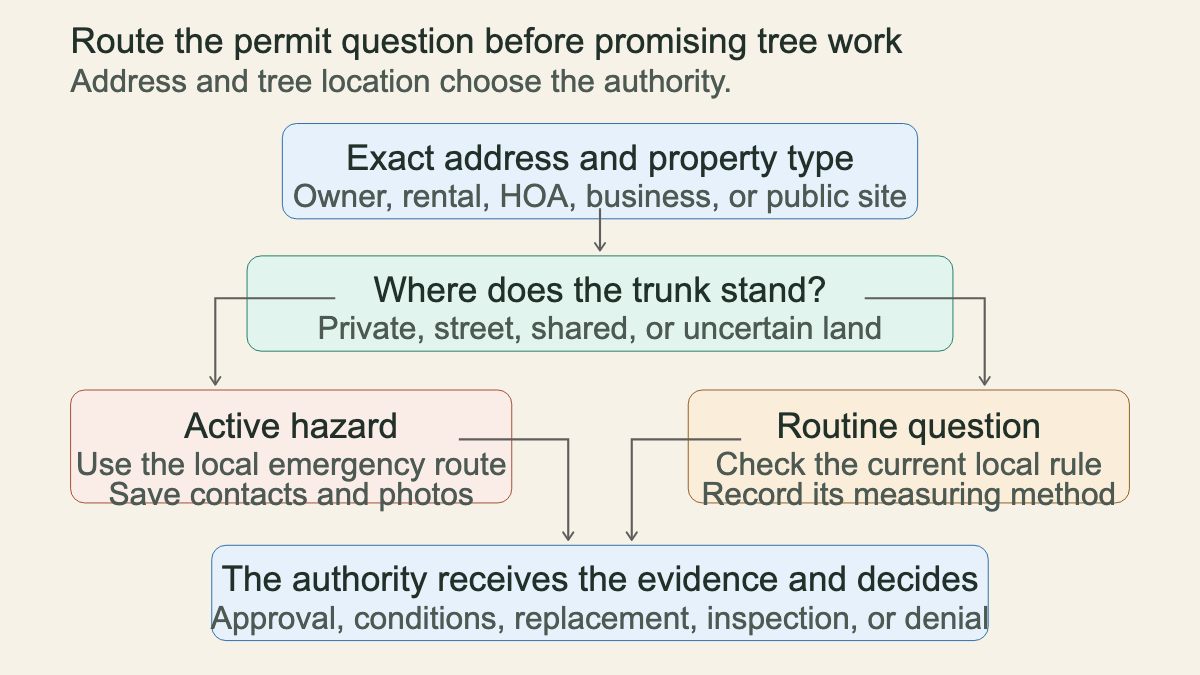
Permit questions are local. Record the service address before discussing diameter, species, or condition. Confirm whether the caller owns the property, manages it, rents it, represents an association, or works for a commercial site. Ask who can authorize an inspection and who can sign an application.
Then locate the trunk. Does it stand fully inside a private lot, in a planting strip by the street, on a common parcel, near a public alley, or close to a disputed boundary? Do not let a caller’s phrase such as “my front tree” settle the category. The public right-of-way can extend beyond the pavement or curb, and a tree near the edge may belong in a street-tree process.
Portland’s published guidance separates street trees, private trees, and heritage trees. San José also distinguishes street trees, heritage trees, ordinance-size private trees, and trees on multifamily or commercial property. Those examples prove the point: the office needs the address and site category before it can find the correct rule.
A neighbor dispute is a separate issue. A permit does not establish ownership, boundary location, permission to enter another parcel, or who must pay. Use the neighbor-tree call workflow when access or ownership is uncertain.
Ask what prompted the removal request
The reason for removal affects the evidence and appointment, even when it does not answer the legal question. Ask, “What happened or changed that led you to call today?”
The caller may have a municipal notice, construction plan, insurance request, arborist recommendation, dead crown, recent lean, damaged root plate, blocked development area, or simple preference for a different yard layout. Preserve the caller’s wording. “Owner reports no leaves this season” is a fact about the report. “Tree is legally dead and exempt” is a conclusion the receptionist cannot make.
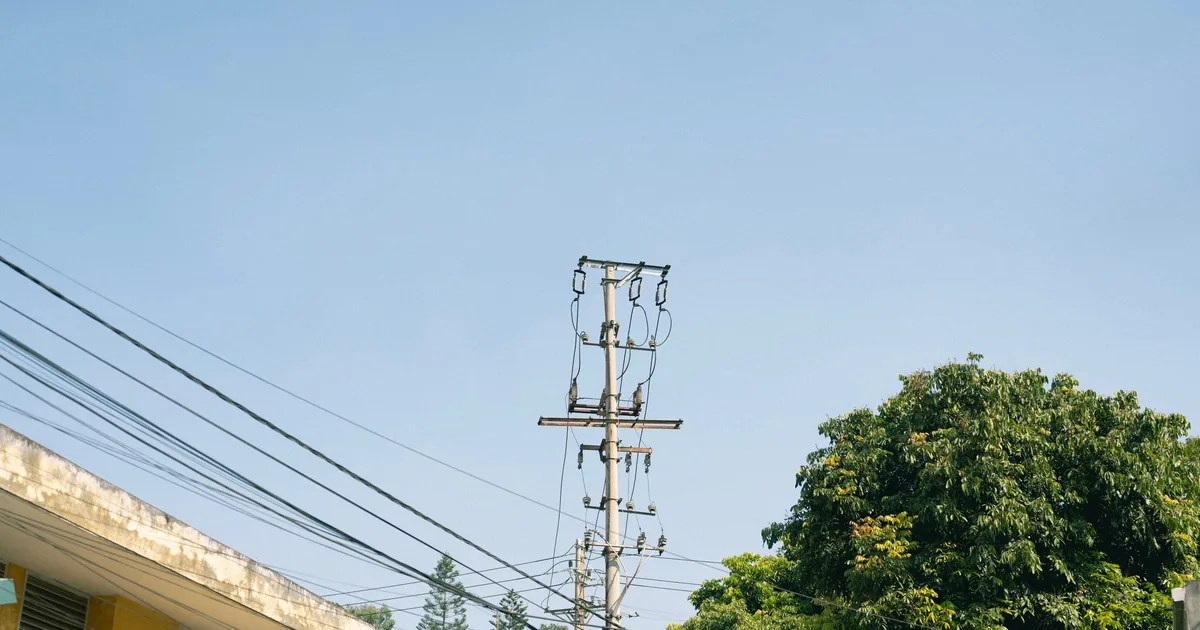
Ask whether anything is falling, moving, uprooting, burning, contacting wires, blocking a road, or threatening people right now. An active electrical hazard, injury, fire, or blocked emergency route belongs in the company’s emergency protocol and may require the utility or emergency services. Keep people away from the area. Do not ask the caller to touch a wire, move a limb, or stand beneath the tree for a better picture.
A hazard claim does not create a national permit exemption. Atlanta publishes a local after-hours process that calls for a message, photographs, and follow-up. San José describes a separate route for an imminently hazardous ordinance-size tree supported by a certified arborist report. Another jurisdiction may use different contacts and evidence. Record the time, the person contacted, the instructions received, and the photographs preserved.
Record the measurement without declaring what it means
Many local rules use trunk size, but the measuring method can differ. A page may call for diameter at breast height, circumference at a stated height, combined measurements for a multi-trunk tree, or another defined method. Find the current source for the exact jurisdiction. Copy its wording into the work record.
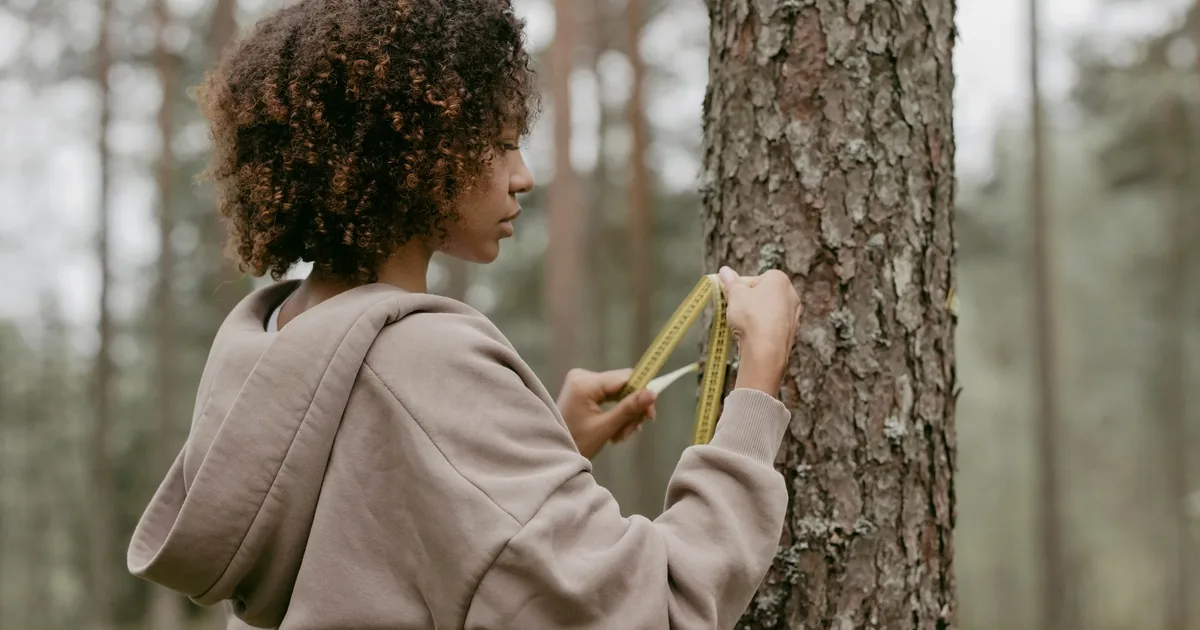
If company policy allows the caller to provide a preliminary measurement, keep it labeled as caller-reported. Ask for a photograph that shows the full tape, the measurement height, the whole trunk, and any multiple stems. Do not convert an irregular multi-stem base into a tidy diameter unless the local instructions say how to calculate it.
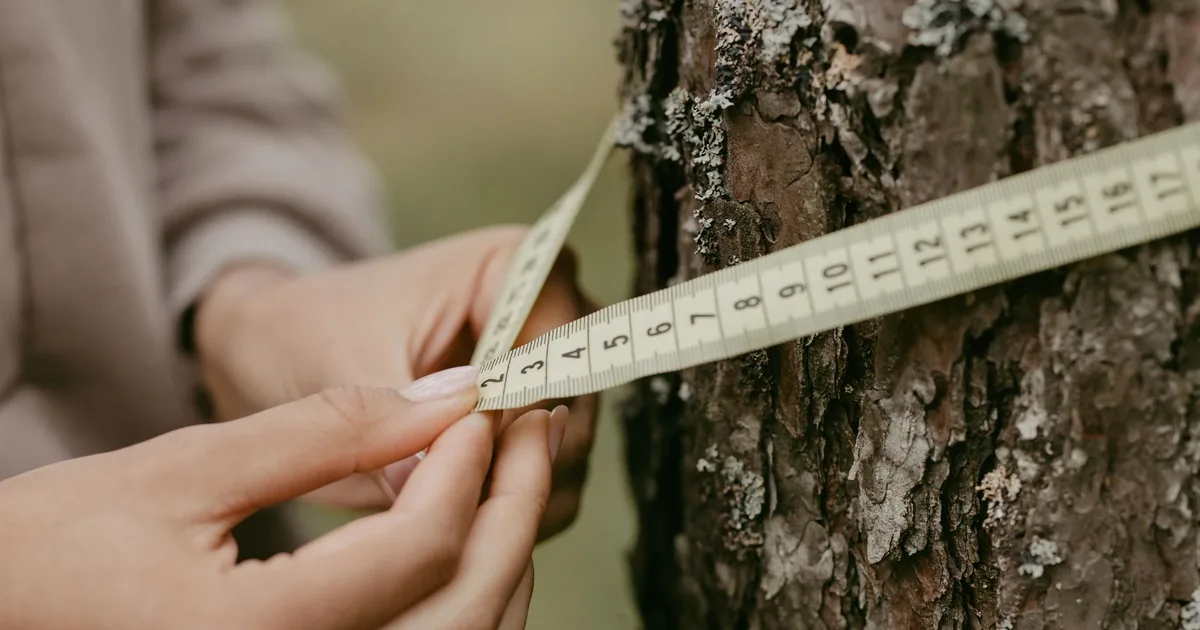
The photo used with this article shows circumference measurement. That does not mean circumference is the required measure everywhere. San José’s current page gives circumference criteria and explains its treatment of multi-trunk trees. Portland publishes its own diameter method. The local definition wins.
Species, heritage designation, condition, property type, development status, and tree location may matter as much as size. Record the species as caller-reported unless a qualified person has identified it. Ask whether the property lies in a historic district, environmental overlay, planned development, association, or other regulated area, but leave classification to the responsible reviewer.
Build one evidence packet before the field visit
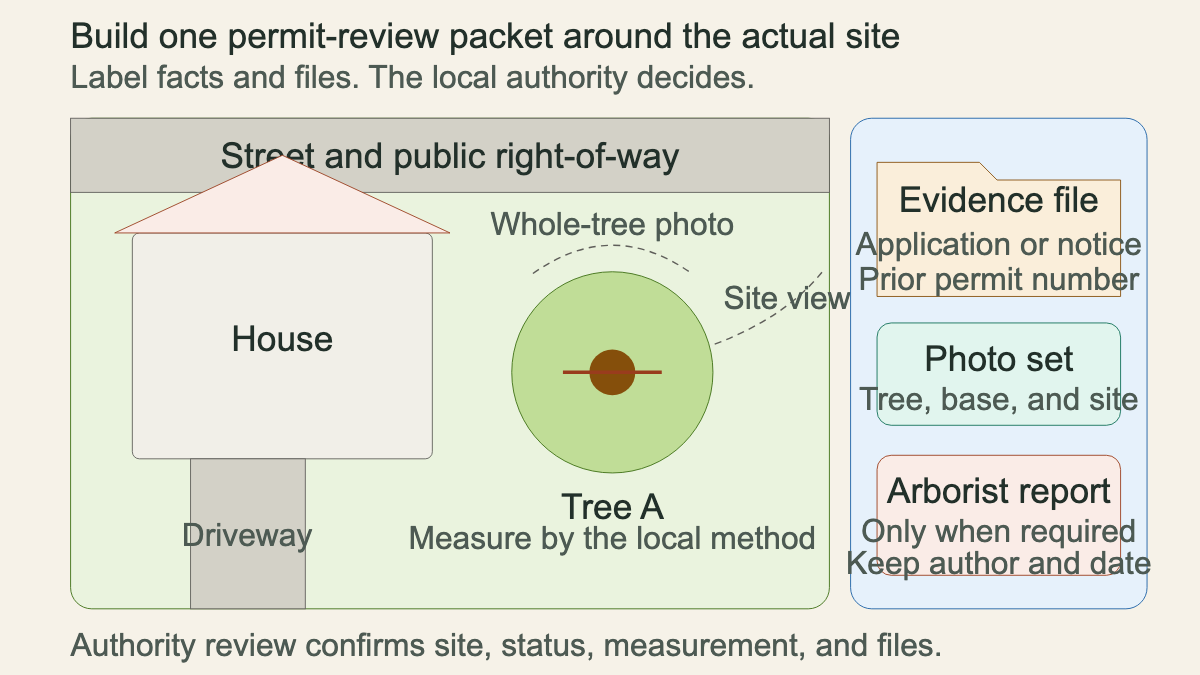
A permit conversation becomes manageable when every source file sits under one address and one labeled tree list. Call the trees A, B, and C on the sketch and use those labels in photographs, reports, estimates, and applications.
San José’s application instructions provide a concrete example. They ask for a tree description table, a site plan showing property lines, the street, structures, and labeled trees, plus a color photograph of each full tree. The city may request an arborist report after review, and an applicant can include an existing report. This is a local process, but its document structure makes a strong intake model.
Collect the material the caller already has:
- the complete notice, application, decision, correction letter, or code complaint;
- a survey, site plan, landscape plan, building plan, or permit drawing;
- wide photographs of each tree, trunk base, crown, nearby structures, street edge, and access route;
- an arborist report with the author, credential, date, scope, photographs, and conclusion intact;
- prior permit numbers, replacement conditions, inspection notes, or planting records;
- the project schedule and the name of the person who controls it.
Keep original files. A caller’s summary of “the city approved it” should not replace the approval document. A screenshot of one paragraph should not replace the full report that states assumptions and limits.
Separate the arborist’s role from the authority’s decision
Some calls need an arborist assessment before a useful permit application can be prepared. The International Society of Arboriculture explains that arborists can evaluate whether removal is appropriate. That professional opinion can document tree condition, risk, alternatives, or the requested work, depending on the assignment.
The arborist does not grant the municipal permit. The city, county, district, park agency, transportation department, or other named authority decides under its current rules. Keep those roles separate in the appointment note.
Ask what deliverable the authority requested. “Arborist report” may mean a specific form, credential, inspection method, risk assessment, site plan, tree inventory, or signed statement. Obtain the written instruction when possible. If the caller needs a broad professional evaluation before choosing pruning, monitoring, or removal, use the certified arborist consultation intake.
Do not promise that a report will support removal. A field assessment can recommend retention, pruning, monitoring, support, treatment, removal, or more investigation. The appointment should define what the professional will inspect and what written product the company actually provides.
Put fees, notices, replacement, and inspections in the scope
Permit work can continue after an approval is issued. Portland explains that some removals carry replanting requirements and that permit closure may involve a final inspection or accepted self-certification. San José publishes replacement ratios and, for some live ordinance-size removals, a notice process. The office should check the applicable local instructions and estimate exclusions.
Tell the caller who handles each task: measuring, site-plan preparation, report writing, application submission, fee payment, posting or neighbor notice, correction responses, permit pickup, replacement planting, final photographs, and inspection scheduling. If the tree service handles only the field estimate and arborist report, say so.
Avoid “We take care of the permit” unless the company truly owns every required step. A clearer statement names the work: “Our arborist can inspect the tree and prepare the report described in the city’s email. The property owner submits the application and pays the fee. We schedule removal only after the office receives the written approval and checks its conditions.”
The tree removal quote-call guide covers access, drop-zone constraints, utilities, debris, wood, and stump scope after the permit route is understood.
Send a permit-ready note to the reviewer
A useful handoff reads like this:
“Owner requests review of one rear-yard tree at 42 Sample Street. Trunk appears inside the private parcel on the attached survey, but boundary and authority are unconfirmed. Caller reports the city requested a removal application and may require an arborist report. Whole-tree, base, street-context, and access photos received. Caller measured circumference at the height shown in the city instructions; measurement remains unverified. No falling material, active movement, wire contact, fire, injury, or blocked public route reported. Existing city email and application are attached. Arborist to assess the tree and confirm available report scope. Office to verify current authority instructions, fees, notice, replacement, approval, and inspection requirements before production scheduling.”
Read the uncertain items back. The caller should know what the tree company will verify, what the arborist will assess, what the owner must provide, and which authority makes the final decision. That clean boundary protects the customer and keeps Thursday’s crew from arriving with a saw before the paperwork is ready.