A homeowner calls and says, “I want a maple beside the driveway.” That sounds ready to quote. It usually is not. The office still knows nothing about the customer's goal, the available root space, overhead lines, afternoon sun, drainage, gate access, or who will water the tree after planting.
The first call should prepare a site consultation, not pick a tree. Capture what the customer wants the planting to accomplish, describe the proposed location, flag conflicts, record access, and name the decisions the field assessor must make. A good note lets the assessor arrive with useful options and avoids turning the appointment into a repeat of the phone call.
Start with the job the tree needs to do
Ask why the customer wants the tree before discussing species. “A maple” may mean dense summer shade over a west-facing room, a red fall focal point, a replacement for a failed tree, or screening from a neighboring deck. Those are different jobs.
Record the goal in the caller's words. Useful prompts include:
- What would you like this tree to do: shade a particular area, screen a view, replace a removed tree, frame an entrance, support wildlife, mark a memorial, or add seasonal color?
- How many trees are you considering, and has anyone prepared a landscape plan?
- Do you have a preferred species, size, flower, fruit, leaf color, or evergreen habit? Are there features you want to avoid?
- Who will approve the final species, location, and proposal?
Keep preferences separate from requirements. “Customer likes red fall color” leaves room for a site-appropriate recommendation. “Install red maple” sounds like a decision that may not survive the visit.
The caller may also have a firm location in mind. Ask what drives it. If the answer is “That is where the old tree was,” note whether the stump remains, whether roots were ground, and why the prior tree came out. Reception should not infer that the same spot is reusable. The assessor needs to see it.
Describe the proposed site at mature scale
A sapling can fit almost anywhere. Its mature crown and roots cannot.
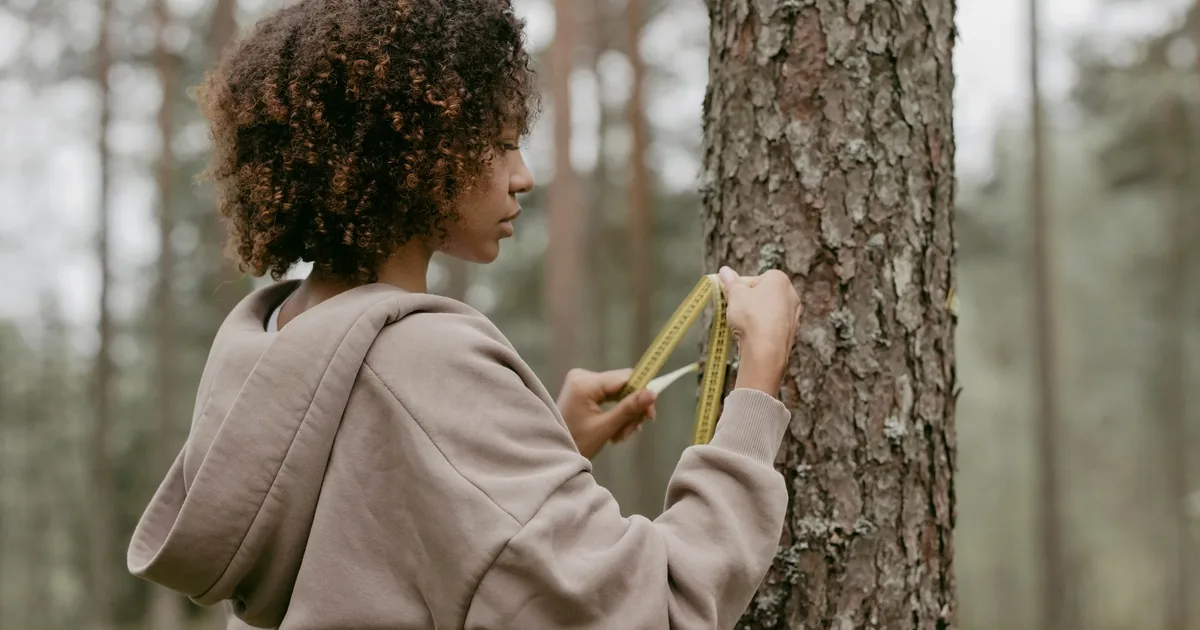
Ask the caller to stand where they hope the tree will go, if they can do so safely, and describe what surrounds the spot. Record the nearest house wall, garage, fence, walk, driveway, patio, retaining wall, pool, septic component, neighboring property, and existing tree. Approximate distances are useful when clearly labeled as caller estimates. Photographs should show the whole area, beyond a close view of bare soil.
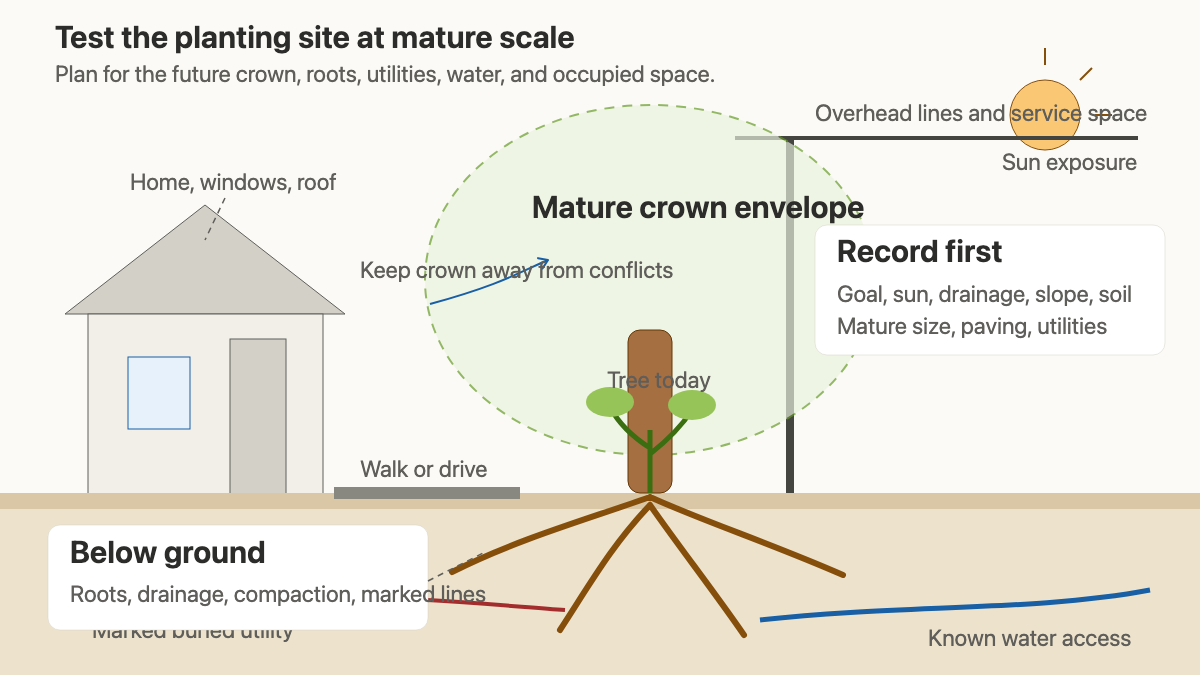
University of Minnesota Extension advises matching the plant to soil, drainage, available water, sunlight, wind exposure, climate, and nearby residential conditions. Its guide also points out that construction can create different soil conditions within one property. The bed near a backfilled foundation may behave differently from the open lawn twenty feet away.
Ask what happens after rain. Does water stand there, run across the slope, or disappear quickly? Is the soil loose, sandy, heavy, compacted, recently filled, or unknown? Has a vehicle crossed the area? Is there irrigation? How many hours of direct sun reach the spot in summer? The office is collecting observations, not diagnosing soil through the phone.
UConn Extension Forestry includes drainage, compaction, soil volume, sunlight, and space for roots and canopy in a planting-site evaluation. The intake note should make those conditions visible before the visit. A field assessor can then decide whether testing, a different location, another species, or additional site work belongs in the proposal.
Put utilities and permissions on the appointment record
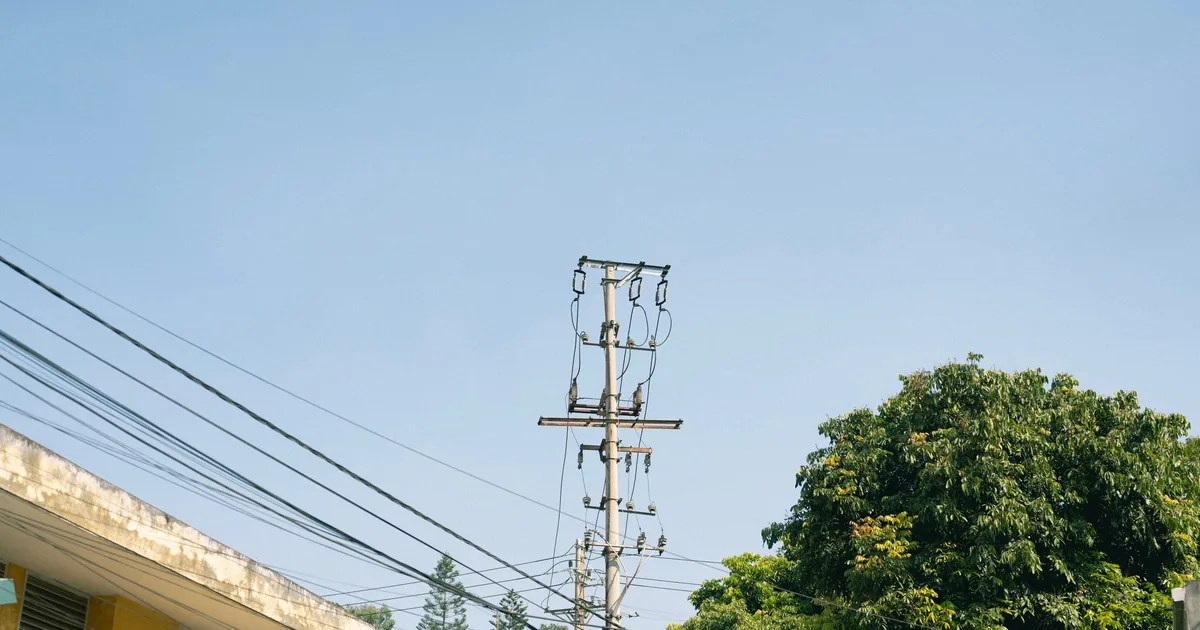
Ask about overhead conductors, the service drop to the house, utility poles, transformers, meters, and streetlights. Record what the caller sees without assigning a planting clearance from the office. Mature size and the utility's rules will shape the final decision.
Below ground, ask about known electric, gas, water, sewer, communications, irrigation, invisible dog fence, landscape lighting, septic piping, and private lines. Then identify who is responsible for the locate request under company policy.
811 Before You Dig says anyone planning to dig should contact the state 811 center, wait the required time, and confirm that utilities have responded before excavation. State procedures vary. Some private facilities may require separate locating arrangements, so the office should not promise that one ticket identifies everything on the property.
Permits and property approvals need the same discipline. Ask whether the proposed site is in a public right-of-way, easement, historic area, homeowners association, shared property, or rental. Record any documents the caller already has. Do not tell the customer that approval is unnecessary or guarantee a deadline. The service address determines the local check.
Keep species selection with the field assessor
The office can gather preferences and narrow the purpose. It should not choose a species from a photograph and a ZIP code.
Species selection may involve mature height and spread, root space, soil drainage, hardiness, sun, moisture, exposure, pest pressure, local availability, maintenance tolerance, and proximity to structures or utilities. The Arbor Day Foundation's planting-site guide calls out mature height, crown spread, root space, structures, sunlight, drainage, soil, and utility lines. Those facts belong together.
A useful response sounds like this: “I have your preference for a narrow evergreen screen. I will note the wind exposure, afternoon shade, overhead line, and the six-foot bed. The assessor will check the site and discuss species that fit those conditions.” That statement preserves the customer's goal and keeps the recommendation honest.
Customers sometimes ask for an exact installed price during the first call. Follow the company's pricing policy, but explain what remains unknown: number and size of trees, nursery stock, delivery route, planting conditions, disposal, protection of turf or paving, and aftercare. Label the first visit accurately as a consultation, estimate, or paid assessment.
Plan how the tree reaches the planting site
The route from the truck to the hole can change the job. Ask about gate openings, turns, steps, slopes, soft lawn, retaining walls, low branches, parked vehicles, overhead obstructions, and a place to stage material. Request one wide photo from the likely unloading point and another through the narrowest part of the route.
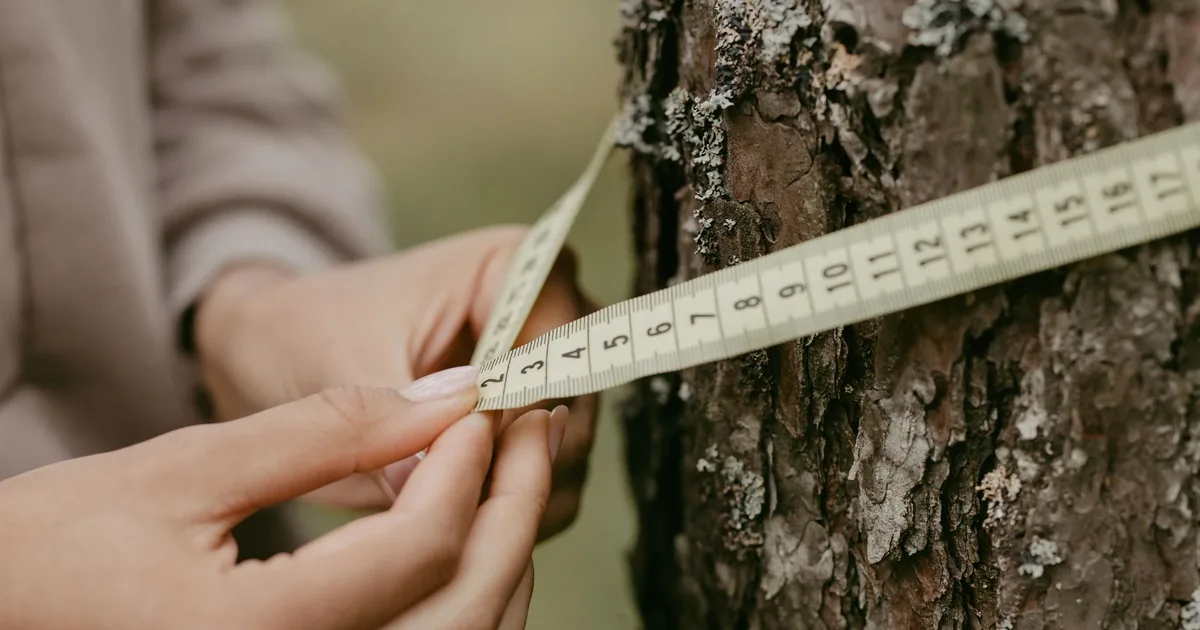
Nursery stock matters too. Minnesota Extension distinguishes bare-root, container-grown, balled-and-burlapped, and tree-spade material. Each has different handling and planting needs. A balled-and-burlapped tree may be too heavy for casual hand carrying. Reception does not need to calculate equipment from a caller's guess, but the note should state the requested tree size, number of trees, known stock form, and access constraints.
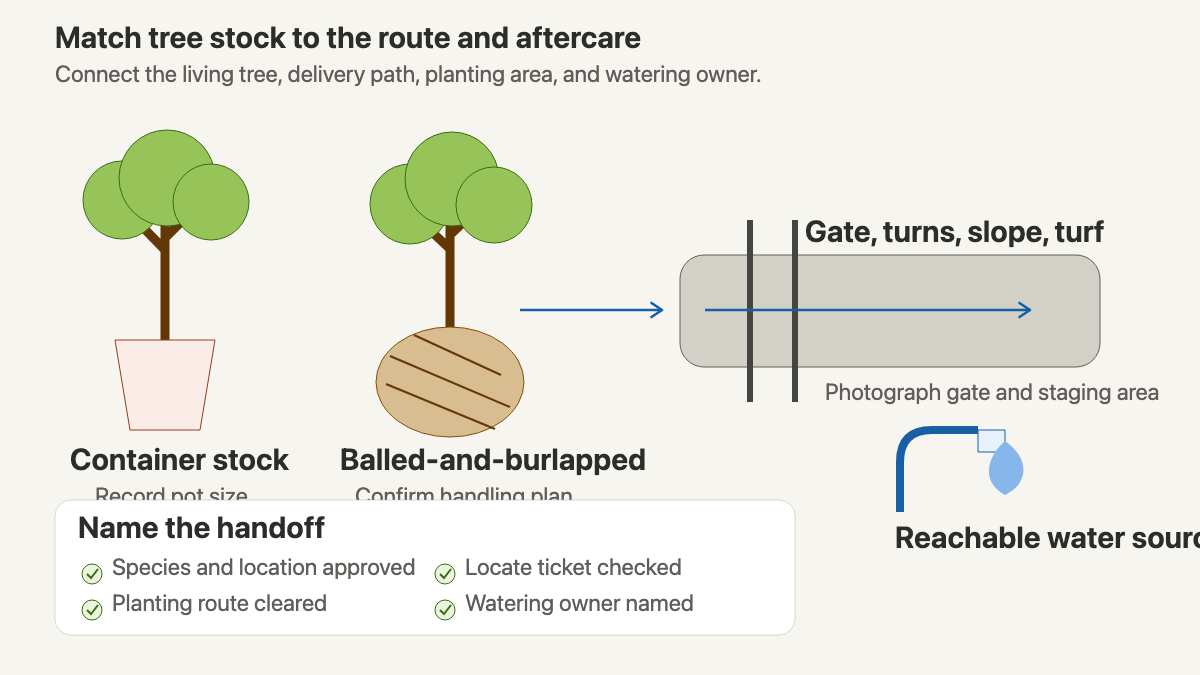
If the customer wants a large specimen or transplant, route the request to the person who evaluates equipment, root-ball requirements, soil, season, and access. A tree-spade project has little in common with carrying a small container tree through a side gate.
This is also the time to ask what the customer expects the proposal to include. Does the company supply the tree? Are delivery, planting, mulch, staking when needed, cleanup, disposal, watering equipment, follow-up, or a written care plan part of the scope? Capture the question. Let the estimator define the offer.
Assign the aftercare before planting day
A tree can be installed correctly and still begin its life with nobody responsible for water. Ask where the nearest usable water source is and who will handle care after the crew leaves. For a rental, association, commercial site, or second home, “the owner” may not be the person on site.
Do not turn a general watering schedule into a universal promise. Stock size, soil, drainage, rainfall, temperature, season, and company warranty terms all matter. The consultation should produce a written care plan tied to the installed tree and current conditions. Confirm who will receive that plan and who can act on it.
For broader assessment needs, route the caller to the certified arborist consultation intake. If the proposed site raises concerns about existing roots near paving, pipes, or a foundation, use the root-damage consultation workflow. The tree-service resource hub covers related scheduling for pruning, removals, hazards, and site assessments.
Read back a field-ready appointment note
Before ending the call, summarize the facts that will travel to the assessor:
“Homeowner wants two trees to shade the west patio and prefers fall color. Proposed area is between patio and rear fence; caller estimates twelve feet of open bed. Afternoon sun, compacted soil after recent construction, and water standing near the fence after heavy rain were reported. Overhead service line crosses the rear corner. Irrigation and landscape lighting are present; private-line status is unknown. Customer will send wide photos from patio and side gate. Gate reported as narrow with one step and a sharp turn. No stock selected. Homeowner will approve the proposal and expects to handle watering. Consultation must confirm species, mature fit, drainage, access, locate responsibility, scope, and care plan.”
That note gives the field assessor a real starting point. The visit can focus on the site, the tree, and the proposal, with the basic phone work already done.