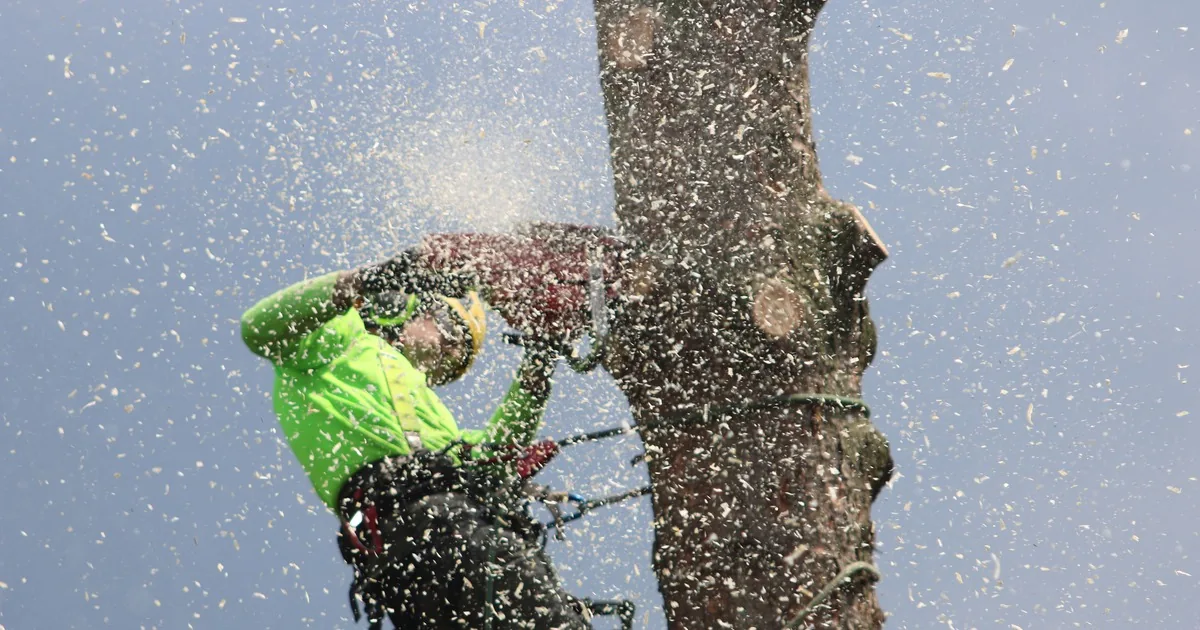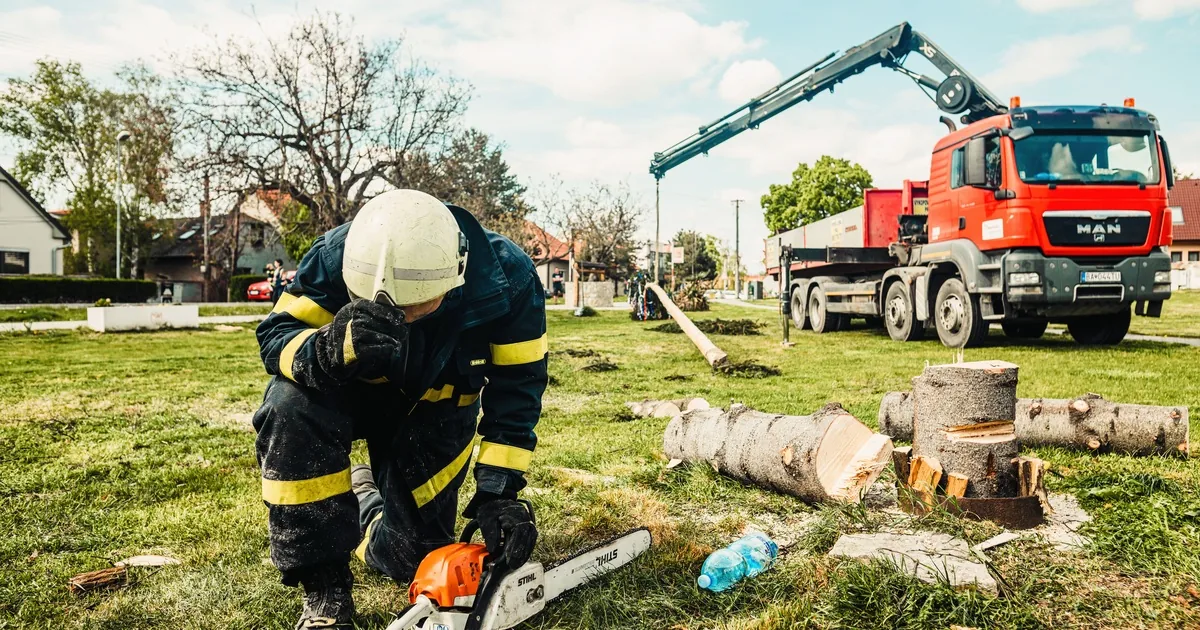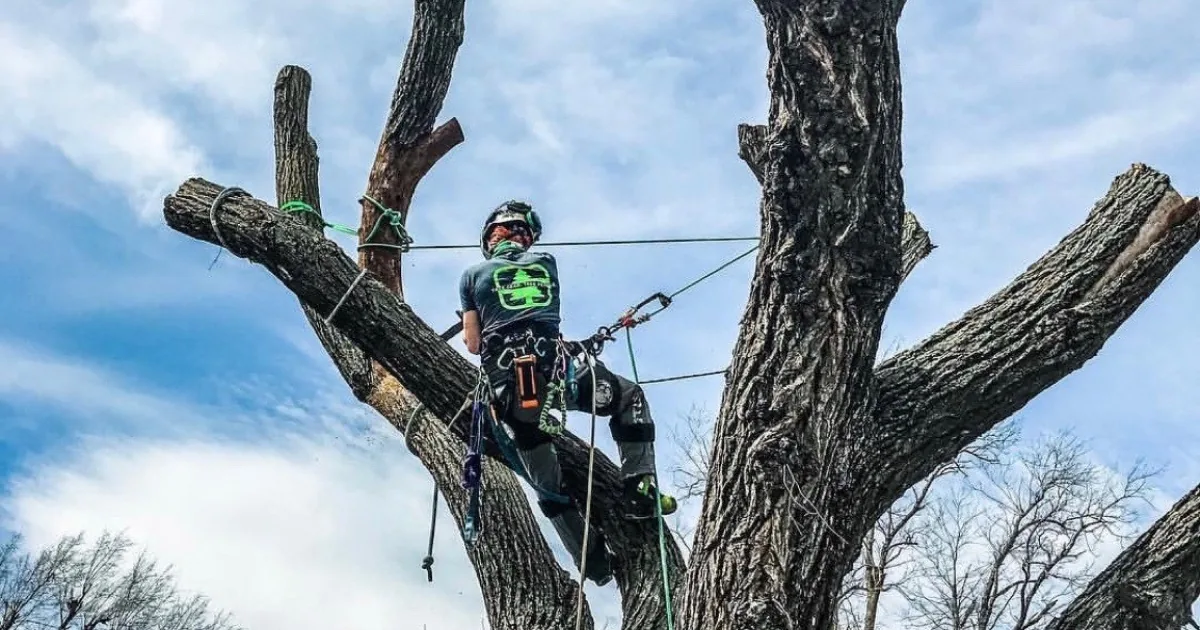
A homeowner calls about “one big oak in the backyard” and asks for a removal price. The phrase sounds specific. It is not enough to quote, schedule, or choose a crew.
The oak may stand in open grass with room to fell it. It may lean over a garage behind a six-foot gate, with a service line threaded through the crown and a septic field between the driveway and trunk. Those are different jobs.
A useful tree removal intake should establish why removal is being requested, whether the situation is urgent, where the tree stands, what surrounds it, how equipment can reach it, and what the customer expects to happen to the wood and stump. The office should collect photos and arrange an assessment. It should not decide from a phone description that removal is required or promise a firm price before someone qualified reviews the site.
Separate a quote request from an active hazard
Start with the reason for the call. Ask, “What changed, or what prompted you to call about this tree today?”
The answer sorts ordinary estimates from calls that need faster review. A customer may be clearing space for an addition, responding to a municipal notice, worried about dead branches, or looking at a tree that began leaning after heavy wind. If the tree or a large limb has already fallen, ask what it struck and whether anyone is injured or trapped.
Power lines deserve their own question near the top: “Is any part of the tree touching or close to an overhead line, service wire, or downed wire?” Do not rely on the caller to volunteer it. People focus on the trunk, roof, or blocked driveway and may overlook a wire inside the canopy.
If a downed line, fire, injury, trapped person, or immediate public danger is involved, follow the company’s emergency policy and direct the caller to the appropriate emergency service or utility. Reception staff should keep people away from the area. They should never coach a homeowner to move a branch near a wire.
OSHA treats work near energized lines as a specialized task. Its guidance says line-clearance tree trimmers receive special training and must determine line voltage before work begins or consider the lines energized. That guidance belongs in crew planning, but it also changes intake: electrical contact cannot be buried in a general estimate note.
This article covers planned quote calls. A storm-damage queue needs a separate safety-first workflow because urgency, access, and public hazards can change by the hour.
Record the tree without pretending the caller is an arborist
Ask for the number of trees and a plain description of each one. Useful details include species if known, approximate trunk diameter, estimated height, visible dead sections, a split trunk, cavities, mushrooms near the base, exposed roots, recent excavation, and any new lean. Mark every answer as customer-reported.
Most callers cannot estimate height well from the ground. That is fine. Better prompts use familiar references: Is the crown above the roof ridge? Is the trunk wider than a standard doorway? Does the tree reach over the house? A photo with the full tree and a building in frame often tells the estimator more than a confident guess in feet.
Keep diagnosis out of the office script. “Dead tree,” “root rot,” and “about to fall” may be the customer’s concern, but none should become a company finding in the job record. The International Society of Arboriculture explains that arborists can help determine whether removal is appropriate for trees that are dead, dying, or considered an unacceptable risk. Its tree risk guidance also treats defects, targets, and likelihood of failure as parts of an assessment.
A clean note reads: “Customer reports fresh lean toward detached garage after wind; no contact with structure; estimator to assess.” That note preserves the observation and its source.
The drop zone usually matters more than the species
Once the tree is identified, ask what sits beneath and around it. The office needs a map in words before an estimator leaves the yard.
Capture the distance and direction to the house, garage, fence, pool, road, neighboring property, overhead wires, play equipment, sheds, and parked vehicles. Ask whether branches cross a property line or hang over a structure. Find out whether the customer owns the property and whether a tenant, property manager, homeowners association, or neighbor must approve access.
Do not promise that the tree can be felled in one piece. Tight sites may require sectional removal, climbing, an aerial lift, rigging, or a crane. The estimator decides that after seeing the tree and site. The receptionist’s job is to identify the constraints.
Use one question that forces a concrete answer: “If the tree came straight down at ground level, what would it land on?” Customers understand that better than “Is there a clear drop zone?” Their answer quickly exposes the garage roof, garden wall, or neighbor’s new fence that was missing from the first description.
Ask how the crew and equipment can reach it
A tree can be visible from the street and still be difficult to reach. Ask where the truck can park, whether the tree is in the front or rear yard, and what lies between the driveway and trunk.
Record gate width if the caller can measure it. Note steps, retaining walls, steep slopes, soft turf, drainage swales, septic components, irrigation, low branches, narrow alleys, and overhead lines across the driveway. Ask whether a neighbor’s driveway or yard would be needed for access. Permission should be settled before the crew arrives.
Photos should cover the route as well as the tree. Request these views:
- The entire tree from two directions, with nearby buildings visible
- The trunk base and surrounding ground
- The crown, dead limbs, splits, or the area causing concern
- The route from the street or driveway to the tree
- Gates, steps, wires, fences, septic areas, and other access limits
- The stump area if grinding is requested
Tie every photo set to the service address and caller record. A close image of bark with no context cannot show whether a lift fits through the gate.
Define what “removal” includes
Customers use “take the tree down” to describe several scopes. Ask what they expect to remain when the crew leaves.
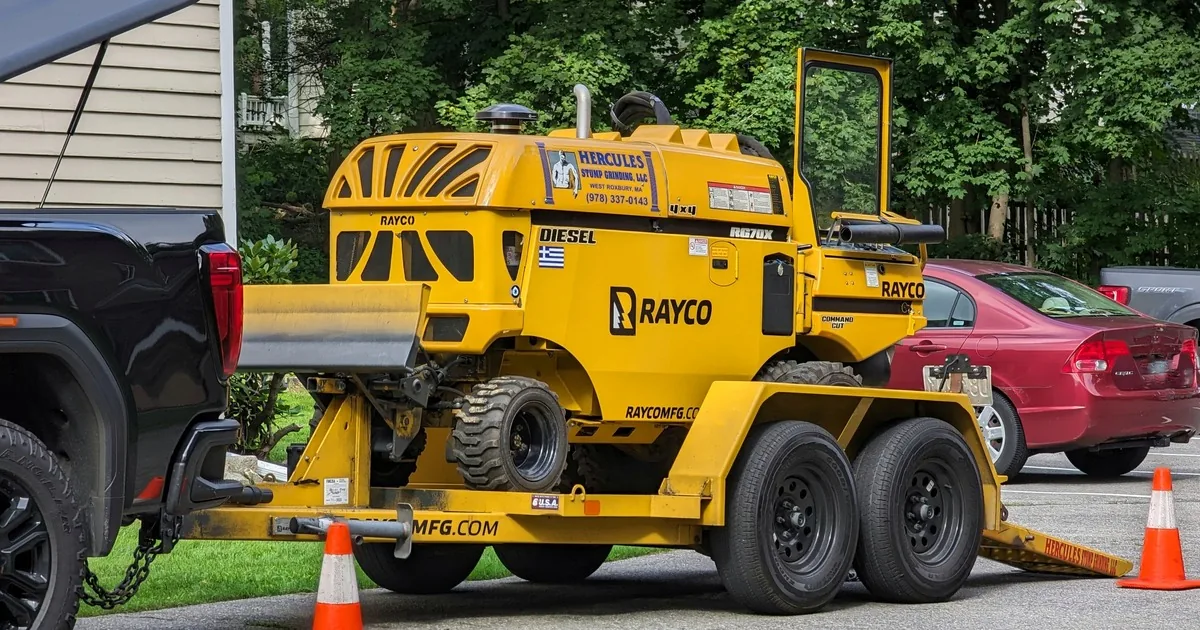
Does the customer want limbs chipped and hauled away? Should trunk wood be removed, cut into firewood lengths, or left in place? Are chips staying on site? Is stump cutting at ground level enough, or do they want stump grinding? If grinding is requested, ask about the desired depth only if the company quotes by a defined policy. Do not improvise a promise on the call.
Also ask whether surface roots, backfill, topsoil, seed, or site repair are expected. Many tree companies exclude some or all of that work. The estimate should state the boundary plainly because a removed trunk, a ground stump, and a lawn ready for planting are separate outcomes.
Stump work introduces underground utility questions. The national 811 service advises anyone planning to dig to contact the state 811 center so underground facilities can be marked. The intake record should flag gas, electric, communication, water, irrigation, and invisible dog-fence lines near the stump. Public locating services may not mark every private line, so the estimator must apply the company’s local process. The starting point is the official 811 guidance for projects involving digging.
Check permits and ownership before setting expectations
Tree rules vary sharply by location. A permit may depend on whether the tree is on private property, in a public right-of-way, protected by species or size, located in a regulated area, or tied to a development project. Some cities require documentation or replacement planting. Others regulate a much narrower set of trees.
That variation is why an intake script should ask for the exact address and avoid a universal answer. Portland, for example, publishes diameter-based rules for some private-property removals, while San José maintains its own removal permit process. These Portland tree removal requirements illustrate why the address must be checked against the responsible local authority.
Ask whether the caller has already contacted the city, received a notice, obtained an arborist report, or started an application. Record permit numbers and deadlines without promising approval or timing. For street trees or boundary disputes, send the request for office review before booking production work.
Give the estimator a quote-ready intake record
The first call should produce a usable site summary, not a price assembled from guesses. A consistent intake captures:
- Service address, caller name, callback number, and relationship to the property
- Number of trees and the customer’s reason for requesting removal
- Active hazards, recent changes, and any contact with structures or utilities
- Tree location, rough size, reported condition, and nearby targets
- Vehicle and equipment access, including measured gate width when available
- Requested debris, wood, chip, and stump handling
- Permit, ownership, neighbor-access, or homeowners association concerns
- Photos of the tree, base, surroundings, and access route
- Preferred assessment times and the decision-maker who should attend
Then explain the next step in the company’s real process. If the company charges for an assessment, say the exact fee and whether it is credited under any written policy. If estimates are free within a defined service area, confirm the address before making that promise. Tell the caller when they should expect scheduling confirmation, but leave technical scope and final pricing to the estimator.
An AI receptionist can collect the same approved fields after hours and route a possible hazard for faster review. The script still needs hard limits around electrical safety, tree-risk conclusions, permit advice, and prices.
Before ending the call, read back the address, the tree count, the main hazard or constraint, and the requested cleanup. The estimator should arrive knowing there is an oak behind a narrow gate, a service wire in the crown, a septic field beside the access path, and a customer who wants the stump ground. “One big tree in the backyard” should never be the whole work order.