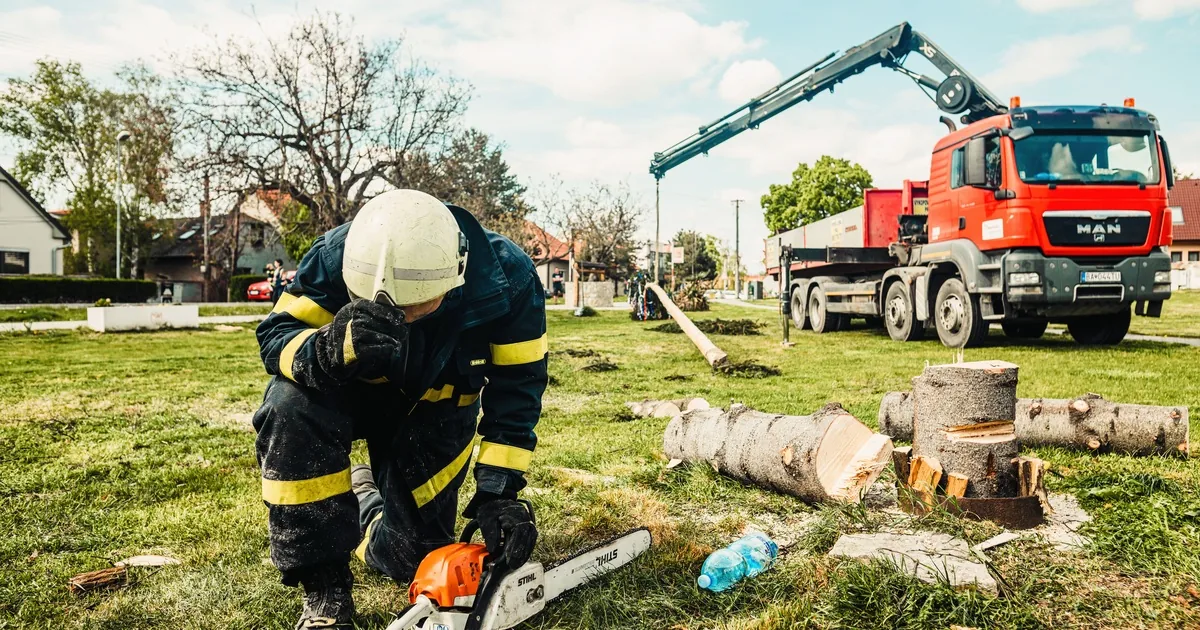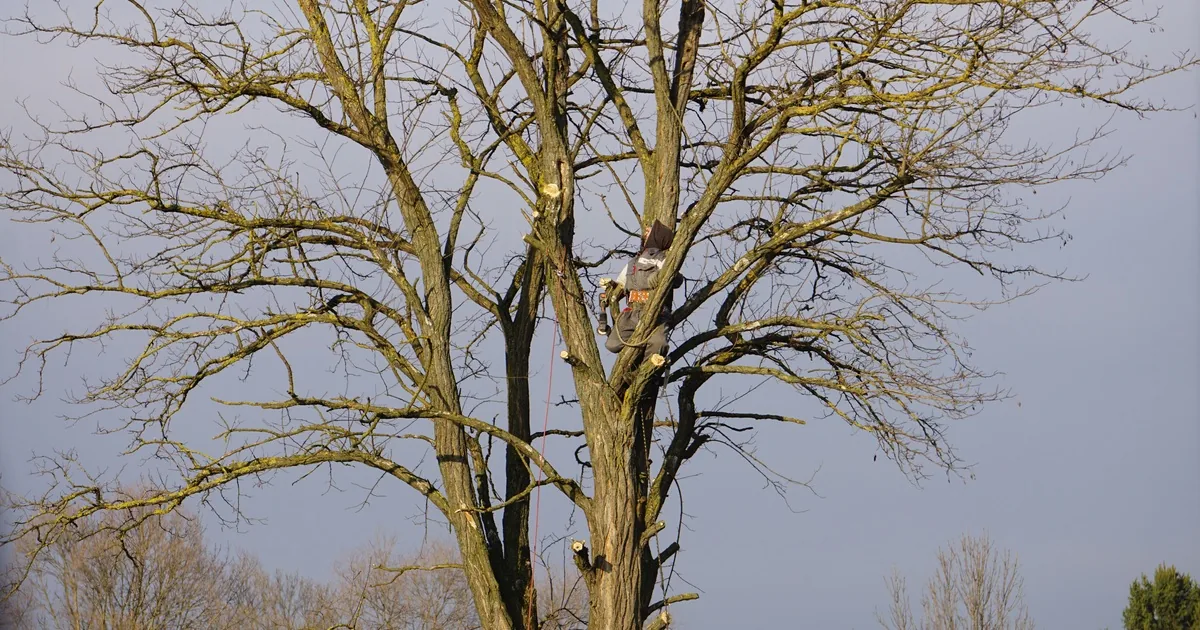
The wind dies down and the phone starts. A big storm rolls through a service area and a tree company can field a week's worth of calls in a single afternoon. Everyone wants a crew now, everyone thinks their job is the worst one on the block, and the person answering the phone has to figure out, in a couple of minutes, whose tree is a genuine emergency and whose can wait until Thursday.
That sorting is the whole game. Storm work rewards the office that answers fast and asks the right questions, in that order. The industry pattern is blunt: storm-surge calls that go unanswered in the first hours go to whoever picks up. A homeowner with a maple through their roof is not going to leave a voicemail and hope. They will call the next name on the list.
So intake during a storm is doing two jobs at once. It is protecting the caller, and it is loading the truck. Get either one wrong and you either send a crew into a hazard they were not warned about, or you send them out missing the saw, the crane, or the second groundman the job actually needed.
Start with danger, not with the tree
Before anyone talks about scheduling, the first question is whether a person is in immediate danger and whether a power line is involved. This is not a customer-service nicety. It changes who the caller should be talking to.
If someone is trapped, injured, or a line is down and arcing, the office should route the caller to 911 and the utility first, then handle the tree work after the scene is safe. A tree crew does not touch a line that could be live, and a dispatcher should never talk a homeowner into treating a downed conductor as an ordinary limb. Assume every downed or tangled line is energized until the utility says otherwise. The office's job in that moment is to slow the caller down, get them away from the line, and point them at the people who de-energize it.
That framing needs to sit at the top of the call script, because a panicked caller will lead with "there's a tree on my house" and only mention the wire draped across the driveway if someone asks. So ask.
The qualifying questions that decide the queue
Once life-safety is handled, a short, consistent set of questions tells the office how urgent a job is and what it will take. The good scripts cover the same ground every time:
- What is the situation: is the tree fully down, is a limb hanging and could still fall, or is the tree leaning and unstable?
- What is it on or near: a house, a car, a power line, a road, or open ground?
- Is anyone in danger right now, and is the structure still occupied?
- Is a power line involved, touching the tree, or down on the ground?
- Can our equipment get in: is there room and a clear path for a bucket truck or a crane, and how wide is the access?
- Is this an insurance claim, and has the homeowner started one?
The answers stack into a rough triage. A leaning tree over open lawn can wait. A hanging limb over a child's swing set or a doorway cannot. A trunk across a public road usually means the road authority is already involved, and a tree on an occupied house jumps the line. Capturing whether an insurance claim is in play early matters too, because those jobs come with documentation the office will need anyway, and it is easier to gather it on the first call than to chase the homeowner later.
None of this requires the person answering to be an arborist. It requires them to ask the same questions in the same order and write the answers down where the crew lead will actually see them.
Photos do the estimating before anyone drives out
The single fastest way to shorten a storm job is to have the caller text photos while they are still on the phone. A homeowner's description of "a huge tree" and the actual tree are often two different sizes. Pictures settle it.
Photos let the office rough out the estimate without a truck roll, and more importantly they decide what rolls. A wide shot shows whether a bucket truck can reach or whether the job needs a crane. A close shot of the base shows how the trunk is loaded and which way it wants to go. A picture of the driveway and gate answers the access question better than any verbal guess about "pretty wide." When the office can see the job, the crew leaves with the right rigging and the right number of hands instead of discovering the problem in the customer's yard.
Ask for the photos by text during the call, tie them to the address, and note anything the pictures cannot show: a soft lawn that will not hold a crane, a back gate that is padlocked, a neighbor whose fence is in the drop zone.
Capture access and utility details so the crew arrives ready
The details that waste a storm crew's time are almost never about the tree. They are about getting to it. Write down the practical stuff every time: where the truck can stage, whether the path to the tree is clear, gate widths and codes, low wires over the driveway, septic fields or pools under the canopy, and a good callback number because the power may be out and the landline dead.
If a utility line is part of the picture but not an emergency, note whether the homeowner has reported it and what the utility said. Crews plan differently when they know a line is coming down later that day versus already clear. The office that records "utility notified, ticket number logged, service drop still attached" hands the crew lead a real picture instead of a surprise.
The hours right after a storm are the whole race
The reason all of this has to be fast is that the demand curve is brutal. Calls arrive in a wall in the first few hours, and every one that hits a busy signal or a full voicemail is a job someone else is already driving to. A tree office cannot staff for a once-a-season surge the way it staffs a normal Tuesday, which is why some shops lean on an answering service or an always-on tool like Answara to catch every call and run the same triage questions when the humans are already three deep. The point is coverage: a caller who reaches a real intake, even a scripted one, stays in the queue.
Build the script before the sky turns green. Print the safety-first routing at the top, keep the qualifying questions short, ask for photos every time, and give whoever answers the authority to say a downed line is a call to the utility, not a job for the saw. When the next front comes through, the office that already knows its questions is the one whose crews are rolling while everyone else is still listening to voicemail.