The kitchen remodel ended Friday. On Monday morning, the homeowner calls a duct-cleaning company and says, “There is drywall dust everywhere, so I need the ducts cleaned before the cabinets go in.” The office knows the address and desired date. It still does not know whether the return grille was open, whether the HVAC system ran during sanding, which rooms were isolated, or whether the dusty work is actually finished.
A useful post-renovation call reconstructs the exposure history before anyone promises cleaning. Record the work performed, work areas, dates, containment, HVAC operation, open or covered registers, final cleanup, filter condition, visible debris, system count, and equipment access. The remodel itself does not prove that the duct system needs cleaning. The condition of the system and the route dust could have taken determine the next step.
Rebuild the renovation timeline first
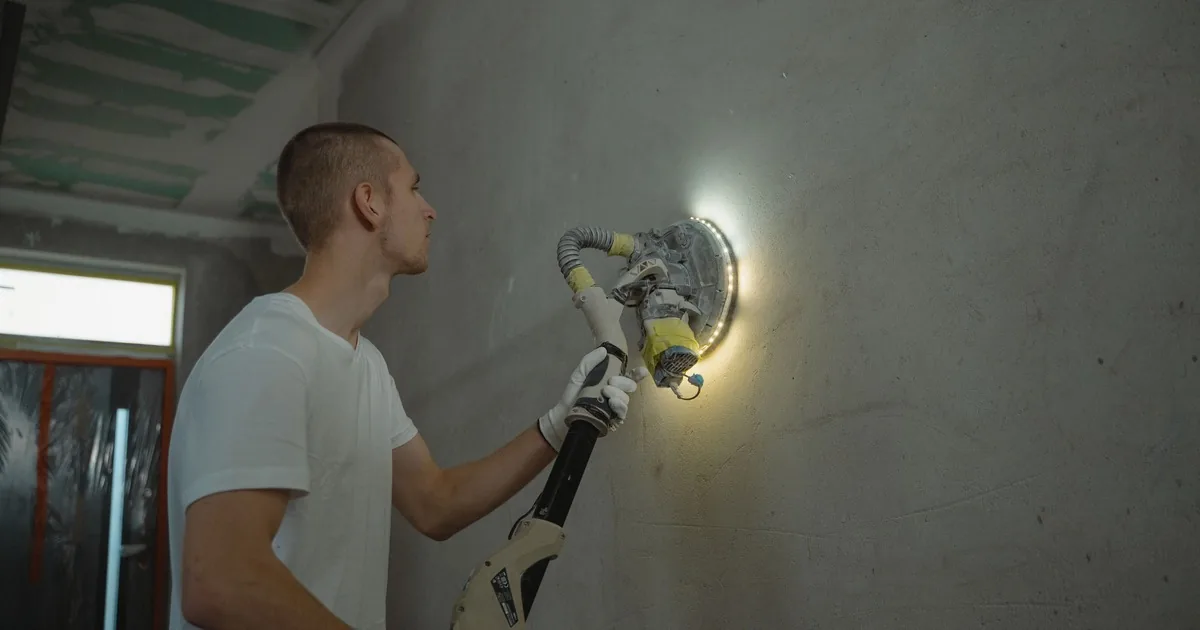
Start with the work, not the word “renovation.” A bathroom repaint and a whole-floor demolition produce different records. Ask what crews cut, sanded, removed, installed, or finished. Drywall sanding, wood cutting, floor refinishing, cabinet work, insulation removal, demolition, and tile cutting deserve specific notes. Record the rooms and floors involved, along with the dates when each dusty phase began and ended.
Then ask whether the project is complete. “The contractor is almost done” can mean that another round of sanding starts tomorrow. Cleaning or inspecting before the dust-producing work ends can leave the field team evaluating a moving target. Confirm whether demolition, cutting, sanding, finish carpentry, flooring, and jobsite cleanup are finished. If painters or flooring crews still need access, put that in the appointment note.
The U.S. Environmental Protection Agency’s duct-cleaning guidance says a blanket recommendation for duct cleaning cannot be made. EPA recommends cleaning as needed and advises homeowners to prevent dirt and water from entering the system. That makes the renovation timeline an intake tool, not a sales shortcut.
Ask what prompted the call today. The customer may have seen dust inside a floor register, found a heavily loaded filter, noticed particles when the blower started, received a recommendation from the remodeling contractor, or simply assumed cleaning belongs on the closeout list. Preserve that reason in the caller’s words. “Customer sees pale powder on the return grille after drywall sanding” is far more useful than “dirty ducts.”
Separate protected work from open-system exposure
Containment changes the inspection story. Ask whether the work area was separated with plastic sheeting or temporary walls, whether doors and openings were sealed, and whether crews used exhaust ventilation directed outdoors. If the caller does not know, record that. Do not turn an uncertain answer into “contained.”
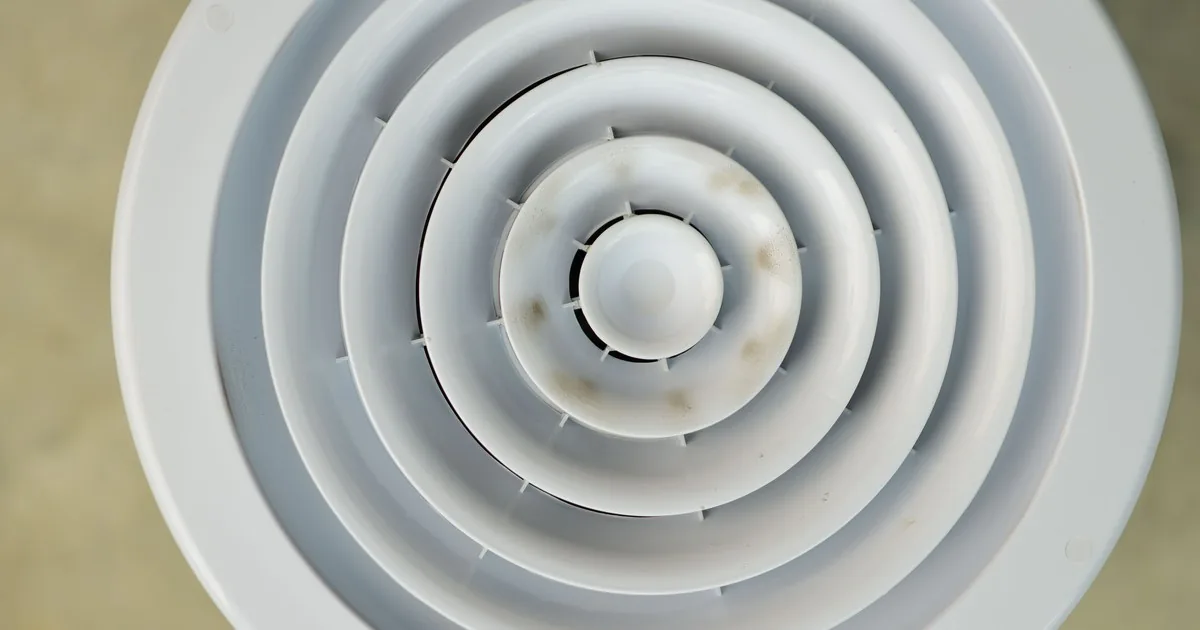
Supply and return openings need separate questions. Were registers covered before dusty work began? Did the covers stay in place? Were any floor openings left uncovered while debris was carried through the room? A return grille can draw air toward the equipment when the blower runs. A supply register sends conditioned air into the room. Callers often call both of them vents, so ask what happened when the system operated or request a wide photo showing the opening.
EPA’s remodeling guidance recommends using barriers to contain dust and covering supply and return registers in the work area. Its duct guidance also says the heating and cooling system should remain off during work that produces dust until the dust has been cleaned up. Reception does not need to grade the remodeler’s containment plan. It needs to document what was done.
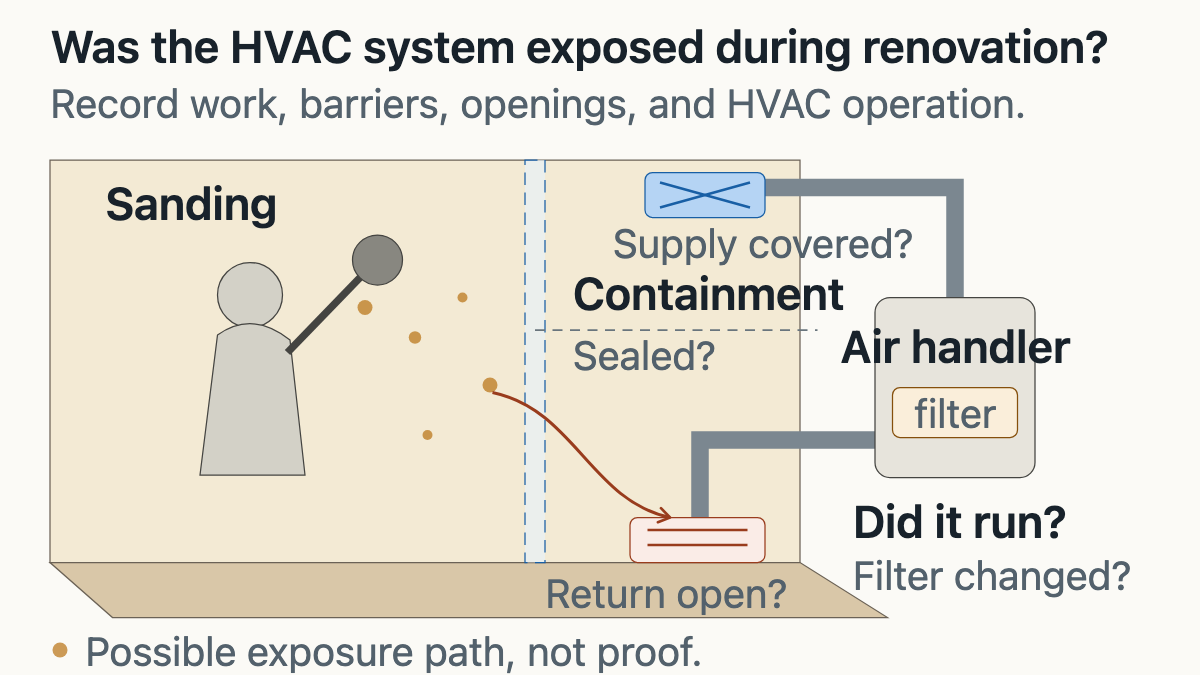
The most important follow-up is simple: did the HVAC system run while crews were sanding, sawing, or demolishing material? Ask whether it ran continuously, only after work hours, or only in unaffected areas. In a home with more than one thermostat, identify which system served the work zone. A first-floor kitchen may be connected to one air handler while an upstairs bedroom project belongs to another.
Map the system that served the work area
The office needs enough of a system map to route the visit. Ask how many thermostats the home has, where the furnace or air handler is located, and which thermostat controls the renovated rooms. Record whether the equipment sits in an attic, basement, crawlspace, garage, mechanical closet, or other area. Note stairs, low clearances, stored belongings, locked rooms, parking limits, and any unfinished work blocking access.
For a fuller estimate record, use the air-duct cleaning system and access guide. That page owns the opening count, equipment count, included components, and work-route questions. The post-renovation call adds the missing chronology: when dust was produced and how the system may have been exposed.
Ask about the filter without prescribing one. Capture its location, whether it was in place during the work, when it was last changed or cleaned, and what the caller sees now. A photo of the filter face can preserve condition, but the customer should not open an unfamiliar cabinet, remove service panels, or climb into an unsafe equipment area for the office.
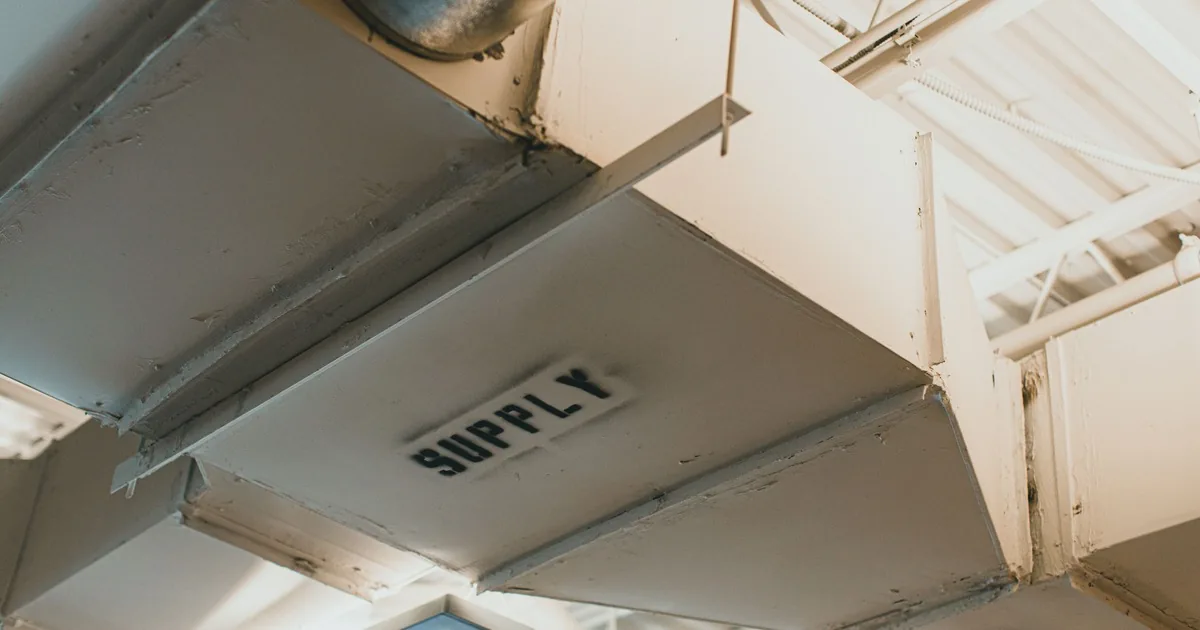
The Department of Energy’s Building America guidance on construction debris in ducts describes drywall work, sanding, and sawing as sources of dust that can enter ducts and mechanical equipment. It also shows why duct material matters. Flexible ducts can collect debris in their grooves and can be damaged by unsuitable cleaning tools. The office should record visible or known duct material and leave the cleaning method to a qualified field professional.
Capture evidence without naming the cause
Ask for observations the inspector can verify. Useful photos show the whole renovated room, each relevant supply or return opening, visible material at an opening, the filter cabinet from a safe position, and the nearby equipment area when accessible. Label images by room and system. A tight photo of gray powder with no location gives the estimator very little context.
The call record should cover these points:
- work performed, rooms affected, and the last dusty work date;
- containment barriers, work-zone ventilation, and final cleanup status;
- HVAC operation during dusty work and the thermostat that served the area;
- supply and return openings that were covered, open, or unknown;
- filter location, installation during the project, change date, and visible condition;
- visible debris, odors, moisture, pests, smoke, or reported material coming from a register;
- system count, equipment location, duct material if known, and safe access;
- labeled photos and the caller’s reason for requesting service now.
Do not tell the caller that powder is drywall dust based on a photo. Do not identify mold, lead, asbestos, insulation, soot, or pest material over the phone. Record appearance and location, then follow the company’s routing policy. Unknown material in an older or damaged building may require a different qualified professional before duct work proceeds.
If the request expands into odors, humidity, filtration, or occupant symptoms, use the HVAC indoor-air-quality consultation guide to capture the broader complaint without prescribing a product. Keep that symptom record connected to the renovation timeline, and leave health conclusions to an appropriate professional.
Wait until the site is ready for evaluation
Schedule around the project, not around the homeowner’s urge to put the house back together. Confirm that dust-producing work is done, loose construction debris has been removed, and the field team can reach the equipment and openings. Note whether cabinets, flooring, trim, or furniture installation will change access after the appointment.
General post-construction cleaning and HVAC-system cleaning have different boundaries. Dust left on walls, shelves, floors, cabinet tops, and window ledges can be stirred up after duct work. A duct-cleaning appointment does not replace cleaning the renovated rooms. Tell the caller what the company’s service includes and leave excluded surfaces in plain language on the work order.
Source control belongs before a promised remedy. The National Institutes of Health fact sheet on HVAC duct cleaning recommends sealing ductwork during renovation and identifying and controlling the contaminant source before cleaning. If sanding continues or registers remain open in an active work zone, the same pathway can expose the system again.
Hand the field team a renovation exposure record
Close by reading back a compact summary:
“Kitchen and hallway drywall sanding ended Friday. Plastic separated the kitchen from the living room, but the caller does not know whether the doorway stayed sealed. Two kitchen supplies were covered. The hallway return was open. The first-floor system ran during two workdays, and its filter remained installed. The caller reports pale powder on the return grille but no material blowing from supply registers. Surface cleanup is complete, and no more cutting or sanding is scheduled. The basement air handler is accessible. Photos are labeled by room. System condition and service scope remain unconfirmed pending inspection.”
That note gives the field team a chronology, a possible exposure route, and the limits of what reception knows. An AI receptionist can collect the same approved fields after hours, but the contractor should set the routing rules and inspection boundaries. The office has done its job when the technician arrives knowing which wall was sanded, which return stayed open, and whether the blower was running.