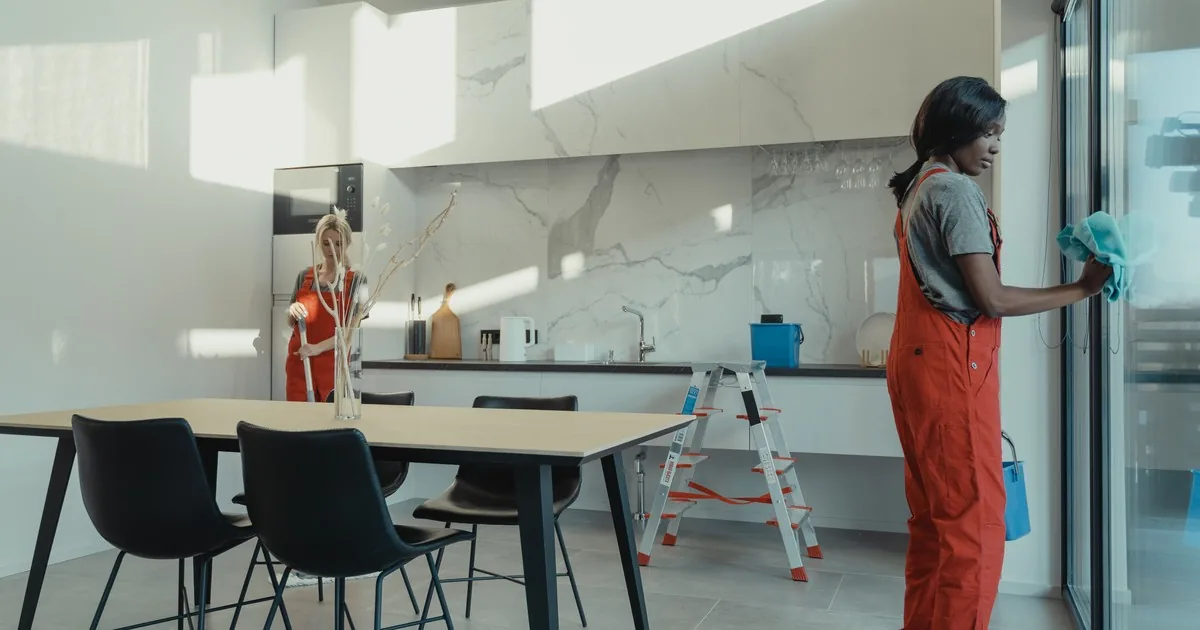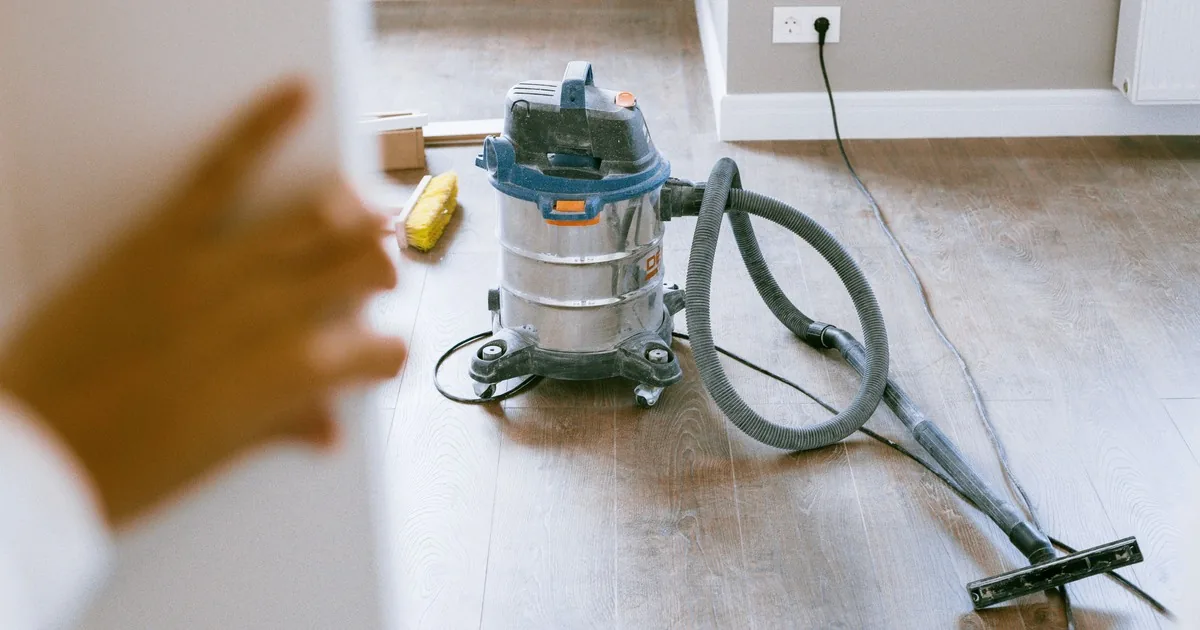
A general contractor calls at 4:20 p.m. and asks for a “final clean” tomorrow. The flooring crew is still cutting planks in the garage. Drywall dust coats the return vents. A pile of trim offcuts sits in the hallway, and nobody has decided who will haul it away. The owner expects keys by noon.
That site has not reached a clean handoff.
A post-construction cleaning call should establish five facts before anyone promises a crew: construction has stopped in the rooms being quoted, bulk debris has an owner, the office knows what produced the dust, the cleaning surfaces and exclusions are written down, and one person can accept the finished work. If any answer is missing, schedule a walkthrough or manager review before the cleaning slot.
Ask whether the contractor has released the area
“Construction is basically done” can describe a finished house with a short punch list or an active job with saws running in the next room. Ask which trades remain, what they will do, and when they will leave. Painting touch-ups, tile cutting, cabinet drilling, floor sanding, and HVAC work can put fresh residue onto surfaces after a cleaning crew has passed.
Name the physical boundary. One floor may be released while another remains active. A kitchen may be ready except for a countertop installer returning Thursday. The job record should identify the rooms that are available, the rooms that are excluded, and the person authorized to release each area.
Do not treat a calendar date as a handoff. Ask for a confirmation point: “Who will tell us that dust-generating work has stopped and the rooms are clear before dispatch?” Record the name, role, and approved contact method. If the answer is “someone from the site,” the handoff still has no owner.
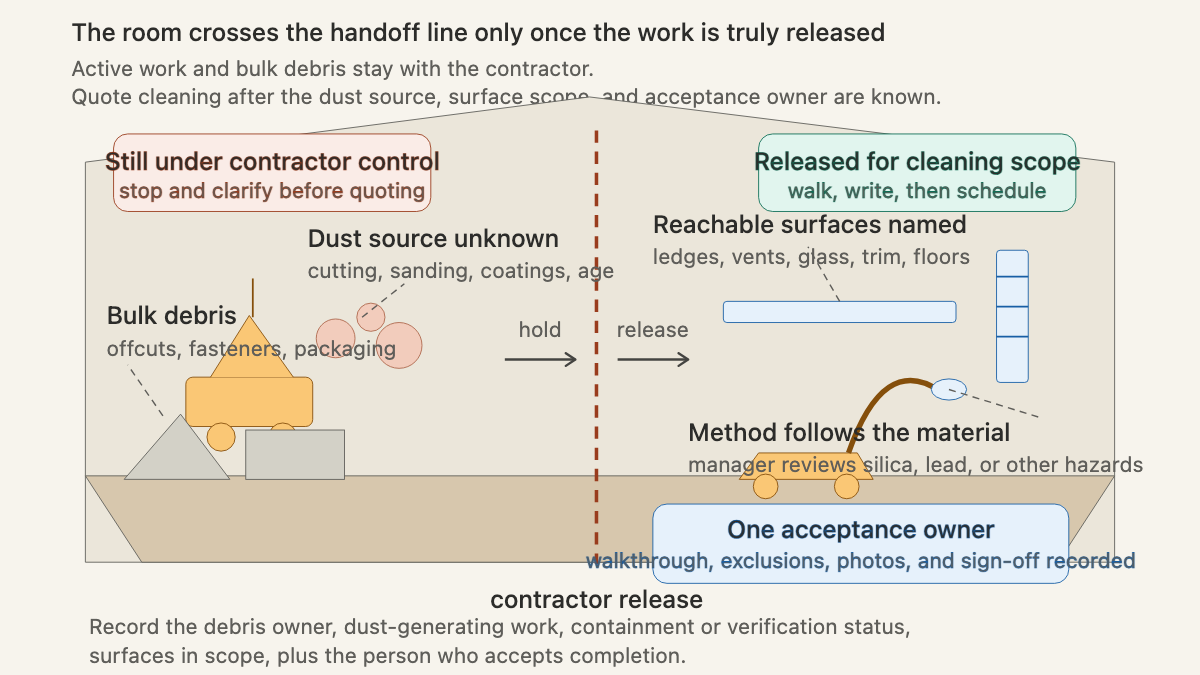
The threshold in the diagram is operational, not decorative. On the left, active cutting and loose material can keep creating dust or block safe access. On the right, the work has stopped, the cleaning company can inspect reachable surfaces, and the acceptance process is known.
Separate bulk debris from detailed cleaning
Callers often use “cleanup” for two different jobs. One is removal of construction material: lumber scraps, drywall pieces, nails, fasteners, tile, old fixtures, pallets, product packaging, and filled contractor bags. The other is detailed cleaning of the released space: floors, trim, doors, ledges, cabinets, fixtures, glass, vents, and other agreed surfaces.
A cleaning company may offer either service, both, or neither. The office should never assume.
Ask these questions before estimating from square footage:
- What loose material remains, where is it, and who is responsible for removing it?
- Are there sharp fasteners, broken glass, heavy pieces, filled bags, liquids, coatings, or unlabeled containers?
- Is a dumpster or approved disposal route available, and does the caller expect the cleaning crew to use it?
- Are tools, ladders, protective floor coverings, temporary walls, or contractor supplies still in place?
- Which adhesive, paint, grout, caulk, or protective-film residues does the caller expect removed?
- Can the site contact send current photos of every room, the debris pile, and the access route?
Photos help the office decide whether a walkthrough is needed. They do not prove that an area is safe or that every condition is visible. A tight crop of a clean countertop says nothing about the stairwell, exposed fasteners, or the bags in the garage.
Write exclusions in plain language. “Cleaning excludes contractor debris, unlabeled chemicals, cured adhesive removal, paint correction, exterior hauling, and any room not released at the walkthrough” is far more useful than “standard final clean.” The company should replace that example with its real policy and service boundaries.
Screen the dust source before discussing methods
“Dust” is a description, not a material. The residue could come from drywall compound, wood sanding, concrete, masonry, tile, grout, insulation, old painted surfaces, or a mix of several trades. The receptionist should ask what work created it, when that work stopped, and whether the contractor has a written control or cleanup process for the material.
The answer matters. OSHA's respirable crystalline silica standard says employers must not allow dry sweeping or dry brushing where those methods could contribute to silica exposure unless wet sweeping, HEPA-filtered vacuuming, or another exposure-minimizing method is not feasible. The standard also restricts compressed-air cleaning where it could contribute to exposure, subject to stated exceptions.
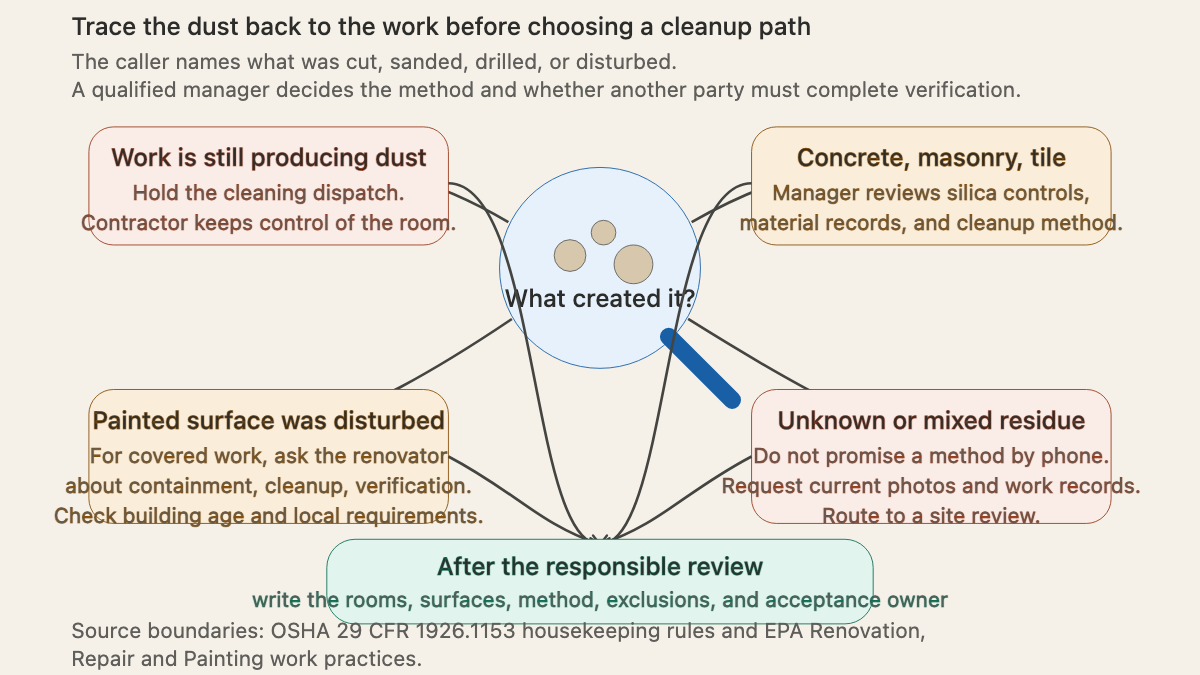
A booking agent should not decide by phone whether the silica standard applies, select respiratory protection, or improvise a cleaning method. Capture the work that occurred, the materials involved, the contractor's controls, and any available safety information. Route uncertainty to the person responsible for the company's worker-safety program.
Older buildings need another boundary. EPA's Renovation, Repair and Painting work-practices page explains that covered renovation work disturbing lead paint requires certified firms and lead-safe work practices. Those practices include containment, thorough cleanup, and verification. A general cleaning crew should not be used as an informal substitute for the renovation firm's required process.
Ask the building age, what painted surfaces were disturbed, which firm performed the work, and whether required containment and verification are complete. Do not promise that an ordinary post-construction clean satisfies federal, state, or local lead requirements. The project manager or qualified contractor must resolve that question.
Require a walkthrough when the call cannot carry the scope
A site walkthrough earns its place when photos are incomplete, several trades worked in the same rooms, residue type is uncertain, access is constrained, or the caller wants a fixed scope without naming the surfaces. The walkthrough should happen after the work area is released and before the cleaning crew arrives with a production schedule.
Walk the same route the crew will use. Start at parking or loading access. Check stairs, elevators, doors, temporary protection, lighting, water, power, temperature, and the path to waste containers. Then inspect each room in a fixed order so upper ledges, vents, cabinet interiors, glass, trim, fixtures, and floors are not collapsed into one vague line item.
OSHA's cleaning-industry hazards overview covers chemical, slip, trip, electrical, equipment, and physical hazards found in cleaning work. A walkthrough is not a formal exposure assessment, but it can expose a bad assumption before dispatch: no working lights, an unlabeled bucket, wet floor sealer, blocked stairs, or a lift that the cleaning company never agreed to operate.
Record four decisions at the walkthrough. First, list the released rooms. Second, list included surfaces and the expected finish for each. Third, name exclusions and unresolved conditions. Fourth, identify who can approve added work and who will accept completion.
Define the phase instead of borrowing the label
Some contractors divide post-construction work into rough, final, and touch-up cleans. Those labels are useful only when both companies define them the same way. One caller's rough clean may mean removing large material before fixtures are installed. Another may expect vacuuming, interior glass, cabinet interiors, and floor preparation under the same name.
Ask what must be true when the crew leaves. Should rooms be clear for the next trade? Ready for an inspection? Ready for owner photographs? Ready for furniture? Does a later touch-up visit cover settled dust and fingerprints after punch-list work? Put the answer in surfaces and conditions, not shorthand.
The move-in cleaning booking guide covers utilities, keys, and the protected window before movers arrive. Use that workflow after construction cleaning is complete if the same property also needs a separate move-in service. For an occupied home whose main issue is buildup and room priority, the first-time deep-cleaning intake guide is the better route.
Close the call with a contractor handoff record
Read the handoff back before booking:
“Post-construction cleaning requested for the first floor at 42 Hawthorn Court. The general contractor will release the kitchen, living room, hall, and powder room after the cabinet crew leaves Thursday. No cutting, sanding, drilling, coating, or punch-list work may continue in those rooms during cleaning. The contractor removes offcuts, fasteners, packaging, filled bags, tools, and temporary materials before release. Drywall finishing and tile cutting occurred; the operations manager will review the dust-control information before the job is accepted. Scope and exclusions will be set at Friday's walkthrough. Morgan Lee approves added work and accepts completion. Dispatch remains on hold until the release and safety review are recorded.”
That note protects the crew from arriving in the middle of construction and gives the contractor a concrete definition of ready. An AI receptionist can collect the first-pass details after hours, but a qualified person still decides whether the site, method, and scope are acceptable.
The right closing question is simple: “Who owns the room before our crew crosses the threshold?” Once the answer is clear, the debris has an owner, and the dust source has been reviewed, the cleaning company can quote work that actually exists.