A caller asks for “a deep clean of the whole house” before family arrives Friday. One bedroom is closed, the oven needs attention, boxes cover the dining table, and the bathroom has mineral buildup around the shower. A bedroom-and-bathroom count will miss most of what the crew needs to know.
For a first-time deep cleaning quote, record every room that is in scope, the surfaces and inside areas the customer expects, the reported condition of each priority zone, belongings that limit access, pets, entry instructions, product concerns, and the customer’s first two priorities. Then choose the quote method your company uses: phone estimate, photos, video walkthrough, or on-site visit. The office should confirm what is included before it promises a price or completion window.
Count the rooms that will actually be cleaned
Start with the service address and the occupied layout. Ask for the number of bedrooms and bathrooms, but keep going. Kitchens, dining rooms, family rooms, offices, laundry rooms, finished basements, stairways, mudrooms, sunrooms, and garages create work too. Ask which spaces are included and which doors should stay closed.
That last question matters. A four-bedroom home where two rooms are skipped is a different assignment from four bedrooms full of furniture, linens, and personal items. Record partial spaces as well. “Basement stairs and half bath only; finished basement room excluded” is a useful note. “Three-bedroom home” is not.
Jobber’s professional house-cleaning checklist recommends separate checklists for deep cleans, move-outs, and individual rooms. It also puts client preparation before the visit. That is the right order for the phone call: define the service type, map the spaces, and capture the conditions that affect access.
Ask whether the home is occupied, partly packed, empty, or under renovation. A normal first visit should not quietly become post-construction cleanup, moving help, or an estate cleanout. If the caller needs furniture, bags, or discarded items removed, the estate cleanout intake guide shows the separate questions that work requires.
Record condition without grading the customer
“Dirty” is subjective and unhelpful. Use neutral descriptions tied to a place and surface. Ask where the buildup is, what it looks like, how long it has been present if known, and whether a photo can show it clearly. Good notes say “grease film reported on range hood and upper cabinets” or “hard-water scale reported on shower glass.” Bad notes label the whole home.
Condition questions should cover what changes preparation or quote confidence. Is the kitchen used daily? Are counters mostly clear? Is pet hair concentrated on rugs and upholstered furniture? Is there soap residue in one shower or every bathroom? Are baseboards dusty, stained, or blocked by furniture? Are dishes, laundry, toys, paperwork, or fragile collections covering the surfaces the customer wants cleaned?
Ask about smoke residue, pest activity, bodily fluids, needles, animal waste, active leaks, sewage, fire debris, or visible microbial growth because those reports may require a different service, equipment, or safety review. A regular cleaning crew should not arrive and discover a restoration job. For moisture or suspected mold, route the inquiry through the company’s boundary and consider a qualified inspection. Answara’s mold remediation call guide explains why the office should document location and moisture history without diagnosing a health condition.
Photos help when they show context. Request one wide image of each priority room and a closer image of the reported buildup. A close-up of a brown mark with no room reference tells the estimator very little. Do not ask the customer to move heavy furniture, climb a ladder, handle waste, or test an unknown substance for the sake of a quote.
Separate included work from add-ons
“Deep cleaning” has no universal task list. Each company defines its own package. The office must translate the caller’s phrase into named surfaces and tasks.
Walk through the high-friction items. Ask whether the customer expects the inside of the oven, refrigerator, cabinets, drawers, or windows. Clarify blinds, tracks, ceiling fans, high ledges, walls, grout, shower glass, baseboards, interior doors, light fixtures, and the space behind appliances. Confirm whether the crew cleans around counter items, moves them, or needs the customer to clear them first.
The Molly Maid deep-cleaning checklist illustrates why room detail matters. Its kitchen, bathroom, living-area, bedroom, laundry, office, garage, and playroom sections contain different surfaces. Your company’s list may differ. The useful lesson is to name the work room by room and put exceptions in writing.
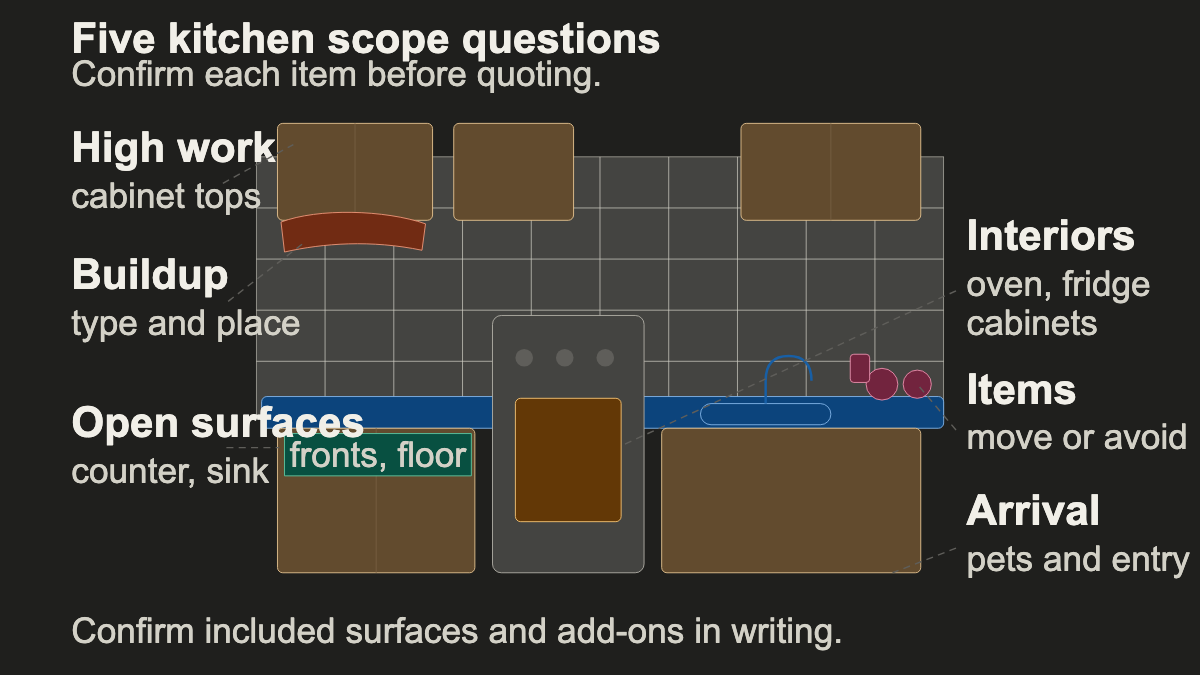
A caller may say, “Please clean the fridge,” while meaning the shelves, drawers, seals, top, front, and floor underneath. Repeat the agreed task in plain language. If the interior is an add-on, say so. If the appliance must be empty and safely movable, record who prepares it and what the crew will leave untouched.
Do the same for windows and cabinets. “Windows included” may mean interior glass only, while the customer expects exterior panes, screens, tracks, and second-story access. “Cabinets” may mean fronts, empty interiors, or shelves full of dishes. One noun can hide an hour of disagreement.
Make the caller choose two priorities
Long wish lists need an order. Ask, “If the crew protects two results above everything else, which two should they be?” The answer might be the guest bathroom and kitchen grease, or pet hair in the living room and dust on bedroom baseboards. Put those priorities at the top of the work order.
A priority is specific enough to verify. “Make it feel fresh” is a goal, but “remove visible pet hair from the living-room rug and sofa” gives the crew a place and result. “Focus on bathrooms” becomes “shower glass and floor edges in the primary bath first; hall bath second.”
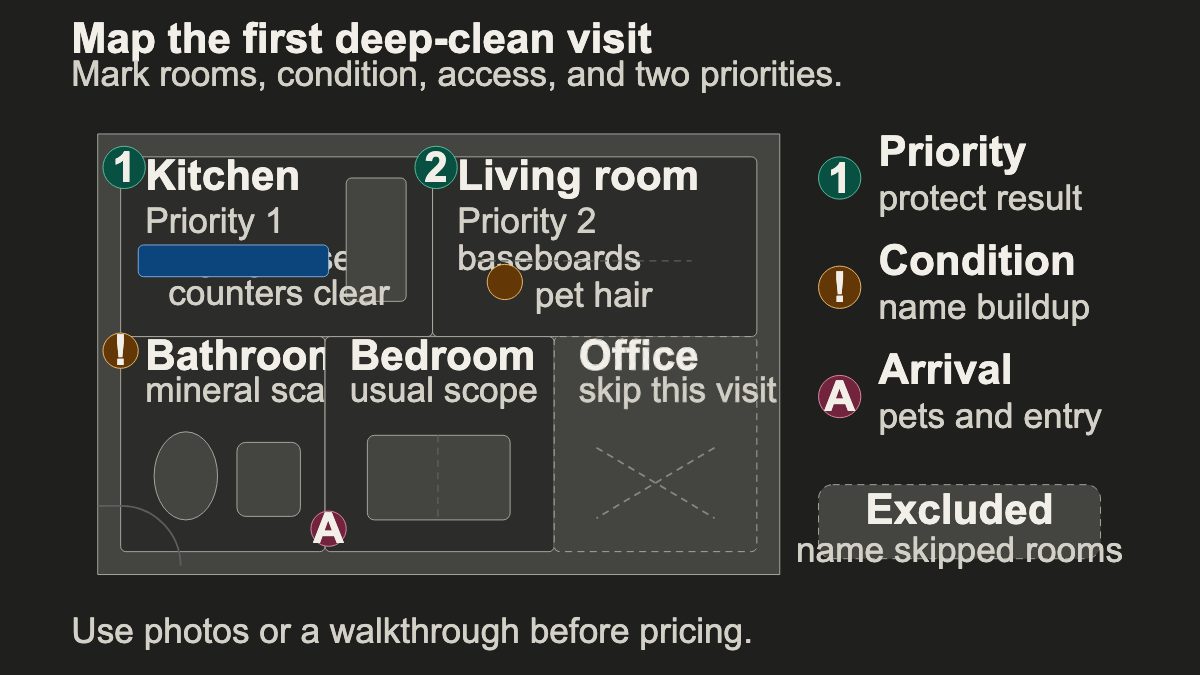
Priorities also expose a scope mismatch before arrival. If the caller lists twelve deep tasks for a short fixed visit, the office can narrow the assignment, change the service, or arrange a walkthrough according to company policy. Do not hide that tradeoff in a vague note. The crew should know which result wins if access or condition differs from the call.
Check access, products, pets, and people
Finish with arrival details. Ask who will be present, where the crew parks, how they enter, whether an alarm or gate is involved, and which rooms stay closed. Record pets by type, number, and planned location during service. “Dog secured in upstairs bedroom; that room excluded” is clear. “Friendly dog” is not an access plan.
Ask whether the customer requests a particular product or has a surface with manufacturer instructions. Save the request without promising that a product is safe for every finish or every person. The field lead should decide what the company can use under its procedures, labels, and training.
Chemical notes need discipline. CDC/NIOSH’s cleaning chemical safety guidance says workers need hazard information, labels, ventilation, training, and appropriate protective equipment. It specifically warns against mixing products that contain bleach and ammonia because dangerous gases can be released. If a customer says they already applied a product, record the exact product name, surface, time, ventilation, and whether residue remains. Never tell the crew to add another chemical over an unknown one.
Also ask about children, older adults, respiratory sensitivities, home medical equipment, remote workers, and planned visitors when those details affect room access or scheduling. Record the practical need. Do not promise a medical outcome or an allergen-free home.
Hand the crew a quote record they can use
A good note might read:
“Occupied two-story home. Kitchen, living room, dining room, three bedrooms, two bathrooms, stairs, and upstairs hall included. Home office excluded and door will remain closed. Priority 1 is grease buildup reported on range hood and two upper cabinet fronts. Priority 2 is pet hair on living-room rug and sofa. Inside oven requested and confirmed as an add-on; refrigerator interior excluded. Kitchen counters mostly clear. Dining table holds packed boxes and will be cleaned around unless customer clears it. Hard-water scale reported on primary shower glass; wide and close photos attached. One dog will be secured in excluded office. Customer will be home for entry. Customer reports using an ammonia-based glass cleaner on shower glass this morning; product name and photo attached for crew review. No price, duration, stain removal, or medical result promised.”
That handoff tells the crew where to work, what to protect, what changed the package, what blocks access, and what chemical note needs review. An AI receptionist can collect the same fields after hours, but the business still controls pricing, exclusions, product decisions, and field safety. The call is complete when the crew can picture the home before opening the front door.