A caller wants recurring cleaning but cannot choose between weekly, biweekly, and monthly service. She has two children, a shedding dog, a rarely used guest room, and a kitchen floor that looks gritty several days after it is cleaned. Asking only for square footage will not settle the question.
Weekly service is the strongest starting point when busy rooms lose their clean quickly or the customer wants very little upkeep between visits. Biweekly service often fits an occupied home where routine pickup and spot cleaning happen between appointments. Monthly service is more plausible for a lower-use home, a limited room list, or a customer who handles most maintenance. Treat each answer as a starting recommendation. The right interval depends on which rooms matter, how they are used, what the recurring visit includes, and what the customer expects to do between visits.
Give a starting answer, then qualify it
The office should be willing to recommend a starting cadence. “Whatever you prefer” sounds flexible, but it leaves the caller to solve a service-design problem with little information.
Begin with the visible result the customer wants. Ask, “Which room bothers you first after the home has been cleaned?” Then ask when that usually happens. A kitchen floor that feels gritty after four days points toward a different conversation than a guest bathroom that still looks fine after three weeks. The customer is describing a threshold, even if nobody uses that word on the call.
Weekly service makes sense when the priority zones cross that threshold early. Common signals include a busy entry, daily cooking, young children using shared rooms, shedding pets on upholstered furniture, or several bathrooms in regular use. Do not turn those signals into a formula. A large quiet house may need less frequent service than a compact home with constant foot traffic.
Biweekly is a practical trial interval when the home gets steady use but the customer handles dishes, spills, clutter, and light floor care between visits. It gives the office enough real observations to see which rooms need attention at the next arrival. The company still needs a clear maintenance checklist.
Monthly service asks more of the customer between appointments. It can fit low-use spaces, a small service area, or a household that wants professional help with selected tasks while maintaining routine surfaces itself. If the caller expects a freshly serviced appearance for an entire month without touching the kitchen floor or bathrooms, say that expectation may not match the interval.
Molly Maid's discussion of how often to have a house cleaned treats weekly, biweekly, and monthly cleaning as separate options and points to pets, household activity, and personal upkeep as relevant factors. Your company's service package may differ, but those are sound intake categories.
Find the rooms that lose the clean first
Do not average the whole house. Recurring frequency is usually decided by a few high-use zones: the entry where grit comes in, the kitchen where crumbs and cooking residue return, the living room where pet hair collects, and the bathrooms used every day. A closed guest room should not outweigh them.
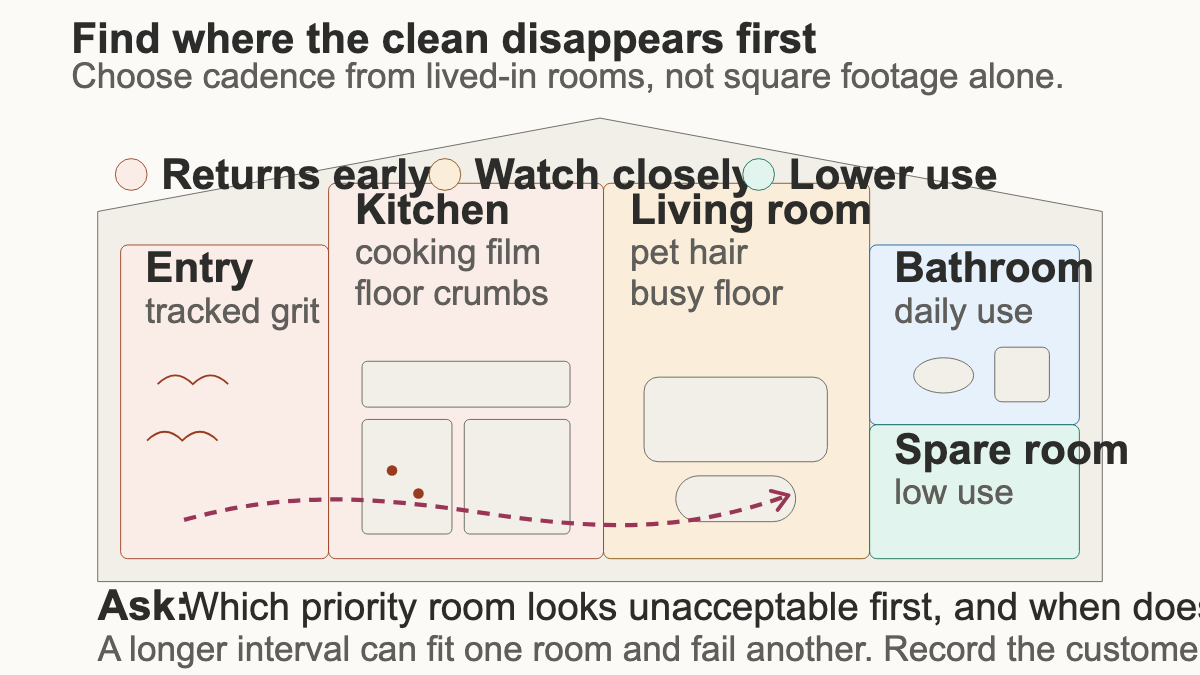
Build the call around observed places and surfaces. Useful questions include:
- Which two rooms should look maintained between every visit?
- What returns first: grit, crumbs, cooking film, pet hair, bathroom residue, or general dust?
- How many adults, children, and pets use those rooms regularly?
- Which floors show soil fastest, and what light upkeep happens between visits?
- Are any bedrooms, offices, or guest spaces usually closed or seldom used?
- Does the customer want the same rooms every time, or a core service with rotating extras?
- What condition would make the customer feel the next visit came too late?
Keep the notes neutral. “Pet hair visible on dark sofa by the end of the first week” helps a cleaner understand the request. “Messy house with a dog” does not. The first note names a surface, a condition, and a time. The second labels the customer.
If the caller has never used the company, the initial visit may need a different scope before maintenance begins. Record current condition, inside-appliance requests, high work, belongings, and room priorities. A maintenance cadence should not quietly absorb an undefined reset clean.
Define the visit before discussing frequency
“Every two weeks” tells the scheduler when to arrive. It does not tell the crew what to do.
Name the recurring core. That might include kitchen counters and appliance fronts, bathroom fixtures, dusting reachable surfaces, vacuuming, mopping, trash, and bed-making when arranged. Another company may define the package differently. The important part is written agreement, not a universal list.
Jobber's professional house-cleaning checklist separates standard maintenance cleaning from deep cleaning, move-out work, and room-specific lists. It also recommends reviewing client notes before arrival. That distinction protects the recurring schedule from surprise requests.
Ask which tasks happen every visit and which ones rotate. Baseboards, blinds, cabinet fronts, interior windows, bedding, or a seldom-used room may be handled on a company-specific rotation. Record who chooses the rotation and how the customer requests a change. Never promise that a shorter interval automatically includes deeper work.
Clutter and access belong in the same conversation. Confirm whether the crew cleans around personal items, whether counters need to be cleared, and which doors stay closed. If toys cover the playroom floor or paperwork covers the office desk, frequency alone will not create access to those surfaces.
Book two visits and review the fit
A recurring interval does not need to be a permanent verdict on the first call. Book the starting cadence your company can support, name the two priority zones, and review the same zones before the first two visits. This creates a small operating test based on the actual home.
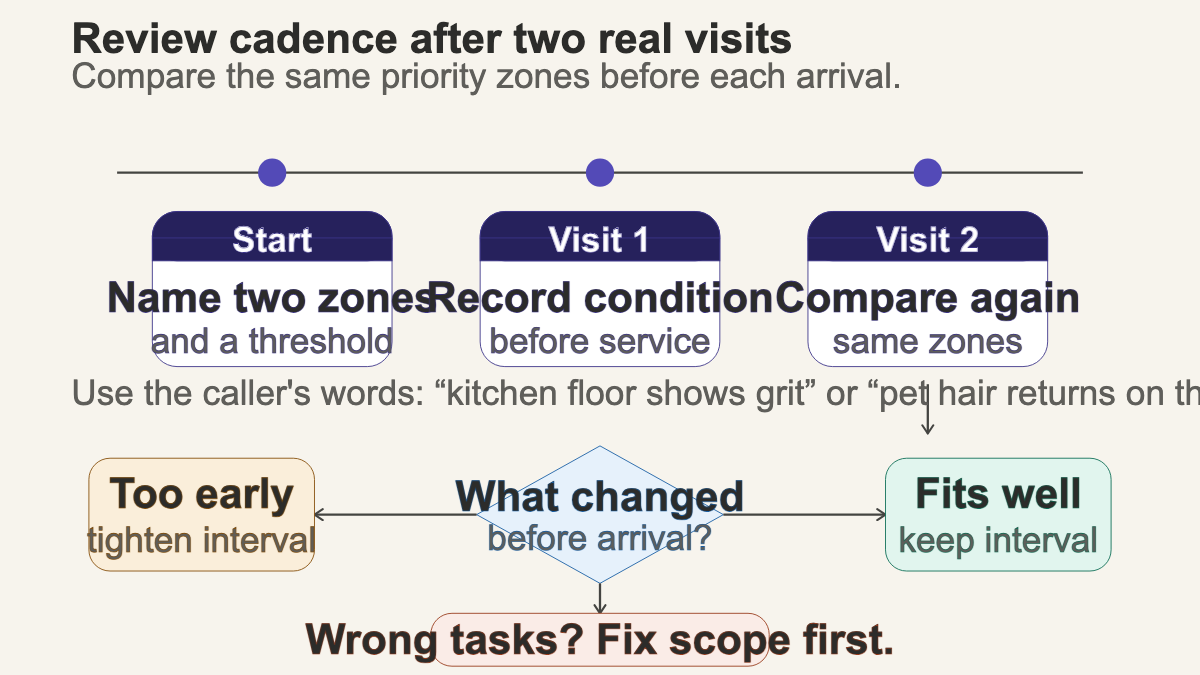
Before each arrival, the cleaner or customer can describe the same concrete signs: grit at the entry, pet hair on the sofa, film near the cooktop, or residue in the primary shower. If those signs return much earlier than the customer accepts, discuss a shorter interval or a narrower high-frequency service according to company policy. If the priority areas remain acceptable and the customer is doing substantial upkeep, a longer interval may be worth testing.
Fix scope before changing cadence when the real problem is a missing task. A customer may complain that monthly service is too infrequent when the unspoken issue is that the inside of the oven was never part of maintenance. More visits will not resolve an inclusion that nobody documented.
Record the review date in the job notes. A useful entry says, “Start biweekly. Review after visit two. Priority zones are kitchen floor and living-room sofa. Customer reports floor grit near patio door by day seven and pet hair on dark upholstery before the second week. Core visit excludes appliance interiors and closed guest room.” The next office person can act on that.
Capture the recurring details that make the slot work
A good frequency recommendation can still fail operationally if access changes every visit. Confirm the preferred weekday or service window, who will be home, parking, gate and alarm arrangements, key or lockbox procedure, pet location, closed rooms, and what happens when the customer needs to skip a date. Do not collect alarm codes or key details in an unapproved free-text field. Follow the company's secure-access process.
Ask about product preferences without promising a health result. If a caller requests products carrying the EPA Safer Choice label, record the exact request and let the company confirm which approved products fit its procedures and the home's surfaces. The label identifies products whose ingredients meet EPA criteria. It does not mean every labeled product suits every finish, person, or pet.
Keep ordinary cleaning separate from a disinfection request. The CDC's home cleaning and disinfection guidance says routine cleaning with soap or detergent removes dirt and most harmful germs on surfaces in most situations. Disinfection has a separate role, including when someone is sick. If the caller asks for infection-control work, route the request through company policy and product-label requirements. Do not let a receptionist promise a medical outcome.
An AI receptionist can collect these fields after hours, but the cleaning company still controls scope, products, pricing, access security, and schedule availability. The handoff should tell the office why the caller chose the interval, which rooms will judge its success, and exactly when the fit will be reviewed.