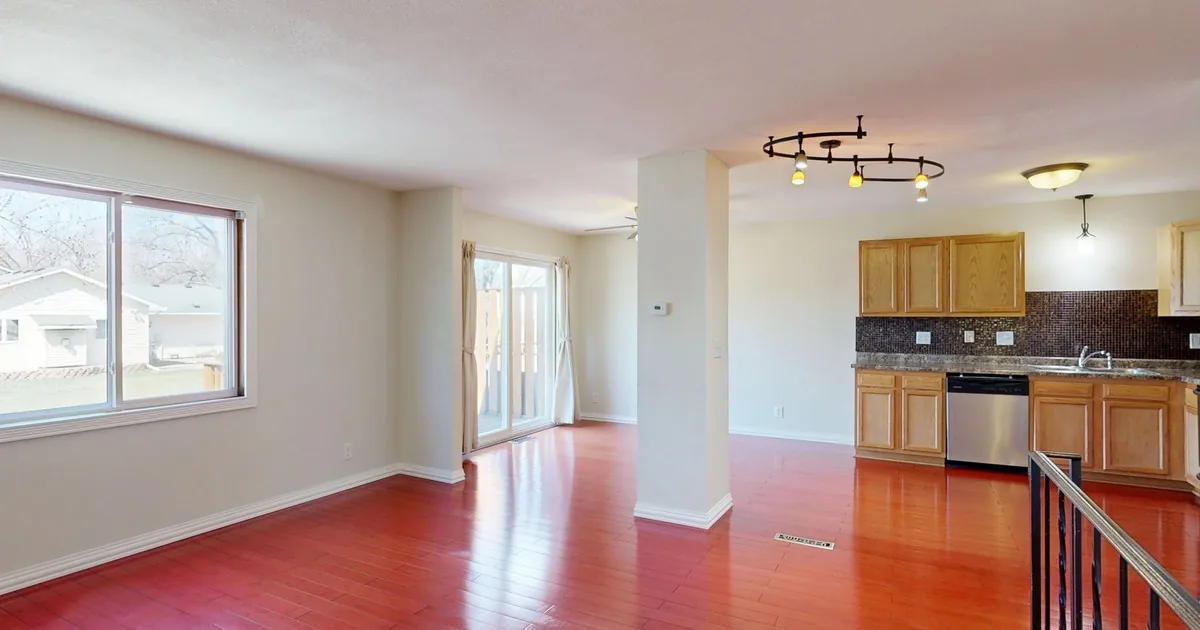
A caller is hosting a graduation dinner Saturday at 6:00. She asks for “the whole house” to be cleaned that morning, then mentions caterers arriving at 3:30, flowers coming through the front door at 4:15, and twelve guests using the downstairs bathroom. The phrase “whole house” has already stopped being useful.
A pre-event cleaning booking needs a deadline, a guest route, and a written room-level scope. Start with when guests arrive and when the cleaners must leave. Then identify the entry, gathering rooms, guest bathrooms, food-service areas, and any closed rooms that can stay outside the visit. Confirm what the host will handle after the crew leaves. That sequence gives dispatch something it can schedule and gives the crew a finish line it can see.
Start with the doorbell, then work backward
Ask for the event date and guest-arrival time first. “Saturday evening” is too loose. A 6:00 dinner might require the home released to the host by 2:30 because a caterer needs the kitchen at 3:30. Another host may want cleaners out by 5:00 because food was prepared elsewhere. The booking depends on the handoff, not the invitation time alone.
Capture four times: when the crew may enter, when cleaning must be complete, how much reset time the host wants, and when guests arrive. If vendors, decorators, family members, or rental deliveries will enter during the visit, put those times in the work order too. A florist carrying buckets through a freshly mopped entry can change the final sequence.
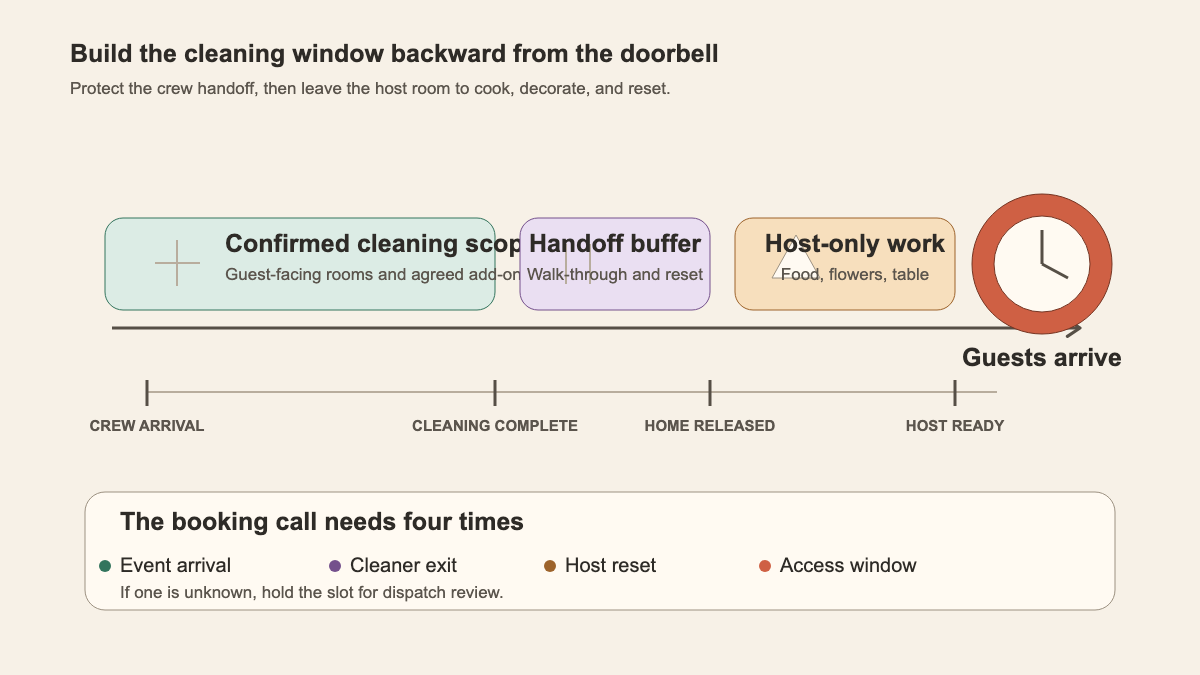
Do not assign the entire interval to cleaning. The crew needs time to complete its check, pack supplies, and release the property. The host may still need to set the table, arrange flowers, stock ice, shower, change clothes, or let a caterer take over the kitchen. Those jobs should sit outside the cleaning promise.
When the requested scope looks larger than the available window, change the scope before you weaken the deadline. The office can offer confirmed guest-facing rooms and treat extra rooms as a separate visit. If the call truly arrives with only a few hours to spare, use the last-minute cleaning intake guide to check live crew capacity and travel.
Follow the guest route through the home
Ask, “Where will guests enter, gather, eat, and use the bathroom?” That question usually produces a better scope than asking how many bedrooms the home has.
For a backyard birthday, the route may run through the side gate, kitchen, family room, patio door, and powder room. A baby shower may use the front entry, living room, dining room, kitchen island, and two bathrooms. Overnight family guests add bedrooms, linens, and luggage space. The American Cleaning Institute’s guest-preparation guidance calls attention to bedrooms, bathrooms, shared spaces, entryways, linens, and entertaining supplies. The booking agent still needs the caller to say which ones matter for this event.
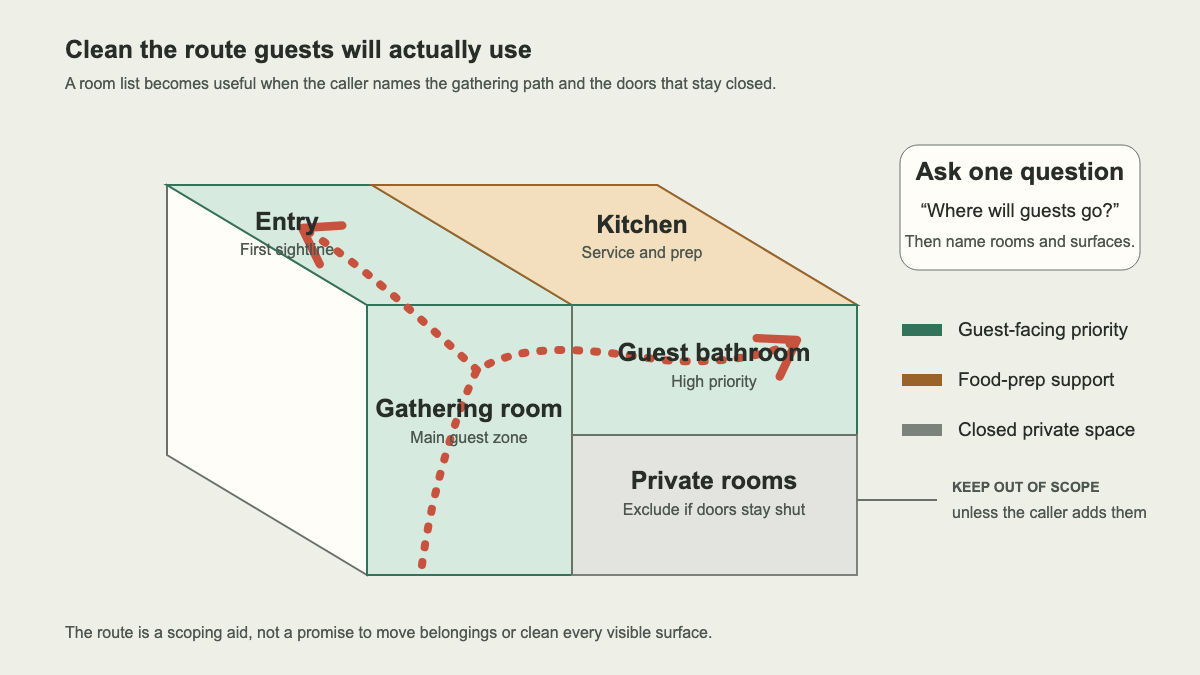
Translate the route into named spaces. “Downstairs guest areas” can become front entry, living room, dining room, kitchen, powder room, and the hall between them. Record which doors will stay closed. If the upstairs office and primary bedroom are outside the event, excluding them may protect the rooms guests will actually see.
Room names still need tasks. Ask whether the caller expects open floors vacuumed or mopped, reachable surfaces dusted, bathroom fixtures cleaned, mirrors polished, waste removed, and fingerprints taken off the entry glass. Use the company’s written service definitions. A caller may hear “kitchen cleaning” and picture the inside of the oven, refrigerator shelves, cabinet interiors, and a pile of party dishes. The office may mean counters, sink, cooktop exterior, appliance fronts, floor, and ordinary waste.
Separate cleaning from host setup
The American Cleaning Institute treats pre-party cleaning and post-party cleanup as different work. Your booking should do the same. Ask whether the customer wants a visit before guests arrive, a return after the event, or two separate appointments.
Pre-event cleaning may include the confirmed rooms and agreed add-ons. Food preparation, decorating, moving rental furniture, washing serving pieces, arranging place settings, and clearing personal belongings are host or vendor jobs unless the company explicitly offers them. Post-event work may involve ordinary trash, bottles, dishes, floor soil, table linens, and spills, but each item still needs a service definition. Do not let a pre-event booking quietly absorb next-day cleanup.
Clarify who clears surfaces before arrival. A cleaner can wipe an open kitchen island much faster than an island covered with invitations, groceries, floral supplies, and catering trays, but the call taker does not need to quote a productivity number. Record whether counters and floors will be accessible. If belongings must be sorted, packed, or moved, send that part for review.
The refrigerator deserves a direct question when food service is involved. The caller may want exterior cleaning, shelf cleaning, expired-food removal, or open storage space for trays. These are different tasks. Inside-appliance work should be named and approved. The same rule applies to interior windows, baseboards, chandeliers, upholstery, laundry, and guest-bed linens.
Ask about condition before promising a standard visit
An event date does not turn heavy buildup into routine maintenance. Ask when the home was last professionally cleaned and whether the current condition includes grease, heavy soap residue, dense pet hair, smoke residue, renovation dust, or an unusual amount of clutter. Photos can help when company policy permits them, especially for kitchens, bathrooms, and gathering rooms.
If this is the customer’s first service and condition may drive the estimate, use the first-time deep-cleaning call guide. Keep any hazard screen separate from an ordinary quote. Sewage, bodily fluids, pest waste, sharps, visible mold-like growth, or active construction may require manager review or a specialist. Reception should record what the caller reports without diagnosing it.
Priorities need an order. Ask the caller to name the rooms that must be complete even if an unexpected condition slows the work. Then record optional areas in sequence. “Powder room, kitchen, entry, and dining room first; living room windows only after those are complete” tells the crew far more than “focus on whatever needs it most.”
Screen products, ventilation, pets, and access
Ask about fragrance preferences, allergies or sensitivities reported by the household, surfaces that require special products, and whether the customer expects the crew to use supplies left in the home. Do not promise that a product is safe for a person, pet, or finish based on a phone description.
The U.S. Environmental Protection Agency advises following product labels, avoiding chemical mixing, reducing unnecessary cleaner use, and ventilating during cleaning when outdoor conditions permit. Record any product the customer has already applied, especially bleach, ammonia, oven cleaner, drain chemicals, or disinfectant. An unlabeled bottle should go to supervisor review, not into the work order as an approved cleaner.
Confirm whether windows can open and whether kitchen or bathroom exhaust fans work if ventilation matters to the planned products. Also ask who will be home, which entrances the crew may use, where parking is allowed, and whether gates, elevators, building desks, or alarm procedures affect access.
Pets need a location and containment plan. “The dog is friendly” does not explain what happens when the front door opens repeatedly for cleaners and vendors. Record where each animal will stay and who is responsible for securing it. The cleaning calls with pets guide covers the handoff in more detail.
Read back a room-level promise
The confirmation should sound like a work order. Read back the service address, entry instructions, event and vendor times, cleaner exit time, confirmed rooms, task definitions, add-ons, exclusions, priority order, access, occupants, pets, products, and the person authorized to approve a change.
A useful readback could say:
“Your guests arrive Saturday at 6:00, and the cleaning visit must be complete by 2:30 so the caterer can take over the kitchen at 3:30. The confirmed rooms are the front entry, living room, dining room, kitchen, downstairs hall, and powder room. The upstairs bedrooms and office are outside this visit. Please clear the kitchen island and dining table before arrival. Inside the oven, refrigerator shelves, laundry, dishes, and patio furniture are excluded. The dog will stay in the closed primary bedroom, and you will meet the crew at the front door. Any scope change goes to you for approval before work begins.”
Send the same scope through the company’s normal confirmation channel. If dispatch has not approved crew and travel capacity, label it as a pending request and give the caller a specific callback time. An AI receptionist can collect the event times, guest route, room priorities, and exclusions after hours, but dispatch should own the final schedule.
The best pre-event booking leaves the cleaner, the host, and the caterer with separate jobs and separate clocks. When the crew closes the door at 2:30, the host should know exactly what is finished and what still belongs to the afternoon.