The cleanout crew leaves at noon. By two o’clock, a cleaning team is expected at the house. The rooms look empty in the photos, but framed pictures remain in one closet, food is still in the freezer, and nobody has said whether the washer and dryer stay with the property. The listing photographer arrives tomorrow.
An estate home cleaning should start with a clear handoff. Confirm that an authorized contact has finished the sorting and removal phase, list every item that stays, document what the cleaners should do if they find personal property, and define the room-by-room cleaning scope. Then verify water, power, entry, parking, and the deadline that follows the clean.
Get a cleanout handoff before dispatch
Estate cleanout and house cleaning solve different problems. A cleanout may include sorting, selling, donating, recycling, and hauling. Caring Transitions describes those activities as part of its estate cleanout service. A house-cleaning crew works after those decisions, on the surfaces and interiors the removal work exposed.
Ask who can release the property for cleaning. Record that person’s name, phone number, relationship to the job, and the company’s required proof of authorization. Reception should not decide whether a relative, realtor, executor, trustee, or property manager has legal authority. Follow the company’s written approval policy and refer disputed authority back to the parties handling the estate.
Get the release in writing through the normal work-order process. It should identify the rooms released for cleaning and anything that remains: appliances, window treatments, shelving, garage cabinets, cleaning supplies, fixtures, documents, keys, labeled boxes, or furniture scheduled for later pickup.
If a donation truck or junk crew is still working, set a real completion time. “They should be done in the morning” is not a handoff. Dust can settle again, hallways may remain blocked, and a final load may uncover a spill or damaged floor that changes the scope.
The estate cleanout call guide covers the earlier sorting and removal questions. Cleaning begins after that work reaches an agreed stopping point.
Walk the empty house one zone at a time
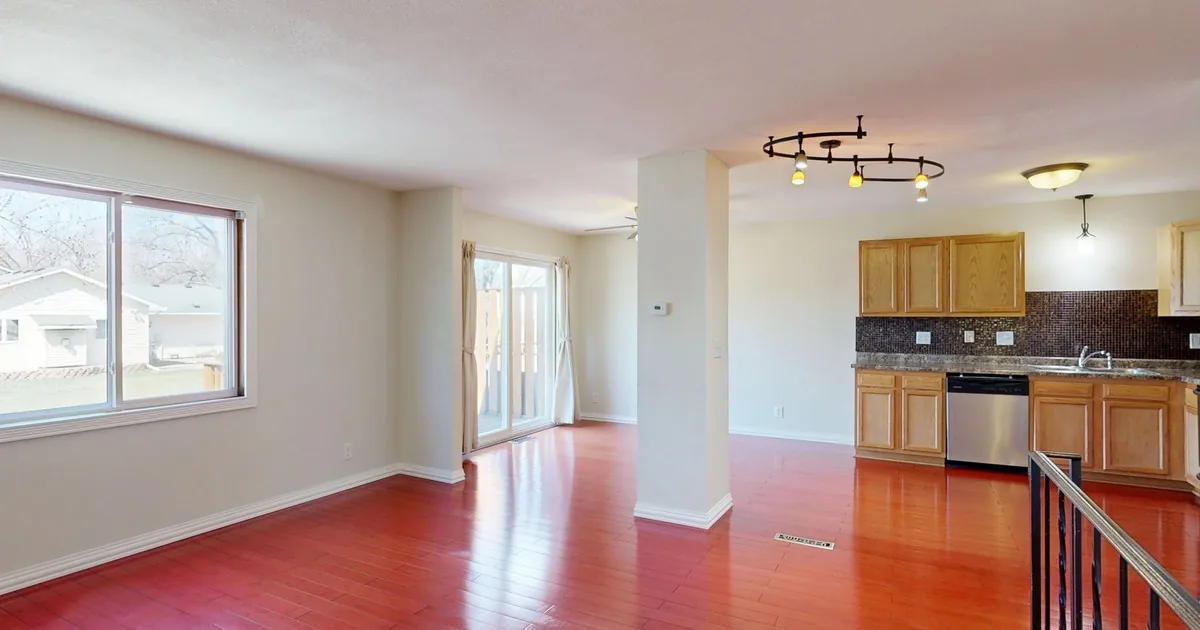
An empty house exposes work that ordinary recurring service never touches. Cabinet interiors, closet shelves, appliance cavities, baseboards behind furniture, window tracks, bare floors, and the tops of built-ins are finally reachable. They still need to be named in the quote.
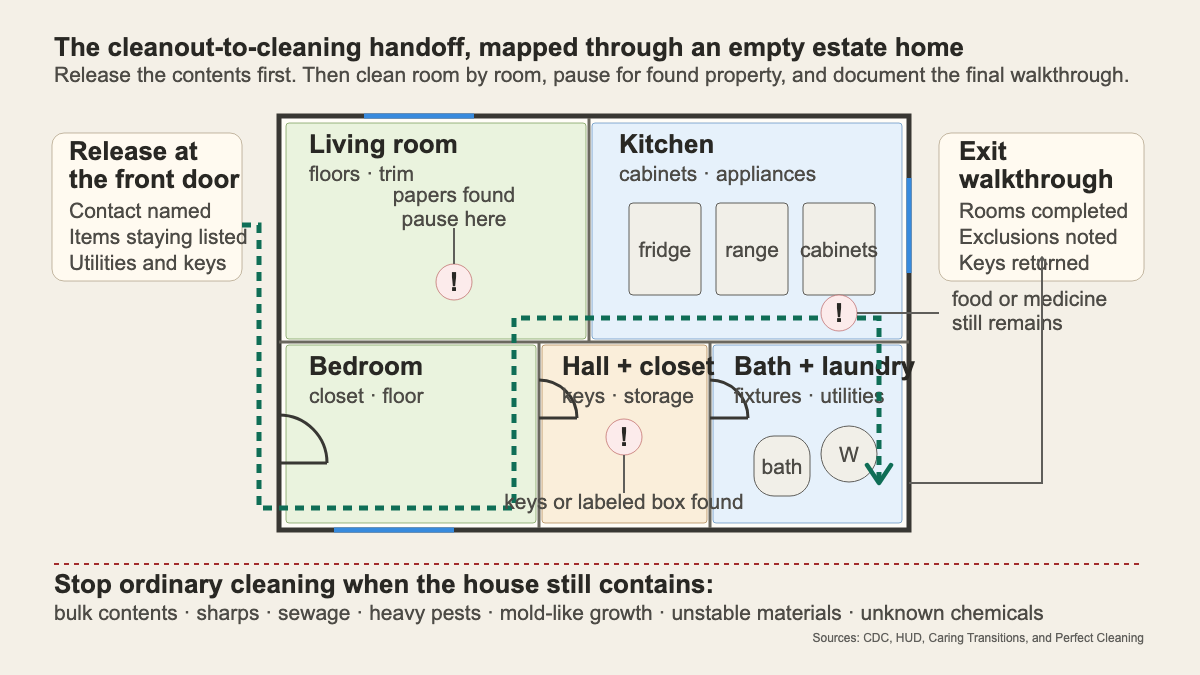
Walk the caller through every space. Start at the entry and move in one direction so garages, laundry rooms, pantries, finished basements, enclosed porches, and exterior storage do not disappear from the ticket. For each room, record whether it is empty, what stays, the visible condition, and the requested result.
Perfect Cleaning’s published vacancy-cleaning scope includes empty cabinets and drawers, pantry shelves, appliance interiors, closets, baseboards, sills, tracks, reachable glass, and floors. That is one provider’s scope, not an industry-wide promise. Your quote must state which of those tasks your company includes.
The kitchen needs its own inventory. Is the refrigerator empty, unplugged, or still holding food? Are the oven racks present? Do any cabinets contain shelf liner, dishes, chemicals, or labels? Will the dishwasher and microwave stay? Ask whether the crew may open and clean each appliance. Do not assume that an appliance left in place is included.
Bathrooms, closets, and utility spaces also hide scope. Record mineral buildup, adhesive, drawer liner, dust on shelving, remaining toiletries, and any inaccessible shutoff or electrical panel. Photograph reported condition through the company’s approved channel when safe. A wide room view plus focused images of cabinets, appliances, floors, and buildup gives the estimator useful context.
Separate cleaning from a second cleanout
“Almost empty” can conceal another removal job. A garage may still hold paint, fuel, tires, shelving, or bags. A basement may contain loose debris and an old freezer. One mattress on the second floor still requires labor, a removal plan, and disposal capacity that a cleaning crew may not have.
Ask what remains in each room and who will remove it. Small amounts of ordinary bagged trash may fit company policy. Furniture, appliances, construction debris, chemicals, unknown containers, and bulk material need explicit review. If hauling is outside the company’s service, schedule it before cleaning.
Reported hazards change the route too. Ask about human or animal waste, sharps, sewage, heavy pest activity, visible mold-like growth, strong unknown odors, water damage, unstable ceilings, broken glass, or rooms that cannot be entered safely. A normal house-cleaning appointment should not absorb remediation work through vague notes such as “extra dirty.”
Perfect Cleaning separates vacancy cleaning from repairs, restoration, and hazardous-material removal. Use the same kind of boundary in your own scope. State what the crew will clean, what is excluded, and who must clear an unresolved condition before the appointment can proceed.
Routine surface cleaning also differs from blanket disinfection. The CDC’s home-cleaning guidance defines cleaning, sanitizing, and disinfecting as separate steps. It says surfaces should be cleaned before sanitizing or disinfecting and that routine disinfection is generally unnecessary unless illness or higher-risk conditions are present. Ask what the customer means by “sanitize the whole house” before adding products or making a promise.
Protect anything found after the release
Even a careful cleanout can miss a passport behind a drawer, cash in a coat pocket, medication in a bathroom cabinet, a key taped under a shelf, or photographs stuck behind an appliance. A cleaner should not have to decide whether an item is valuable or disposable.
Create a found-property rule before the visit. The simplest version is to stop work in that small area, photograph the item in place if company policy permits, note the room and location, and contact the authorized representative. Put the item in a designated holding location only when the work order allows it. Record who gave the instruction and what happened next.
Use this rule for papers, keys, jewelry, cash, medication, photographs, digital devices, labeled containers, and anything that may be personal. It can also cover unplanned furniture or sealed boxes. The point is control. A crew hired to clean surfaces should not become the final decision-maker for estate contents.
Privacy matters here. Keep images and notes inside the approved job system, limit access to staff who need them, and avoid casual text threads. The office should tell the caller how documentation is handled and who receives found-property alerts.
This is the biggest difference between an ordinary move-out cleaning call and an estate handoff. A tenant usually knows what was left behind. In an estate property, the person authorizing the clean may live elsewhere and may never have opened every drawer.
Confirm utilities, access, and the next property milestone
A vacant house still needs working conditions. Confirm that water and electricity will remain on for the entire appointment. Ask about heat or cooling when weather could affect staff safety or product use. Record alarm instructions, lockbox or key custody, gate codes, parking, elevator reservations, pets, cameras, and any contractor who may enter during the clean.
Do not schedule cleaners on top of painters, floor refinishers, movers, or repair crews unless the sequence has been agreed. Fresh dust, wet coatings, open tool areas, and disconnected appliances can prevent completion. The first-time deep-clean intake guide helps when the home is still occupied or partly furnished. This estate workflow assumes the removal phase is complete.
Name the event after cleaning: listing photographs, realtor walkthrough, buyer inspection, closing, family visit, lease transfer, or property-management handoff. Get the date and time. Leave room for a final walkthrough and any approved correction visit before that event.
HUD’s move-in and move-out inspection form demonstrates the value of a room-by-room condition record. It covers entrances, floors, walls, ceilings, windows, cabinets, appliances, fixtures, locks, and building equipment. An estate cleaning company does not need to copy the form, but its completion record should be specific enough to distinguish cleaned surfaces from existing damage, missing parts, and excluded repairs.
Close the booking call with a read-back:
“Three-bedroom estate home released after the cleanout. Refrigerator, range, washer, dryer, blinds, and garage shelving remain. Kitchen cabinets and appliances are empty and included. One labeled document box in the hall closet stays untouched. Water and power are on. The rear bedroom has visible wall damage excluded from cleaning. Any papers, keys, medication, cash, jewelry, or photographs found will stay in place while the office contacts Maria. Lockbox entry begins Tuesday at nine, and the realtor walkthrough is Wednesday afternoon.”
That ticket gives the crew a house it can actually clean. More important, it tells them where cleaning authority ends.
Sources
- CDC: When and How to Clean and Disinfect Your Home
- HUD: Move-In/Move-Out Inspection Form
- Perfect Cleaning: Vacancy Cleaning Scope
- Caring Transitions: Estate Cleanout Services