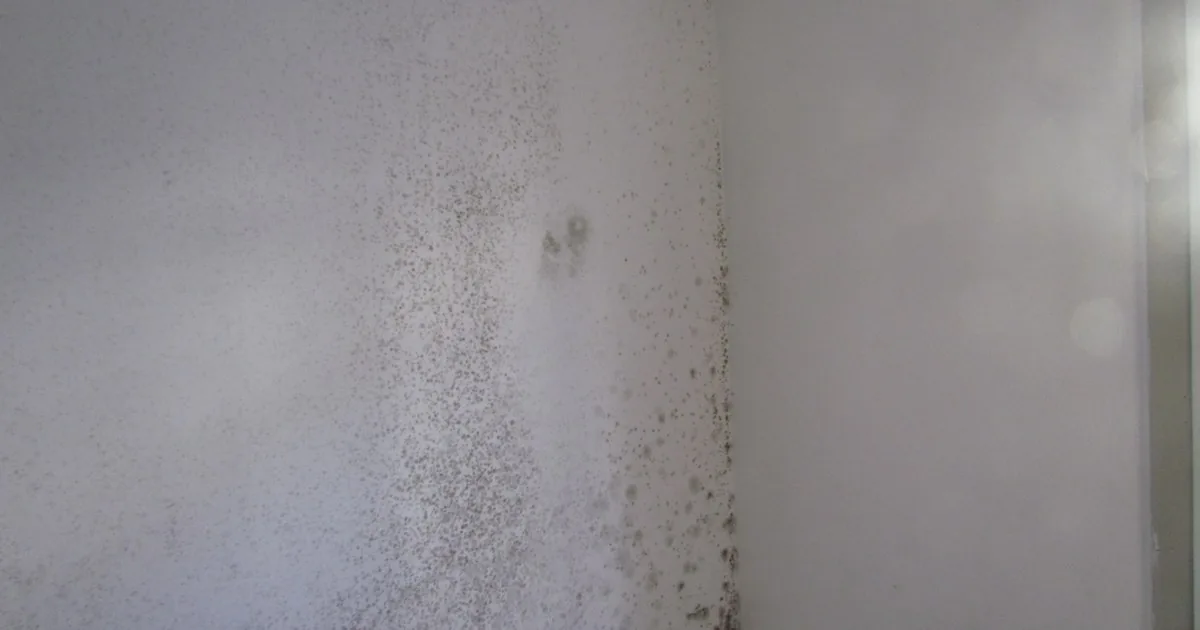
A homeowner calls and says, “There is black mold behind the washing machine. Can you remove it, and is it making us sick?” The office now has two jobs. It needs enough detail to route the inspection, and it needs to avoid diagnosing a substance or a person over the phone.
The useful answer starts with the building: where the growth appears, what got wet, whether the moisture source is active, how large an area seems affected, and whether heating or cooling equipment may be involved. Health questions should be referred to a medical professional. Promises about species, toxicity, cleanup scope, price, or insurance coverage should wait for qualified assessment.
That boundary makes the call better. It also gives the inspector a record worth reading before arrival.
Find the moisture story before discussing mold
Visible growth is a symptom of a moisture problem. The U.S. Environmental Protection Agency says that cleanup will be temporary if the water or moisture source is not fixed. So the first useful intake question is usually, “What happened before you noticed this?”
The caller may mention a supply-line leak, roof damage, a sewage backup, an overflowing appliance, condensation on a cold wall, or a basement that stays damp. Ask whether that source has been repaired and whether anything is still wet. An active leak belongs in a different response lane than an old stain discovered during a renovation.
Build a timeline in the caller’s own words. When was the water event? When did the odor or visible growth first appear? Has the affected patch changed? Was the space dried by a restoration crew, opened with fans, or left closed? Do not turn those answers into a laboratory conclusion. They help the inspector choose equipment, access needs, and appointment priority.
EPA guidance advises drying wet or damp materials quickly and identifies 24 to 48 hours as the usual window for acting after a water event. That figure supports prompt moisture control. It does not let a receptionist announce when growth began or how far it has spread inside a wall.
Describe what the caller can safely observe
“Black mold” sounds specific, but color does not establish species or health risk. Record the phrase as the caller’s observation: “dark spotting behind washer,” “white fuzzy growth on floor joist,” or “musty odor in finished basement.” That is more accurate than converting every report into a diagnosis.
Ask where the condition appears and what material is involved. Painted drywall, carpet, ceiling tile, framing, concrete, insulation, and the inside of a cabinet behave differently when wet. Then get a rough sense of the visible area. A useful method is to compare it with a familiar object, such as a sheet of paper, a bath towel, one wall, or several rooms. The inspector can measure on site.
Photos can help with routing if company policy permits them. Request a wide photo that shows the room and a closer image of the affected surface. Tell the caller not to pull apart walls, lift contaminated flooring, or move damaged materials merely to get a better picture. The EPA warns that disturbing mold during an inspection can increase exposure, which is why personal protective equipment and controlled work practices matter.
Odor-only calls still deserve a record. Note where the smell is strongest, when it occurs, whether the building recently had water damage, and whether it changes when the HVAC system runs. An odor does not prove mold. It can, however, point the assessor toward a wall cavity, crawlspace, drain, or mechanical system that needs inspection.
Screen for conditions that change the visit
Some answers affect safety or dispatch before anyone discusses an estimate. Ask whether sewage, floodwater, fire residue, or other contaminated material is present. Find out whether ceilings are sagging, floors feel unstable, or standing water is near electrical equipment. Office staff should tell callers to stay out of unsafe areas and use the company’s emergency escalation policy. They should not coach a person through demolition or electrical work.
The HVAC question deserves special attention: “Is the visible growth or moisture near a return grille, supply register, air handler, or duct?” EPA guidance tells building owners to consult specific duct-cleaning guidance when an HVAC system may be contaminated or mold is near an intake. Flag the job for a reviewer who understands the company’s HVAC boundaries. Do not tell the caller to run the fan to dry the area, since air movement could spread material from an affected location.
Occupancy matters too. Record whether the site is occupied and whether access can be provided without moving through the suspected area. If a caller reports symptoms or asks whether the building is safe for a child, older adult, tenant, employee, or immunocompromised person, keep the response narrow: the office cannot assess health over the phone. The Centers for Disease Control and Prevention advises people with health concerns to consult a healthcare provider. For an immediate medical emergency, the caller should contact emergency services.
That is a referral, not a dismissal. Capture the caller’s concern word for word so the field team understands the situation, but leave medical advice to clinicians.
Establish the service the caller actually needs
“Mold inspection” can mean a visual assessment, moisture mapping, air or surface sampling, a written remediation protocol, a cleanup estimate, or post-remediation verification. Those services are not interchangeable. State licensing and separation-of-duty rules also vary by jurisdiction, so the office needs a routing policy based on the service address.
Ask what prompted the call. A tenant may need documentation for a property manager. A buyer may be responding to a home inspector’s note. A restoration customer may have opened a wall after a pipe leak. A commercial manager may need an assessment before occupants return to a room. Request any existing inspection report, lab report, drying record, leak invoice, or protocol before the appointment.
Do not sell sampling as the automatic first step. The CDC does not recommend routine mold testing and notes that there are no health-based standards for mold in indoor air. EPA guidance likewise says that sampling may be unnecessary when visible growth is present, although sampling can be useful in some situations and should be performed by experienced professionals. The right office response is simple: explain what your company offers, record why the caller wants testing, and let the qualified assessor decide which method fits the site and local rules.
The same discipline applies to post-remediation work. If the caller requests clearance or verification, ask who wrote the protocol, who performed the cleanup, what areas were treated, and whether containment remains in place. Confirm that your company is permitted and qualified to provide the requested service. Never promise a passing result on the intake call.
Capture access, ownership, and documentation
A good appointment can still fail at the front door. Confirm the full service address, property type, parking or gate instructions, and the name of the person who can authorize access. For a rental, identify the tenant, property owner, and property manager. Ask who is requesting the inspection and who will receive the report.
Occupied rooms need planning. Note pets, locked mechanical spaces, low crawlspaces, attic access, stored belongings, and any area the caller says cannot be entered. Commercial sites may require a certificate of insurance, a site contact, a security check-in, or work outside occupied hours. These are scheduling details, but they can determine whether the inspector gets past reception.
Insurance belongs on the record without becoming a coverage promise. Ask whether there was a recent water loss, whether a claim is open, and whether the caller has a claim number or adjuster contact. Tell the caller that the insurer decides coverage under the policy. Avoid statements such as “mold is covered” or “this will be denied.” Neither can be known from a phone description.
Use one intake record every time
The receptionist should capture these fields before routing the call:
- Caller name, callback number, email, service address, and relationship to the property
- Reason for the request and the service sought, including assessment, sampling, remediation estimate, protocol, or post-work verification
- Location, visible appearance, approximate extent, affected materials, and any musty odor
- Moisture source, date discovered, repair status, and whether materials remain wet
- Sewage, floodwater, electrical exposure, unstable surfaces, or other immediate access hazards
- Proximity to HVAC equipment, returns, registers, or ductwork
- Occupancy, access contact, pets, crawlspace or attic access, and commercial check-in requirements
- Existing reports, lab results, photos, remediation protocols, claim information, and requested deadline
Close by explaining the next step your company can actually provide. That might be a scheduled assessment, a same-day review by the on-call manager, a request for documents, or a referral to an independent assessor. Give a time window only when the schedule supports it.
Consistency matters after hours, when a rushed caller may lead with fear and the on-call technician needs the building facts. A trained receptionist or AI receptionist can follow the same intake path at any hour, provided the escalation rules and medical, legal, insurance, and diagnostic boundaries are written into the workflow.
The field inspector should arrive knowing which room to enter, what became wet, whether the source is fixed, who can authorize access, and which promises were never made. That is a qualified mold inspection call.