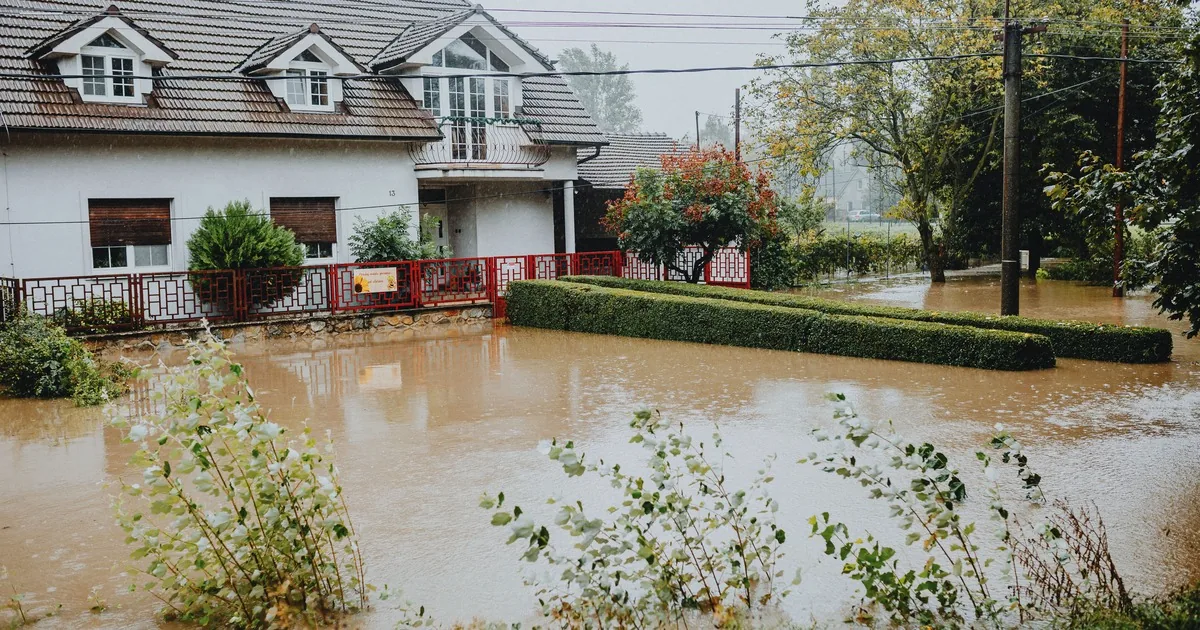
A caller says, “There are three inches of water in my basement.” They are standing at the top of the stairs. The lights downstairs are still on, the sump is silent, and rain is striking the windows. Reception has enough information to stop asking for a closer look.
A safe basement flood intake starts with the caller’s location and immediate hazards. Then it records the reported water pathway, whether the flow is active, the farthest visible spread, utility contact, materials, access, and who is handling the source. The technician confirms the cause and restoration scope on site.
Keep the caller on dry ground
Ask where the caller is standing. The best answer is often “upstairs looking down,” “outside at the walkout door,” or another dry position. If the caller is already in the basement, ask whether there is standing water near outlets, appliances, the electrical panel, a furnace, a water heater, or extension cords.
Do not direct anyone through water to reach a breaker, sump plug, floor drain, or shutoff. The CDC’s disaster cleanup guidance says a person who would have to enter standing water to reach the main power switch should call an electrician. It also says never to operate electrical power or equipment while standing in water.
Screen for gas odor, hissing, shifting sounds, sagging floors or ceilings, and visible structural movement. A caller who smells gas should leave the building and contact emergency authorities from outside. Strange movement or a visibly unstable structure belongs in the same emergency lane. Those conditions take priority over a normal restoration booking.
Record whether children, pets, tenants, or employees remain near the affected area. The useful note is specific: “Caller and dog are upstairs; basement door is closed.” That gives the manager something better than “everyone is safe,” which may hide an unaccounted-for tenant or a pet still below grade.
Name the reported pathway without diagnosing it
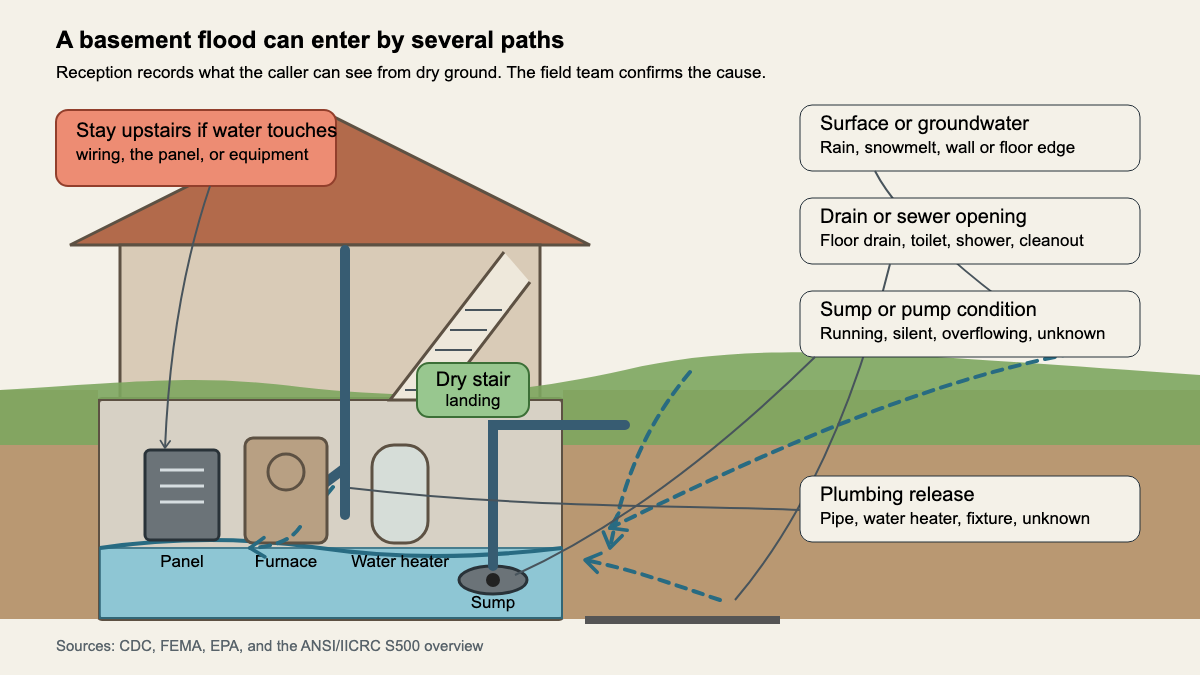
“Basement flood” describes a location, not a cause. Water may be entering at a wall or floor edge during heavy rain. It may be rising through a drain, overflowing a sump pit, spraying from a supply pipe, leaking from a water heater, or flowing from a fixture on the floor above.
Ask the caller to describe the first place they saw water and what it is doing now. Good prompts include:
- “Can you see water entering from where you are standing?”
- “Is it coming from a wall edge, floor drain, sump pit, pipe, appliance, ceiling, or somewhere you cannot identify?”
- “Is the water still rising, holding at the same level, or going down?”
- “Did this begin during rain, after snowmelt, while a fixture was running, or at an unknown time?”
- “Has a plumber, sewer utility, building manager, or sump contractor already responded?”
Preserve the caller’s words. “Water is bubbling from the floor drain when an upstairs toilet flushes” is an observation. “The city sewer is blocked” is a diagnosis unless the utility or a qualified contractor has confirmed it.
Source status matters too. A closed main valve may stop a plumbing release, but it will not stop groundwater at a foundation edge or a public sewer backup. Ask what was shut off, who did it, and whether the visible flow changed afterward. Never assume “the water is off” means the event has stopped.
The ANSI/IICRC S500 overview states that identifying and correcting the underlying source is generally the property owner’s responsibility unless the restorer or another specialist is contracted for that work. The dispatch note should name the handoff: plumber en route, sewer utility ticket open, property maintenance checking the sump, or source still unknown.
Treat unknown water as a safety question
Reception cannot classify water from color or odor alone. Clear water may have crossed a dirty floor, entered wall cavities, or contacted stored chemicals. Dark water does not prove a sewer event. Ask what the caller knows about the pathway, then route uncertainty under company policy.
The CDC notes that floodwater can contain bacteria from sewage plus agricultural and industrial waste. The EPA’s mold cleanup guidance recommends a professional experienced with contaminated-water damage when sewage or other contaminated water caused the loss.
If the caller reports sewage, stop ordinary scope questions long enough to keep people and pets away from the area. Then use the dedicated sewage backup call intake for the source, affected fixtures, utility contact, and contamination handoff.
Map the water to fixed landmarks
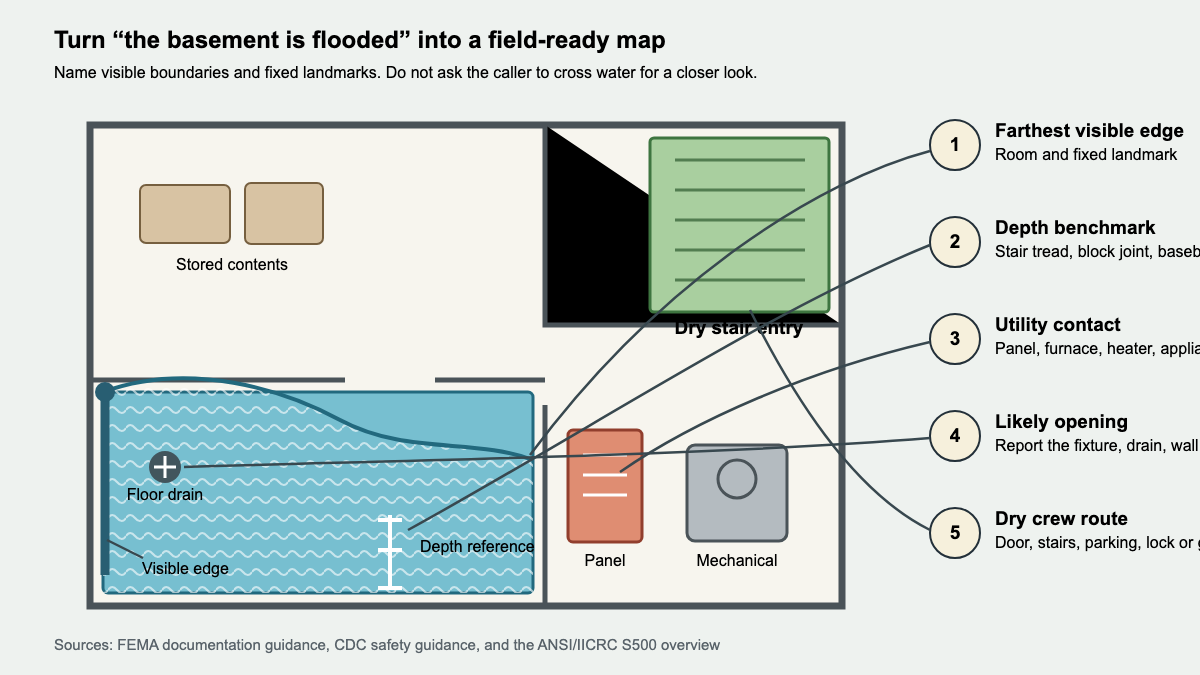
“Half the basement” is hard to dispatch. Ask for rooms, walls, doorways, stairs, and equipment the caller can see without entering water. A useful first map might read: “Water visible from the bottom stair across the finished family room to the furnace-room threshold. Laundry side appears dry from the landing.”
Record the farthest visible edge and a depth reference. A stair tread, baseboard, concrete-block joint, floor drain rim, or storage-bin mark is more useful than an estimated square footage. If the caller says “three inches,” ask what fixed object they used to judge it. Do not ask them to wade in with a ruler.
Name wet materials that are visible: carpet and pad, vinyl plank, drywall, paneling, insulation, cardboard boxes, stored furniture, or bare concrete. These reports support crew and equipment planning. They do not settle salvage decisions.
Utilities deserve their own line in the record. Ask whether water is touching the electrical panel, furnace, boiler, water heater, laundry equipment, freezer, outlets, or extension cords. Also ask whether the HVAC system is running and whether any return grille is near the water. The field manager can decide which specialists and safety controls are needed.
Build the dispatch record around time and change
Ask when the water was first noticed, when someone last saw the basement dry, and whether the level is rising, steady, or falling. If the start time is unknown, write “unknown.” A guessed timestamp can distort the field team’s picture of the event.
Fast response matters because wet materials can continue to deteriorate. CDC guidance calls for drying a home within 24 to 48 hours if possible, while EPA warns that standing water and wet materials support microorganisms and ongoing material damage. That is a reason to capture time accurately. It is not a promise that every basement will be dry within a fixed window.
For a deeper or still-rising loss, note the change against a landmark during the call if the caller can observe it safely. “Water moved from the first block joint to the second while we spoke” is useful. Reception should not keep a frightened caller on the line merely to produce a trend.
Confirm access and authorization before the truck moves
Below-grade jobs often fail at the doorway. Capture the service address, caller name, onsite contact, owner or manager, and the person authorized to approve the inspection or emergency work. For a rental or multi-unit building, include affected unit numbers, common spaces, maintenance contact, and any master-key process.
Ask about the dry entry route. Can the crew use an exterior basement door, garage, bulkhead, or interior stairs? Are gates locked? Is the driveway under water? Are roads closed? Can a truck and extraction equipment reach the property? Record pets, alarms, low ceilings, narrow stairs, stored contents, and any door that cannot be opened.
Ask which other parties are involved. A basement event may need a plumber, electrician, municipal sewer department, sump contractor, HVAC specialist, or building official. The restoration company may coordinate some of that work, but the receptionist should not promise a scope the company has not accepted.
Insurance questions belong in the record, not in a coverage decision. Note the carrier and claim number if one exists. Do not tell the caller that groundwater, drain backup, a failed sump, or a plumbing release will be covered. Policy language and the carrier decide that.
Request photos only when the position is safe
FEMA advises documenting damage before cleanup where practical, including interior and exterior views and appliance identifying information. For dispatch, a short set is enough: one wide photo from the dry stair landing, one view of the farthest visible edge, one view of the suspected opening, and one image showing utility contact.
Label files by room or landmark, such as basement-stairs-wide, furnace-room-edge, and sump-pit-from-door. Never request a better angle if it requires entering water, leaning over an unstable stair, moving wet contents, or approaching energized equipment.
The final dispatch note should let a manager picture the basement before calling the crew: caller upstairs, rain ongoing, water entering at the east wall, sump status unknown, level at the second block joint, finished room and furnace threshold affected, panel on the dry west wall, exterior bulkhead accessible, owner onsite, plumber not yet assigned. That is enough to make the next decision without pretending the phone call completed the inspection.
For a broader hazard-first framework, use the water damage emergency call triage guide. When a confirmed plumbing break drives the loss, the burst-pipe source-control intake adds the plumbing handoff and vertical water-travel questions.