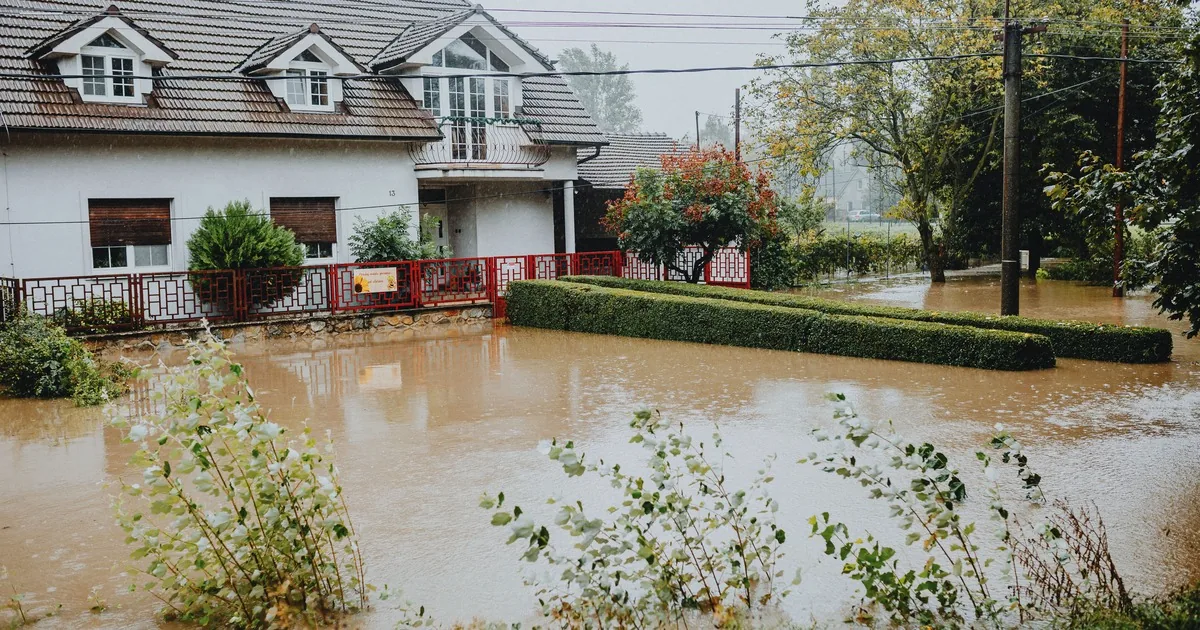
Rain is still falling when a homeowner calls. Water is dripping through a bedroom ceiling, a brown patch has reached the light fixture, and a roofing company cannot arrive until morning. The restoration office needs to decide whether anyone should remain in the room, what crew may be needed, and whether the source is still active. It cannot diagnose a missing shingle over the phone.
A useful roof leak water damage intake starts with the ceiling and electrical hazards. It then records the weather event, source-control status, first indoor sign, visible travel, wet materials, rooms and floors affected, access, authorization, and the roofer handoff. The field team confirms the affected assembly and mitigation plan on site.
Screen the room before discussing the roof
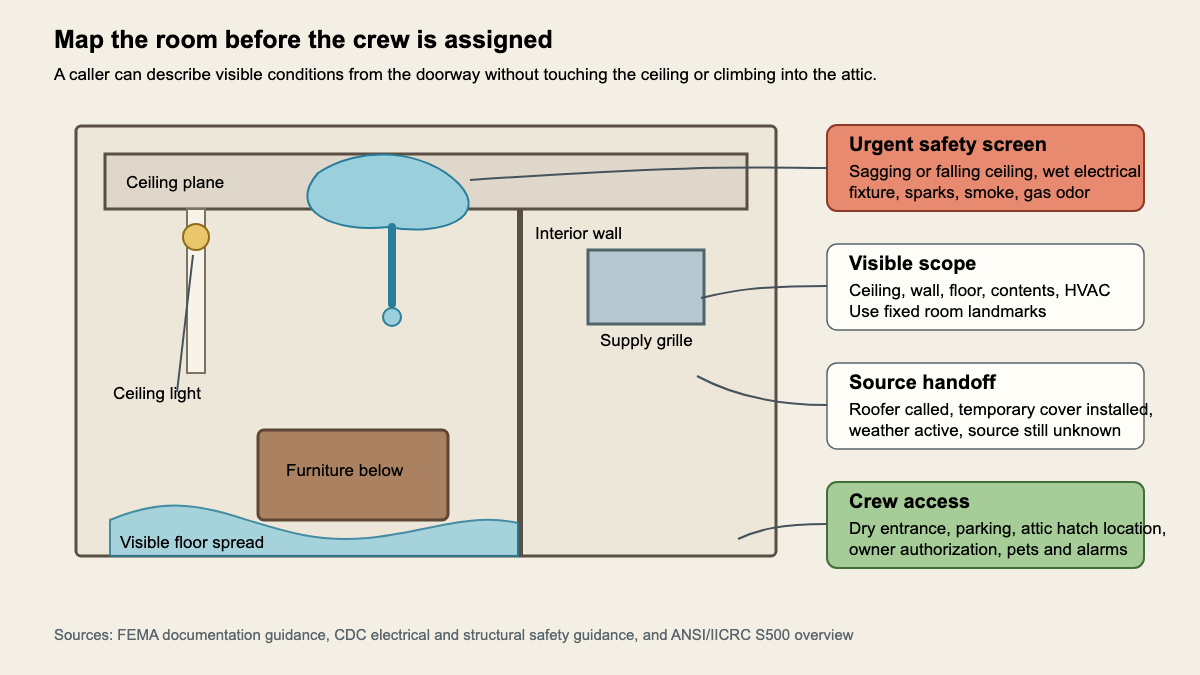
Ask where the caller is standing and whether they can leave the affected room by a dry route. Then ask about a sagging or bulging ceiling, falling drywall, water at a light or ceiling fan, wet outlets, sparks, smoke, a burning smell, gas odor, or shifting sounds. Those answers come before roof age, shingle type, or insurance.
Do not tell the caller to touch a wet switch, remove a light cover, puncture a ceiling bulge, climb a ladder, enter the attic, or reach a breaker through water. The CDC's disaster cleanup guidance says people should stay away from damaged structures and leave if they hear shifting or strange noises. It also warns against operating electrical equipment while standing in water.
A receptionist is not the electrical authority. Follow the company's emergency protocol when water has reached a fixture, wiring, panel, appliance, or energized device. Record the caller's exact observation: “Water is dripping through the recessed light above the bed” is useful. “The circuit is safe” is a conclusion the caller and receptionist cannot establish.
If the ceiling is sagging, move the conversation to keeping people and pets out of the room. Ask whether occupants have a safe place elsewhere in the building. A normal estimate script can wait.
Separate source control from interior mitigation
“Roof leak” is a caller's description of the event. The opening may involve flashing, a vent, damaged roofing, a skylight, an ice condition, wind-driven rain, or another part of the assembly. Reception should preserve what happened without naming the defect.
Ask when the rain, snow, wind, hail, or falling branch began. Record when the caller first noticed water indoors and whether it is dripping faster, slower, or at the same rate. Note any recent roof work, solar installation, chimney work, HVAC work, or previous leak in the same area. These details help the field teams form a plan. They do not prove causation.
Source status needs a separate line in the dispatch record. Has a roofer been contacted? Is a temporary cover in place? Who installed it? Did the visible indoor flow change afterward? Is the weather still active? Never ask the caller to inspect the cover or climb onto the roof for a better description.
The ANSI/IICRC S500 public overview states that correcting the underlying source is generally the property owner's responsibility unless the restorer or another specialist has been contracted for that work. A restoration company may coordinate source control, but reception should not imply that an interior mitigation crew will repair the roof. Name the handoff: roofer confirmed for 8 a.m., emergency tarp contractor en route, property manager arranging access, or source-control provider not yet assigned.
For homeowner actions before roof service, send callers to the separate roof leak emergency guide. The restoration call still needs its own interior-loss record.
Follow the water through fixed landmarks
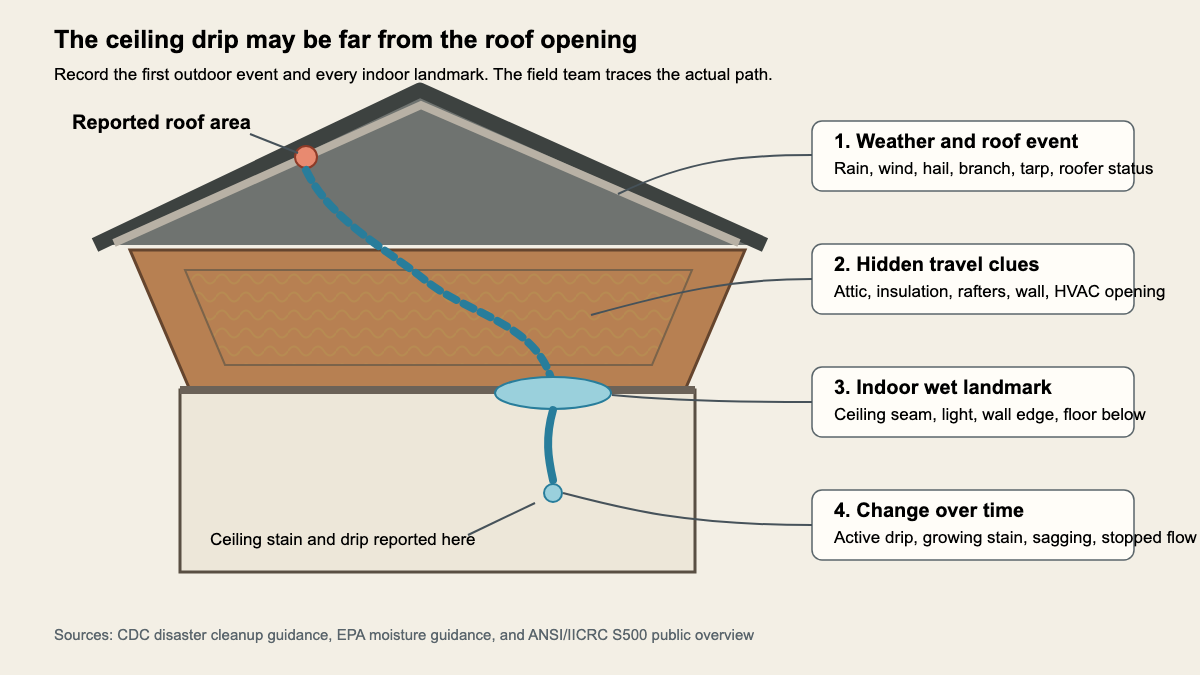
A ceiling drip may appear several feet from the place where water crossed the roof covering. Water can move along roof decking, framing, insulation, pipes, ducts, or the top of a ceiling before it becomes visible. Ask for the first indoor sign and every later sign in chronological order.
Capture the room name, floor, and position relative to exterior walls, roof slopes, chimneys, skylights, vents, and attic access. Then map what the caller can see from the floor:
- Ceiling stain, seam, bubble, sag, opening, or active drip
- Water at a light, fan, smoke alarm, outlet, switch, or extension cord
- Wall streaks, damp trim, wet flooring, furniture, bedding, electronics, or stored contents
- Water on the floor below, in an adjacent room, inside a closet, or near an HVAC grille
- A dry entrance for the crew plus the location of the attic hatch, if known
Use landmarks instead of guessed square footage. “The stain runs from the chimney-side wall to the ceiling fan” gives the crew a picture. “About 200 square feet” may be a frightened caller's estimate with no measured basis.
Ask whether the caller can see water reaching the floor and where its farthest visible edge sits. A doorway, baseboard corner, rug edge, floor register, or furniture leg makes a better reference than “most of the room.” Do not request a closer photo when getting it would place the caller under a sagging ceiling or near wet electrical equipment.
Record time without promising a drying result
Three times matter: when the building was last known dry, when the indoor sign was first noticed, and what the water is doing now. Write “unknown” when the caller does not know. An invented start time damages the record.
The EPA's moisture guide recommends drying water-damaged areas and items within 24 to 48 hours to help prevent mold growth. The same guide notes that moisture can remain hidden behind drywall, above ceiling tiles, and in roof materials. That supports prompt assessment. It does not let reception promise that a ceiling cavity will be dry in two days or decide which materials can stay.
Ask about repeated wetting. Did the stain appear during the last storm and fade? Has paint bubbled in the same spot before? Is there an existing musty odor? Did the caller recently repaint the ceiling? Recurrence changes the field investigation because the visible event may be the latest episode in a longer moisture problem.
Keep medical questions out of scope. Record reported odors and visible growth as observations. Do not identify mold by color, speculate about health effects, or recommend treatment over the phone.
Match the crew record to the building
Ask whether the property is a detached home, townhouse, apartment, commercial suite, or multi-unit building. Capture the service address, caller, onsite contact, owner or manager, and the person authorized to approve inspection or emergency work. For a tenant call, document who has been notified and whether management controls roof, attic, or unit access.
Access can decide whether the first trip is productive. Record gate codes, parking restrictions, elevator hours, security desks, pets, alarms, attic-hatch location, ceiling height, steep interior stairs, locked rooms, and any area blocked by water. If the roof opening is over one unit but water appears in another, record every affected or potentially affected unit that the caller can identify.
The dispatch note should also list other parties already involved: roofer, electrician, property manager, insurer, emergency service, HVAC contractor, or plumber. A wet ceiling below a rooftop unit may involve a roof opening, condensate, piping, or another source. Reception records the clues and avoids assigning blame.
For broader hazard routing, use the water damage emergency call triage guide. It covers electrical, structural, contamination, occupancy, and access questions across source types.
Ask for a short, safe photo set
FEMA advises documenting damage before cleanup. For dispatch, ask only for images the caller can take from a safe standing position: one wide room view, one view of the ceiling condition, one view of the farthest visible floor or wall spread, and one exterior ground-level view if the reported roof area is visible without approaching hazards.
Label each file with a room and landmark, such as upstairs-bedroom-wide, ceiling-light-stain, or hallway-floor-edge. Photos support planning, but they do not replace moisture measurement, electrical evaluation, roof inspection, or field documentation.
Insurance details belong in the record without a coverage opinion. Capture the carrier, claim number, adjuster contact, and any stated documentation request. The dedicated water damage insurance documentation intake gives the office a fuller workflow for that conversation.
A strong final note is concrete: active rain, drip began at 6:20 p.m., upstairs bedroom ceiling stain growing toward a recessed light, room closed to occupants, water visible on carpet beneath the window wall, hallway dry, attic hatch in garage, roofer scheduled tomorrow morning, owner onsite, dry front-door access, two photos attached. The crew can act on that record without treating the call as a roof diagnosis.