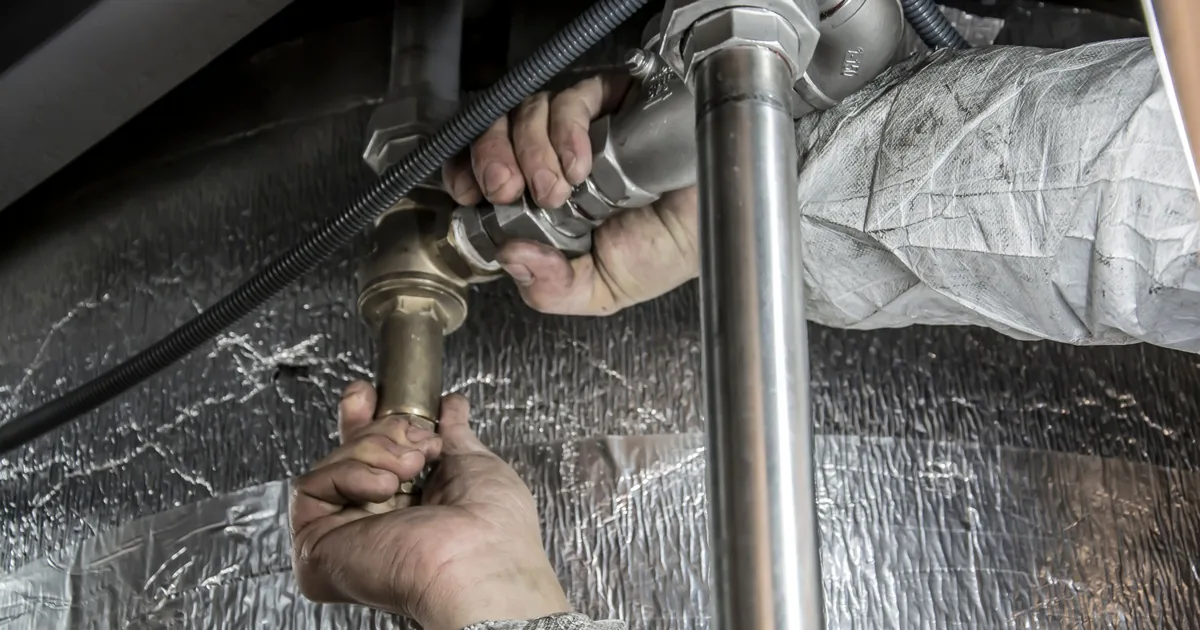
A caller says a pipe has burst above the laundry room. Water is running through a ceiling light, the main valve is somewhere behind boxes in the garage, and the plumber has not called back. The restoration office needs five things before a truck moves: whether the caller is safe, whether water is still entering, where it has traveled, who is handling the plumbing source, and how the crew will get inside.
That is the useful answer to a burst-pipe intake. Reception should record observable facts and route hazards. The technician confirms the source, materials, moisture extent, and drying plan on site.
Start with the caller's location, then the water source
Ask, "Are you standing in a dry, safe place right now?" before discussing square footage or equipment. If water is near outlets, appliances, a light fixture, or the electrical panel, keep the caller out of the wet area. The CDC's electrical-hazard guidance says not to enter standing water to reach a main switch and not to operate electrical equipment while standing in water.
Once the caller is safe, get a plain source-status answer:
- Water is actively flowing.
- The main valve or a fixture valve has been closed and the flow has stopped.
- The shutoff is inaccessible or its location is unknown.
- The caller cannot tell whether the source is still active.
Do not turn that answer into a diagnosis. "Water stopped after we closed the main" is useful. "The copper elbow failed" is a field conclusion unless a qualified plumber has already identified it. The American Red Cross advises turning off water at the main valve when pipes are damaged and calling a plumber. A receptionist can repeat that general direction without asking someone to climb, crawl, move heavy storage, or cross a wet floor.
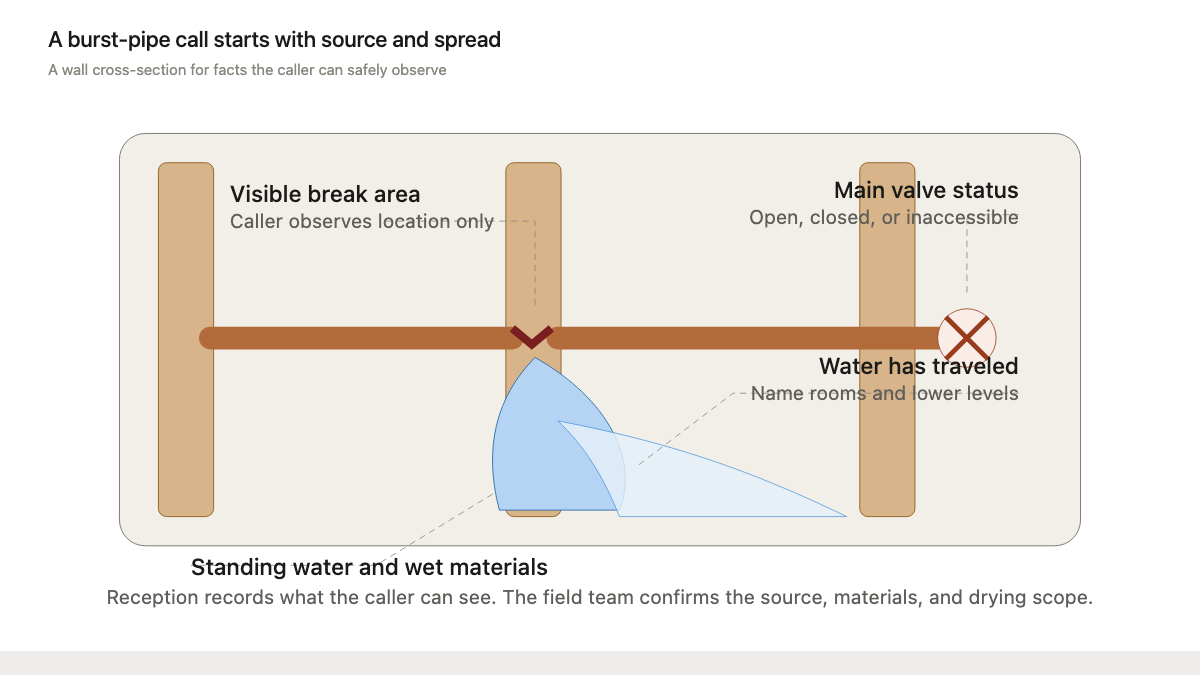
The intake record should preserve the caller's exact status language. "Main is off, but the ceiling is still dripping" tells the manager that residual water may still be moving through the assembly. "I closed the valve under the sink and the spray continues" suggests the attempted control did not settle the question. Both deserve a manager callback, not improvised troubleshooting from reception.
Separate source repair from water mitigation
A burst-pipe loss often needs two trades. The plumber repairs or isolates the failed plumbing. The restoration crew inspects, extracts water where appropriate, documents moisture, removes affected materials when required, and sets a drying plan. Some companies can contract for both scopes, but the call taker should never assume that arrangement.
The ANSI/IICRC S500 overview states that determining and correcting the underlying source is the property owner's responsibility unless the restorer or another specialist is contracted to do it. That boundary belongs in the intake.
Ask who has been contacted, who has confirmed attendance, and whether anyone has given an arrival window. Record the plumber's company and direct callback number when available. For a tenant or managed property, identify the person authorized to approve plumbing work and mitigation. A tenant saying "maintenance knows" is incomplete. Get the maintenance contact, property manager, unit number, and any after-hours authorization process.
The office can then state the next step cleanly: "I have recorded that the main is off and a plumber is expected. Our restoration manager will review the affected areas and call you with the dispatch plan." That sentence commits to a callback the company controls. It does not promise a repair, coverage, or an arrival time the dispatcher has not approved.
Screen electrical and structural danger before scope
Water touching a ceiling light, receptacle, appliance, extension cord, or service panel changes the call. Ask what the caller can see from dry ground. Do not ask them to test a switch, unplug an appliance, reset a breaker, or step closer for a better photo. If there are sparks, smoke, a burning odor, or a shock, route the call to emergency services and the electrical emergency procedure.
Ceiling shape matters too. Ask whether any ceiling is sagging, bulging, cracking, or shedding material. Keep people and pets out from underneath. FEMA's cleanup guidance tells occupants to check for structural damage before entering and to watch for sagging floors and ceilings. Reception cannot declare a ceiling safe because the leak slowed down.
Other escalation details include a trapped occupant, water affecting a medical device, a commercial electrical room, water near fuel-burning equipment, or a loss in a multi-unit building where lower units may be occupied. Record the observation and follow the company's escalation tree. Avoid a homemade safety lecture. A short instruction that keeps the caller away from a visible hazard is easier to follow.
Build a room-by-room water-spread map
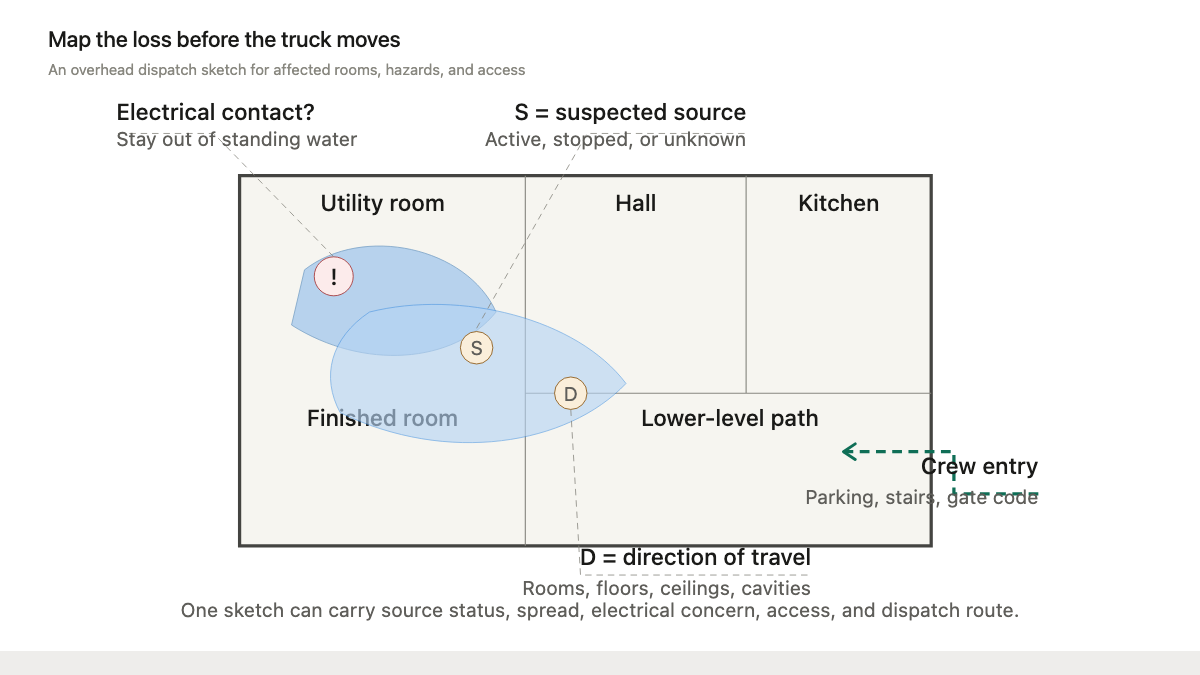
"The basement is flooded" does not tell the crew where the water began or what it crossed. Build the first map over the phone. Start at the suspected break and move outward: room, floor, ceiling below, adjoining wall, hallway, and lower level.
For each area, record whether the caller sees standing water, active dripping, a wet ceiling, darkened drywall, lifted flooring, damp carpet, or water emerging at a baseboard. These are observations, not moisture readings. Ask when the water was first noticed and when the flow stopped. If nobody knows, write "unknown." A false timestamp is worse than a blank one.
Photos help after safety has been settled. Request one wide photo of each affected room, one view back toward the suspected source, and one image of visible travel to the floor below. FEMA recommends photographing damage before cleanup when conditions are safe and labeling images by room. The office can use filenames such as laundry-wide, hall-ceiling, and basement-below-source. That beats a text thread full of twelve nearly identical close-ups.
Do not ask the caller to open a wall, pull wet carpet, remove a ceiling panel, or move a heavy appliance. Those steps can expose wiring, contaminated material, or unstable finishes. The field team decides what must be moved or opened after inspection.
Capture access that can change the dispatch
The address is only the start. A crew may need a gate code, loading instructions, elevator access, parking clearance, a unit contact, or permission from building management. Ask where the break is relative to the best entrance and whether stairs separate the entrance from the affected rooms.
For occupied homes, note children, pets, older residents, and anyone who needs a clear path through the building. For commercial calls, capture the site contact, operating hours, alarm procedure, affected operations, and where a vehicle can stage. For multi-unit properties, list known affected units and the person coordinating access. Do not rely on "the superintendent will be there" without a name and direct number.
The dispatch note should also say whether the property currently has running water. Closing the main can leave the whole building without toilets, sinks, or fire-protection supply depending on the system. Reception should record that consequence and escalate it. A restoration call taker should not advise when a building system can be returned to service.
Set the drying clock without scare tactics
The reason to move promptly is specific. EPA guidance says water-damaged areas and items should be dried within 24 to 48 hours to help prevent mold growth. That window is a drying goal, not a promise that mold appears at a precise minute or that every material can be saved.
Tell the caller what happens next: the manager reviews safety, source status, affected areas, access, and trade coordination; the caller receives a callback with the dispatch decision; the field team confirms moisture extent and the work plan. If the company gives time windows, use the approved one. Never invent "within an hour" because the caller sounds distressed.
Insurance questions need similar restraint. Ask whether a claim has been opened and record the carrier and claim number if one exists. Do not say the loss will be covered. The office may advise the caller to preserve photos and receipts, but policy interpretation belongs to the carrier or a licensed professional in the caller's jurisdiction.
The dispatch note should read like a site briefing
A strong note can be read aloud in under a minute and still answer the questions that control the first response. Use a fixed order:
- Caller location and immediate safety concerns.
- Source status and main-valve status.
- Plumber, property manager, or maintenance contact.
- Suspected source room and affected rooms or floors.
- Electrical contact, sagging finishes, or other escalation flags.
- Access, occupancy, parking, stairs, gate codes, and callback number.
- Time first noticed, time flow stopped, photos received, and promised callback.
An AI receptionist can collect the same fields after hours and hand them to the on-call manager. The escalation rules still belong to the restoration company. They should reflect its service area, staffing, trade partnerships, and safety policy.
The final note should sound concrete: "Caller is outside the wet laundry room. Main valve closed at 8:42 p.m.; ceiling drip continues in the basement below. Water is near one laundry receptacle, so the room is being kept clear. Plumber callback pending. Side-door code and property manager number attached." The manager can act on that.