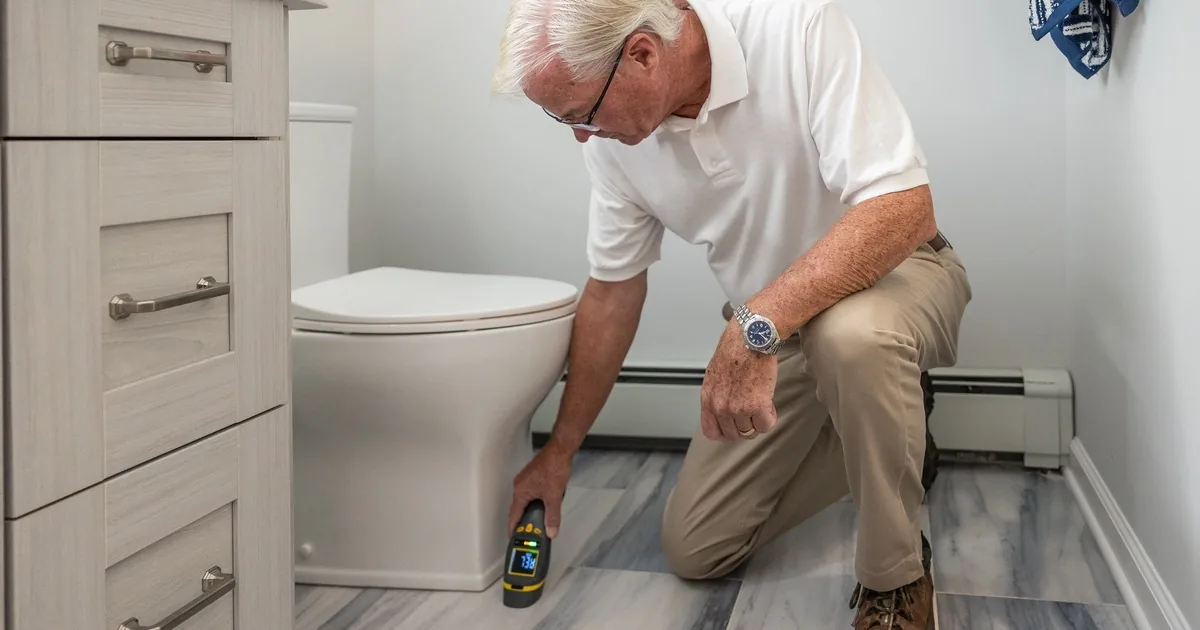
A homeowner calls three days after a toilet supply line dripped behind the vanity. The plumber replaced the connector, the tile looks dry, and there is no standing water. Now the caller wants to know whether the wall or floor still needs attention.
Book that as a post-leak moisture inspection when the source has stopped and no immediate hazard is present. The office should capture when the leak began, when it stopped, which materials became wet, what changed afterward, and where the technician can take comparison readings. Reception should never declare an assembly dry because its surface feels dry or because the caller owns a moisture meter.
First decide whether the call is still an emergency
“Small leak” describes the caller’s impression, not the current conditions. Start with source status. Ask what leaked, who stopped or repaired it, and whether any water is still appearing. A slow stain that continues to grow belongs in active-loss routing. So does water near an outlet, light fixture, appliance connection, electrical panel, or sagging ceiling.
Keep the emergency screen short:
- Is water still flowing, dripping, or spreading?
- Is anyone standing in water or near wet electrical equipment?
- Is there sewage, stormwater, or another possibly contaminated source?
- Is a ceiling bulging, cracking, or dropping material?
- Can everyone stay out of the affected area safely?
If any answer raises an immediate safety concern, follow the company’s emergency procedure. The broader water-damage emergency call triage guide covers that sequence. A completed sink leak with a dry walking path is a different appointment from an active pipe break running through a light fixture.
Once the call is safely in the inspection lane, state the purpose plainly: the field technician will inspect the reported path, take moisture readings appropriate to the materials, compare affected and dry areas, and explain the findings. The call taker cannot promise what the inspection will find.
Capture the leak as a timeline, not a label
“Minor bathroom leak” is too thin for a work order. The technician needs the event in order. Ask when the caller first noticed water, when it may have started, when the source was stopped, and what drying has happened since. If the start time is unknown, record that. Do not turn a guess into a timestamp.
Then follow the water path. A useful description might read: “Toilet supply connector dripped inside vanity. Water was visible on cabinet floor and at left baseboard. Caller saw no water in hallway. Plumber replaced connector Tuesday at 2 p.m. Box fan ran overnight.” That gives the technician a source area, two materials, an edge to check, and a stopping time.
Ask about every layer the caller can identify without moving or opening anything: cabinet base, drywall, baseboard, tile, grout, wood flooring, carpet, ceiling below, and the wall on the other side. Record stains, swelling, peeling paint, soft finishes, lifted flooring, or a musty odor as observations. Avoid conclusions such as “drywall is ruined” or “there is mold behind the wall.”
The U.S. Environmental Protection Agency recommends fixing the moisture source and drying water-damaged areas and items within 24 to 48 hours when feasible. That is a drying target, not a countdown to a diagnosis. If the caller reports that materials stayed wet beyond that period, pass the timing to the field team without declaring mold present.
A moisture inspection needs a map
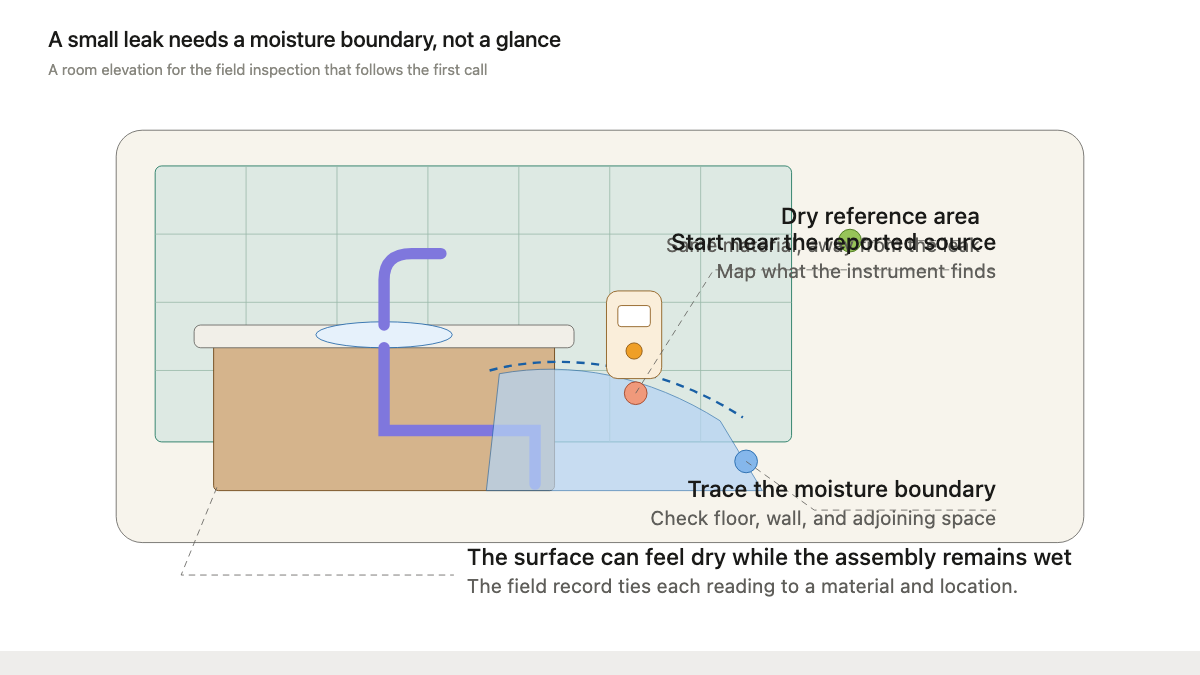
A single reading beside the vanity cannot define the affected area. The technician usually needs to begin near the reported source, move outward through each material, and find comparison locations that were not part of the leak. The work order should make that route possible.
Ask which rooms share the wet wall and what sits below the leak. A bathroom wall may back onto a closet. A second-floor supply leak may show first at the ceiling beneath it. Built-in cabinets, a tiled wall, vinyl wallpaper, or a finished basement ceiling can conceal the path and limit access. Note those assemblies. Do not ask the caller to remove trim, drill a hole, lift flooring, or open drywall before the technician arrives.
The Massachusetts Department of Public Health explains that moisture-device readings depend on the meter, its settings and calibration, the material being tested, surface conditions, conductive materials, and operator technique. Its guidance recommends comparing suspect areas with a dry standard or baseline in the same material. That means a field note should identify the room, exact location, material, meter method, and reference area. A bare number in a text message is incomplete.
The visual map also prevents a common handoff error. If reception records only “bathroom wall,” the field technician may arrive without knowing that the vanity blocks the source area, the opposite side is a packed closet, and the caller will not be home to move belongings. Five precise questions can save a return trip without pretending to scope the repair remotely.
Keep meter interpretation with the field technician
Callers sometimes say, “My meter reads 18. Is that bad?” There is no responsible universal answer. A reading on wood cannot be carried over to gypsum board, concrete, tile, or carpet. Meter models use different scales and modes. Metal corner bead, fasteners, foil-backed material, salts, surface condensation, and poor contact can affect a reading.
Pinless meters scan a broader area without inserting probes. Pin meters take a measurement at specific contact points. Either may be useful when selected and used correctly, but the method belongs in the record because the two readings are not interchangeable.
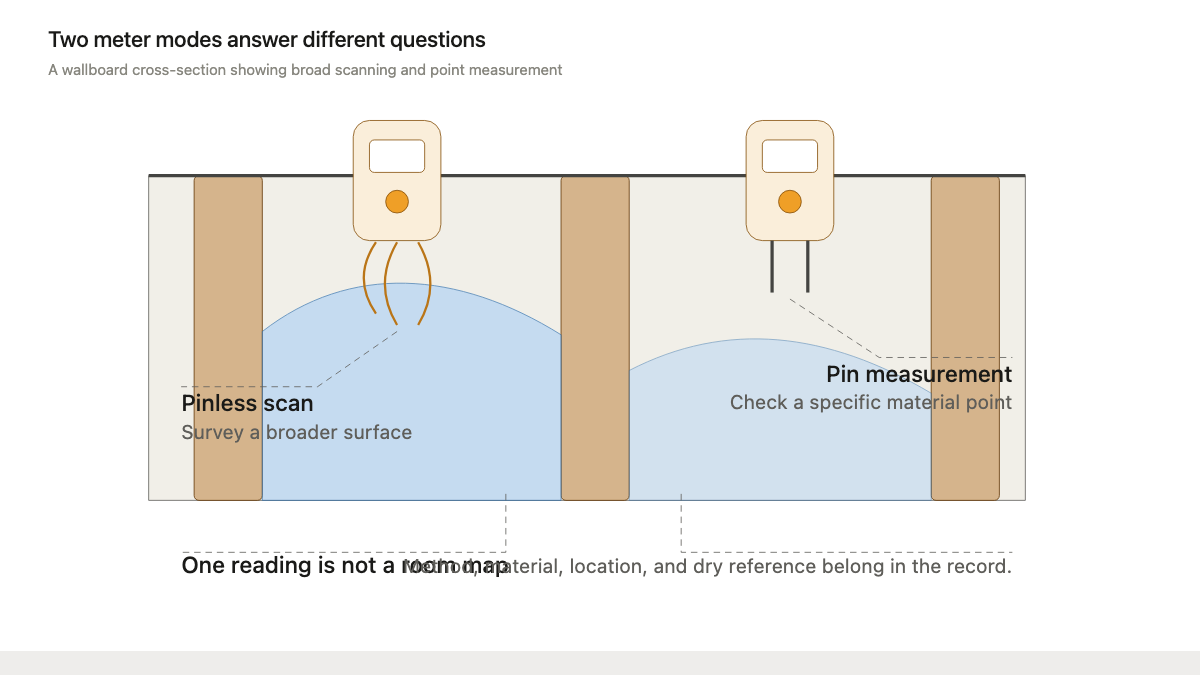
The EPA’s mold investigation course notes that moisture meters can help locate wet building materials and monitor drying. It also describes hidden-moisture investigations as work that may require experienced professionals and specialized equipment. Reception can explain the appointment in those terms: “The technician will choose the appropriate method on site and compare the reported area with other locations.”
Do not promise thermal imaging, invasive testing, mold sampling, or a written clearance unless the company’s service actually includes it. If the caller requests a specific document for a real-estate transaction, insurer, landlord, or contractor, capture the exact request and route it to a manager before booking. “Moisture inspection” means different deliverables across companies.
Build the appointment around access and responsibility
The leak may be fixed, but the source area can still be inaccessible. Ask whether the technician can reach the cabinet, wall, floor, room below, and adjoining room. Record locked doors, tenant notice requirements, pets, parking restrictions, gate codes, elevator reservations, and the name of the person authorized to approve work.
For a rental or managed property, identify who reported the leak, who arranged the repair, and who can authorize inspection or further work. Get direct numbers. “The landlord knows” does not tell dispatch who will open the unit or approve a change in scope.
Photos can help the manager prepare if they were taken safely. Request one wide image that establishes the room, one view of the reported source, and one view showing the farthest visible stain or wet edge. Ask for the plumber’s invoice or repair note when the caller has it. A repair record can confirm what work was reported without forcing the receptionist to interpret it.
If the event began as a burst pipe and the source-control handoff is still unresolved, use the burst-pipe dispatch intake guide. That page separates plumbing repair from mitigation. This inspection page assumes the active source has already been addressed.
Set the caller’s expectation before hanging up
Read back the source, timing, affected materials, visible changes, access plan, and requested deliverable. Correct mistakes while the caller is present. Then explain what the office can promise: an appointment or manager callback, the areas the technician has been asked to inspect, and any preparation the company requires.
Do not promise that the wall will test dry, that no material will need removal, that mold is absent, or that insurance will pay. Those conclusions require facts the receptionist does not have. Even the technician may need to revise the plan after finding an unexpected material or concealed path.
A strong work order sounds like this: “Upstairs toilet connector repaired Tuesday. Water was visible inside the vanity and along the left baseboard; no active dripping now. Hallway side appears unchanged. Closet shares the wet wall and will be cleared before Thursday’s visit. Caller wants a moisture inspection and written findings, pending manager confirmation.”
An AI receptionist can collect the same fields after hours and send the record to the restoration manager. The company still owns the emergency rules, service definitions, and field conclusions. When the technician arrives, the first measurement should connect to a room, a material, and the story of how water moved there.
Sources
- Massachusetts Department of Public Health: Use of Moisture Measuring Devices for Evaluating Water Damage in Buildings
- U.S. EPA: Mold Course Chapter 3
- U.S. EPA: A Brief Guide to Mold, Moisture and Your Home
- IICRC: ANSI/IICRC S500 Standard for Professional Water Damage Restoration