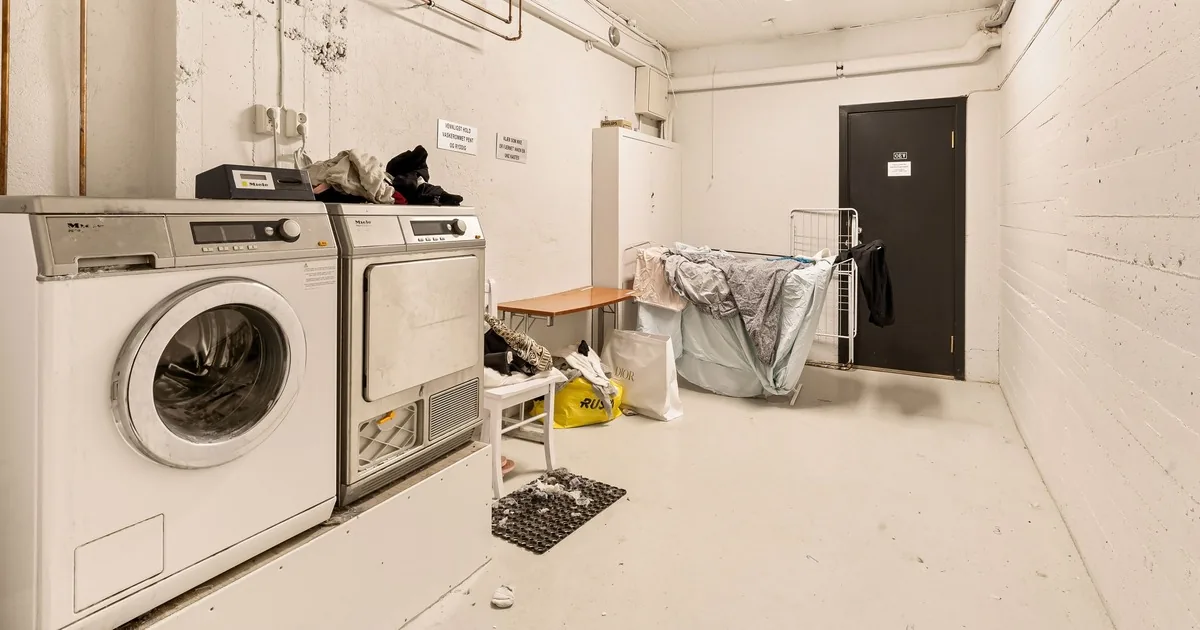
A washing machine stops mid-cycle. Water is spreading across the laundry floor, the homeowner can still hear it running, and the machine sits beside an outlet and an electric dryer. The first call cannot determine whether a hose, pump, drain, or door seal failed. It can keep the caller away from an electrical hazard and give the restoration manager a useful dispatch record.
For an appliance leak water damage call, capture the caller's safe location, active flow, power concerns, appliance type, operating state, reported leak point, source-control status, visible water edge, wet materials, rooms below, access, and authorization. Keep appliance repair and building mitigation as separate workstreams until a qualified person accepts each scope.
Start with the person, power, and active water
Ask where the caller is standing. If water is near an outlet, cord, power strip, electric appliance, or electrical panel, do not direct anyone to cross the wet area, pull a plug, press a control, or reach a breaker through water. The CDC's cleanup safety guidance says never to turn power on or off or use an electrical appliance while standing in water.
Then establish whether water is still entering the building. Ask what the caller can see from dry ground: a stream from a hose, water under the machine, an overflowing tub, a backed-up standpipe, a refrigerator line spraying behind a cabinet, or an unknown opening. Record whether the flow is increasing, steady, slowing, or stopped.
A shutoff question needs precision. “The water is off” could mean the appliance was paused, its local valve was closed, or the home's main supply was shut. Ask what was operated, who operated it, and whether the visible flow changed. Do not coach a caller to reach behind a wet appliance or move the machine to find a valve.
If sewage, drain backup, smoke, sparks, a burning smell, gas odor, falling material, or another immediate hazard is reported, use the company's emergency route. The broader water damage emergency call triage guide covers those conditions across source types.
Identify the appliance and what it was doing
“Appliance leak” is too broad for dispatch. A front-load washer running a wash cycle presents a different set of observations from a dishwasher leaking only during drain-out, a refrigerator supply line that sprays continuously, or a water heater releasing from its tank area.
Ask for the appliance type, brand, approximate age if known, and location. Then capture the last action before water appeared. Was the washer filling, tumbling, draining, or finished? Did the dishwasher leak at startup, during the wash, or near the end? Was anyone using the refrigerator dispenser or ice maker? Had the water heater recently recovered after heavy use?
Preserve the caller's observation without naming a failed part. “Water appeared at the front-left corner during drain-out” is useful. “The drain pump failed” is a diagnosis. The field technician or appliance service company may find a loose connection, blocked drain path, cracked component, installation issue, or another cause that was not visible during the call.
Recent work belongs in the record. Ask whether the appliance was installed, moved, repaired, or reconnected recently. Note who performed that work and whether the caller has an invoice or service note. If the equipment label can be photographed from a dry, accessible position, the appliance model and serial number intake guide explains how to capture it without guessing.
Map the water past the machine
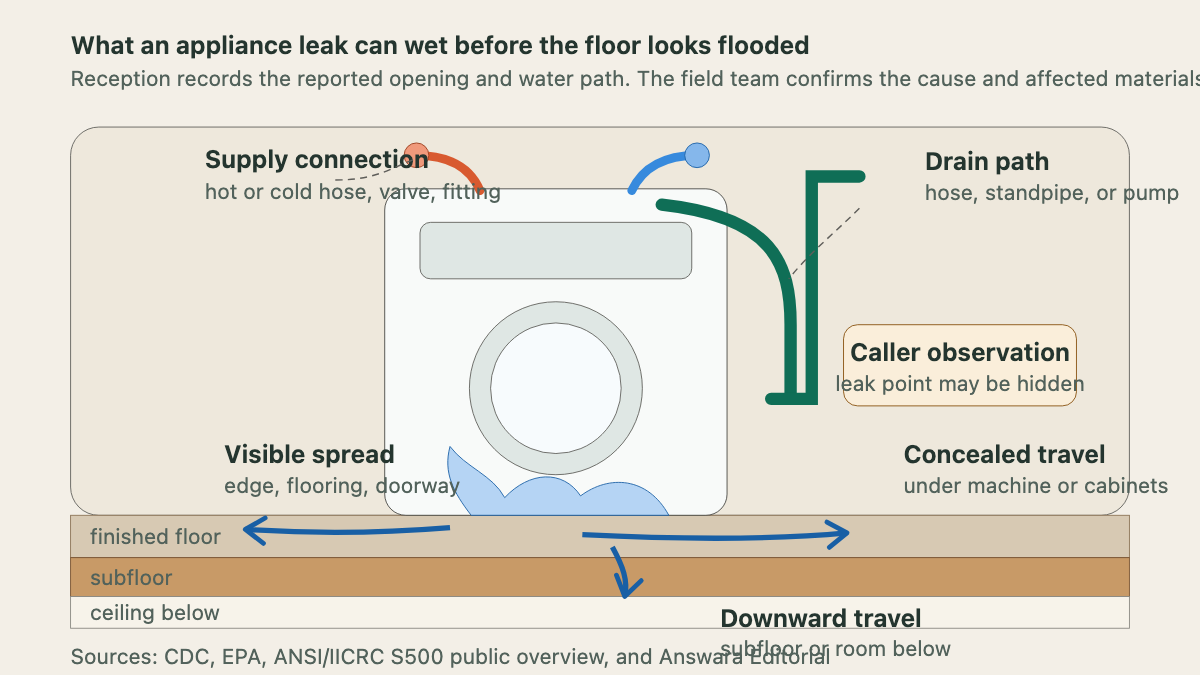
The appliance footprint is only the starting point. Ask for the farthest visible edge of water using fixed landmarks: the laundry doorway, a cabinet toe kick, the end of a floor seam, the baseboard behind a hamper, or the leg of a nearby table. A landmark gives the crew something it can verify when it arrives.
Follow the path in every direction the caller can observe safely. Water may run beneath the appliance, enter the gap under cabinets, cross into a hallway, soak a wall base, or travel through the floor assembly. For an upstairs laundry or kitchen, ask what room sits below and whether the caller sees a stain, drip, bubble, or wet light fixture there. A caller should never remove a ceiling cover or touch a wet fixture for a closer look.
Record the materials along that path. Sheet vinyl over concrete is a different field condition from plank flooring over wood subfloor, carpet and pad, or tile beside built-in cabinets. Reception does not decide what can be dried or what must be removed. It gives the manager enough detail to prepare for inspection and drying work.
Time matters, but guessed precision does not help. Capture when the appliance was last known to be operating normally, when water was first noticed, when the flow stopped, and what drying has happened since. Write “unknown” where needed. The EPA moisture guide recommends drying water-damaged areas and items within 24 to 48 hours when feasible. That guidance supports prompt assessment; it does not promise that a floor cavity will be dry within two days.
A surface that looks dry can still sit above wet underlayment, subfloor, cabinet material, or ceiling board. If the active source has stopped and the caller is asking whether hidden moisture remains, the post-leak moisture inspection guide covers that appointment type.
Separate source repair from restoration work
The appliance may need repair, plumbing may need to correct a connection or drain, and the building may need extraction or drying. Those jobs can overlap at one address without belonging to one contractor.
The public ANSI/IICRC S500 overview says correction of the underlying water source is generally the property owner's responsibility unless the restorer or another specialist has been contracted for it. Ask who is handling source control and what has actually been confirmed. Useful notes include “appliance company scheduled for morning,” “plumber closed the refrigerator supply valve,” or “source not yet assigned.”
Also record whether anyone has moved, tilted, disconnected, or restarted the appliance. Do not request those actions. They can change the leak, create an electrical or lifting risk, disturb evidence, or move trapped water into another area. The restoration manager can coordinate access with the appliance technician after responsibilities are clear.
A solid dispatch record names each handoff:
- Restoration company: inspect and address affected building materials within its accepted scope
- Appliance technician: diagnose and repair the machine if contracted
- Plumber: address a supply, valve, standpipe, drain, or other plumbing issue if contracted
- Electrician: evaluate wet electrical equipment or circuits when required
- Owner or property manager: authorize access and work
- Insurer or adjuster: receive claim documentation without directing field safety
That list prevents the common promise that “our technician will take care of everything” before anyone has seen the loss.
Confirm access, authority, and a safe photo set
Capture the service address, caller, onsite contact, owner or manager, direct callback number, and the person allowed to authorize inspection or emergency work. For rentals and multi-unit buildings, record the affected unit, room below, maintenance contact, tenant-notice requirements, and any shared shutoff or common-area access.
Ask whether the crew has a dry route to the appliance area. Note stairs, elevators, parking limits, gate codes, pets, narrow doors, stacked machines, built-in cabinetry, and an appliance closet that restricts movement. If the unit cannot be inspected without moving it, flag that condition for the manager. Do not imply that the first responder will disconnect or pull it out.
Photos help when they can be taken from a safe position. Request one wide room view, one view of the reported opening or appliance side, one image of the farthest visible water edge, and one view of any stain in the room below. A model-label photo is useful only when the label is already accessible. Label each file by room and landmark so the crew does not have to decode a camera roll.
Insurance belongs in the intake record, not in a coverage opinion. Capture the carrier, claim number, adjuster contact, and any stated documentation request. Avoid promises about the appliance, flooring, cabinets, or temporary housing. The policy and carrier determine coverage.
Read the final note back to the caller. A field-ready version might say: front-load washer stopped during drain cycle at 7:10 p.m.; caller is in dry hallway; water visible from machine front to laundry doorway and under right cabinet; outlet is behind machine and has not been touched; local valves are not accessible; kitchen ceiling below has a new stain but no active drip; owner onsite; appliance technician not assigned; dry garage entry available. The restoration manager now has a scene to evaluate, not a message that says only “washer leaking.”