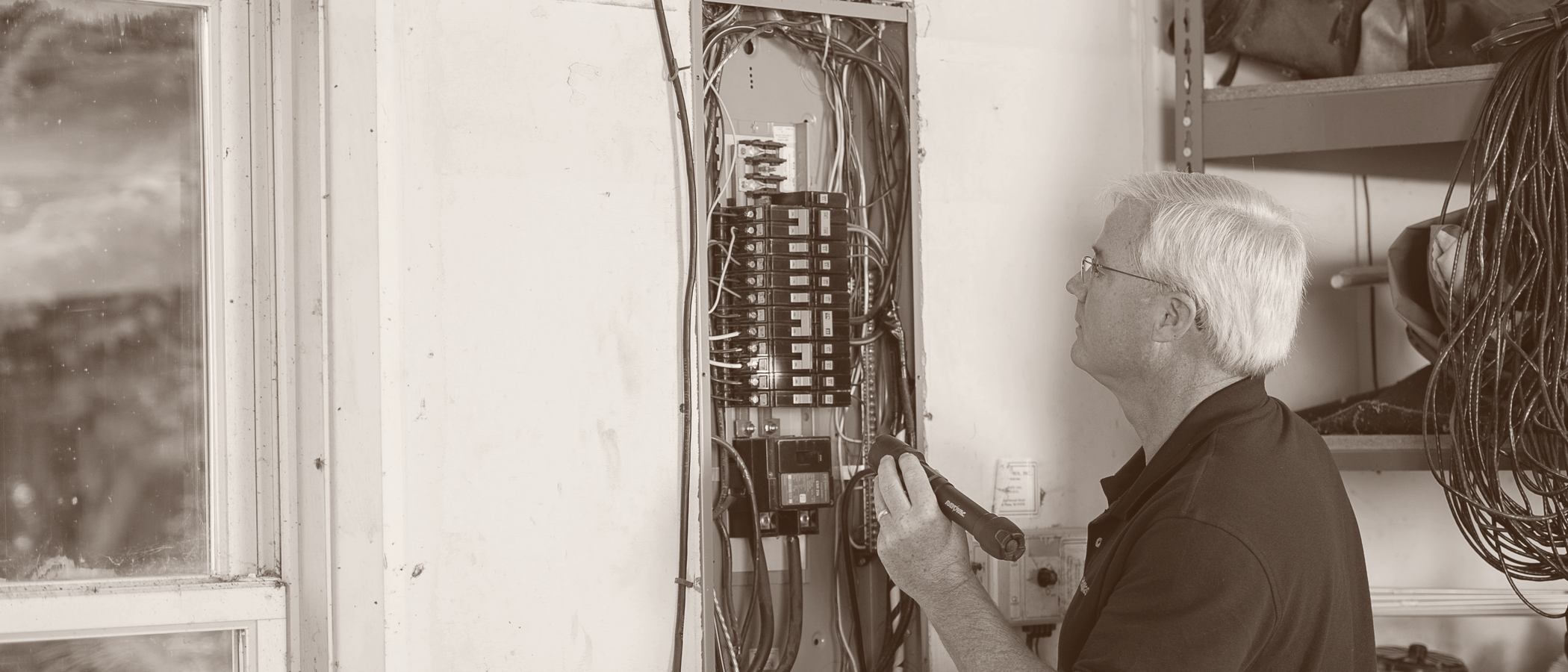
Tropical Storm Nadine enters the forecast cone on a Tuesday afternoon. By Wednesday morning, every homeowner in the county with a Generac Guardian sitting on a pad beside the house is having the same thought: when did anyone last change the oil in that thing? By noon, the three electrical contractors who actually service standby generators within forty miles are fielding a month of calls in a day. Dispatch answers what it can. The rest ring through to voicemail, and the caller moves down the search results to whoever picks up.
That homeowner was always going to call someone. The storm picked the week. The busy signal picked the contractor.
Generator service demand arrives in waves, and the waves are predictable
A standby generator is the rare piece of home equipment that owners ignore for eleven months and then panic about all at once. Annual maintenance calls cluster in spring and fall, when the reminder sticker on the enclosure finally catches someone's eye. Then a named storm shows up on the evening news and compresses six weeks of demand into forty-eight hours.
The calls in that wave are wildly different from each other, even though they all start with "I have a Generac." One caller has a 22kW Guardian installed in 2021, on a maintenance plan, serviced last October, and just wants confirmation that the pre-storm check is scheduled. Another has a Kohler 20RESCL that came with the house, has no service records at all, and noticed last week that the exercise cycle never ran. A third is reading an error code off the controller and asking what "overcrank" means while the wind forecast climbs.
Treating those three callers identically is how schedules fall apart. The first needs a confirmation. The second needs a full service visit: oil and filter change, air filter, spark plugs, battery load test, transfer switch inspection, and probably a valve lash check that has never been done. The third may need a truck today.
Maintenance-plan intake: capture the unit on the first call
The difference between a clean service call and a wasted trip is usually what got written down when the phone rang. Good generator intake is specific. Brand and model. Rated kW. Air-cooled or liquid-cooled. Fuel source, since a propane unit with a low tank is a different conversation than one plumbed to natural gas. Install year. Date of last service, if the owner knows it. Whether the weekly exercise cycle runs, and whether anyone has actually watched it run. What the controller display shows right now.
For maintenance-plan customers, intake also means checking the agreement. Does the plan include a pre-storm inspection? Is this visit covered or billable? For one-off callers, the intake call is the moment to plant the plan conversation: a tech is already coming out, records will exist after this visit, and next year the reminder call happens automatically instead of the panic call.
Every detail captured on the phone is a part the truck carries and a question the tech skips. An air-cooled Generac needs different filters than a liquid-cooled Kohler. A unit that has sat unexercised for a year needs a battery on the truck, because that battery is dead more often than it is fine.
Triage before severe weather: who runs first
Two days before landfall, the schedule stops being first-come, first-served. It becomes a judgment call, and the judgment is only as good as the information collected at intake.
Some callers rise to the top on any honest list. The household with an oxygen concentrator or a powered medical lift. The unit that faulted during its last exercise cycle. The plan customer whose agreement promises a pre-storm check. The transfer switch that hums during the weekly test but has never once carried the house.
Others can wait, and telling them so honestly is part of the job. The owner who wants a quote for a new install "sometime this fall" does not need a slot this week. The unit serviced in March with a clean exercise log needs reassurance more than a truck roll. A dispatcher who knows the model, the service history, and the fault code can sort fifty calls into a defensible run order. A voicemail box full of "call me back, storm's coming" sorts nothing.
After-hours answering decides who gets the maintenance plan
Storm anxiety keeps banker's hours for no one. The call volume peaks after the evening news runs the updated track, which is exactly when the office line goes to voicemail. The homeowner standing in the garage at 9pm, staring at a controller that says the battery failed its last check, is going to call until a human answers. If that human works for a competitor, the competitor gets the service call. Worse, the competitor gets the maintenance agreement that follows it, and a maintenance agreement on a standby generator is a decade-long relationship: annual oil changes, battery swaps every few years, the eventual controller replacement, and the referral when the neighbor's install goes in.
The electrician who did the original install often loses that customer without ever knowing the call happened. There is no missed-call report for the owner who gave up after four rings.
What the phone should produce: a queue, already sorted
When the cone shifts and the calls stack up faster than dispatch can breathe, Answara answers the wave. It works through the same intake your best dispatcher would run: brand, model, kW, fuel type, install year, last service date, what the controller display says, whether the weekly exercise cycle has been running, plan customer or first-time caller. It hears the difference between the owner scheduling next month's annual service and the one whose unit faulted with a medical device in the house, and it holds that standard at 9pm exactly as it does at 9am. Your electricians start the morning with a triaged queue and complete unit details on every entry, so the trucks roll in the right order with the right parts. Answara handles the phone so your crew can handle the transfer switch. Somewhere over warm water, the next depression is already earning its name, and the wave it sends can land on a schedule instead of a voicemail box.