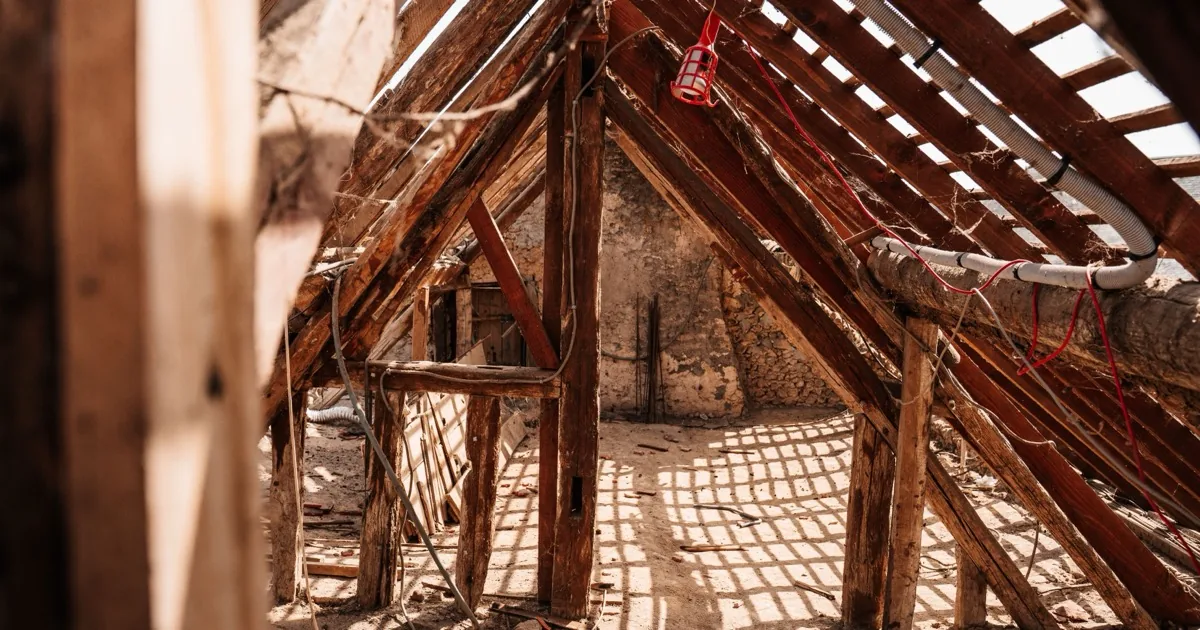
A homeowner calls because a roofer found damp insulation below an old leak. Before the office can book removal, the caller adds that mice were heard last winter, the attic contains “little shiny pebbles,” and the only hatch is above a closet packed to the ceiling. That is no longer a simple vacuum-and-replace estimate.
Treat an attic insulation removal call as an inspection request until the condition and source are understood. Record why removal was recommended, the exact affected area, water and animal timelines, visible material, odor, access, wiring and equipment, prior reports, source repairs, and the service the customer expects. A qualified field professional should decide what comes out, what must happen first, and when replacement can begin.
Start with the event that triggered removal
Ask who raised the issue and what they actually observed. A roofer may have photographed wet cellulose near a vent. A pest company may have noted droppings and trails through fiberglass. A home inspector may have written “possible vermiculite” without testing it. Keep the source, wording, date, and location together in the ticket.
Then ask what changed. Did water drip through a ceiling after a storm? Did someone smell urine when opening the hatch? Was insulation moved during electrical work? Has an animal been heard at night? “Bad insulation” tells the estimator almost nothing. “Gray loose fill is matted below the north roof valley, and a roofer repaired flashing there four days ago” gives the visit a starting point.
Request reports and dated photos when they exist. The safest useful photo may be one already taken by the roofer, pest technician, or inspector. Do not ask the caller to climb into the attic, walk on ceiling joists, move storage, or dig through insulation for a better picture.
The desired outcome belongs in the first note too. A customer may want a removal quote, a condition assessment, cleanup after pest exclusion, access for rewiring, documentation for a sale, or new insulation after roof repairs. Those are different appointments. If the customer wants a clean upgrade and reports no damage or contamination, the attic insulation upgrade intake guide covers that narrower call.
Build separate water and animal timelines
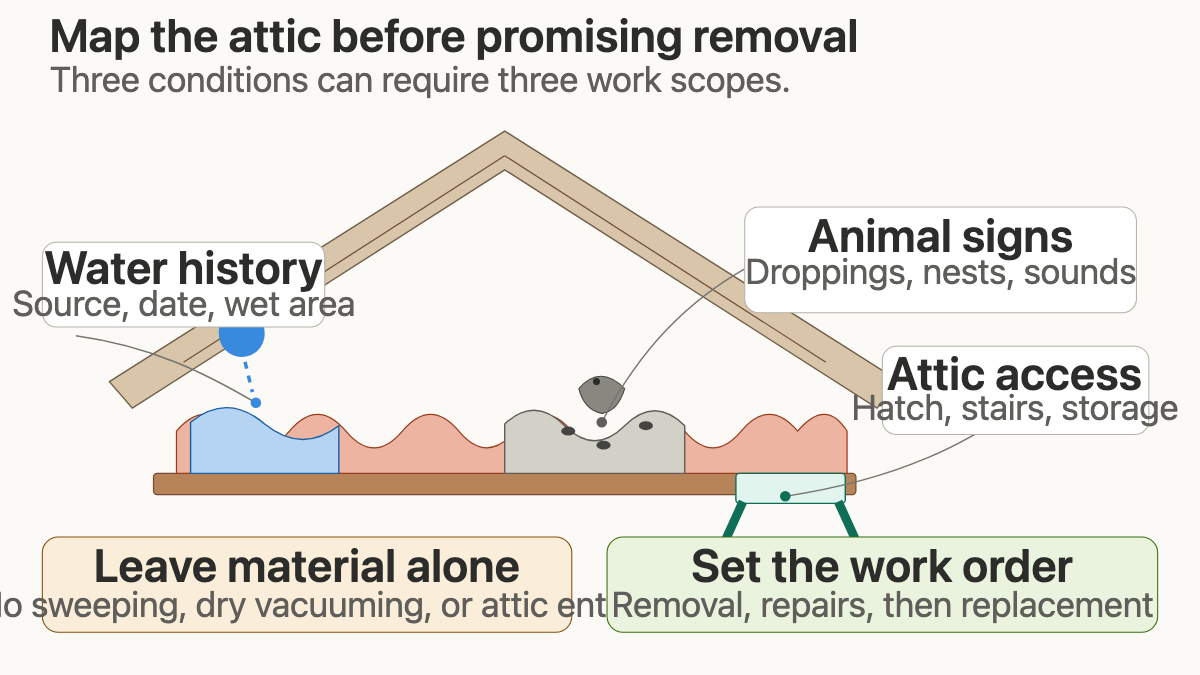
Water and animal activity can occupy the same attic without sharing a cause. Give each one its own timeline.
For water, record the first and most recent event, the weather or plumbing condition at the time, the room below, and whether the material is still wet. Ask who inspected the source and what was repaired. A roof invoice, plumbing receipt, or drying report is more useful than “the leak is fixed.” Note staining, compressed insulation, damp wood, ceiling damage, and odor as observations. Reception should not label dark material as mold or promise that one dry day made the assembly ready for new insulation.
EPA’s mold cleanup guidance says to fix plumbing leaks and other water problems and dry affected items completely. It also notes that mold can fill the spaces in porous materials, which can make those materials difficult or impossible to clean fully. The field team still has to determine what happened in this attic, how far the water moved, and which materials belong in the work scope.
For animals, ask what was seen or heard, where, and when. Capture droppings, nesting material, gnaw marks, tracks, odor, damaged ducts, disturbed insulation, or a trapped animal without trying to identify the species from a phone description. Find out whether a pest or wildlife provider has inspected the building, whether active animals were removed, and whether entry points were sealed. Request that company’s diagram or completion note.
Removal before exclusion can set up a repeat visit. But reception should not declare an infestation resolved because the homeowner has not heard scratching for a week. Put the reported status in the record and let the relevant contractor verify it.
Keep suspect material undisturbed
The office needs a firm stop line when the caller describes waste or an unknown insulation product. The CDC’s rodent cleanup guidance says not to vacuum or sweep rodent urine, droppings, or nesting materials. Dry disturbance can put contaminated particles into the air. The same guidance says exposed insulation contaminated with urine and droppings should be placed in plastic bags for removal.
That is a work-planning issue, not a reason to coach a homeowner through cleanup. Ask whether anyone has already swept, vacuumed, blown, or moved the material, then record the answer. If the company handles this work, follow its trained procedure and applicable health, disposal, and respiratory-protection rules. If it does not, the ticket may need a handoff to a pest-remediation or environmental provider.
A description of shiny, pebble-like, gray-brown, or silver-gold loose fill raises another boundary. EPA advises homeowners to assume vermiculite attic insulation may be contaminated with asbestos and to leave it undisturbed. Its vermiculite attic guidance recommends trained professionals for testing or removal decisions. Reception should avoid identifying a material from color, age, or a blurry photo.
Ask whether asbestos testing, an environmental assessment, or earlier abatement paperwork exists. Get the actual report. Do not promise that a negative result for one sample clears every material in the attic, and do not describe the company as licensed for work outside its real qualifications.
Map the attic and access before assigning a crew
“Attic” may mean one open space, knee-wall voids beside finished rooms, separate areas over additions, a low-slope cavity, or a walk-up third floor. Ask how many sections exist and which one contains the reported condition. Record the approximate house age and additions because old and new roof areas may have different materials and access points.
Locate the hatch, pull-down stair, knee-wall door, or full stair. Note the room below, ceiling height, opening dimensions if already known, landing space, stored belongings, and whether a protective floor path is possible. Ask about narrow halls, fragile finishes, pets, gates, parking, and the route from the equipment location to the hatch. Removal equipment and sealed waste need a real path through the property.
Map what occupies the attic. Useful intake details include:
- electrical panels, junction boxes, active wiring, and older wiring reported by an inspector;
- furnaces, air handlers, ducts, flues, chimneys, recessed lights, and exhaust fans;
- storage decking, loose boards, built-in platforms, solar equipment, or water tanks;
- roof-deck foam, insulation at the attic floor, insulated knee walls, or more than one assembly;
- signs of sewage, fire residue, sharp debris, unstable flooring, or structural damage.
The U.S. Department of Energy’s guide to attic air sealing puts leaking roofs, vermiculite, active knob-and-tube wiring, exhaust fans terminating in the attic, combustion equipment, and attic flooring in the pre-work review. The point is sequencing. Removal cannot be priced as a clean production job when a stop condition still controls the space.
Define the appointment and the handoffs
Read the ticket back as a sequence. A strong summary might say: “Removal assessment for loose-fill insulation below the rear roof valley. Leak appeared during two storms and flashing was repaired last Friday. Pest company documented mouse droppings near the same bay and reports exclusion complete. Unknown shiny granular material is visible near the hatch and has not been disturbed. Pull-down stair is in the bedroom closet; customer will clear the closet floor. Roofer and pest reports attached.”
That summary does not decide the job. It tells the estimator what to verify.
The field scope may separate source repair, pest exclusion, environmental testing, contaminated-material handling, clean insulation removal, wood or drywall repair, air sealing, ventilation corrections, and replacement insulation. Name which services the company provides and which require another contractor. Avoid promising that everything will happen in one visit.
Replacement should wait for a defensible work plan. The crew needs to know that the water or animal source has been addressed, suspect materials have an approved handling path, utilities and access are safe, and the exposed assembly can be inspected after removal. If the customer’s real complaint is drafts or uneven room temperatures after cleanup, schedule a broader home air-sealing assessment once the attic condition allows it.
A receptionist or AI call handler can collect these details after hours and keep the water, animal, material, and access notes in separate fields. The final read-back matters most. When the estimator opens the ticket, “remove old insulation” should already have become a map of the attic, the unresolved risks, and the next safe inspection.