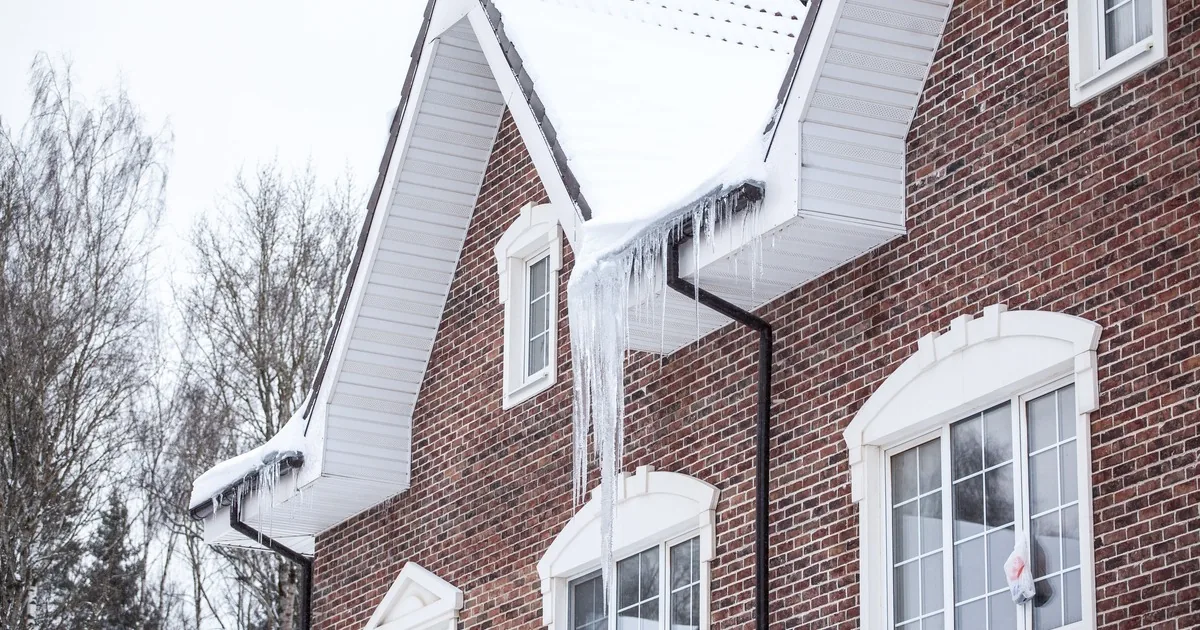
A homeowner calls during a thaw because water is staining the bedroom ceiling. Icicles hang from the gutter above that room, but a long strip of shingles near the chimney is already bare. They ask for more attic insulation tomorrow. The office still does not know whether the immediate need is water control, professional ice removal, roof repair, drying, or a later home-performance assessment.
Start by separating today’s problem from the permanent investigation. Record active water, falling ice, the exact roof pattern, snow and temperature history, interior damage, attic access, known insulation and ventilation conditions, heat sources, previous work, and safe photos. A trained field professional should determine the roof condition, leakage paths, insulation scope, air-sealing work, ventilation changes, and safe access method.
Separate the active leak from the later assessment
Ask where water is entering now. Name the room, wall or ceiling area, then locate it relative to the exterior eave, valley, dormer, chimney, skylight, porch roof, or addition. Find out when the caller first saw dripping, staining, bubbling paint, wet insulation, or water at a window. Record whether the water is moving, spreading, or near a light fixture, outlet, panel, appliance, or fuel-burning equipment.
Follow the company’s emergency policy for active electrical hazards, falling ice over an occupied path, a sagging ceiling, or signs of structural distress. Reception should not coach the caller onto the roof, under a loaded eave, or into a wet attic. The Occupational Safety and Health Administration’s roof snow-removal hazard alert identifies falls, hidden skylights, ladders, electrical contact, falling snow, and roof loading among the hazards workers must plan for. A homeowner with a phone camera has fewer controls than a trained crew.
Next, define the service the caller wants. They may need an urgent roof or water response, professional ice and snow removal, an attic assessment after the weather clears, documentation for an insurer, or coordination among a roofer, insulation contractor, electrician, and drying company. Do not fold those into one appointment unless the company actually provides them.
Temporary action and permanent correction belong on separate ticket lines. University of Minnesota Extension’s ice-dam guidance separates short-term snow or drainage measures from long-term control of heat loss. The office can explain its own service boundary. It should avoid promising that removing visible ice fixes the cause.
Map the ice pattern from safe locations
Ask the caller to describe the roof from the ground, an interior window, or another safe place. Which side of the building is affected? Is ice continuous along an eave or concentrated below a valley, chimney, dormer, skylight, wall intersection, or exhaust? Are icicles attached to the gutter, fascia, roof edge, siding, or another feature? Does the roof have one slope or several connected rooflines?
Record the snow pattern too. A bare patch surrounded by snow, a strip that melts first, a drift behind a dormer, or persistent snow over one room can help the field team choose where to look. A photograph should include a reference point such as a window, chimney, or corner. Request a second, closer view only when it can be taken safely from the same protected location.
Do not diagnose from the pattern. Sun, wind, roof shape, snow depth, indoor heat, ducts, exhausts, chimneys, insulation, air leakage, and ventilation can interact. The Building America ice-dam guide explains the basic mechanism: snow melts over a warmer roof area, water moves downslope, and it refreezes at a colder eave. Water held behind that ridge can reach openings in the roof covering. The visible ridge identifies the symptom area, not the full cause.
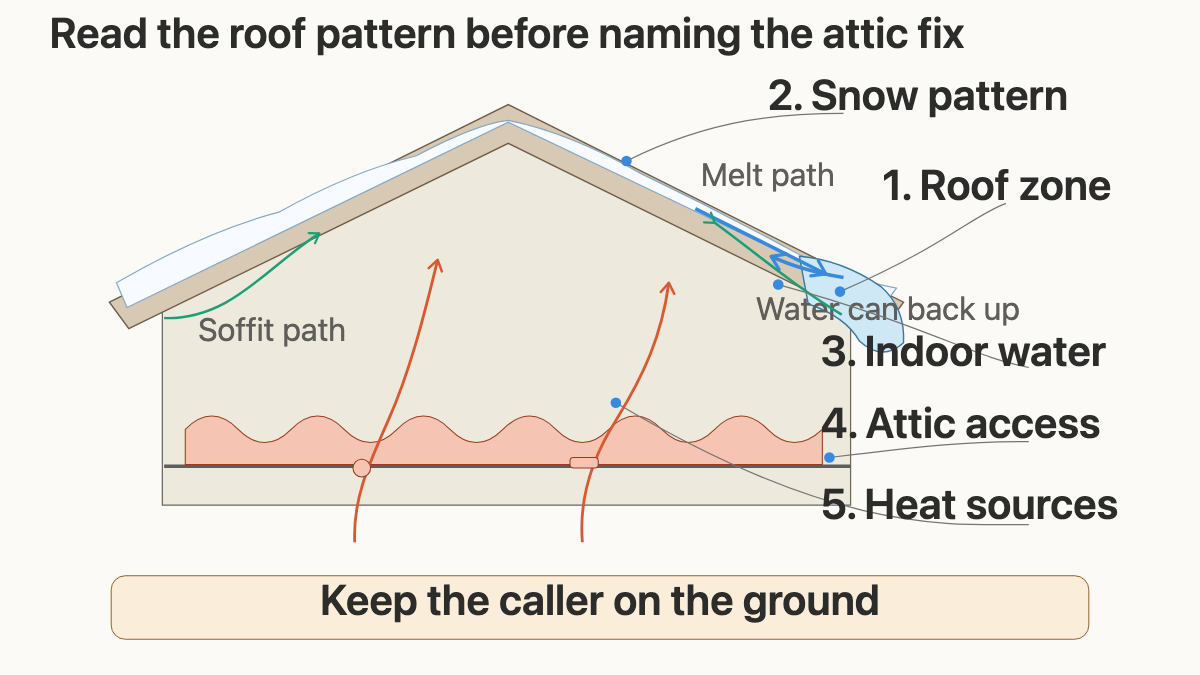
A simple exterior map is more useful than “bad ice dams.” Divide the house by elevation, then mark each affected eave or valley. Add the room below, active water location, nearby roof penetration, and whether the same spot has iced before. That map gives the estimator a starting point without pretending that ceiling stains sit directly below the roof opening.
Build the event and recurrence timeline
Ask when snow began, whether more snow fell later, and when the caller first noticed melting, icicles, an ice ridge, or indoor water. Record recent thaws, refreezing, rain on snow, strong sun, wind, and long cold periods in the caller’s own words. Exact local weather can be checked later. Reception should not invent a temperature history from memory.
Find out whether this is the first event. If the same eave produces ice each winter, note which rooms were heated, which appliances were used, and whether the pattern changed after a roof, insulation, HVAC, chimney, bathroom, kitchen, or addition project. Ask for dated photographs from earlier winters, repair invoices, energy-audit reports, roof proposals, and insurance documentation.
A recent interior change may matter. Record new recessed lights, ceiling fans, exhaust fans, attic stairs, wiring, plumbing, ductwork, speakers, or a finished ceiling. Ask about a newly used fireplace, wood stove, attic furnace, or room addition. These are assessment clues, not proof of leakage.
Also ask what happened after earlier repairs. “More insulation was added” needs a date, contractor, area, material if known, and any air-sealing or ventilation work listed on the invoice. “The roofer fixed it” should include the repaired component. A new underlayment, heat cable, gutter, vent, or shingle repair answers a different question from work at the ceiling plane.
Qualify the attic and roof assembly
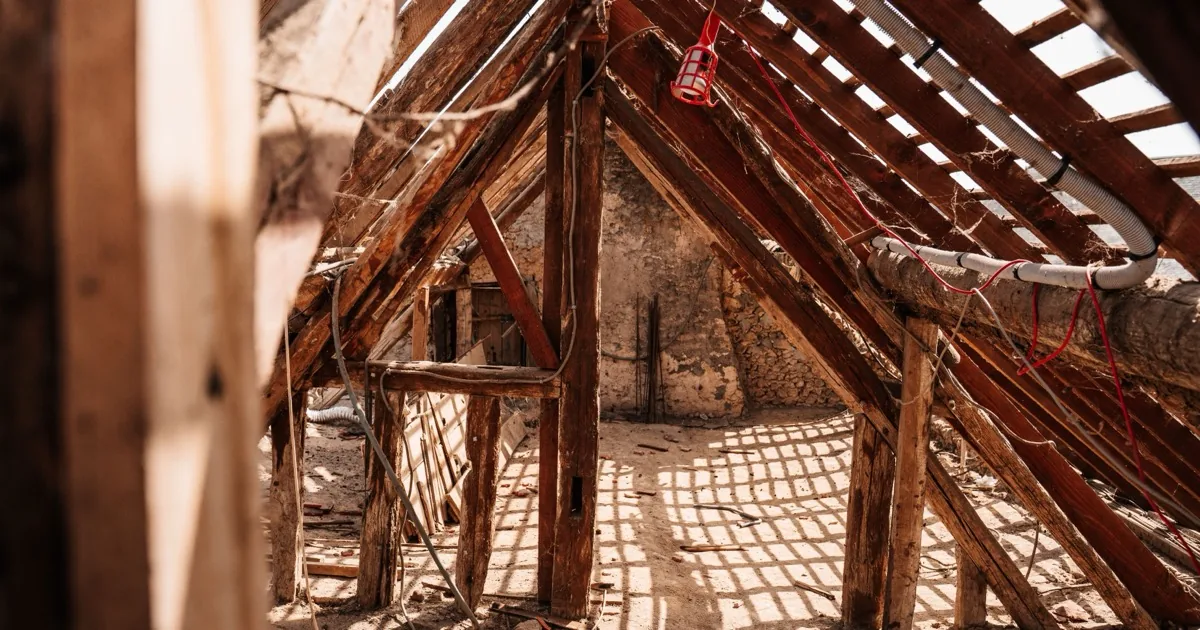
Identify the spaces below the affected roof. Is there an open attic, a low knee-wall space, a cathedral ceiling, a finished third floor, an attic over an addition, or no known access? Locate hatches, pull-down stairs, full stairs, knee-wall doors, garage access, and separate attic sections. Record stored items, narrow openings, fragile finishes, pets, tenants, and who can unlock the property.
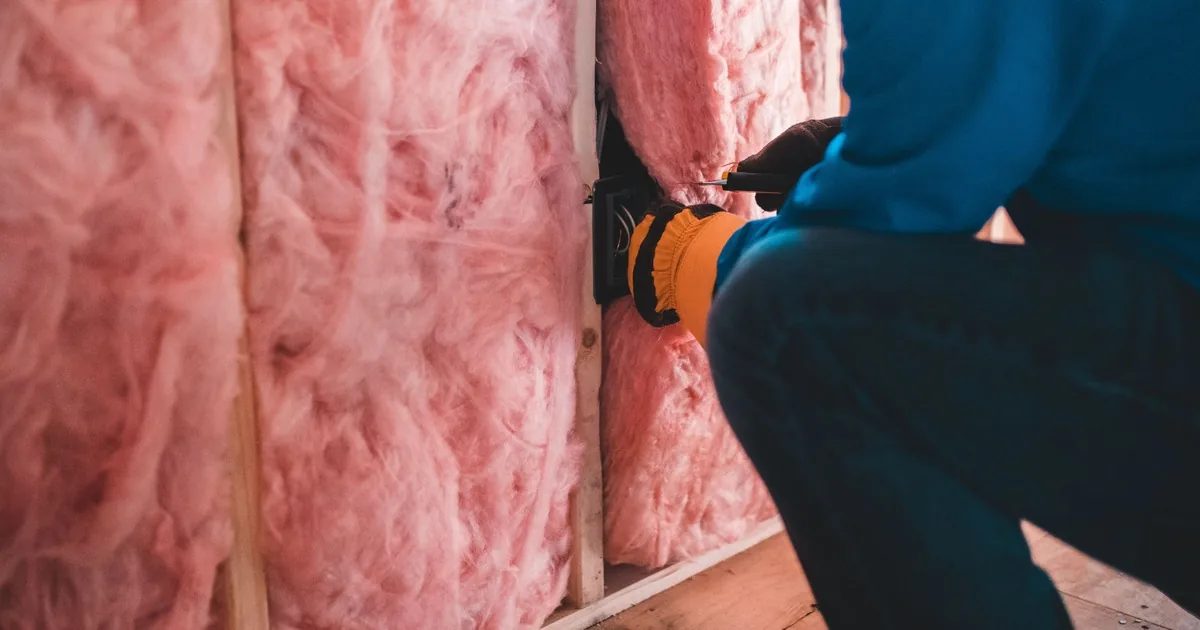
Ask what the caller already knows about the insulation. Useful descriptions include loose fibers on an attic floor, batts between joists, foam at the roof deck, rigid board, an unknown material, or more than one assembly. Note visible thin areas, compressed material, gaps at eaves, covered soffits, damp spots, and storage platforms. Do not ask the caller to walk on concealed framing or move insulation around wiring, lights, flues, or exhaust ducts.
Ventilation needs the same restraint. Record soffit vents, ridge vents, box vents, gable vents, powered fans, baffles, and blocked openings only when the caller can identify them safely. Avoid promising that adding a fan or cutting more vents will solve the event. PNNL’s roof and attic guidance treats ceiling air tightness, insulation continuity, roof ventilation, geometry, and local heat sources as a connected assembly.
List known attic heat sources: supply or return ducts, an air handler, furnace, water heater, chimney, flue, recessed lights, exhaust duct, plumbing chase, dropped ceiling, attic stair, or open wall cavity. The field team may use visual inspection, blower-door testing, infrared imaging under suitable conditions, or other methods within its service. Reception should record what the company offers without guaranteeing that one test will locate every path.
If the caller wants only an insulation estimate, explain the appointment accurately. The roof ventilation and attic airflow guide covers intake and exhaust paths, blocked soffits, and common ventilation questions. A recurring ice-dam event may need a wider assessment than material depth alone.
Read back a field-ready record
Before booking, the ticket should include:
- the requested service, urgency, active water, electrical concerns, falling ice, and areas kept clear;
- affected elevation, eave or valley, snow and bare-roof pattern, icicles, ice ridge, roof features, and safe photos;
- event timeline, weather sequence as reported, previous winters, prior damage, and earlier repair attempts;
- rooms below, stain or drip location, attic type, access, insulation description, vents, equipment, ducts, chimneys, exhausts, and recent work;
- owner, occupant, site contact, insurer or property manager involvement, available reports, access limits, and decision deadline.
Then read the important facts back in plain language:
“You reported active staining at the north bedroom ceiling during today’s thaw. Ice runs along the north eave and is deepest below the small dormer. Snow remains over most of the slope, with one bare strip near the chimney. Nobody will enter the attic or approach the icy walkway before the visit. The house has a pull-down attic stair in the hall, loose insulation on the attic floor, a bathroom exhaust duct, and a masonry chimney. Insulation was added three years ago, but the invoice does not mention air sealing. We have ground photos from today and the prior contractor’s invoice.”
That record keeps immediate risk, exterior evidence, and attic questions in the same handoff. An AI receptionist can collect the approved fields after hours and route urgent exceptions under company policy. The field professional still decides where heat moved, why water entered, which work is safe, and what the roof and attic need before the next snow.