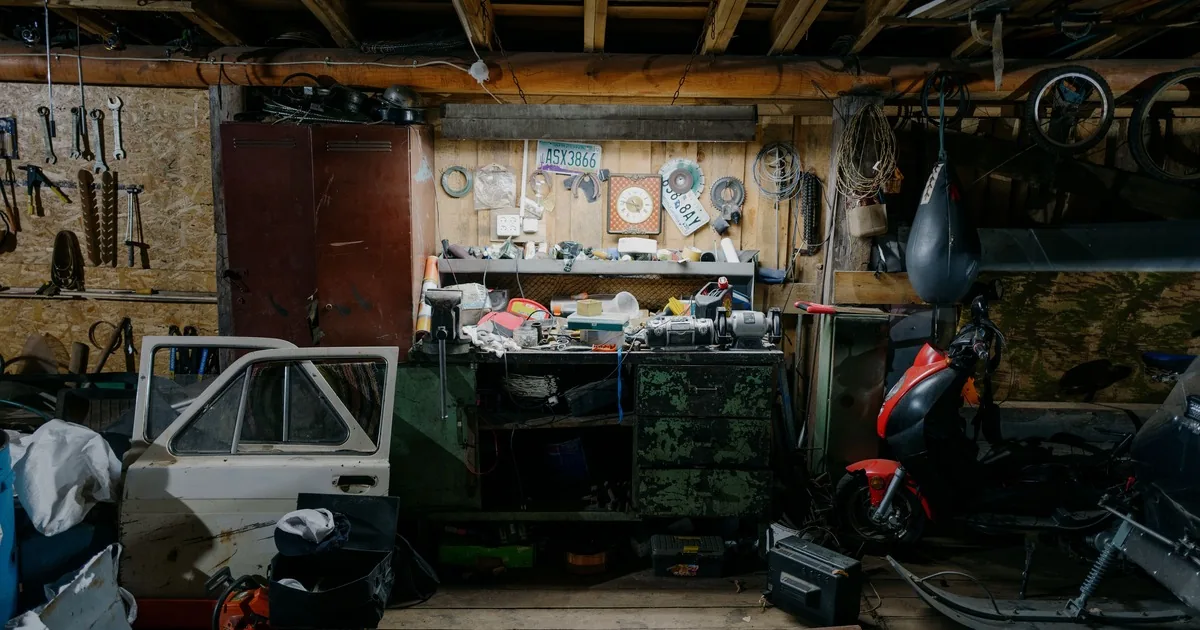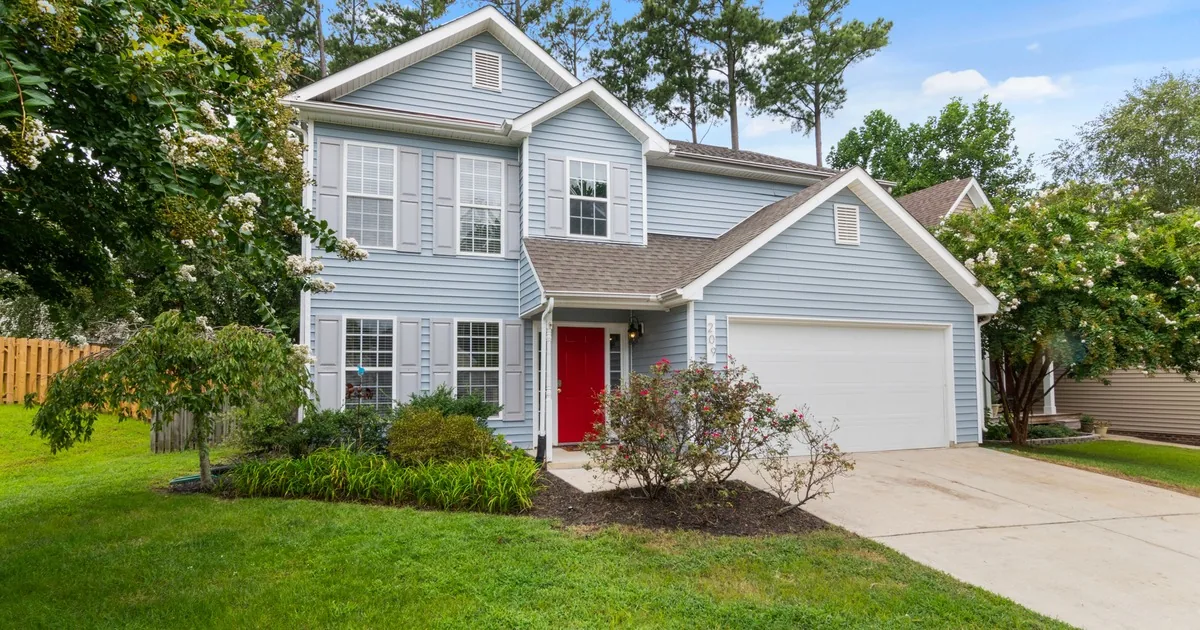
A homeowner asks, “How much to soft wash my house?” They mention a green wall by the patio. The first photo shows six feet of siding. It leaves out the second story, chalky south wall, loose vent cover, flower bed against the foundation, well-fed hose bib, and locked gate between the driveway and backyard.
A useful house soft-wash quote call records the included elevations and surfaces, siding material and finish, stain pattern, damaged or fragile areas, openings, landscaping, water source, drainage, and crew access. Reception can organize the evidence. The contractor must choose the cleaner, pressure, protection plan, and runoff controls that fit the property.
Define what the house wash includes
Start with the service address and the shape of the house. Ask how many stories are exposed on each side, since a walkout basement can turn one elevation into three levels while the street view still looks like a two-story home. Note attached garages, dormers, gables, additions, screened porches, and walls over a lower roof.
Then name the surfaces. “Whole house” means different things to different callers. One customer expects siding only. Another assumes the soffits, fascia, gutter faces, shutters, exterior window rinse, porch ceiling, garage door, and visible foundation are part of the same price. Roof cleaning, interior gutter clearing, detailed window cleaning, decks, fences, patios, and driveways should be separate unless the company’s written scope says otherwise.
Ask which sides need attention. A shaded north wall may have green growth while the sunny side looks chalky. A single chimney chase or rear addition may use a different material. Record what the customer wants cleaned and what they want left alone.
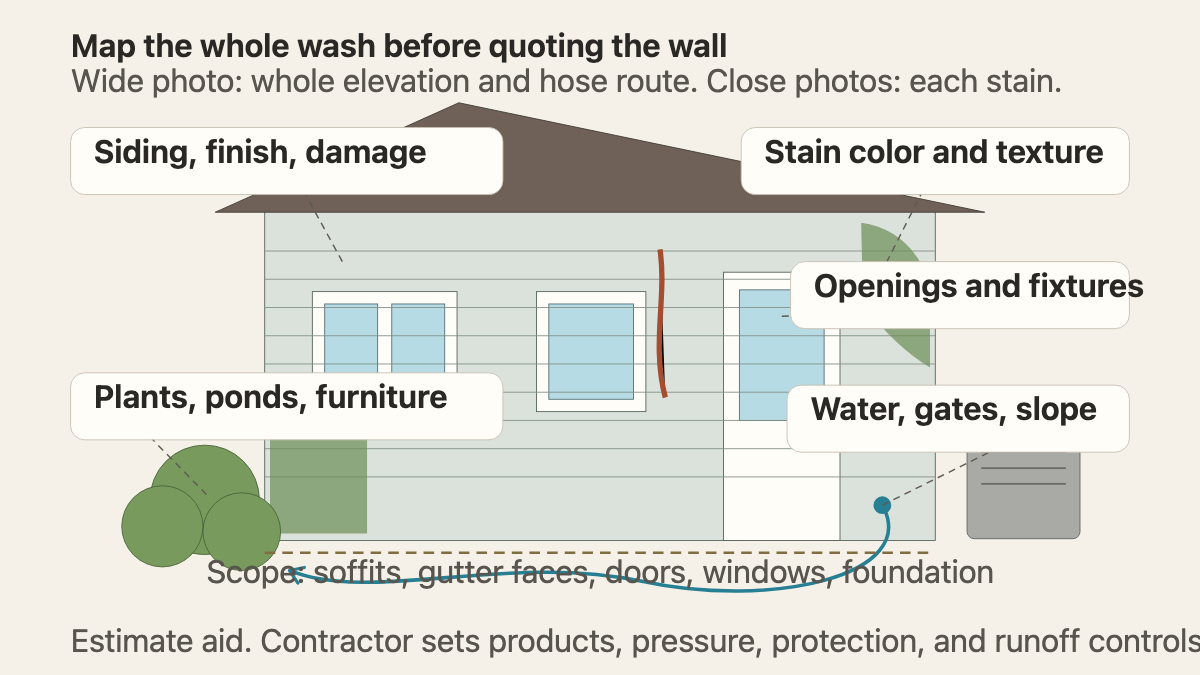
Photos should follow the scope. Request one wide daylight view of every elevation, followed by close views of each distinct stain or damaged spot. A wide photo establishes height, wall area, landscaping, obstacles, and access. A close photo preserves texture and color. Neither replaces an on-site review when the surface or condition is uncertain.
Identify the siding before discussing a method
Ask whether the exterior is vinyl, fiber cement, painted wood, engineered wood, stucco, brick, stone, metal, composite panels, or a mix. If the caller does not know, request a photo of a broad wall, a corner, the bottom edge, and any spare product label or project invoice they already have. Do not ask them to pry up a panel.
The exact material matters because cleaning instructions differ. The Polymeric Exterior Products Association’s vinyl-siding guidance tells readers to follow manufacturer instructions and warns that pressure-washing limits vary by product. It also cautions against directing water behind siding and calls for care around windows, doors, and plumbing connections.
James Hardie’s cleaning guidance advises low-pressure water and soft, nonmetal tools for its siding and trim. It says not to use a high-pressure power washer. CertainTeed’s vinyl-siding instructions also advise against power washing its vinyl or polymer siding because of possible moisture intrusion, damage, or discoloration.
Those instructions settle an important office question. “Soft wash” is not enough detail to promise that one standard process fits every wall. Record the product when possible, flag mixed surfaces, and let the approved field procedure control the method.
Existing finish belongs in the same note. Ask whether the surface is factory colored, field painted, stained, sealed, coated, or unknown. Record peeling paint, open joints, warped panels, cracked stucco, loose trim, soft wood, failed caulk, and prior patching. A cleaning estimate should not bury a repair concern.
For callers comparing materials during a larger exterior project, the vinyl versus fiber cement siding consultation guide covers ownership and installation questions that sit outside a wash quote.
Describe the stain without diagnosing it
Begin with the caller’s words. Is the mark green, black, brown, orange, white, gray, or rainbow colored? Does it look powdery, streaked, spotted, fuzzy, crusted, greasy, chalky, or like a shadow? Where does it appear: under eaves, below a gutter seam, near sprinklers, behind shrubs, around a dryer vent, beside a chimney, or across the whole sunny wall?
Ask when it appeared and whether it changes after rain. Note irrigation spray, roof runoff, a leaking gutter, dryer exhaust, grill smoke, tree sap, bird activity, construction dust, road soot, and nearby metal that could produce rust-colored runoff. These are observations, not diagnoses.
Oxidation deserves a separate flag. A caller may describe faded vinyl or paint as dirt because a pale film appears on the sunny side. Do not promise that routine washing will restore the original color. Ask whether anyone has wiped the surface and whether that changed the sheen. The crew can decide whether further testing is appropriate.
Find out what has already touched the wall. Record store-bought house wash, bleach, degreaser, rust remover, vinegar, soap, paint cleaner, pressure washing, scrubbing, or an unknown contractor treatment. Ask for the product name or a label photo if it is already available. Reception should not provide a mixing recipe.
OSHA’s guidance for workers who use cleaning chemicals calls for labels, safety data sheets, correct dilution, protective equipment, and training. It specifically warns against mixing products that contain bleach and ammonia. Chemical selection belongs in company procedure, not an improvised quote-call answer.
Map openings, damage, and protection zones
Walk around the house verbally. Ask about open or damaged windows, loose screens, pet doors, attic vents, dryer vents, exterior outlets, cameras, doorbells, speakers, light fixtures, electric meters, service panels, mini-split equipment, and wall-mounted decorations. Note any opening that leaks during normal rain or any fixture that is loose.
A gap around a vent or utility line may need repair review before washing. The siding inspection guide for vents and utility penetrations explains how to document the object, visible damage, weather history, and prior work without assigning a cause by phone.
Now map what sits in the spray and runoff zone. Record dense foundation shrubs, new plantings, vegetable beds, herbs, fruit trees, ponds, fountains, pools, outdoor kitchens, painted furniture, fabrics, toys, pet bowls, bird feeders, grills, firewood, and items stored against the wall. Ask about pets and gates. The estimator needs to know what can be moved, what must be worked around, and what requires an approved protection plan.
Do not promise that every plant or finish is compatible with a proposed cleaner before the surface, product label, weather, and site are reviewed. The call should expose the protection work, not settle it.
Confirm water, drainage, and crew access
Ask whether there is a working outdoor hose bib and where it sits. Record municipal water, a private well, a shared supply, or an unknown source. If the customer reports low pressure, intermittent flow, discolored water, a softener bypass issue, or a shutoff that cannot be found, flag it. The company can decide whether it needs a flow check or its own water plan.
Trace the route from legal truck parking to every wall. Note gate width, locked gates, steep grades, steps, retaining walls, narrow side yards, soft ground, low branches, fences, overhead wires, basement stairs, and roof sections below upper walls. Ask about septic components, irrigation controls, invisible-fence wires, and freshly seeded areas when equipment or hoses may cross them.
Drainage also belongs in intake. Where does water travel from each elevation? Identify street drains, swales, patios, basement doors, window wells, neighboring property, pools, ponds, and low areas beside the foundation. Runoff requirements vary by location and product. The office should record the site and let the contractor apply its local compliance procedure.
Weather and timing can change the visit. Ask about freezing conditions, strong wind exposure, water restrictions, community work hours, school pickup congestion, and a deadline tied to painting, a listing, or an event. State the company’s weather policy without guaranteeing a date the forecast may move.
Read back a quote-ready record
A useful summary sounds like this: the customer wants all four vinyl-sided elevations washed, including soffits and gutter faces but excluding the roof, windows, deck, and driveway. The rear is three levels above a walkout basement. Green spotting is concentrated behind shrubs on the north wall; an orange streak sits below a metal fastener near the garage; and the south wall looks chalky. One bathroom vent cover is loose. A flower bed, condenser, cameras, and painted porch furniture need review. The hose bib uses a private well, the customer reports low flow, and backyard access is through a locked thirty-four-inch gate.
Confirm the customer’s name, address, photo set, desired scope, site contact, parking limits, gate plan, pets, water details, and appointment window. Mark unknown siding, failing paint, open penetrations, prior chemical use, fragile landscaping, ponds, and water-supply concerns for human review.
An AI receptionist can collect these fields after hours and attach the photos to the estimate request. The script should preserve uncertainty. It should never identify a stain, choose a chemical mix, guarantee removal, or approve a surface from one close-up.
A good quote call lets the estimator see the whole wash before pricing it: the wall, the mark, the things that can leak, the things that need protection, and the route the crew and water must take.