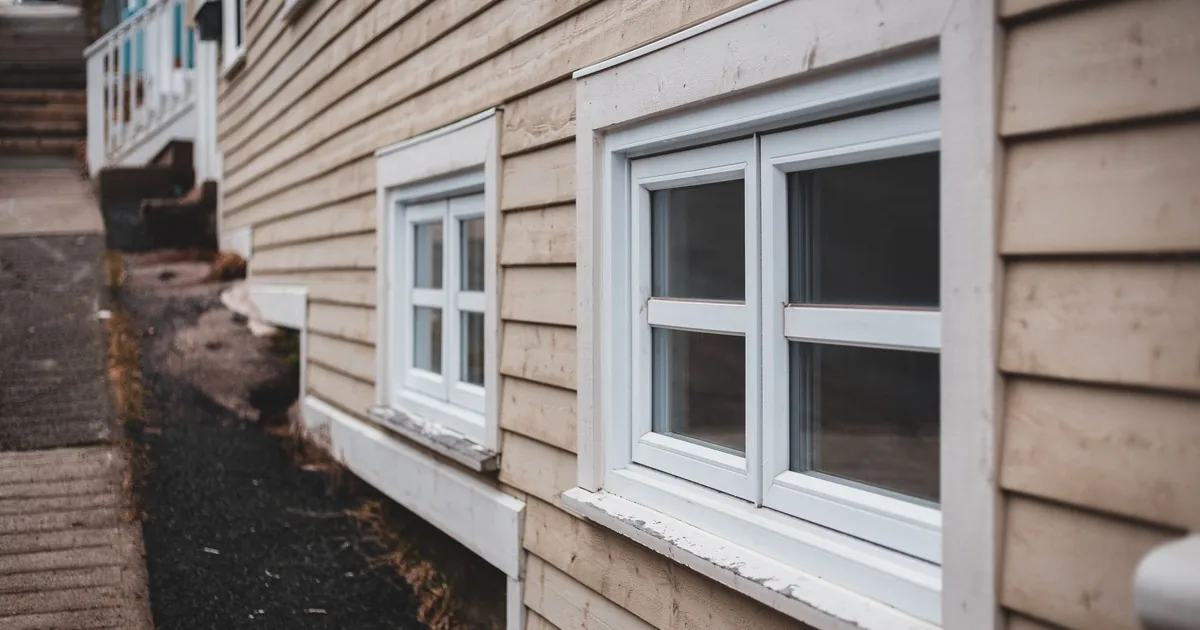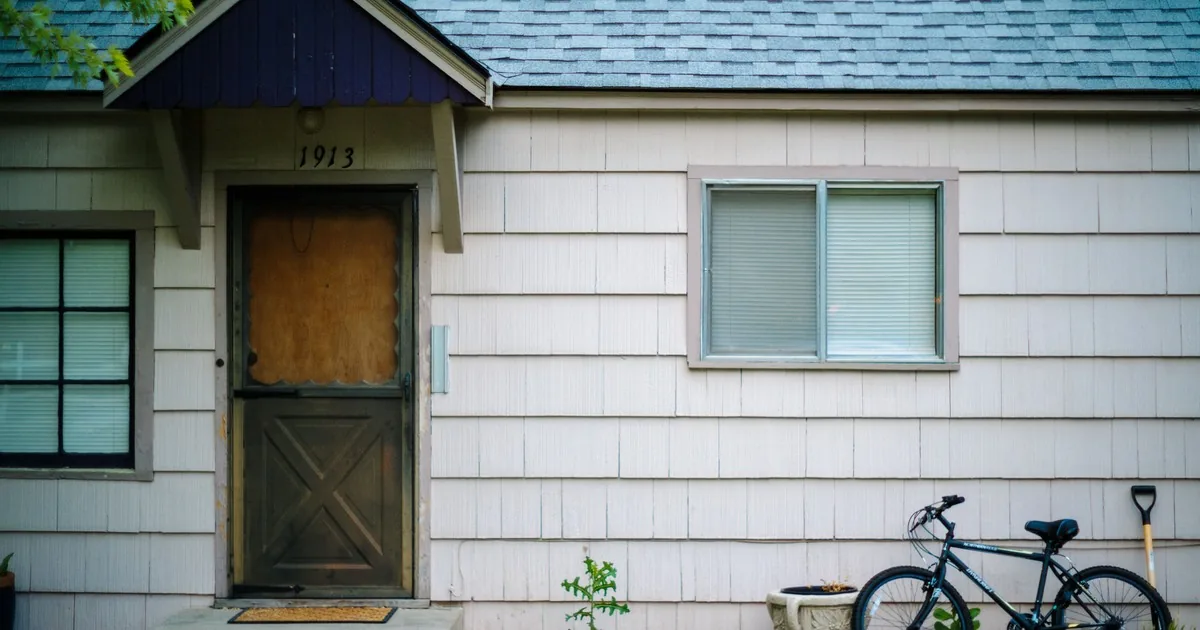
“The siding is open around my dryer vent” can describe a cracked mounting block, a loose siding course, a missing hood, a gap left by another trade, or water damage behind an opening that still looks tidy from the yard. Those jobs do not belong under one quick phone quote.
A useful inspection call identifies the object passing through the wall, the damage visible around it, any interior or weather-related evidence, who last worked there, and how a crew can reach the area. Reception records observations. The field inspector determines whether the repair involves the siding face, the penetration assembly, concealed water-control layers, or coordination with another contractor.
Name the opening before discussing the siding
Start with a simple question: “What comes through the wall at that spot?” The answer may be a dryer hood, bath exhaust, hose faucet, electrical receptacle, light fixture, meter, cable, plumbing vent, furnace intake or exhaust, or refrigerant lines serving an outdoor unit. Ask the caller to describe the object without touching, opening, or removing it.
That distinction matters because the siding contractor may own the trim and cladding while another licensed trade owns the equipment. A loose mounting block around a light is not permission to disconnect the fixture. Damage beside refrigerant lines may require HVAC coordination. A bent dryer hood can affect the appliance connection as well as the siding around it.
Record the wall and location in plain terms: front, rear, left, or right elevation; floor; approximate height; and nearby landmark. “Back wall” is weak field information. “First-floor rear wall, below the kitchen window and three feet to the right of the deck stairs” gives the crew a place to begin.
Ask whether the opening passes through horizontal vinyl, fiber cement, wood lap, shingles, panels, masonry veneer, or mixed materials. If the caller is unsure, a wide photograph is better than a guess. Material affects how the opening is trimmed and how far the surrounding area may need to be inspected.
Record the wall face and the area below it
The visible condition should be described before anyone assigns a cause. Is the mounting block cracked, tilted, loose, or pulled away? Is a siding edge outside its receiving channel? Is there an open gap, split sealant joint, bent hood, missing cover, exposed backing, rust mark, or stain below the penetration?
Then widen the view. Ask about buckled courses, chipped edges, fastener holes, brittle material, repairs in a different color, or a seam that has opened above or beside the block. If the damage followed wind, impact, or a service visit, note that sequence. Do not turn sequence into certainty. A cable installer working nearby last week may explain the gap, but the inspection still has to confirm what moved.
Water deserves its own line in the call record. Ask when it appears and what the caller sees indoors. Useful descriptions include staining below the opening, damp drywall, peeling paint, softened trim, musty odor, or active dripping during wind-driven rain. A stain under a vent does not prove that the vent caused it. Water can travel behind cladding before it becomes visible.
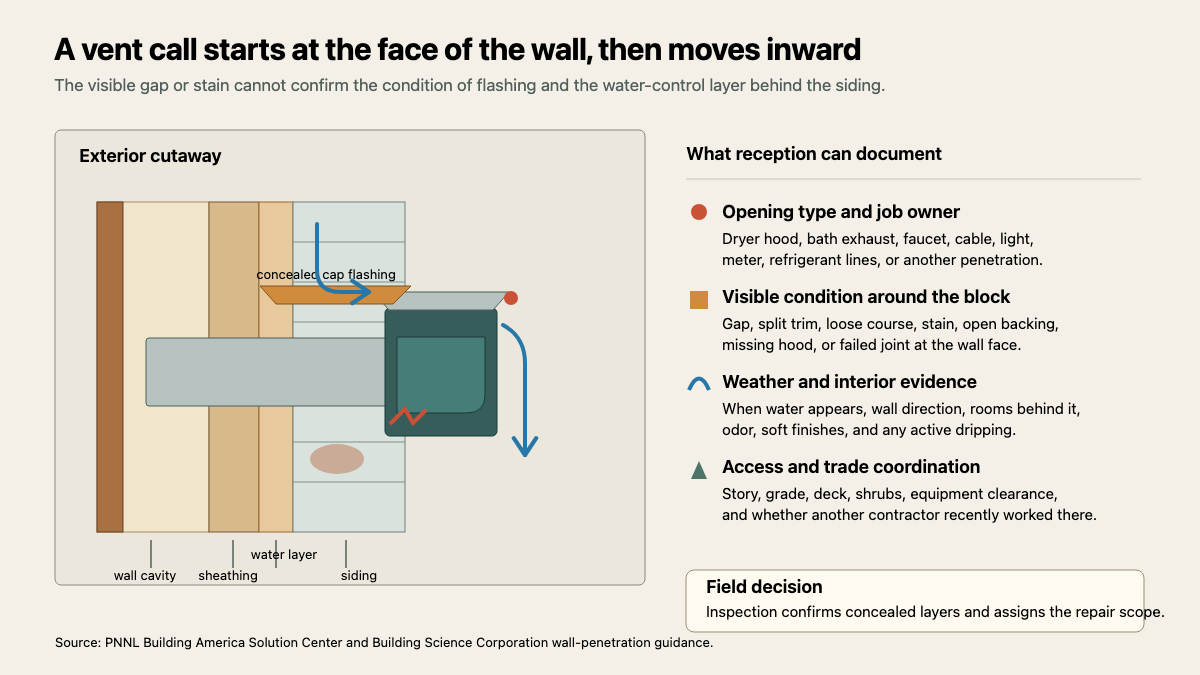
The Building America Solution Center guide to flashing wall penetrations shows why the phone description has limits. Pipes, vents, wiring, trim blocks, sealants, flashing, and the wall's water-control layer meet in one small area. Several of those parts are concealed after the siding goes on.
Ask for a photo set that preserves context
One close-up can make a half-inch gap look dramatic while hiding the rest of the wall. It can also make a serious opening look minor because the photo excludes staining below it. Ask for wide views first, then details.
A useful photo set contains:
- the full wall elevation, including grade, roof edges, decks, and equipment nearby;
- the entire vent, fixture, pipe, line set, or utility component;
- one close view of each gap, crack, loose edge, stain, or exposed layer;
- siding courses above, beside, and below the opening;
- the interior wall or ceiling area where moisture has appeared;
- any label visible from a safe position, without asking the caller to open equipment;
- access obstacles such as a condenser, fence, shrubs, narrow side yard, porch roof, or overhead service line.
The caller should stay on the ground or use an existing safe viewpoint. Reception should never ask someone to climb, pull off trim, probe soft material, disconnect a fixture, or tape over an operating exhaust. Photos support scheduling and preparation. They do not replace an inspection of concealed conditions.
Treat caulk as evidence, not a complete repair plan
Callers often say, “It probably just needs caulk.” Record that request, but do not promise a caulk-only visit. Sealant may be one part of a listed assembly or maintenance joint. It cannot reveal whether flashing is missing, the water-control layer is torn, the trim block is unsupported, or the surrounding siding has been cut too tightly.
Building Science Corporation describes the basic water-management principle as “down and out.” Its common flashing details show how flashing and drainage layers direct water toward the exterior. The U.S. Department of Energy's water-managed walls guidance also explains that cladding is backed by a drainage plane because water can pass through joints and gaps in exterior finishes.
Calls that begin as questions about the concealed wall layer can also use the house wrap and insulation consultation guide.
That is the practical intake lesson. The visible joint is one clue within an assembly. A fresh bead over the face may hide the gap without restoring the intended drainage path. The estimator needs to know whether prior sealant is cracked, smeared across weep paths, separating from the material, or covering an earlier patch.
Use the broader siding leak and moisture call guide when the complaint spans several wall areas or the source is unclear. Keep this page focused on a named wall penetration and the siding immediately around it.
Capture trade history and equipment status
Ask who installed or last serviced the object. A recent dryer replacement, cable run, heat-pump installation, exterior-light swap, hose-faucet repair, or siding job can identify the records and contractors needed for coordination. Capture the date if the caller knows it, along with any invoice, warranty, permit record, or installer name.
Do not advise the caller to operate equipment to test the wall. If a combustion appliance intake or exhaust appears damaged or blocked, follow the company's safety escalation policy and involve the qualified mechanical contractor. If electrical components are loose, wet, sparking, or damaged, keep reception out of diagnosis and route the concern according to the contractor's emergency rules.
Ask whether the equipment is currently running, shut down, disconnected, or awaiting another trade. This is scheduling information, not a technical verdict. It tells the siding office whether the inspection can happen independently or should be coordinated with an electrician, plumber, HVAC technician, utility, or communications provider.
Make access part of the scope
A dryer hood six feet above level ground is a different assignment from a penetration above a porch roof or behind a condenser in a fenced side yard. Capture the story, grade, gates, pets, landscaping, roof surfaces below, and clearance around fixed equipment. Note overhead lines or a utility meter near the work area.
If the opening sits behind an outdoor unit, ask for a wide photo that shows available working space. Do not promise that the siding crew can move the unit. The same rule applies to meters, service conductors, gas equipment, satellite mounts, and fixed plumbing. Another party may need to make the area accessible.
For localized trim damage without moisture or equipment concerns, the office can usually book a normal inspection. Prioritize the handoff when there is active interior water, an open wall area, loose material over a walkway, exposed wiring, a damaged exhaust serving operating equipment, or rapidly worsening movement. The exact response should follow the company's written safety and after-hours policy.
Give the field crew a note it can use
A strong note reads: “First-floor right elevation, bath exhaust below the upstairs window. White vinyl mounting block is pulled away at the upper-left corner. Brown stain runs one siding course below. Caller sees no indoor stain. Bathroom fan was replaced last month by another contractor. Photos show a condenser four feet in front of the wall and a locked gate on the driveway side.”
That note locates the opening, identifies the equipment, describes the siding face, separates exterior from interior evidence, records recent work, and flags access. It does not diagnose failed flashing or assign blame.
Consistent intake helps the siding contractor arrive with the right questions, access plan, and coordination contacts. An AI receptionist can capture the same fields after hours, but the script should preserve the boundary: document what the caller can observe, then leave the wall assembly to the person who can inspect it.